Concept Sketch
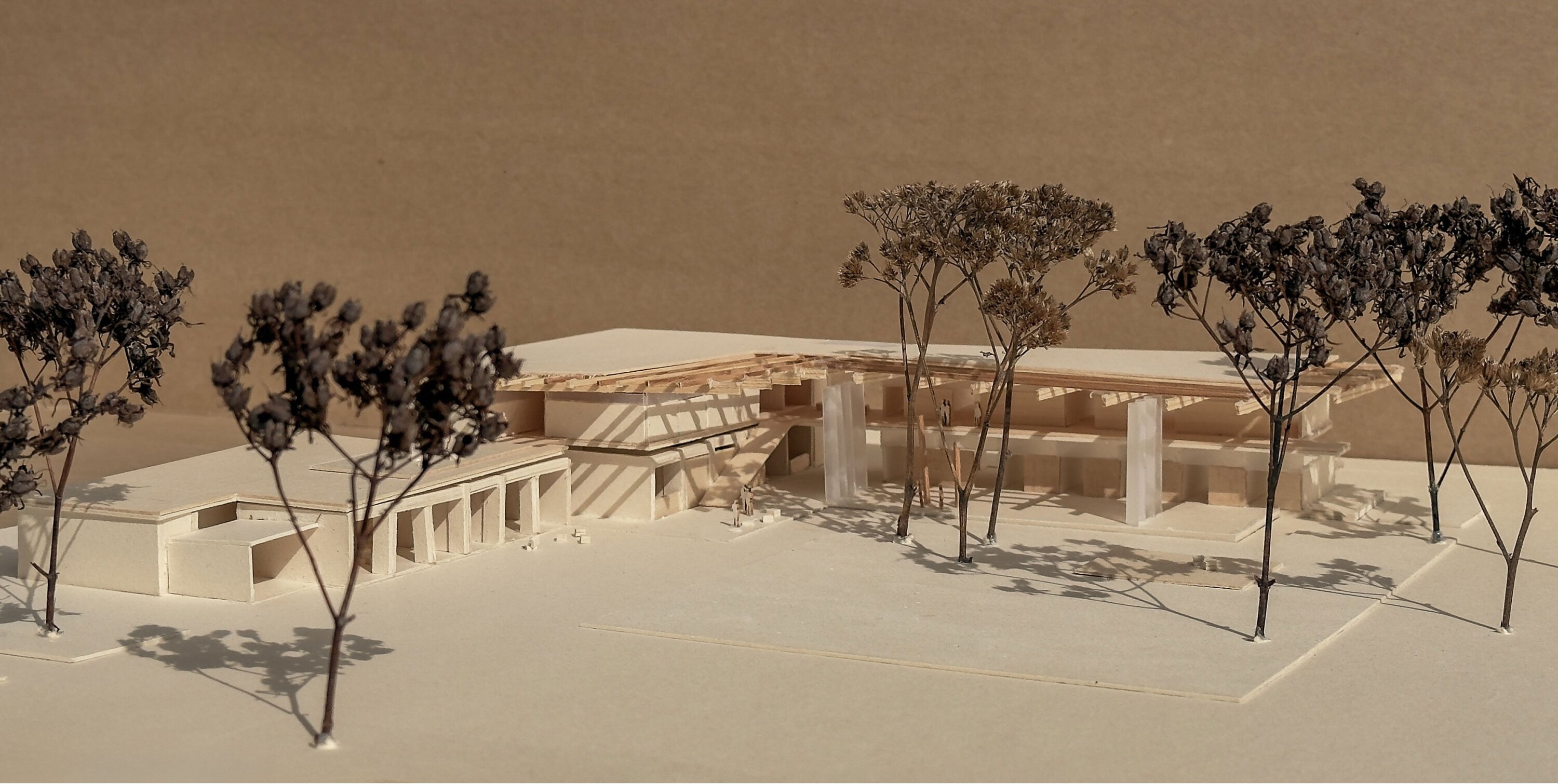
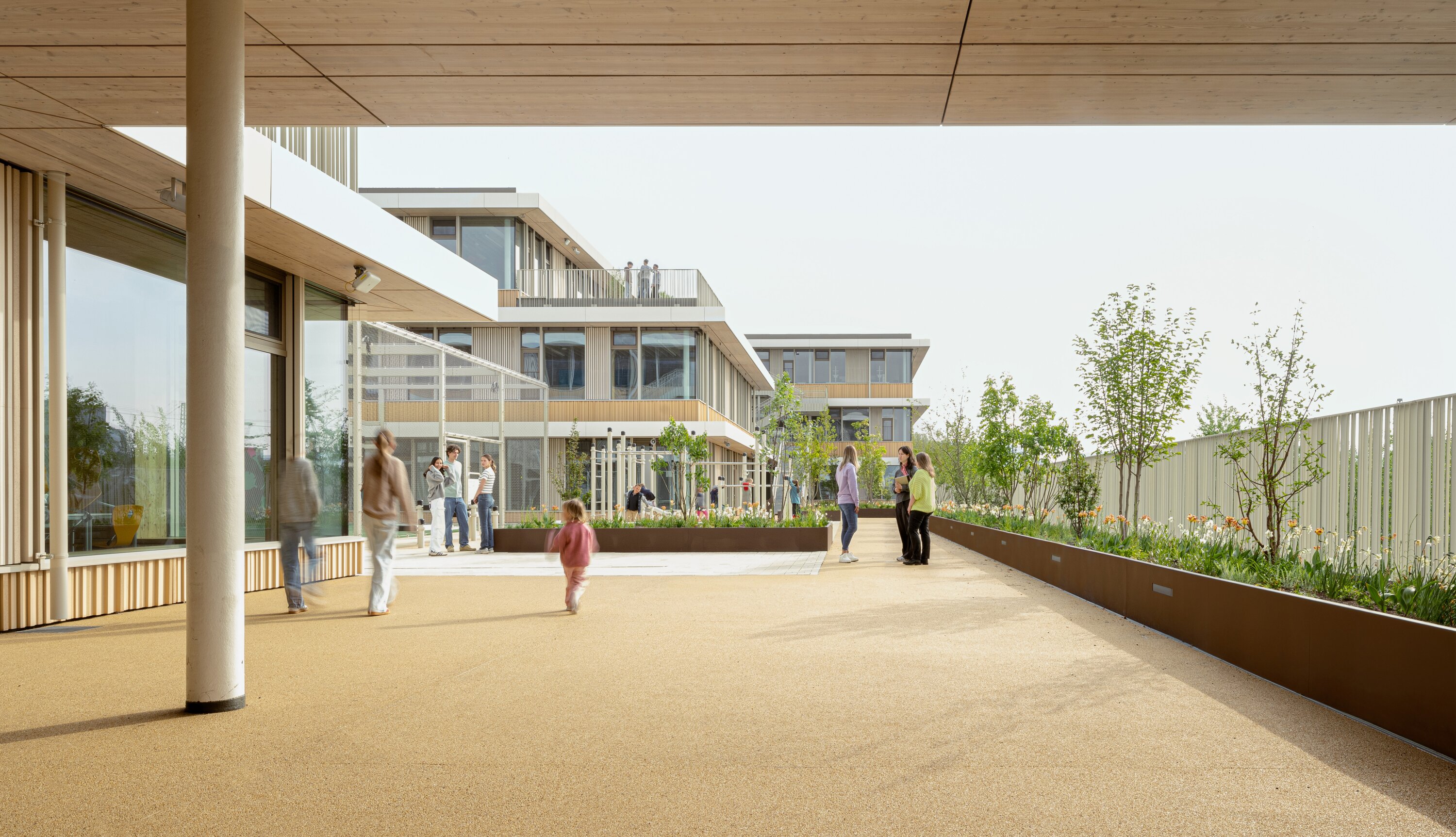
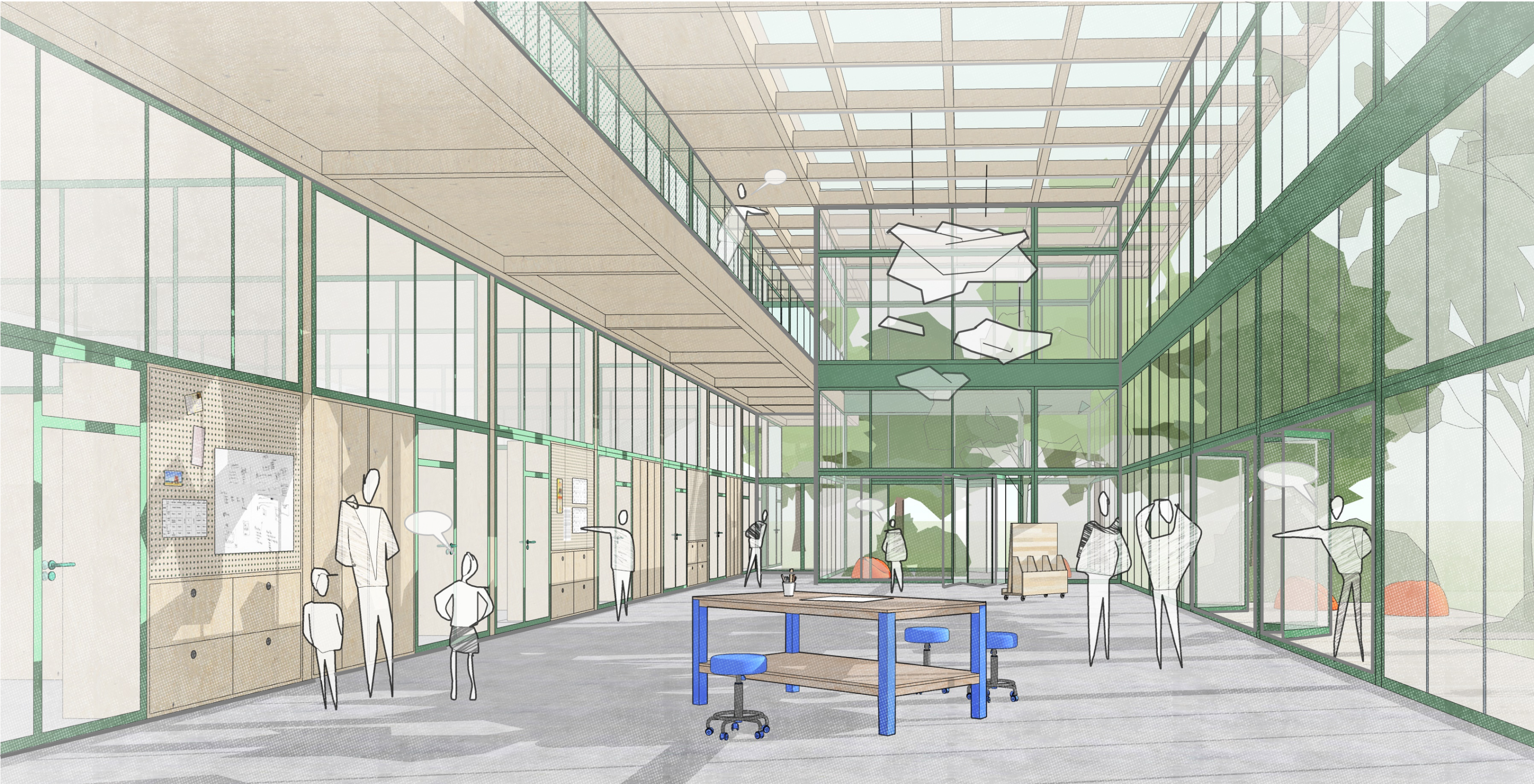
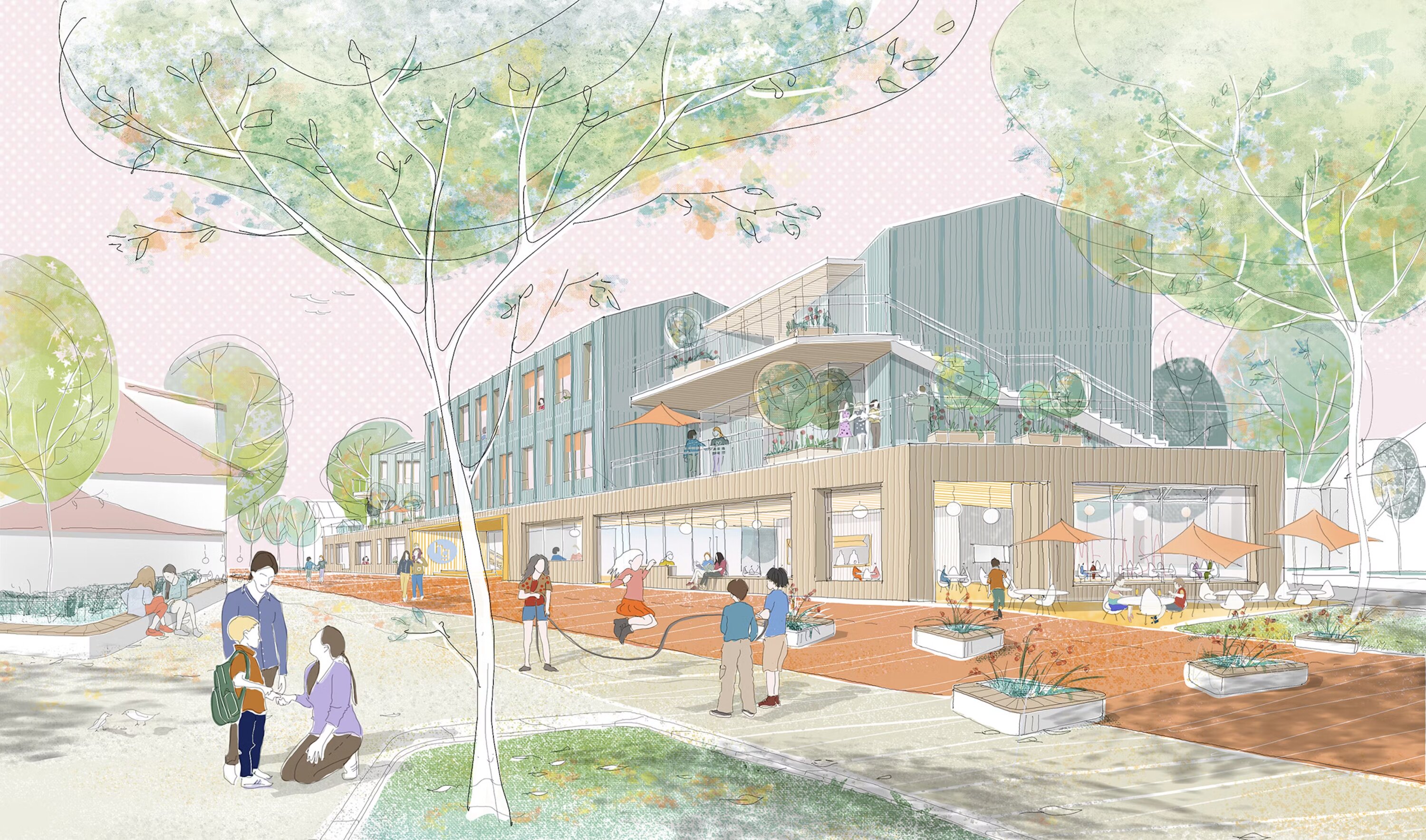
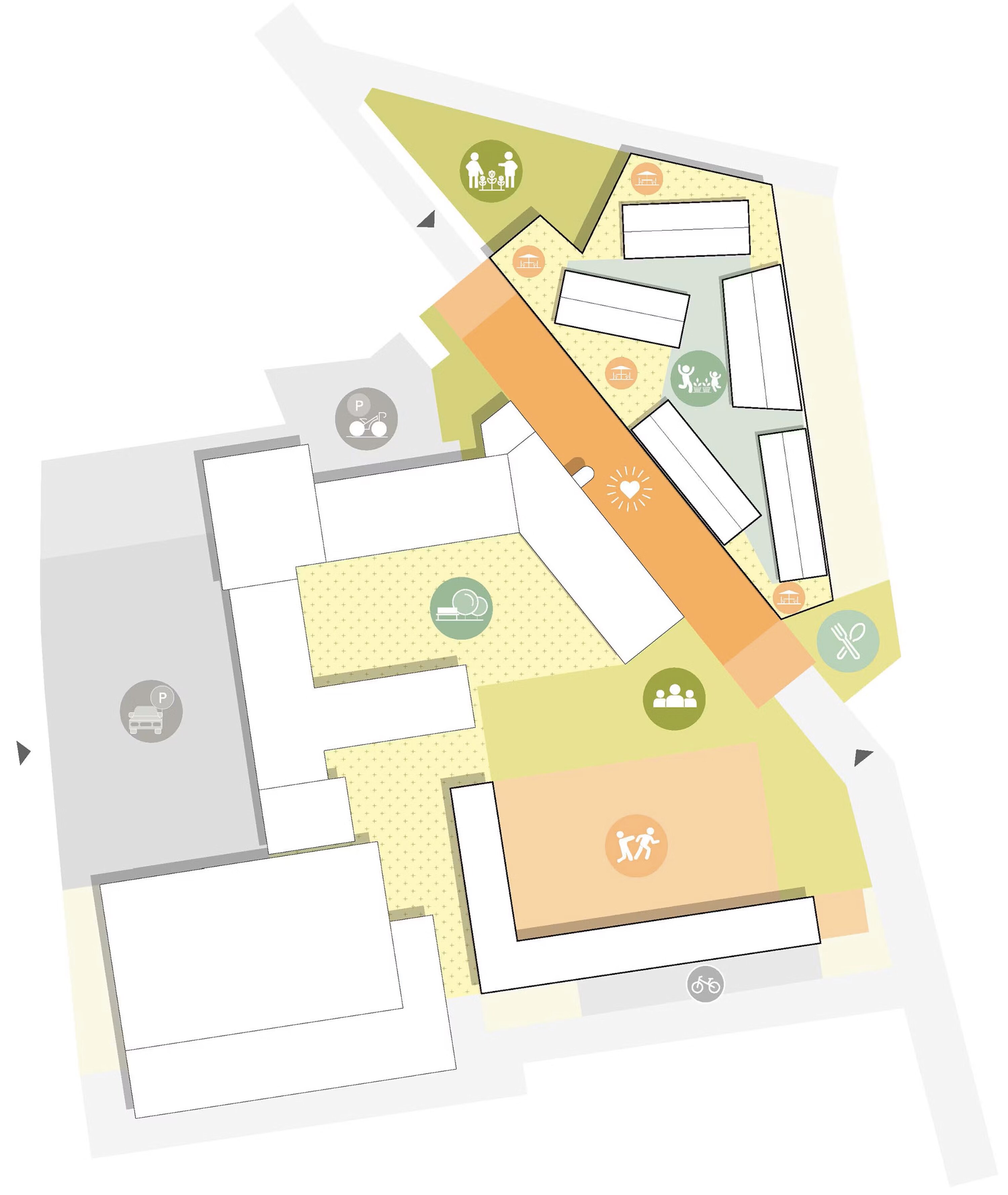
The design responds sensitively to the heterogeneous context between the historic school building and the surrounding residential fabric. Instead of a dominant volume, the new building is conceived as a series of small-scale, two-storey pavilion-like structures resting on a unifying plinth, referencing the former nursery use of the site. The plinth extends the outdoor space into the building and structures the schoolyard into a sequence of differentiated courtyards while preserving the majority of existing mature trees. A generous, covered incision marks the main entrance and establishes a new boulevard as the central connection between old and new buildings. Internally, the foyer functions as a central marketplace and orientation space with flexible multi-use potential. Shared functions such as the cafeteria and science departments are located on the ground floor for campus-wide accessibility. Learning is organized in clearly defined year-group clusters across two storeys, offering a variety of spatial situations for classroom teaching, collaborative learning, retreat, and outdoor education. The spatial concept supports flexibility, interaction, and the pedagogical profile of the school as a UNESCO Cultural School.
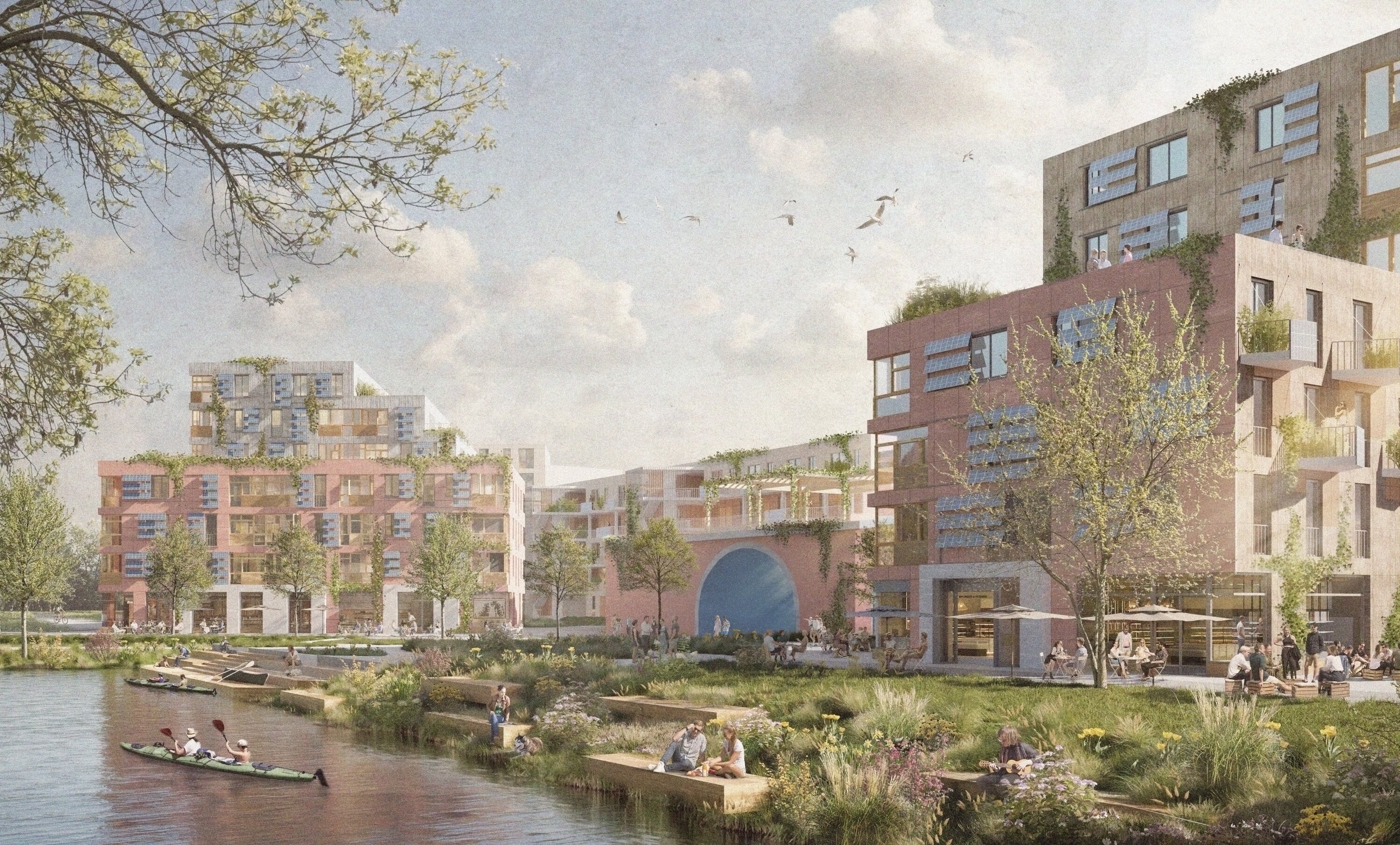
The open space concept is structured around a central boulevard that connects the listed historic building with the new extension and serves as a social and representative heart of the campus. Designed as a place of arrival, encounter, and exchange, it enables learning activities and exhibitions to extend into the outdoor and public realm. Organically shaped green islands ensure extensive de-sealing, integrate rainwater retention through topographic modeling, and create a sequence of outdoor spaces with distinct identities. Existing courtyards offer quieter retreat zones, while terraces and seating landscapes support informal learning and social interaction. Sports facilities are reorganized on the footprint of the demolished building, with a strong focus on sustainability through the reuse of existing foundations and structural elements. The retained concrete structure is reinterpreted as a multifunctional, greened framework accommodating sports, learning, energy generation, and noise protection, reinforcing the ecological identity of the campus.
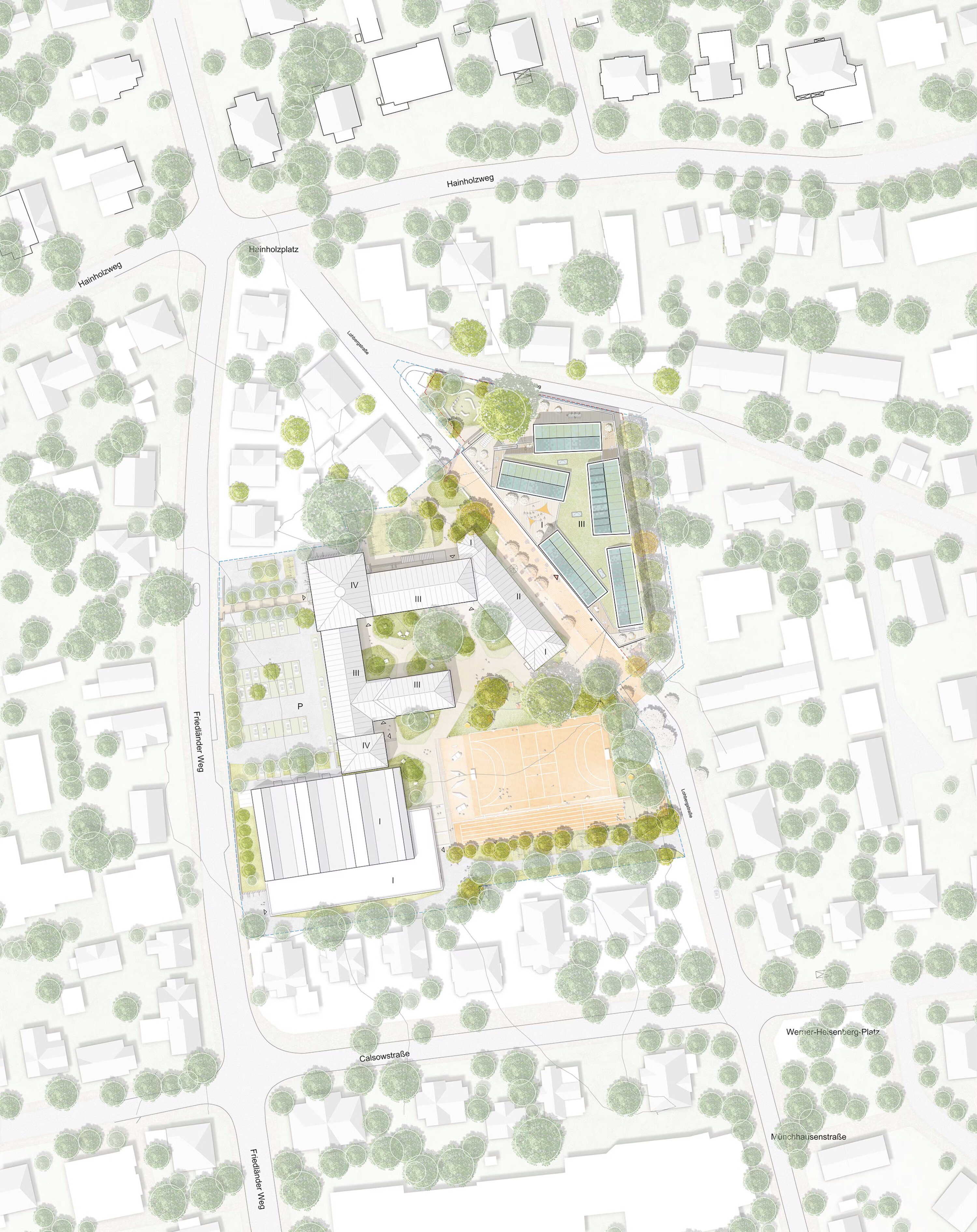
Site Plan
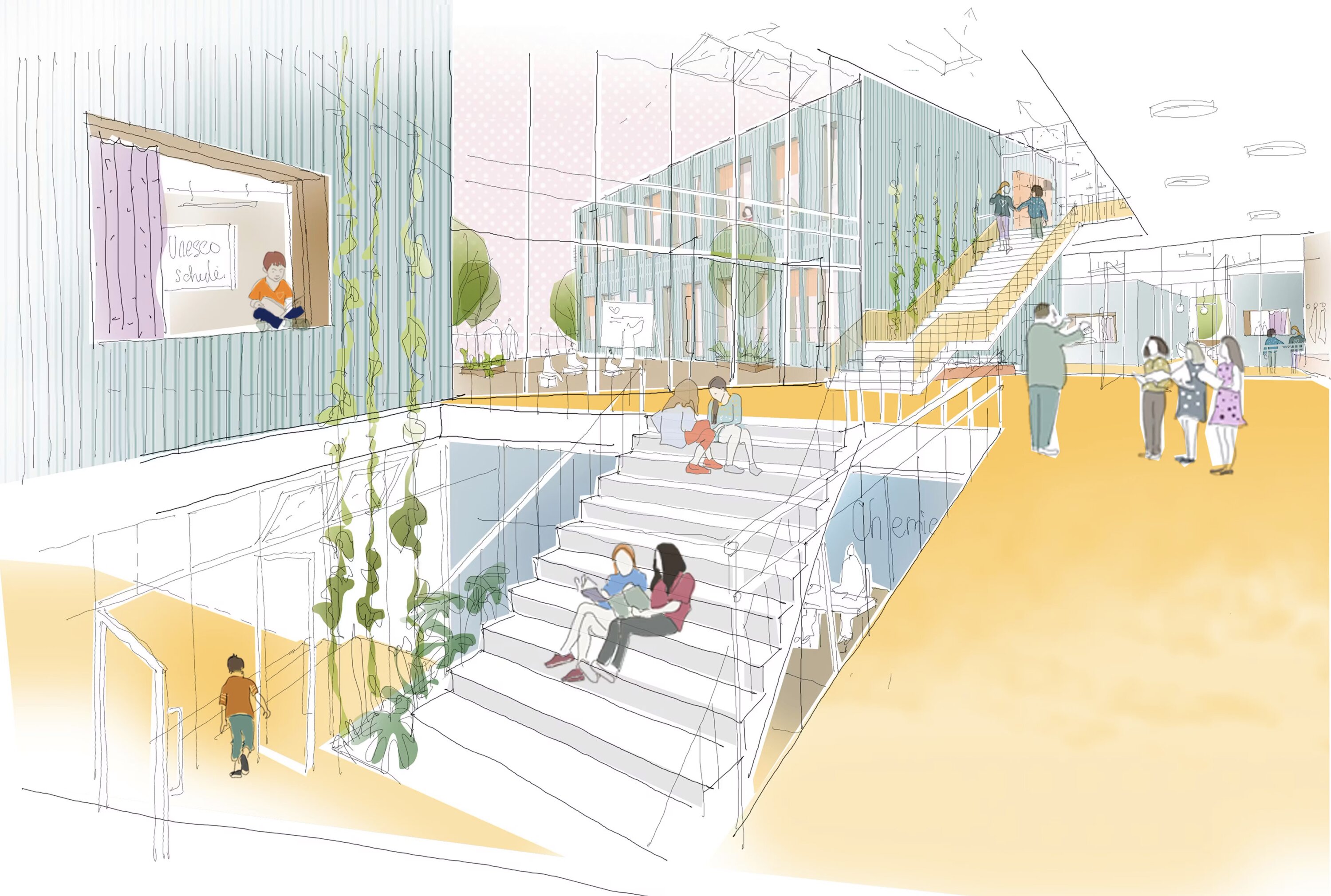
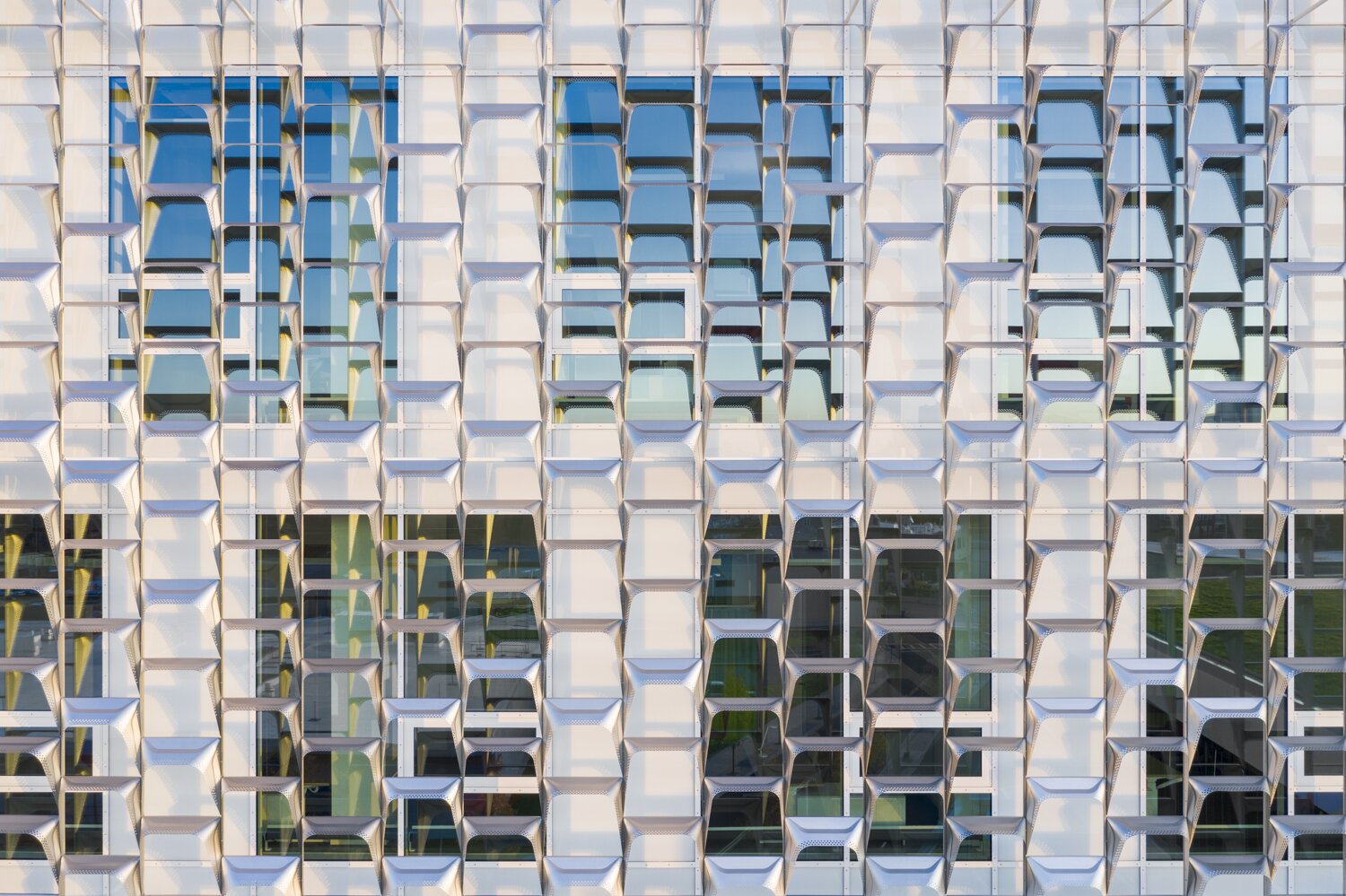
The building is designed as a timber hybrid structure consisting of a robust plinth and two upper storeys. Large classroom spans are achieved using prefabricated cross-laminated timber hollow-core or ribbed slabs, integrating acoustic mass and vibration control within the structural depth. Cross-laminated timber walls form the primary load-bearing system. Due to the offset structural grid of the upper floors, wall-type beams supported by integrated glulam columns are employed, ensuring structural efficiency without compromising spatial quality. Fire safety is addressed through a redundant strategy combining sacrificial charring layers and protective linings. The roof is conceived as a glulam purlin structure with CLT decking for bracing. Prefabricated timber-frame façade elements enable high energy performance, fast construction, and a consistent architectural expression. The interior material palette emphasizes ecological materials such as timber, clay, natural stone, and linoleum, contributing to a healthy indoor climate.
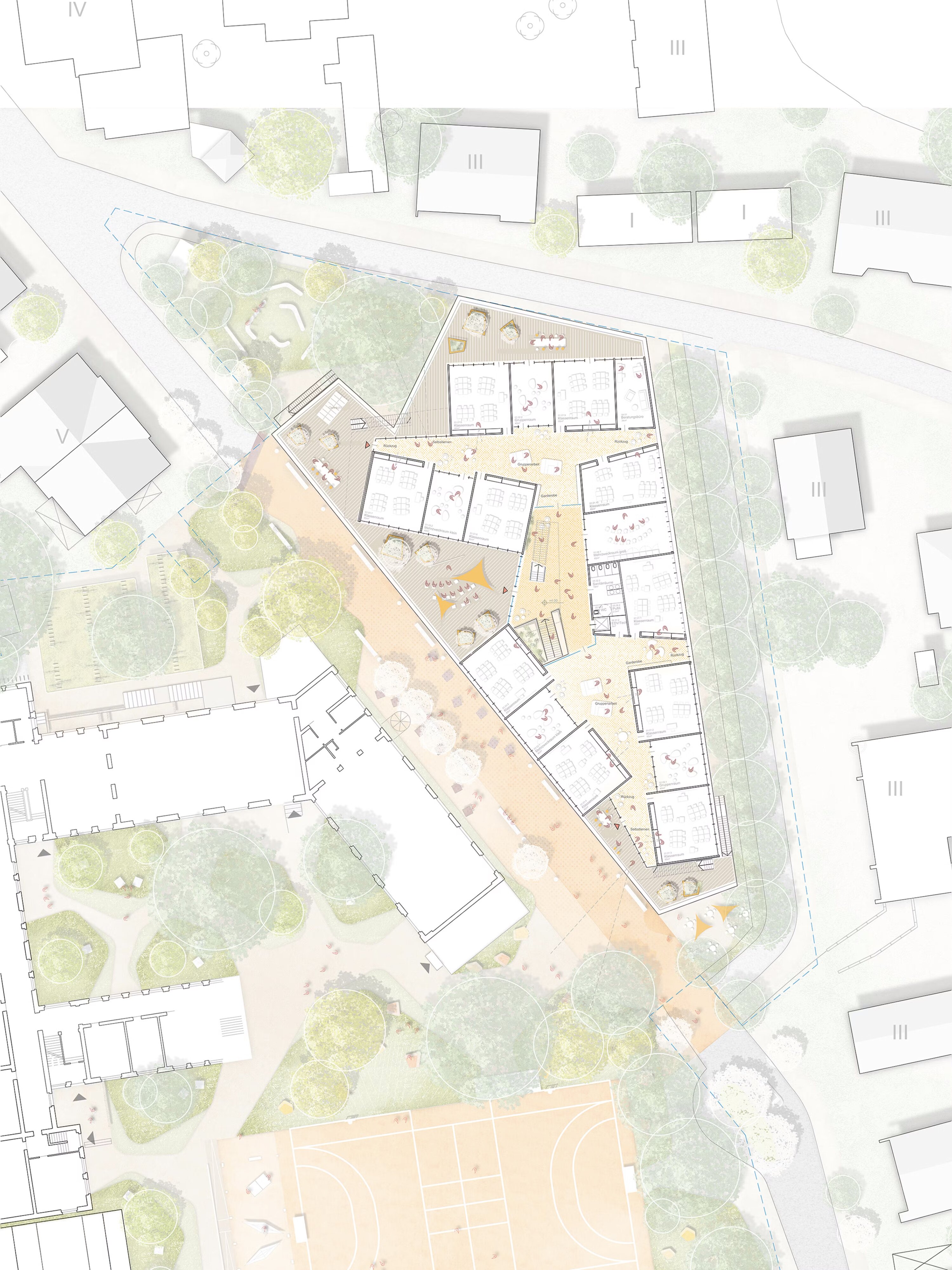
Level 1
The energy concept aims to minimize operational energy demand while ensuring a high level of thermal comfort through an integrated combination of architectural and technical measures. A high-performance building envelope in line with Passive House standards significantly reduces heating and ventilation requirements. Heating is provided by a ground-source heat pump, with the option of connecting to district heating if available. Electricity is generated on site via photovoltaic systems on the roof, supported by battery storage to increase energy autonomy. Indoor air quality is ensured through a hybrid ventilation strategy combining mechanical base ventilation with high heat recovery and natural cross- and night ventilation. This allows effective passive cooling during summer months and largely eliminates the need for active cooling. All spaces are individually controlled, enabling demand-driven and efficient operation.
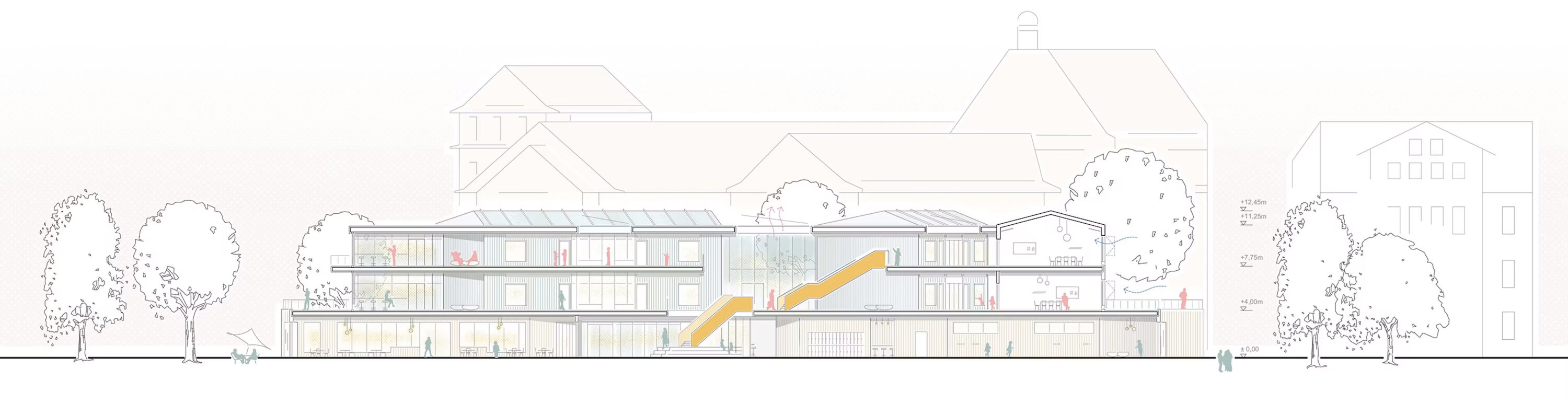
Section
- Architects
- Behnisch Architekturbüro
- Competition
2024, 3rd prize
- Downloads
-
Download PDF