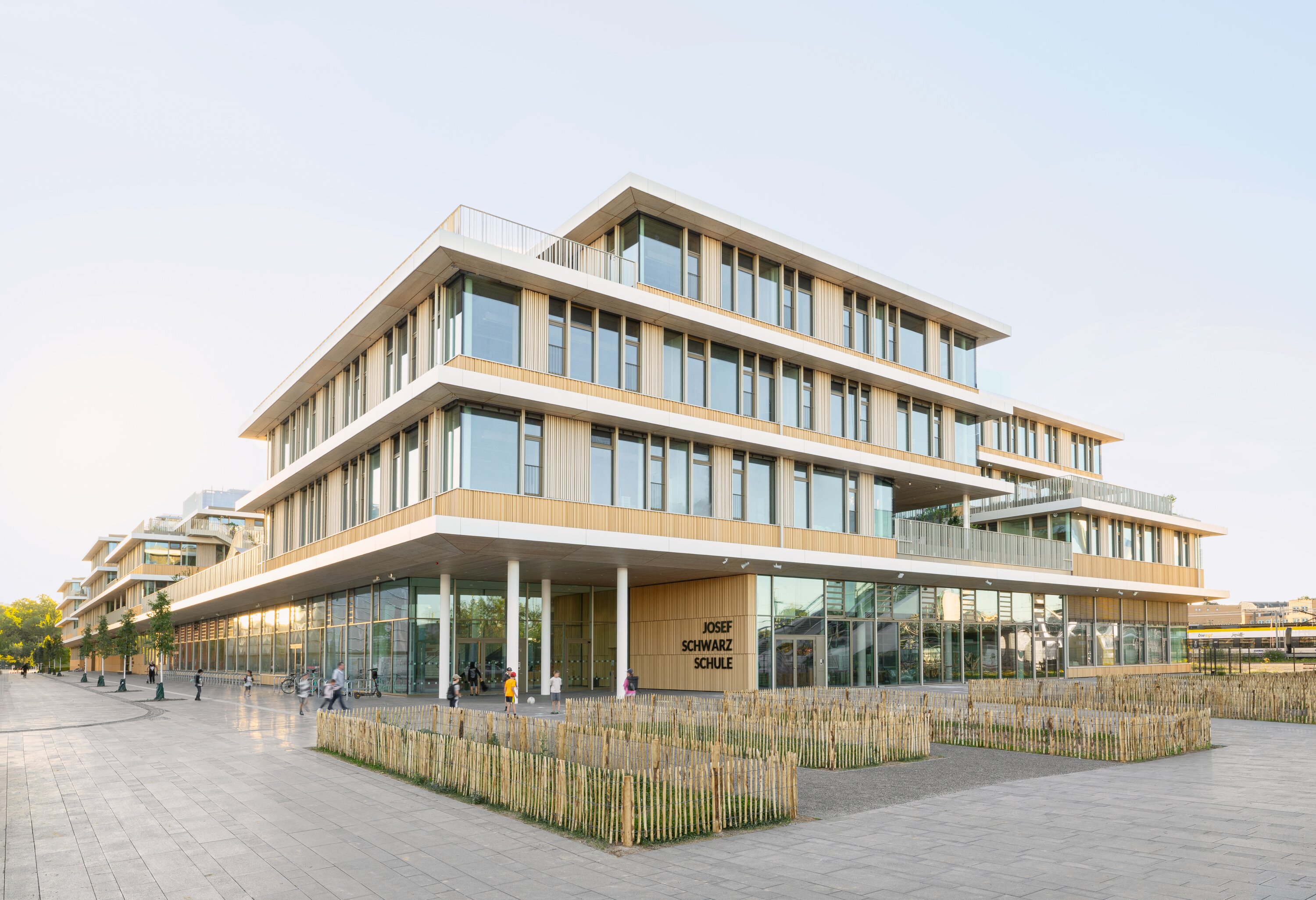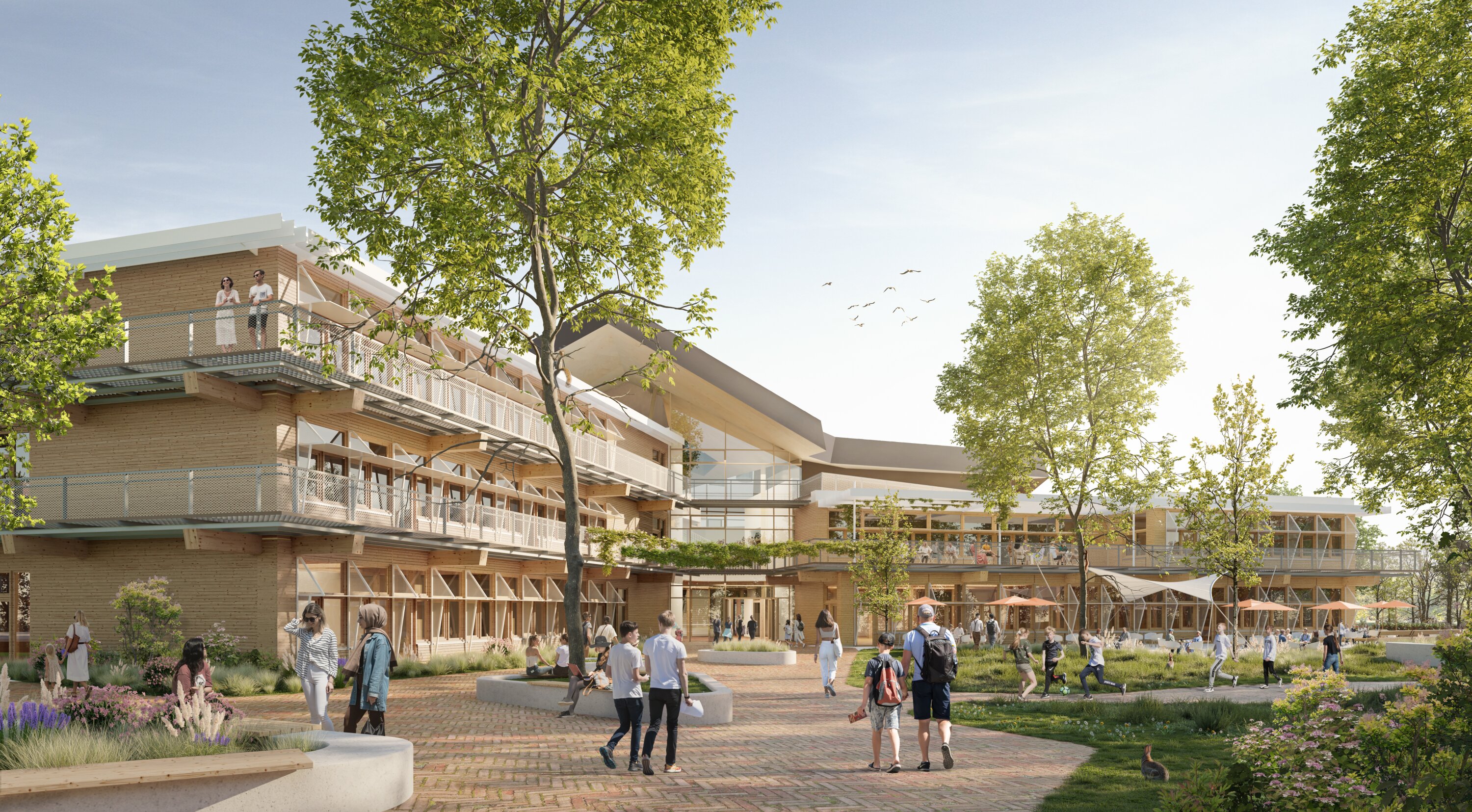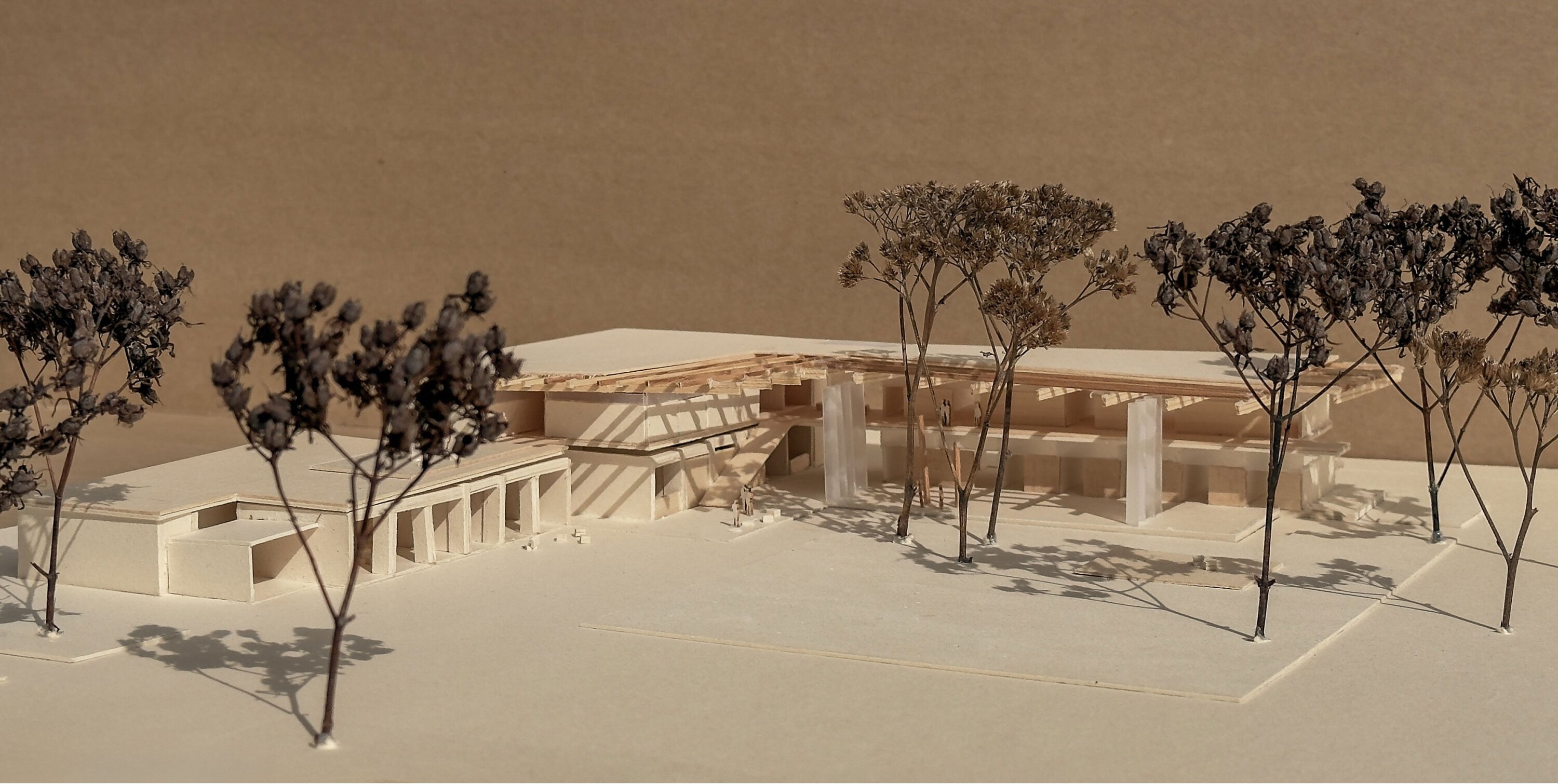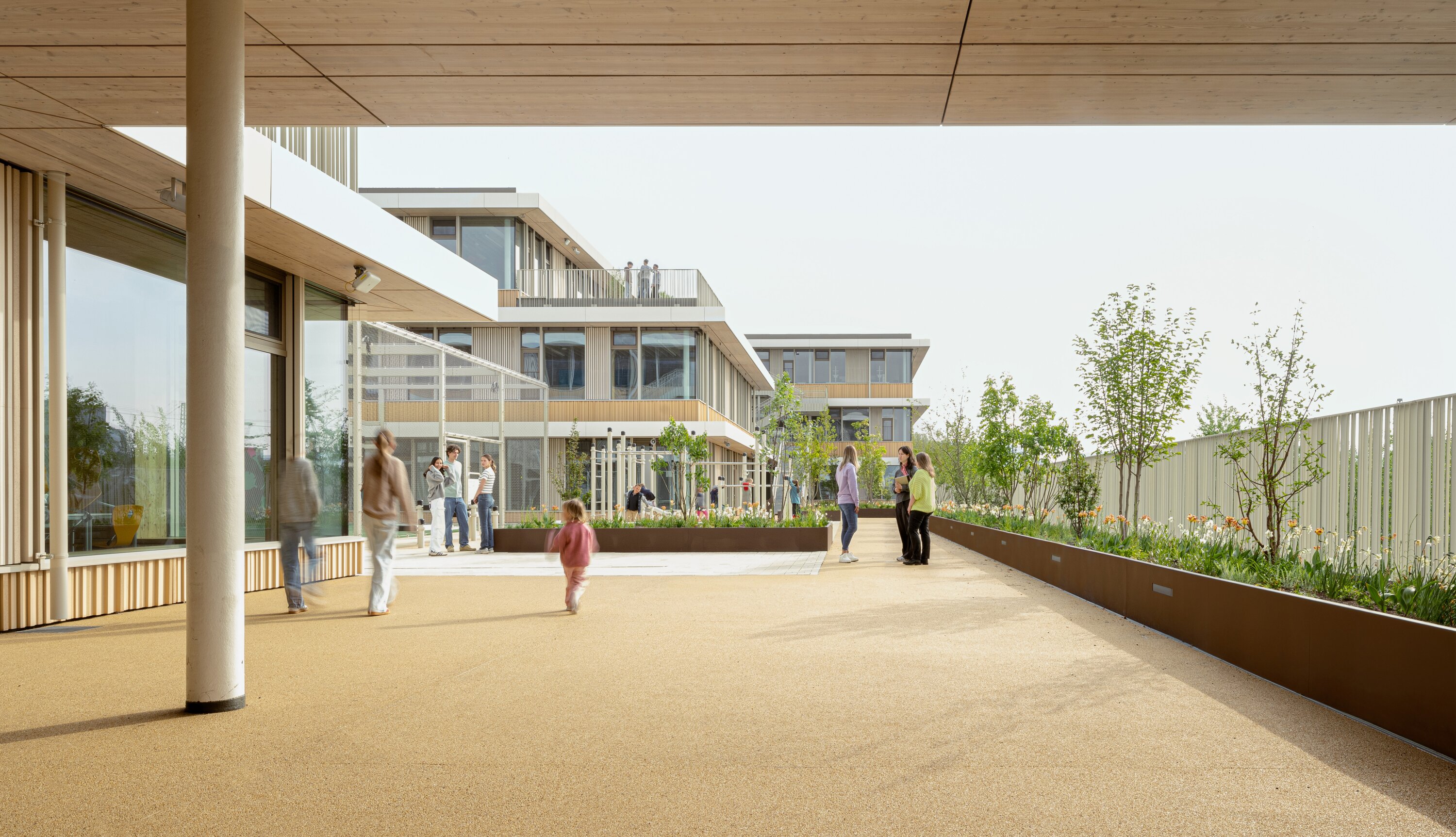
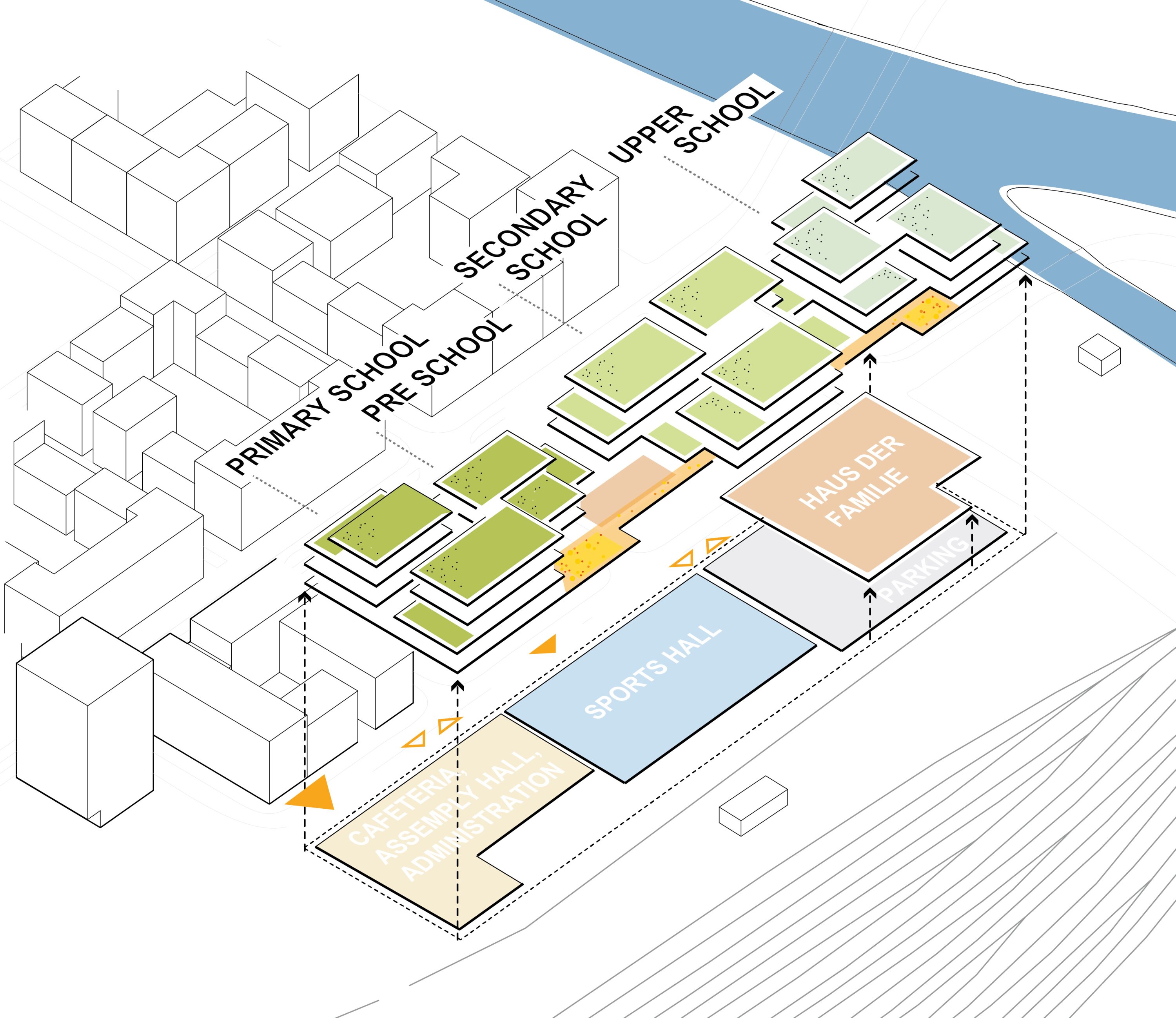
The building responds to nearby railway lines by establishing a continuous slab above the first floor that spans the footprint of the entire campus, forming a landscaped plateau that serves as an elevated schoolyard. As a protected yet open setting for daily school life, this level weaves together three rooftop pavilions, terraces, landscaped recreation areas, playgrounds, and sports facilities. Carefully placed openings, balconies, terraces, and patios ensure permeability and lend the architecture a distinct human scale.
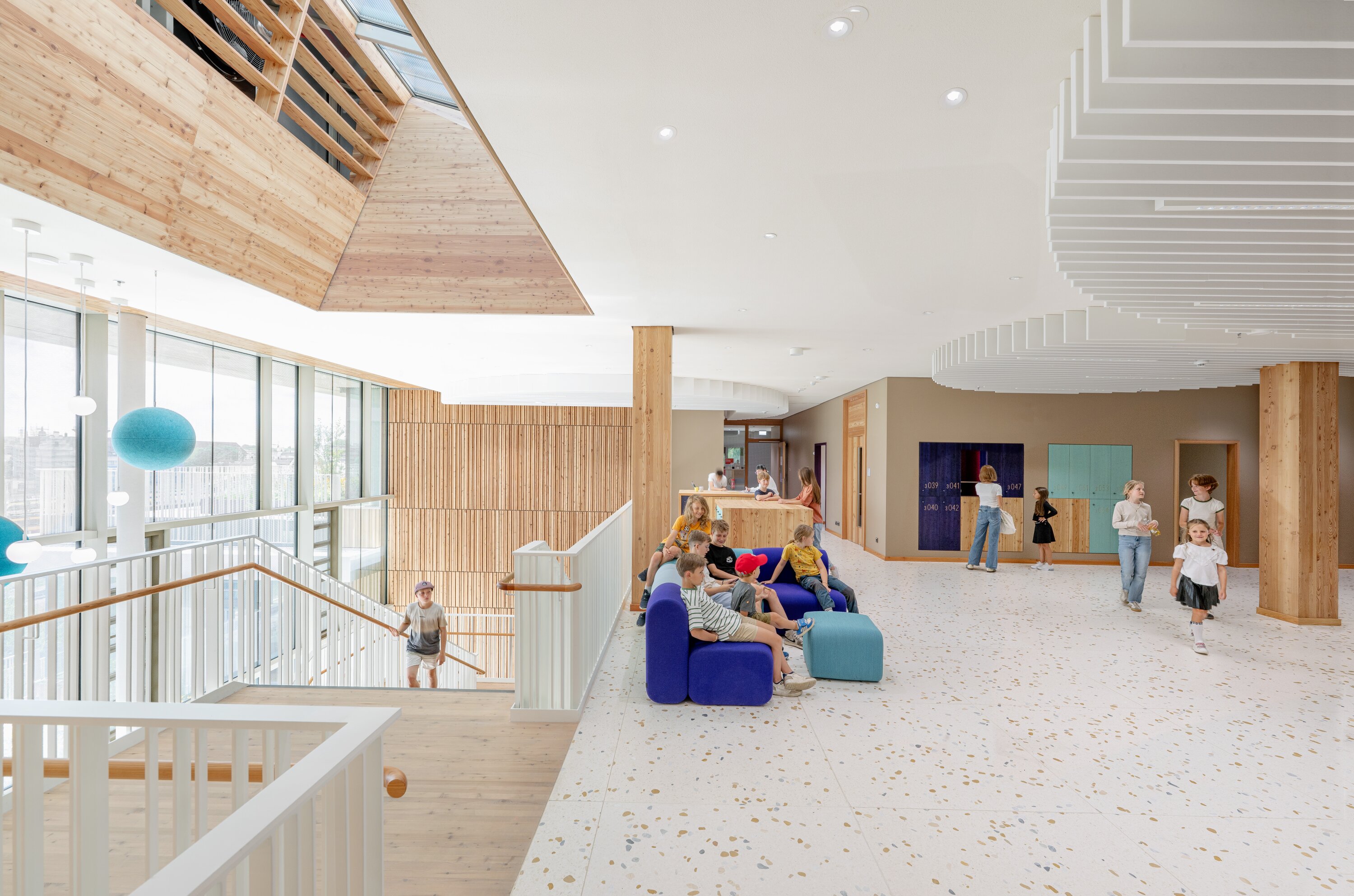
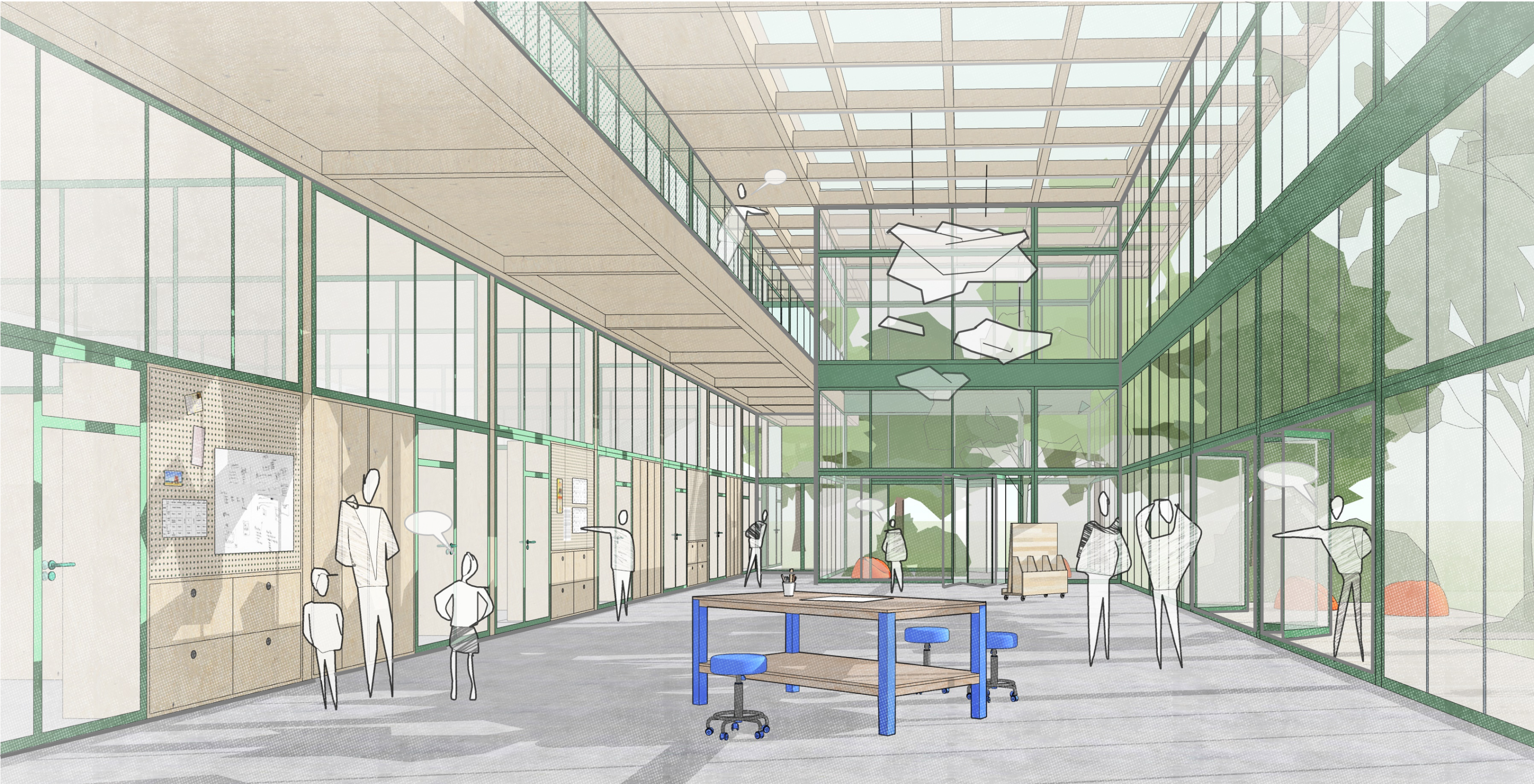
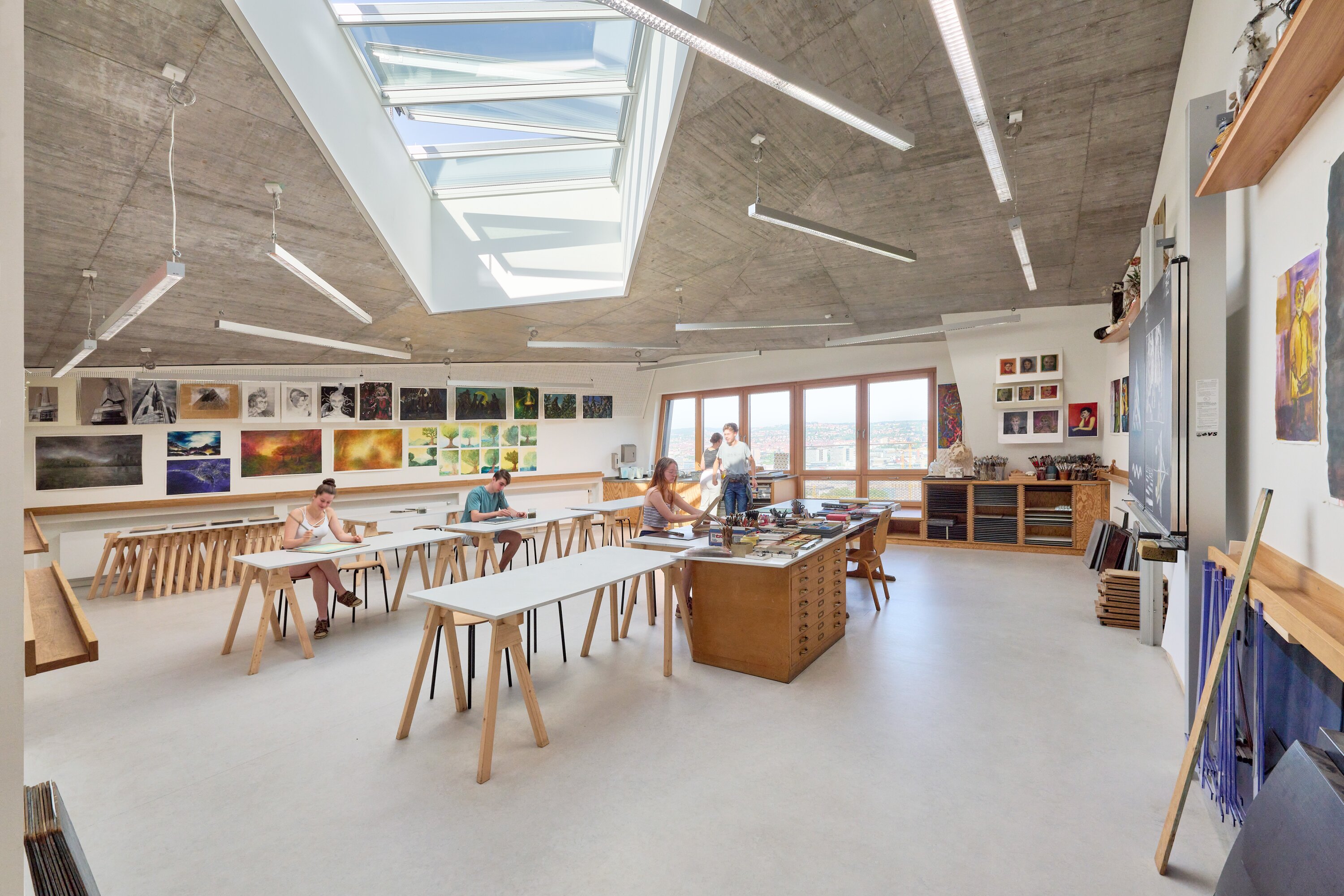
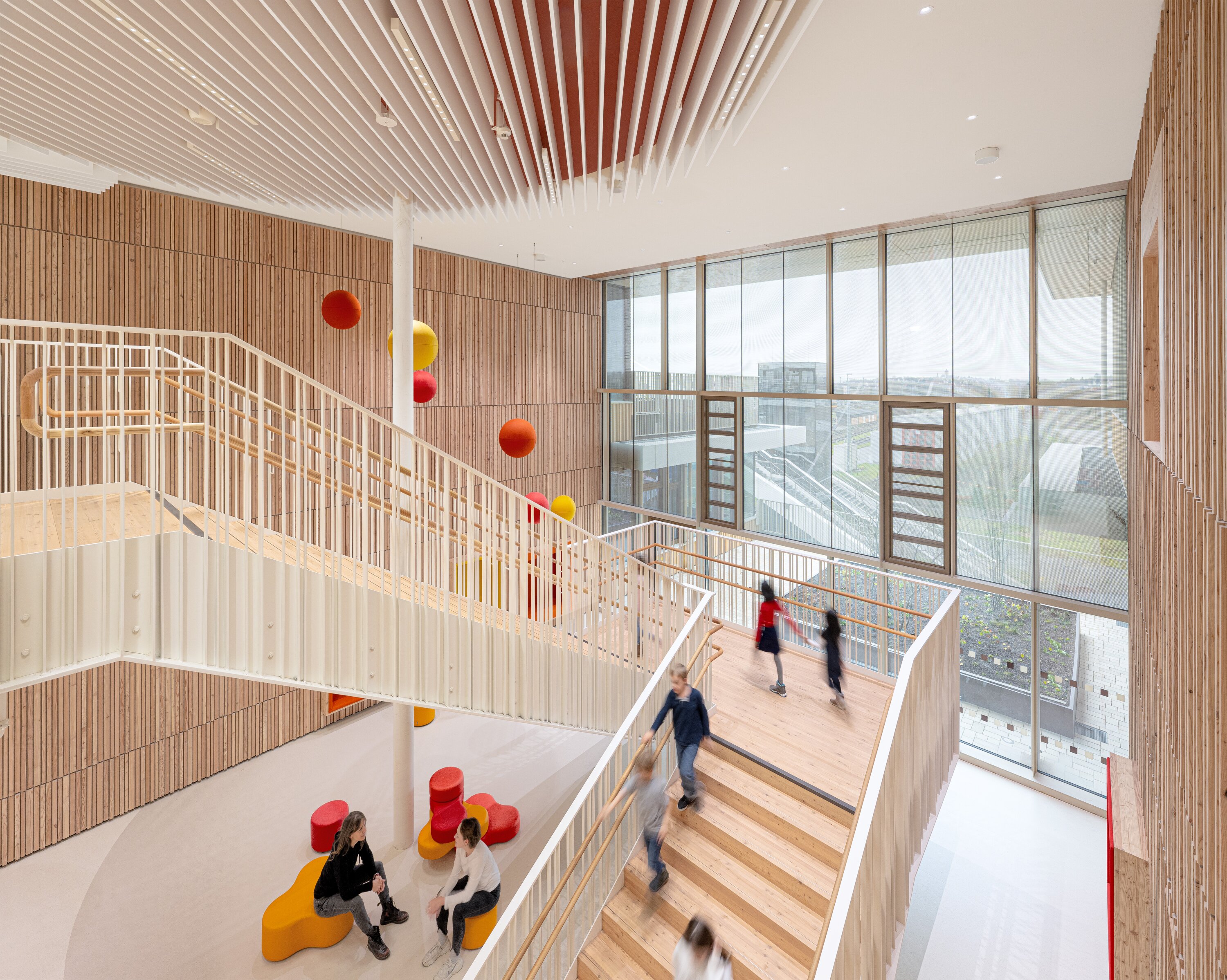
Each type of school has its own building with a distinct character: The primary school is organized into learning houses with differentiated spaces for each grade, while the secondary level features open learning studios that support collaborative and individual work; the upper school in turn is organized in specialized clusters that respond to curricular needs.
- Client
- Schwarz Immobilienmanagement GmbH & Co KG
- Architects
- Behnisch Architekturbüro
- Address
Erich-Mendelsohn-Straße 1
74076 Heilbronn
Germany- Gross Area
54.825,00 qm / 590.101,74 sq.ft
- Gross Volume
279.711 cbm / 9.875.525,76 cu.ft
- Competition
2019
- Certification
DGNB Platin + Diamond
- Photography
David Matthiessen
- Downloads
-
Download PDF
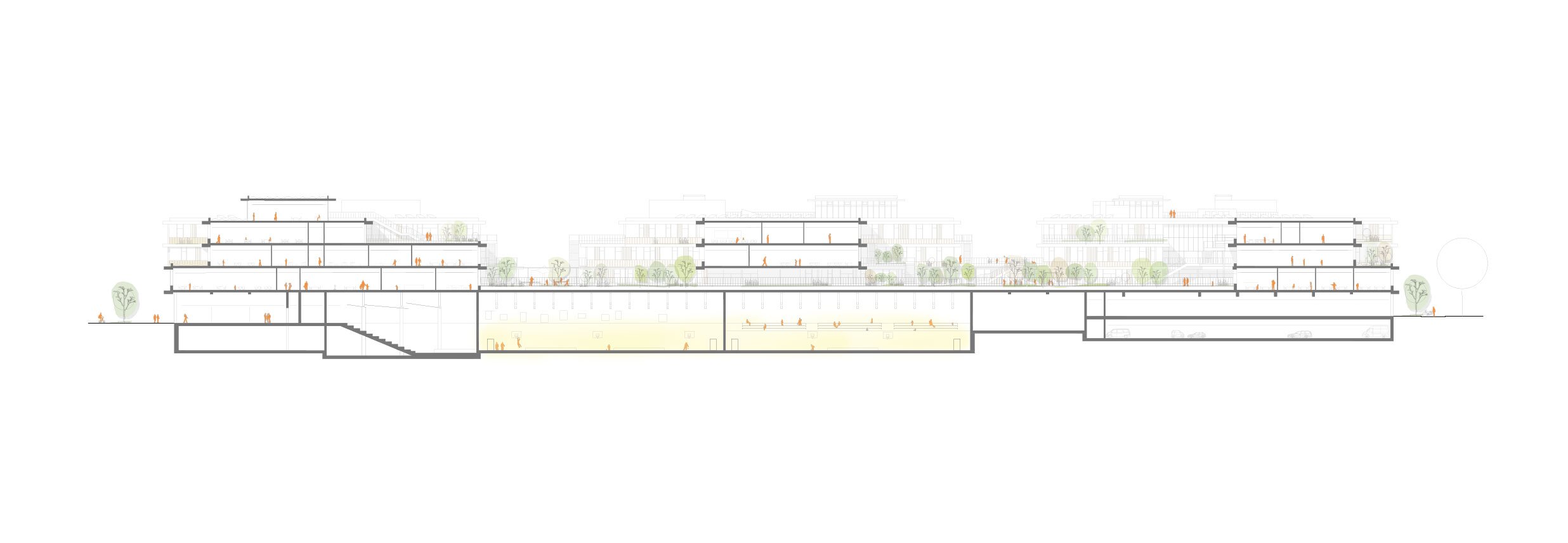
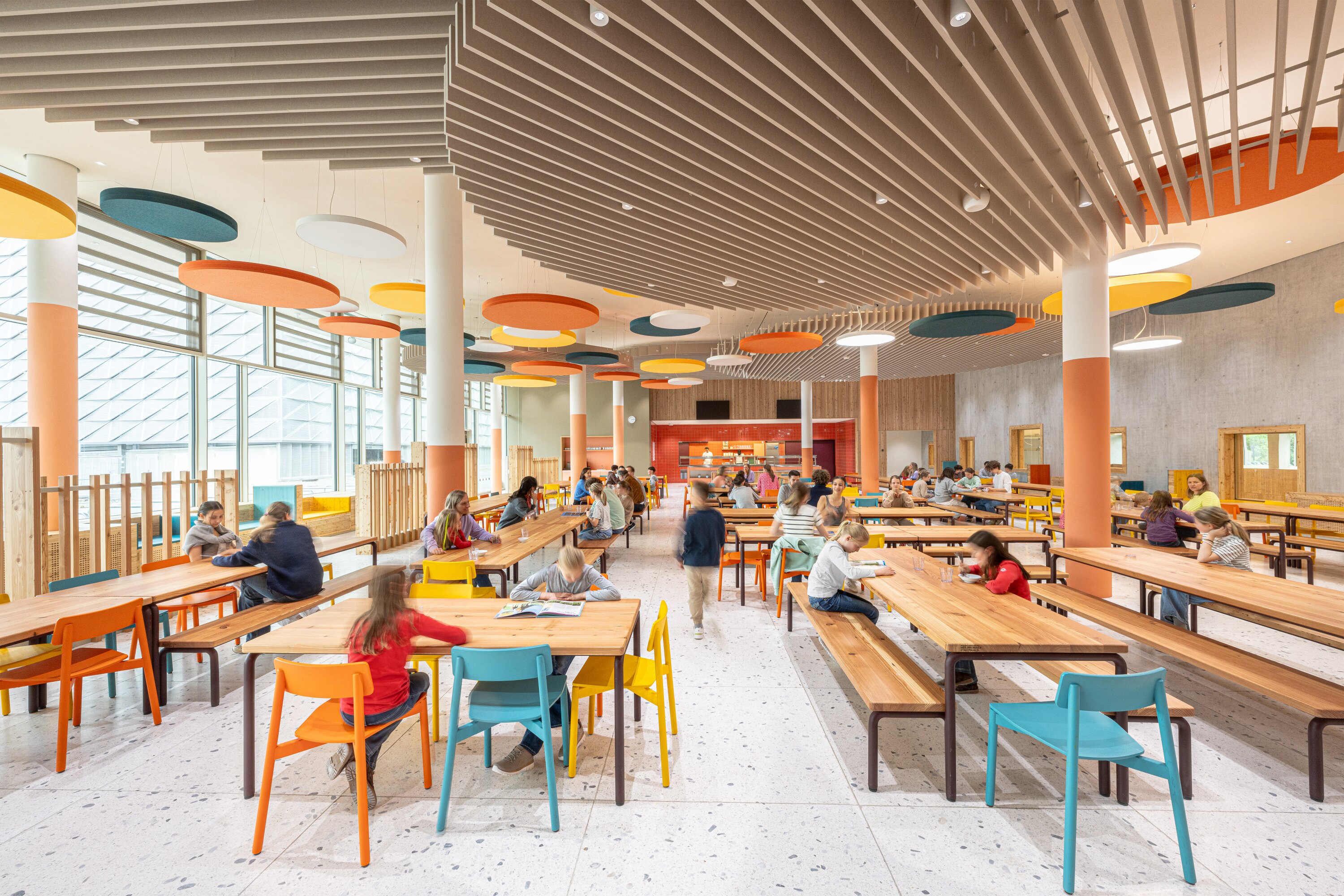
Shared functions—the auditorium, cafeteria, and foyer—are located on the ground floor, forming the social heart of the campus where students, teachers, and visitors meet. Complementing the educational buildings, the Haus der Familie serves as an important interface between the school and its neighborhood, offering spaces for dialogue, collaboration, and shared activities.
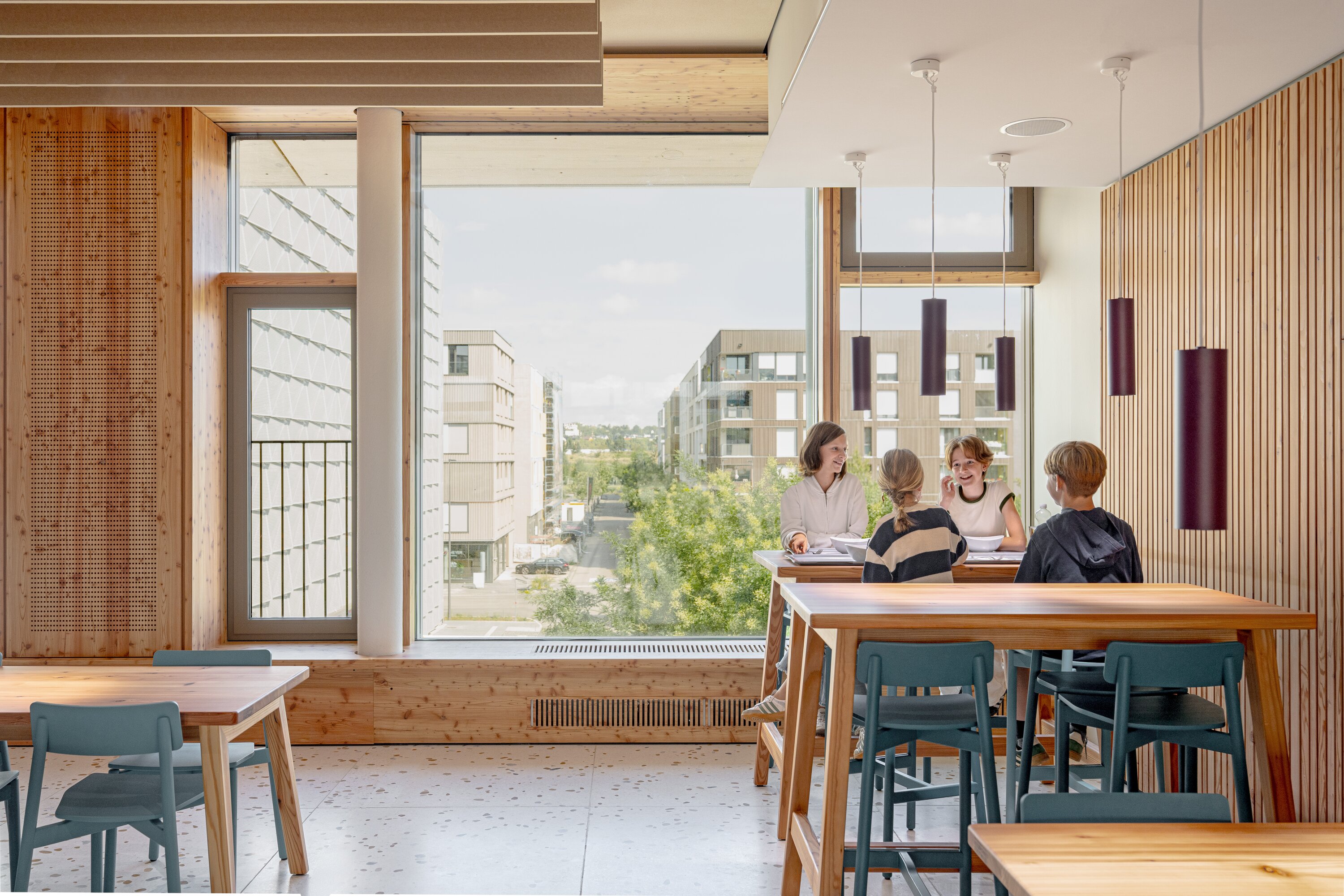
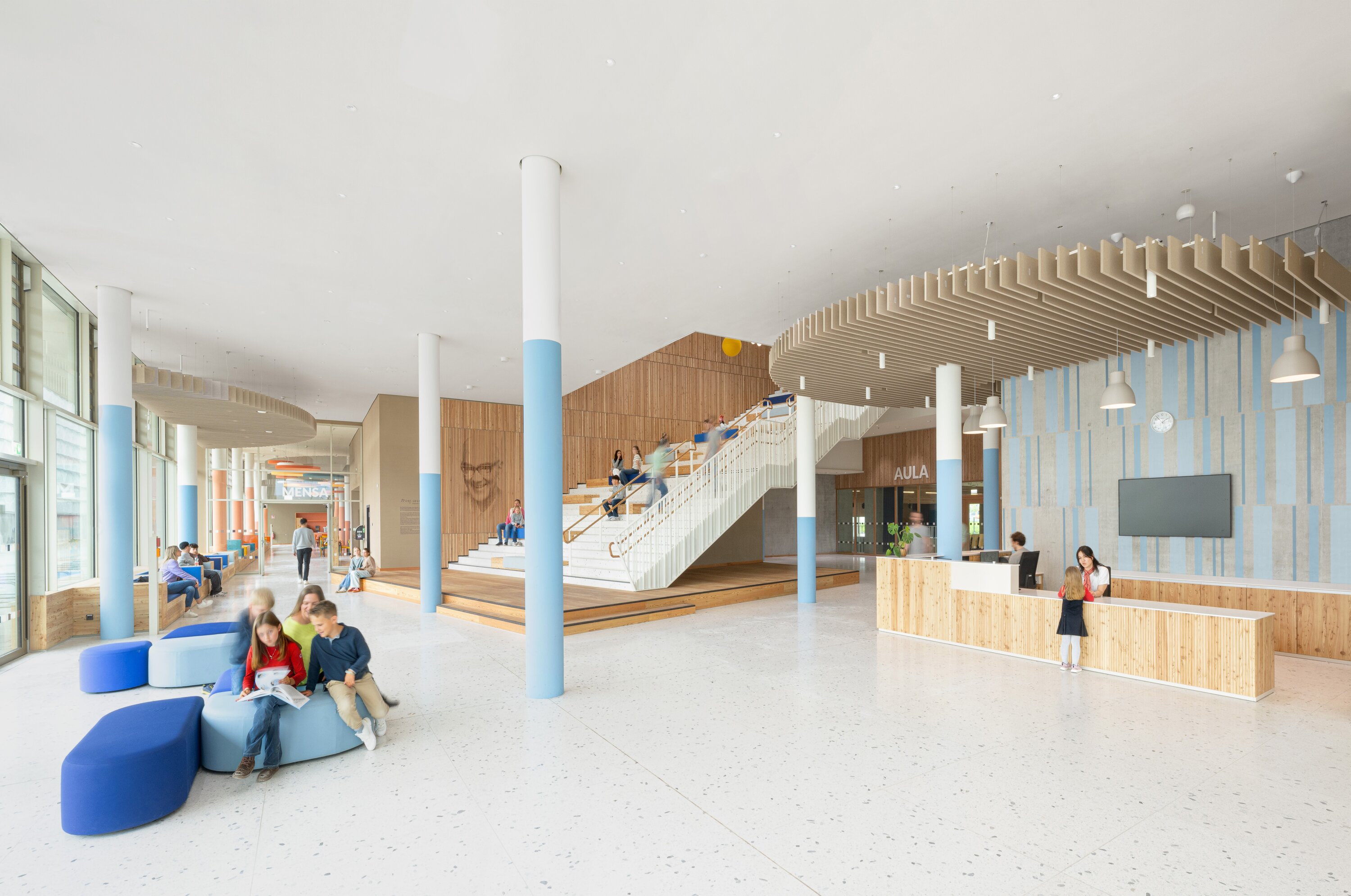
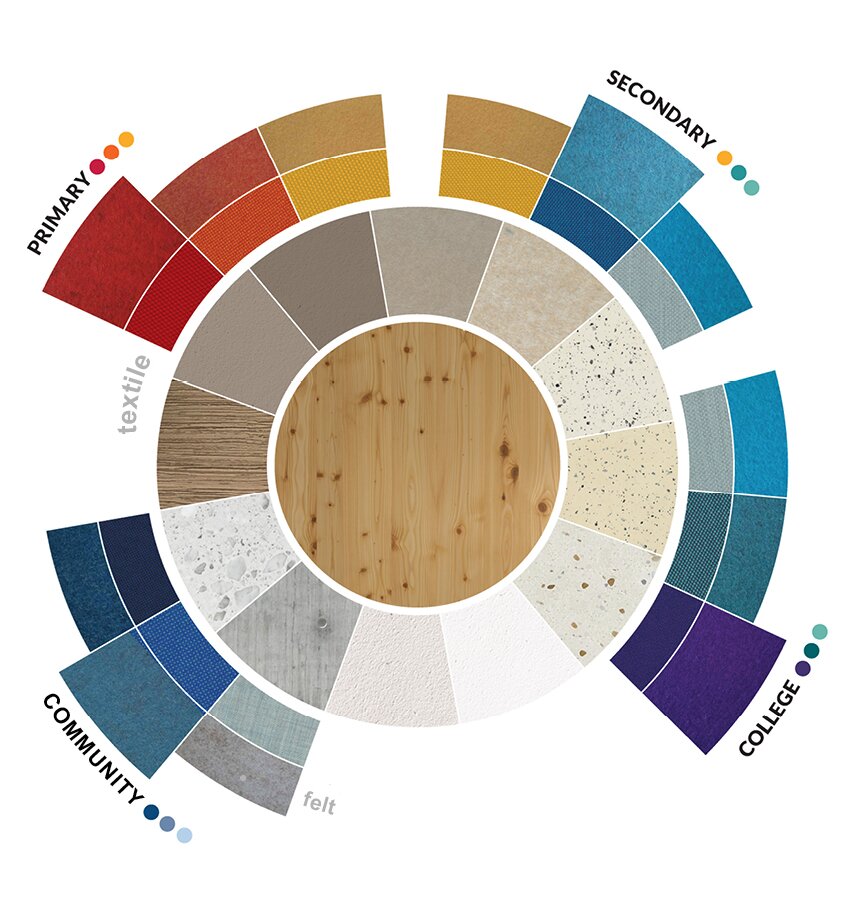
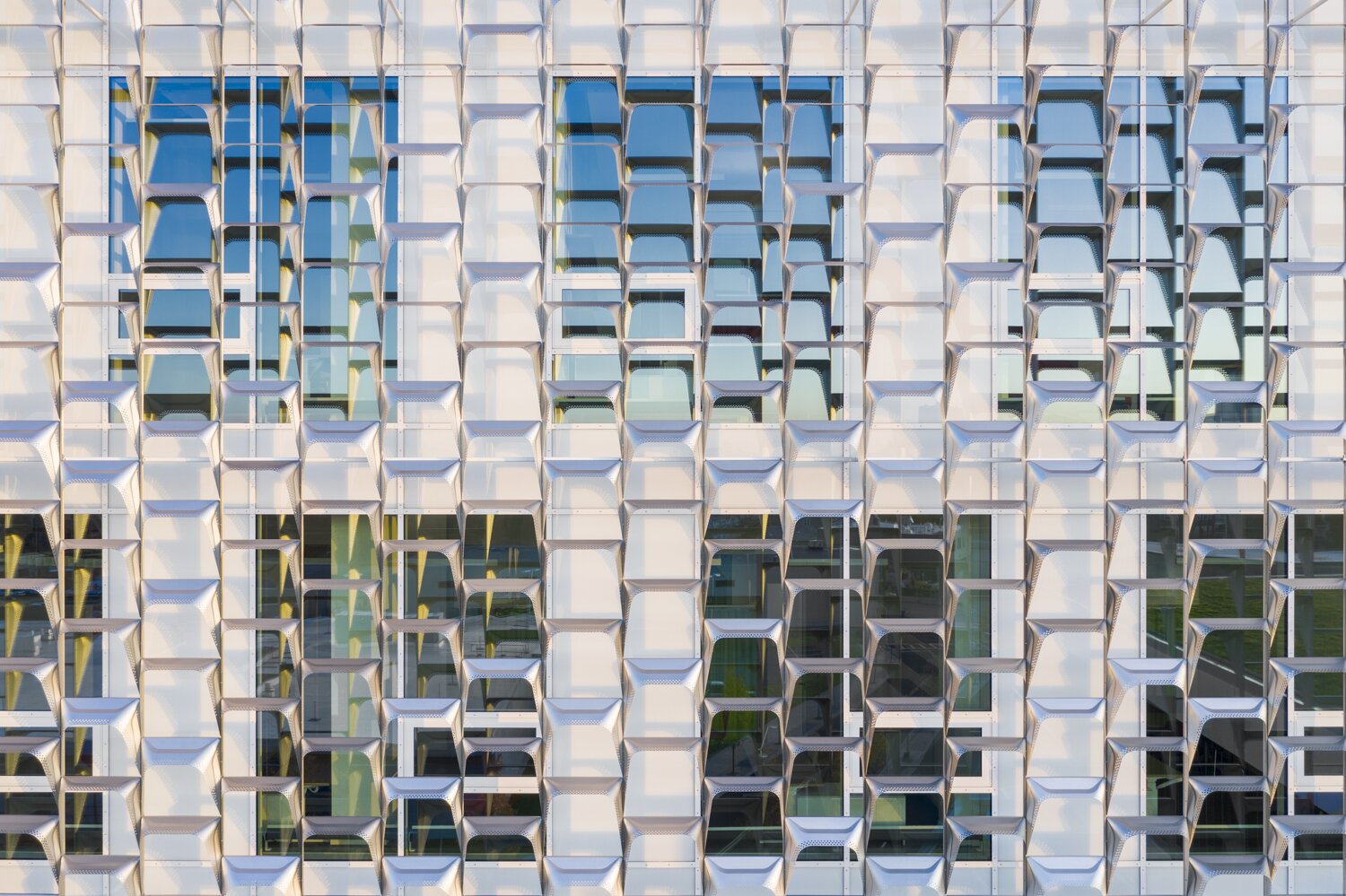
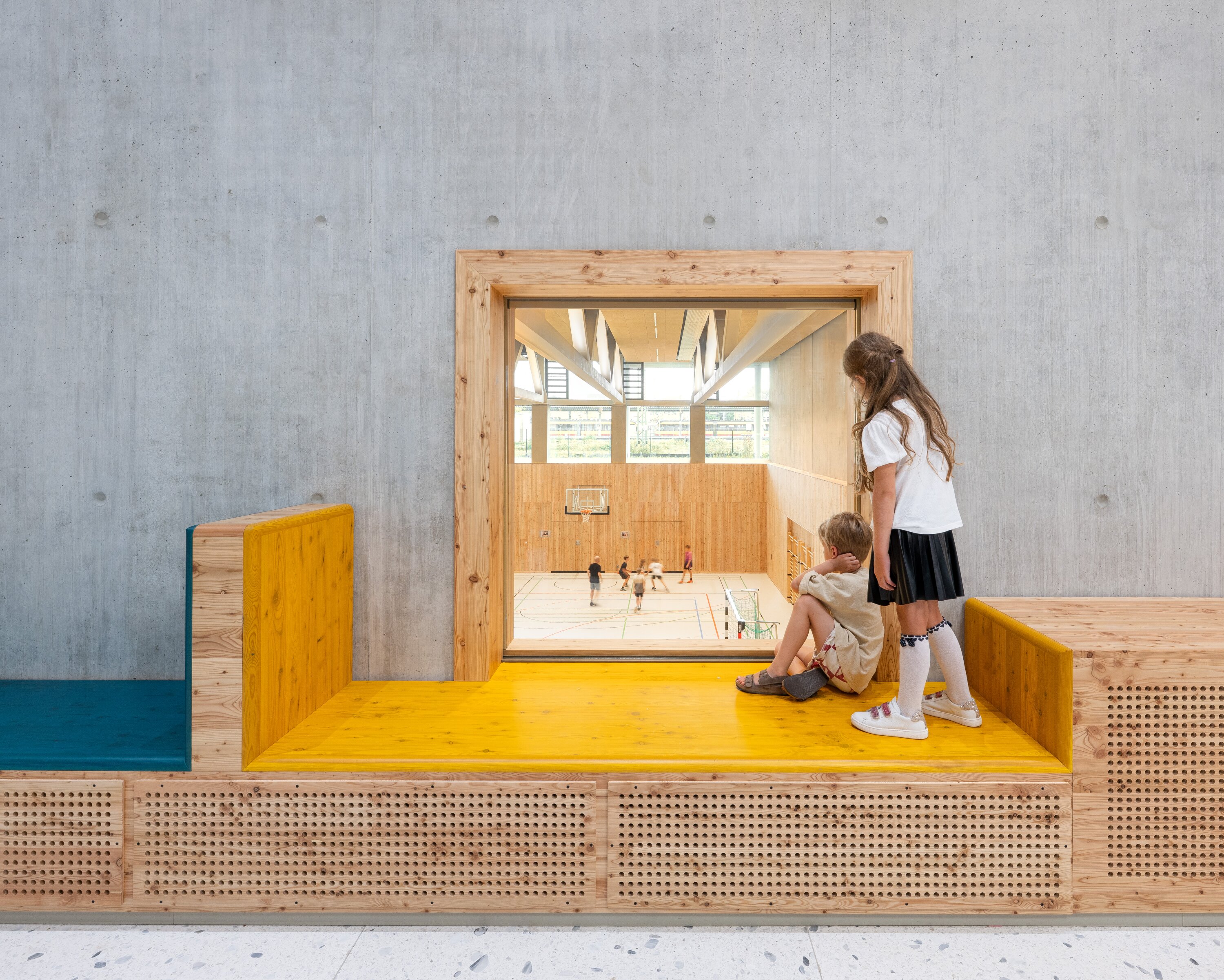
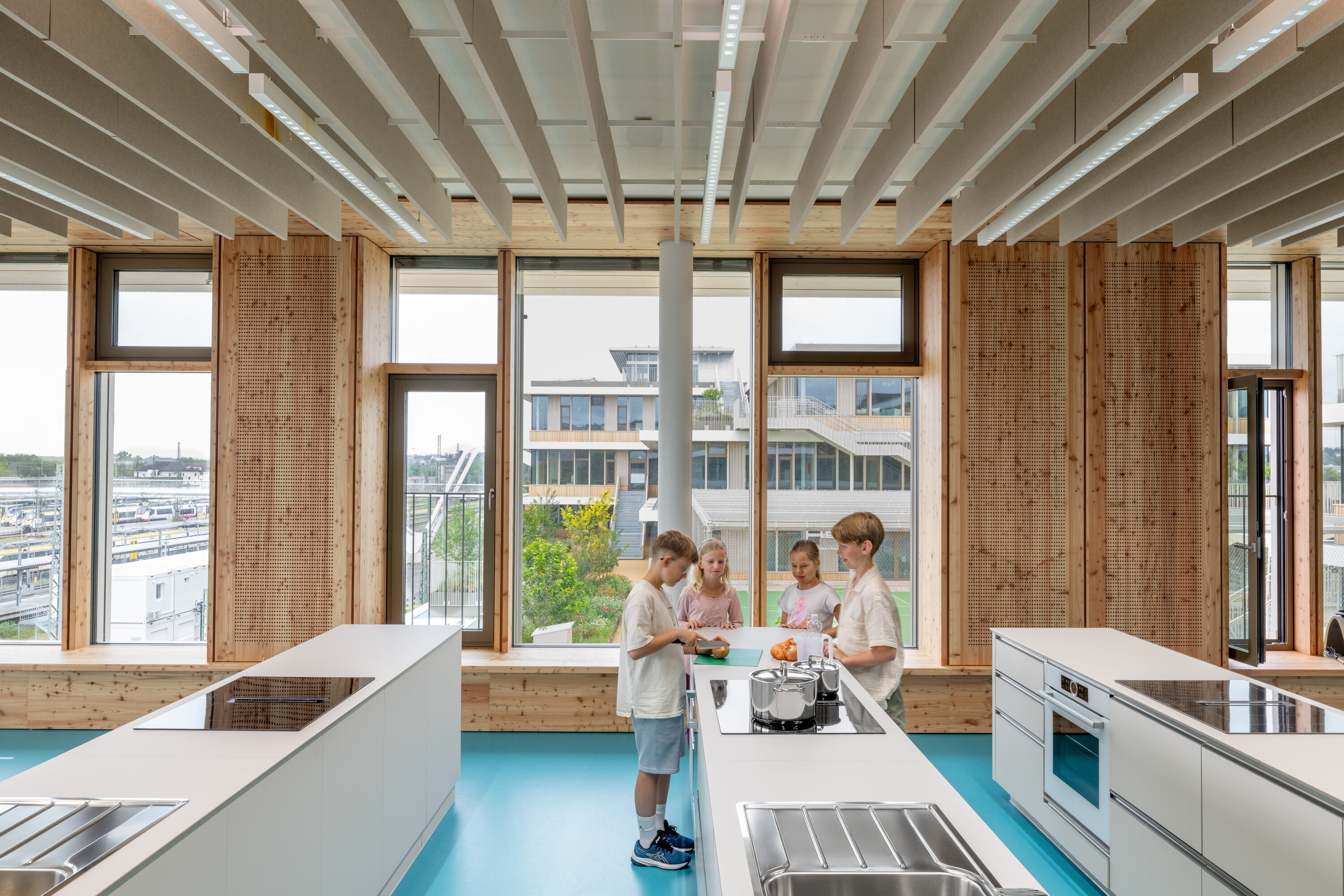
The materials originate predominantly from Central European production and are largely recyclable: larch wood, clay, ceramics, rubber, and precast concrete define both the interior and exterior appearance, imparting a calm, robust character. The school employs a timber-hybrid construction. Wood creates a warm and tactile atmosphere, enhances indoor comfort, and contributes to the building’s energy efficiency through its natural insulating properties and ability to store carbon.
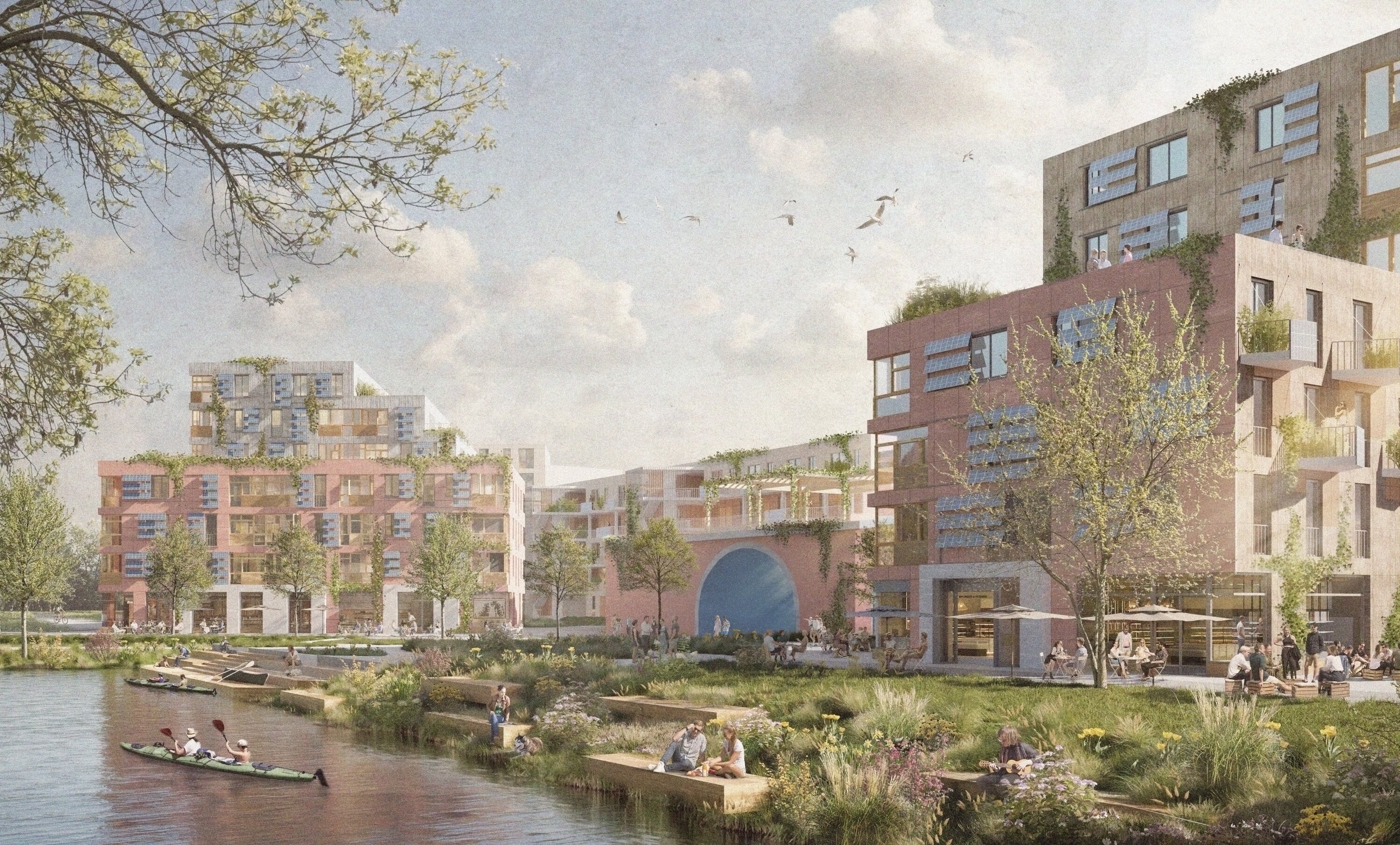
A clay-based radiant ceiling for heating and cooling further supports thermal comfort. Instead of relying on complex mechanical systems, the concept emphasizes natural ventilation and the intelligent use of thermal mass. Energy is supplied via geothermal systems and photovoltaic panels.
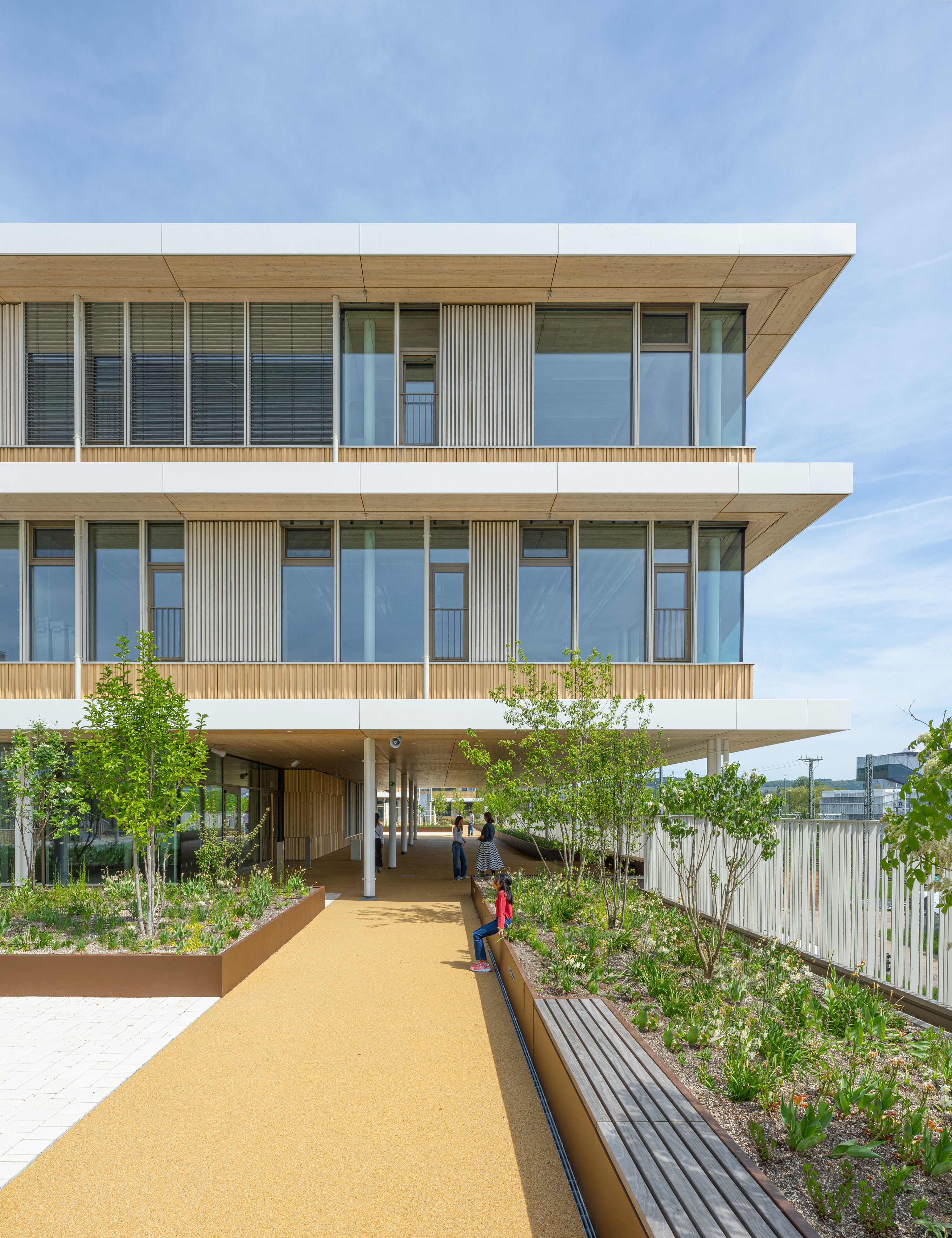
The school balances spaces for focus and retreat with areas for exchange, movement, and collective learning, creating a campus that functions as a small town within the city—bringing together learning, community, and sustainability in a straightforward architectural form.