How a circular design approach can make our buildings better for the environment and its inhabitants
Task
Propose an approach to tackling carbon emissions in today’s building industry that goes beyond enhancing operational energy performance.
Finite resources, climate change and high carbon emissions are the main challenges facing the contemporary building industry. As a result, the industry tends to design energy efficient buildings through the implementation of technical systems and highly insulated building envelopes. Such buildings are efficient in operation, but intense in grey emissions and material consumption. To increase energy efficiency, the standards for technical equipment and building envelopes were continuously raised, leading to a significant increase of new building material used in construction and renovation.
A look at the 55,4% of construction and demolition waste in Germany 2020 shows that this cannot be the only strategy to make the building sector carbon neutral.
Objective
Researching and implementing design strategies that help make the building sector carbon neutral.
A holistic approach for the future of building must consider not only the operational energy, but also the embodied energy over the whole lifespan of our buildings and beyond. The building industry has to rethink its approach to sustainability and develop circular construction strategies that address both the pre-use and post-use potential of materials.
Circular Design Methods
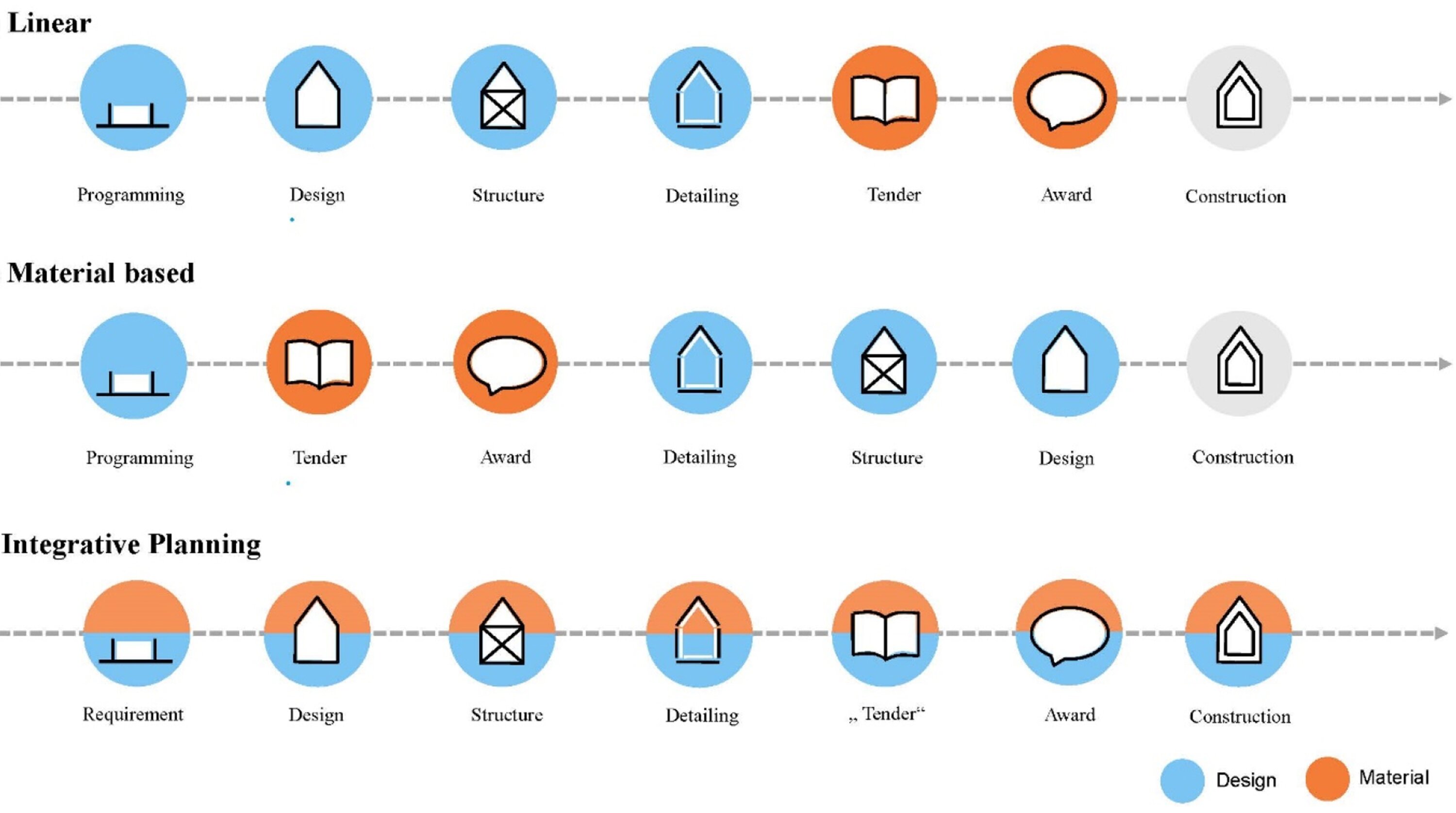
In contrast to the traditional linear design process—where a building’s form, orientation, function, and appearance are defined before materials are selected, produced, and delivered—an alternative approach begins with harvesting components from existing sources. These materials, obtained from professional reuse suppliers or deconstructed host buildings, form the basis for a design generated through their reassembly.
Dealing with the availability and existing properties of materials and their possible places of implementation must be considered right from the start. Therefore, the design process needs to be transformed from a linear into an interlaced, holistic process.
Reduce, Reuse, Recycle, Renewables, Repair, Super-Use!
Reduce: Only build what you really need! Reuse: Same object, new life! Recycle: Old material becomes new material! Renewables: Use renewable resources! Repair: Design with life-cycle in mind! Super-Use: Design with flexibility in mind!
Circular Material Parameters
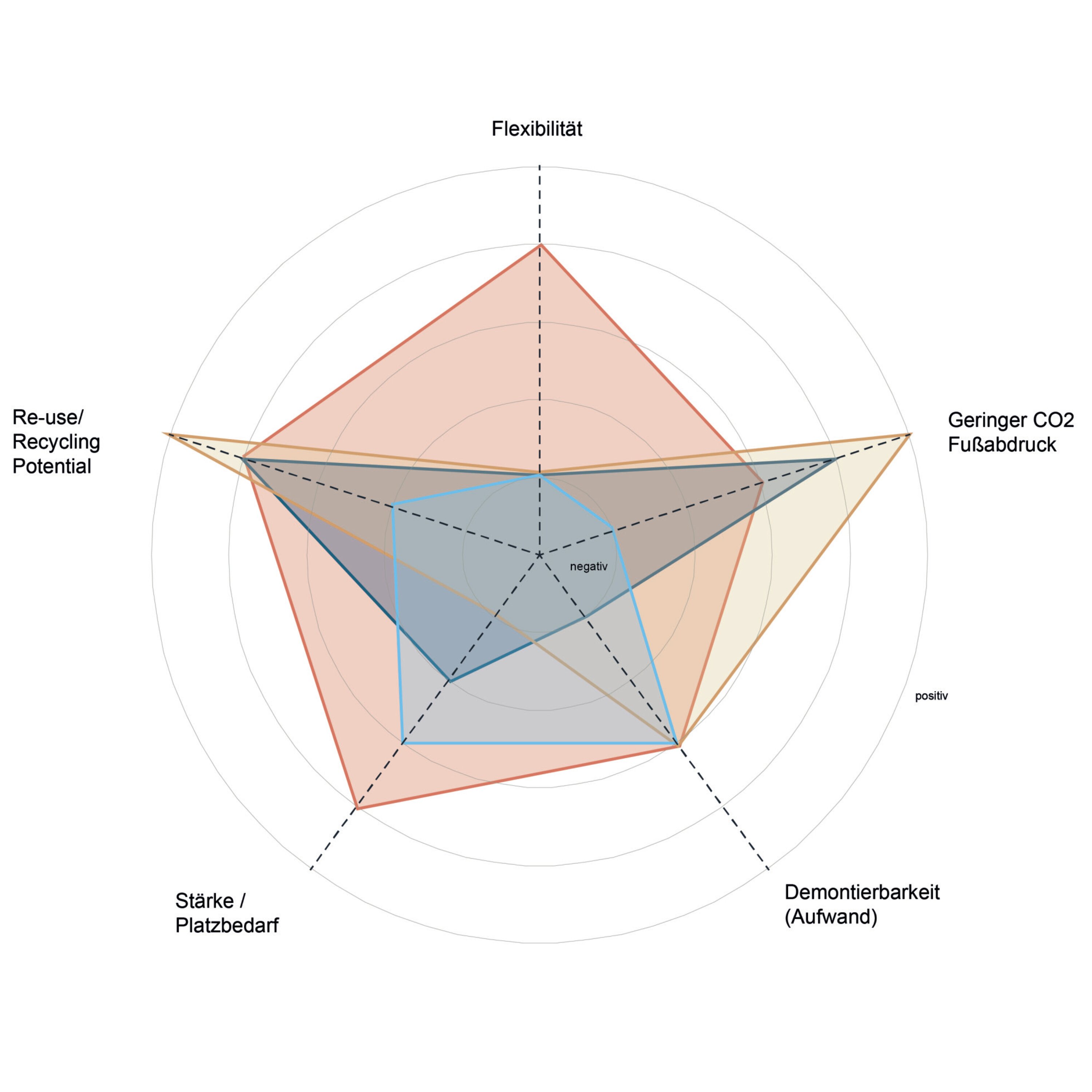
Concerning the carbon footprint, the buildings’ primary structure, the ceiling and the facade elements have a major influence, as they represent a significant portion of the building mass. Therefore, early design decisions on these elements have an irreparable impact on the buildings’ carbon footprint.
In addition to the material’s inherent global warming potential (GWP), numerous parameters must be aligned to create a structure with the lowest possible emissions and the greatest recyclability throughout its pre- and post-use phases.
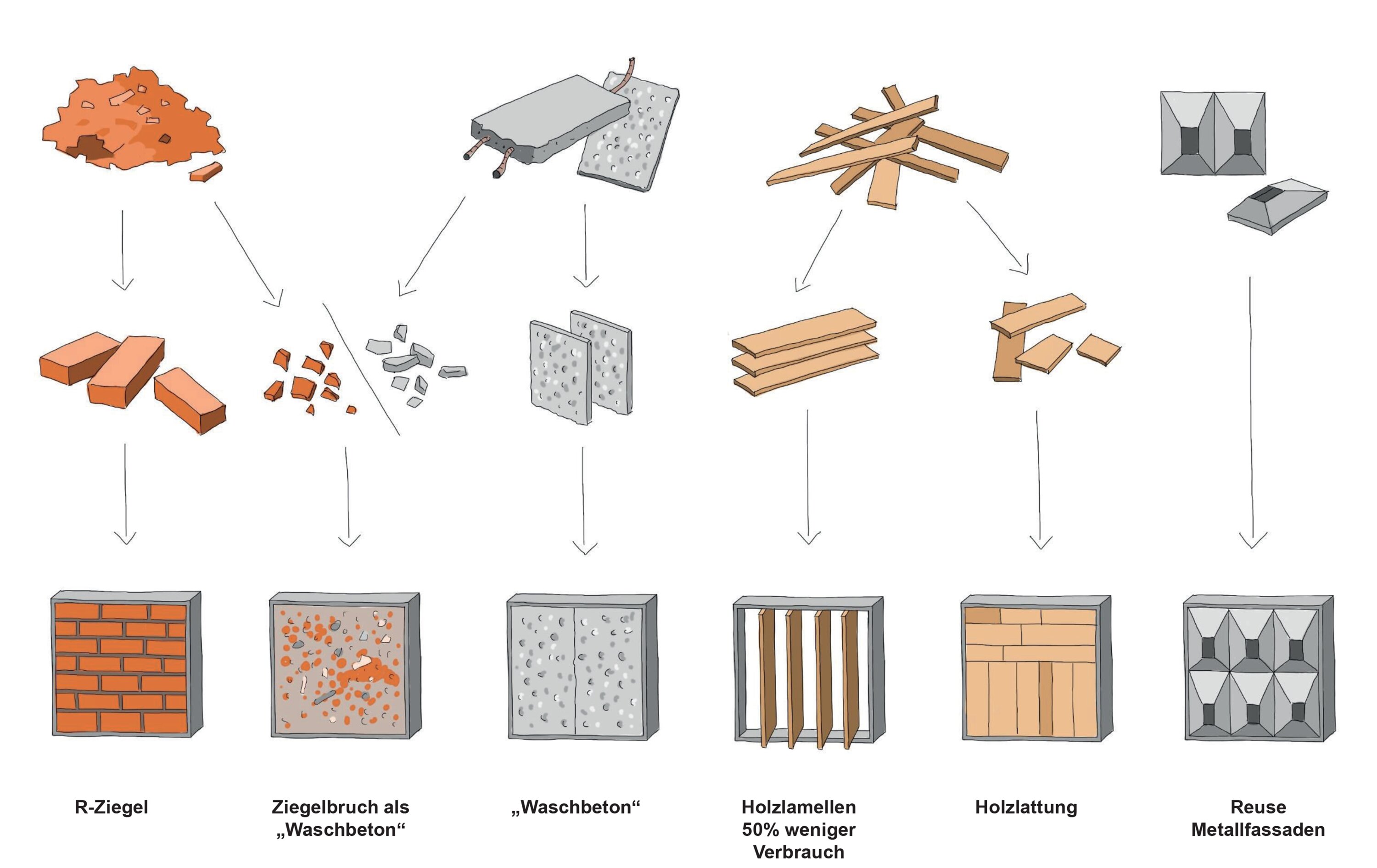
Reuse: Efficient in primary resource consumption and carbon footprint, the implementation of reused construction elements can be an interesting option due to the missing production process. Only transport distances and de- and reconstruction influence the GWP.
Recycle: Dealing with recycled (RC) construction components, particular focus needs to be set on the GWP of the recycling process. For example, replacing “traditional” concrete with a recycled-concrete (RC) mix reduces primary resource use, such as gravel, but can increase carbon emissions.
Renewable: Wood, for instance, is a renewable alternative, but its carbon benefits depend heavily on fabrication. Structural uses generally require GLT (glued laminated timber) or CLT (cross laminated timber), since construction timber would need larger sections. This increases the GWP and confines production to specialized firms, often resulting in longer transport distances.
Solution
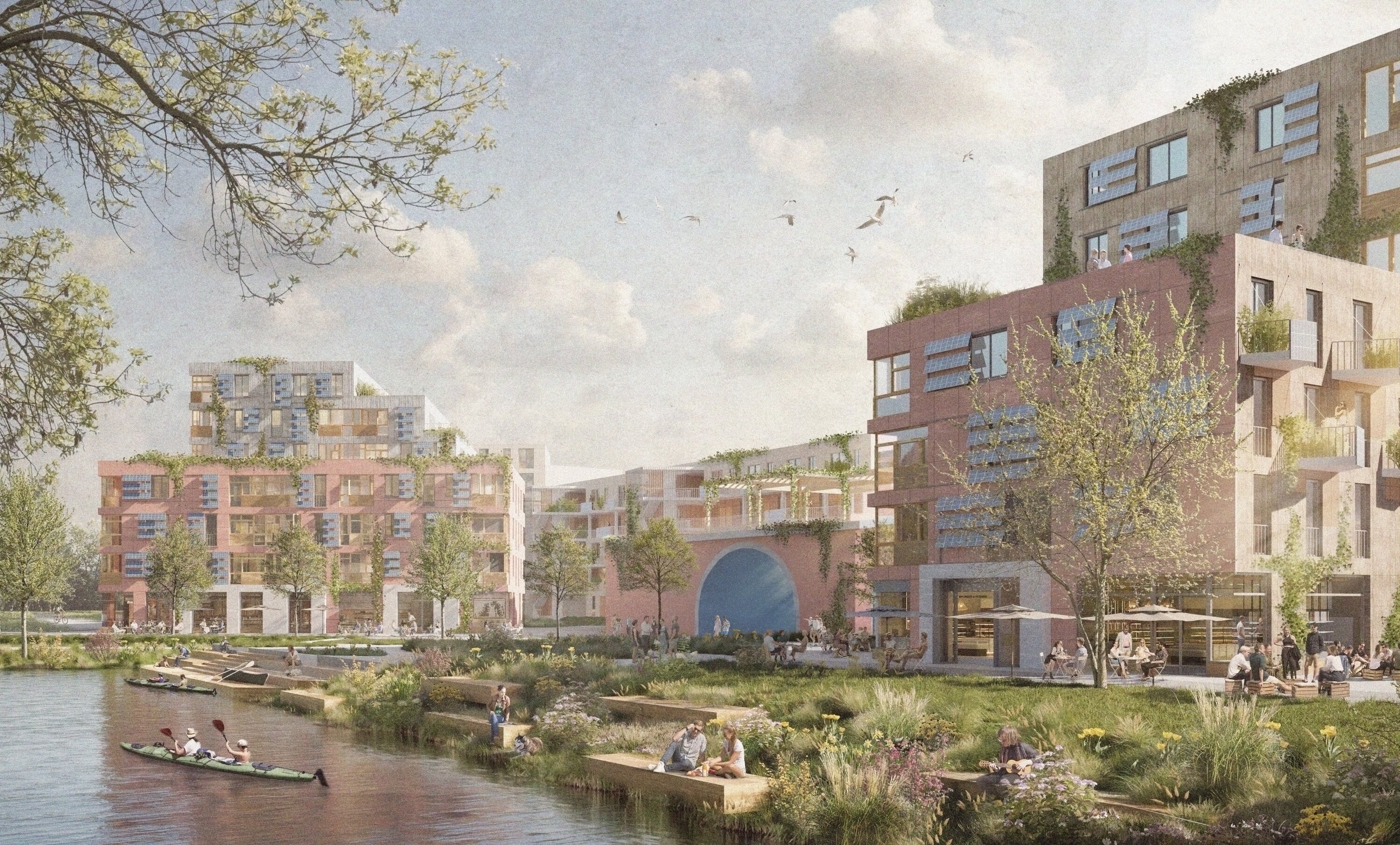
A more holistic circular construction strategy, as showcased in our large-scale project Wilhelmsburger Rathausviertel.
new mixed-use residential quarter
A holistic approach that considers the entire lifespan of our buildings is needed to reduce carbon emissions as well as resource consumption. This starts with precise programming, flexible floorplans, a focus on pre-use and post-use of materials, and the possibility to adapt entire buildings to future needs and climate change.
Reduce: the city’s masterplan proposed an eight-story building—classified as a high-rise by just one floor. The design team and client chose to forgo this extra rental area to avoid the high-rise designation and enable a circular design strategy, allowing greater flexibility in material selection and technical systems. The project promotes spaces with reduced thermal regulation requirements, making it possible to integrate reused facade elements with outdated U-values. Loggias act as thermal buffer zones, allowing the building to adapt to seasonal changes and future climate conditions through a secondary layer of reused windows. Externally, weather-protected staircases reduce fire safety constraints, facilitate the use of reclaimed facade components, and serve as social spaces for residents.
Switch Apartments
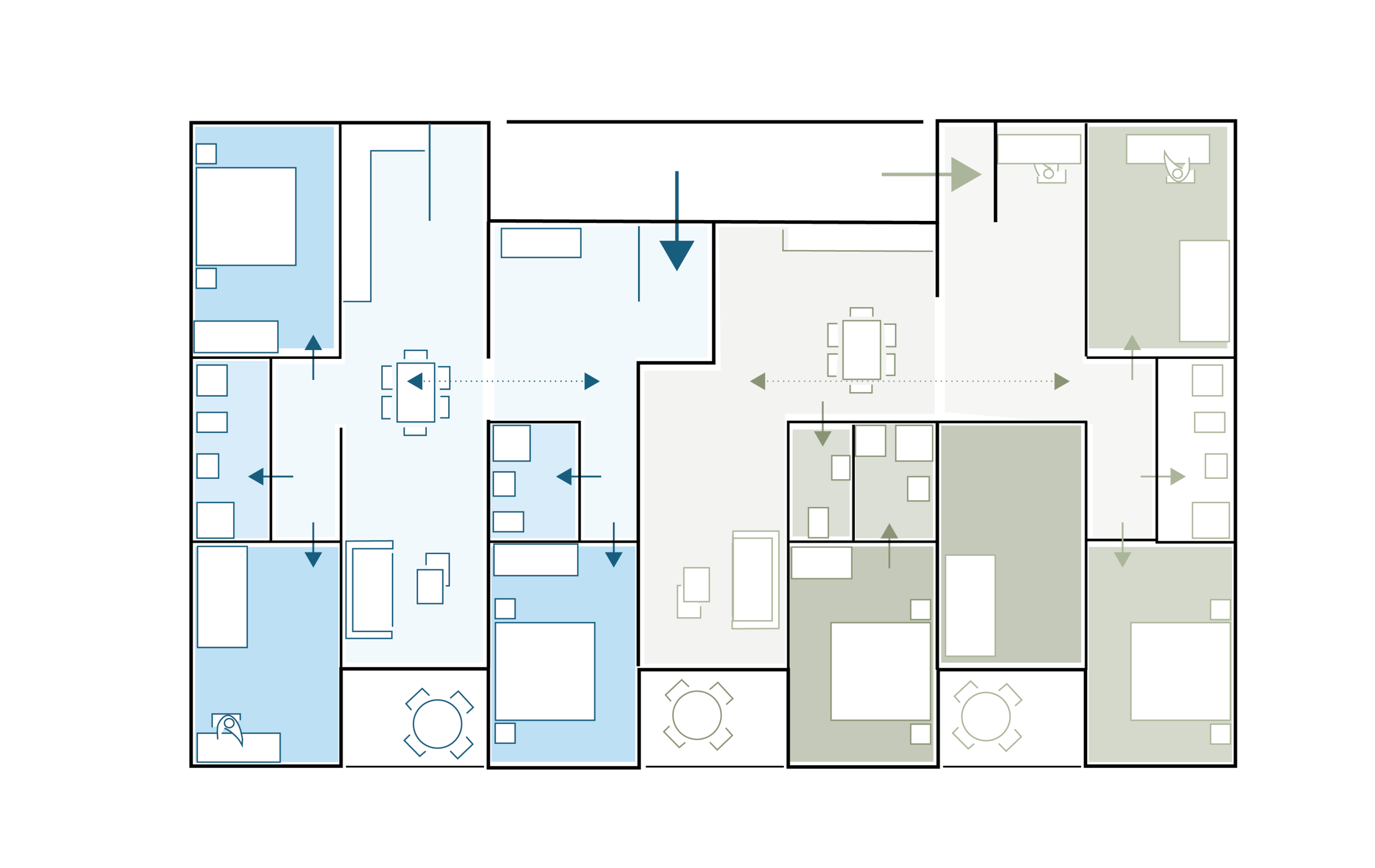
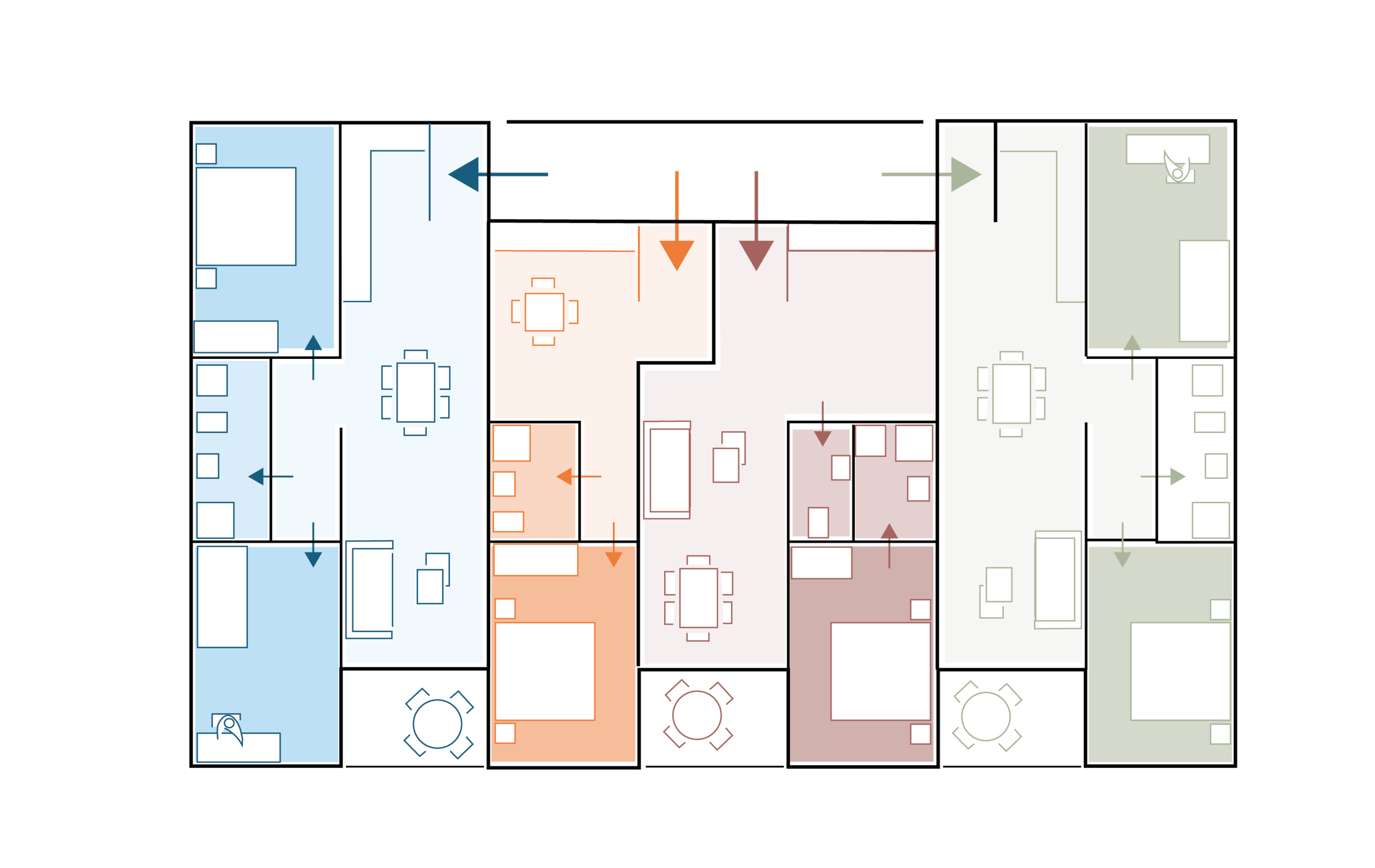
Super-use: The building’s functional organization plays a key role in its future lifecycle. Flexible floor plans, shared spaces, and adaptable apartments enable the building to evolve over time, creating a dynamic organism with a maximized lifespan. So-called switch apartments allow bigger units to be easily compartmentalized into two smaller ones.
Reusable Facade Elements
Circularity is far more than the implementation of recycled materials. Sustainable urban structures which can adapt to user needs and climate change as well as constructions that allow the reuse of building materials can promote circularity and lead to new, surprising design results.
Related
Circuit - Circular Economy in Wilhelmsburger Rathausviertel
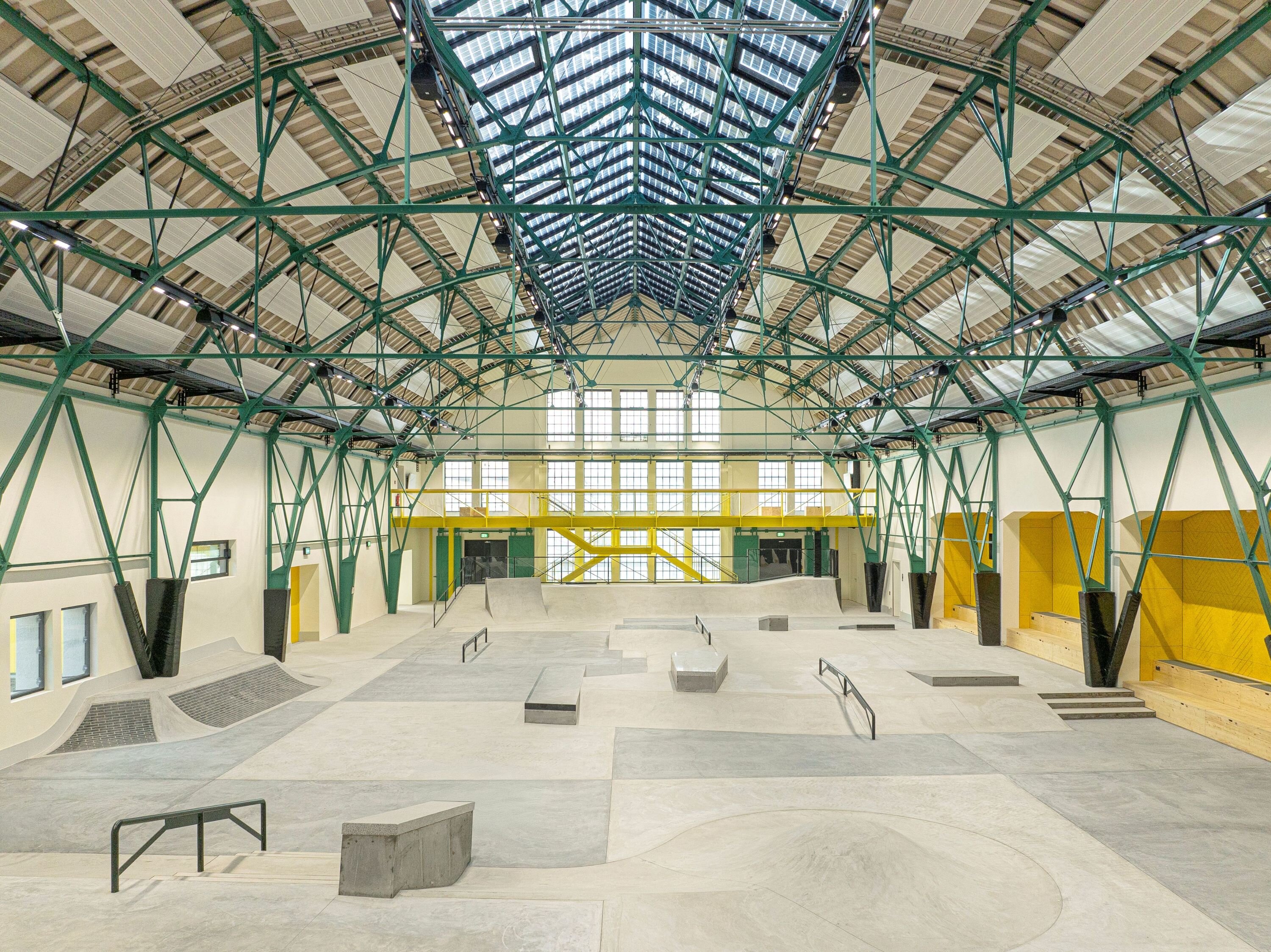
Action Sports Center
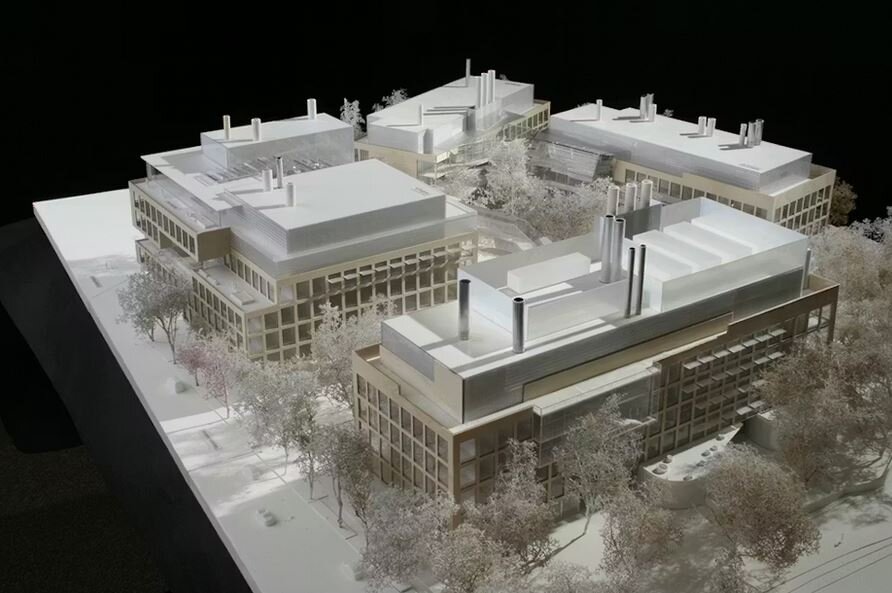
Harvard University's Allston Science Complex
How we understand the role of educational spaces beyond architecture
- daylightoptimization
- innovation
- lowenergy
- publicspace
- sustainability
- participation
- flexibility
- innovativematerials
How we developed energy-saving fixed shading systems
- daylightoptimization
- lowenergy
- energyefficiency
- wellbeing