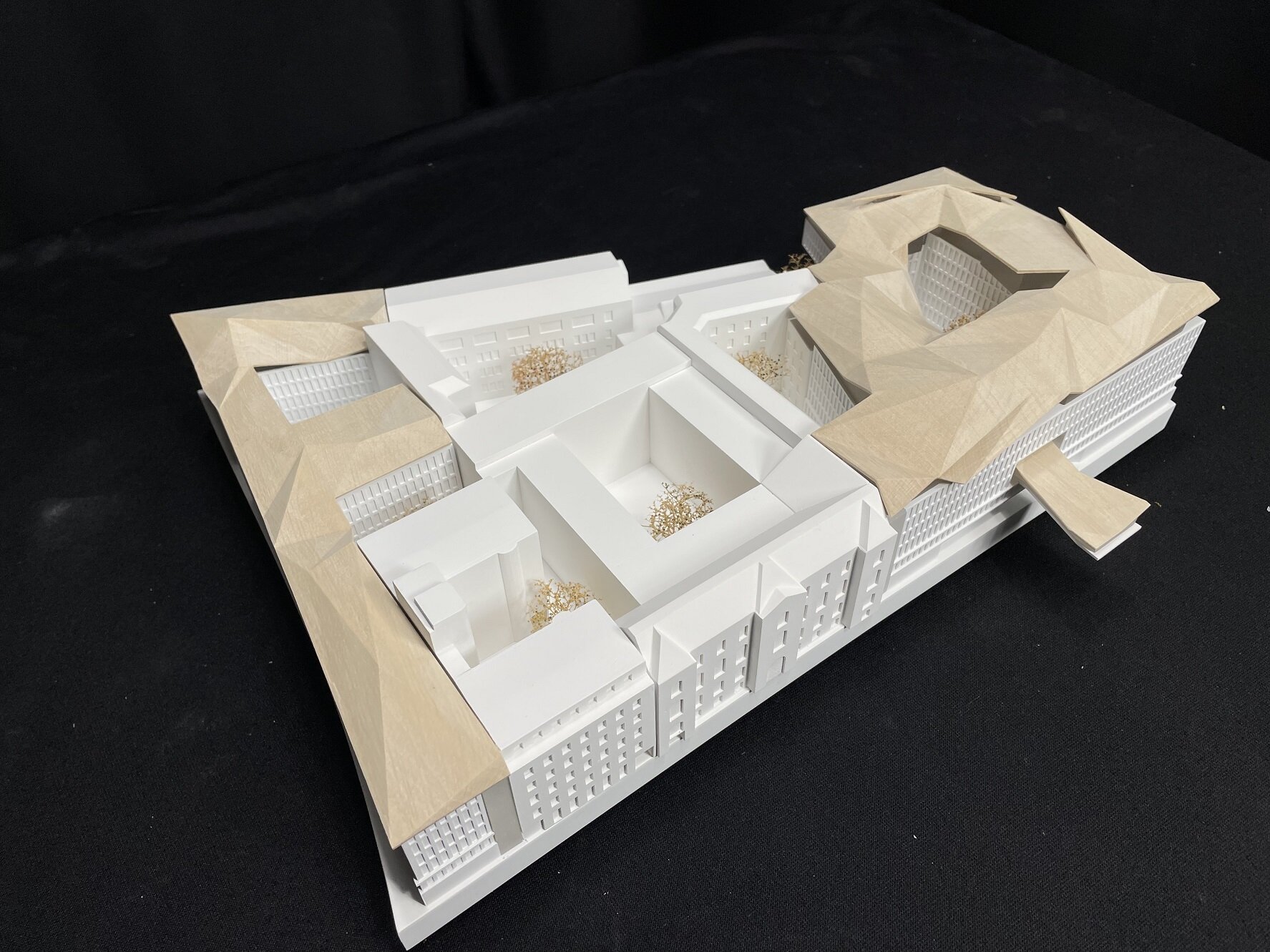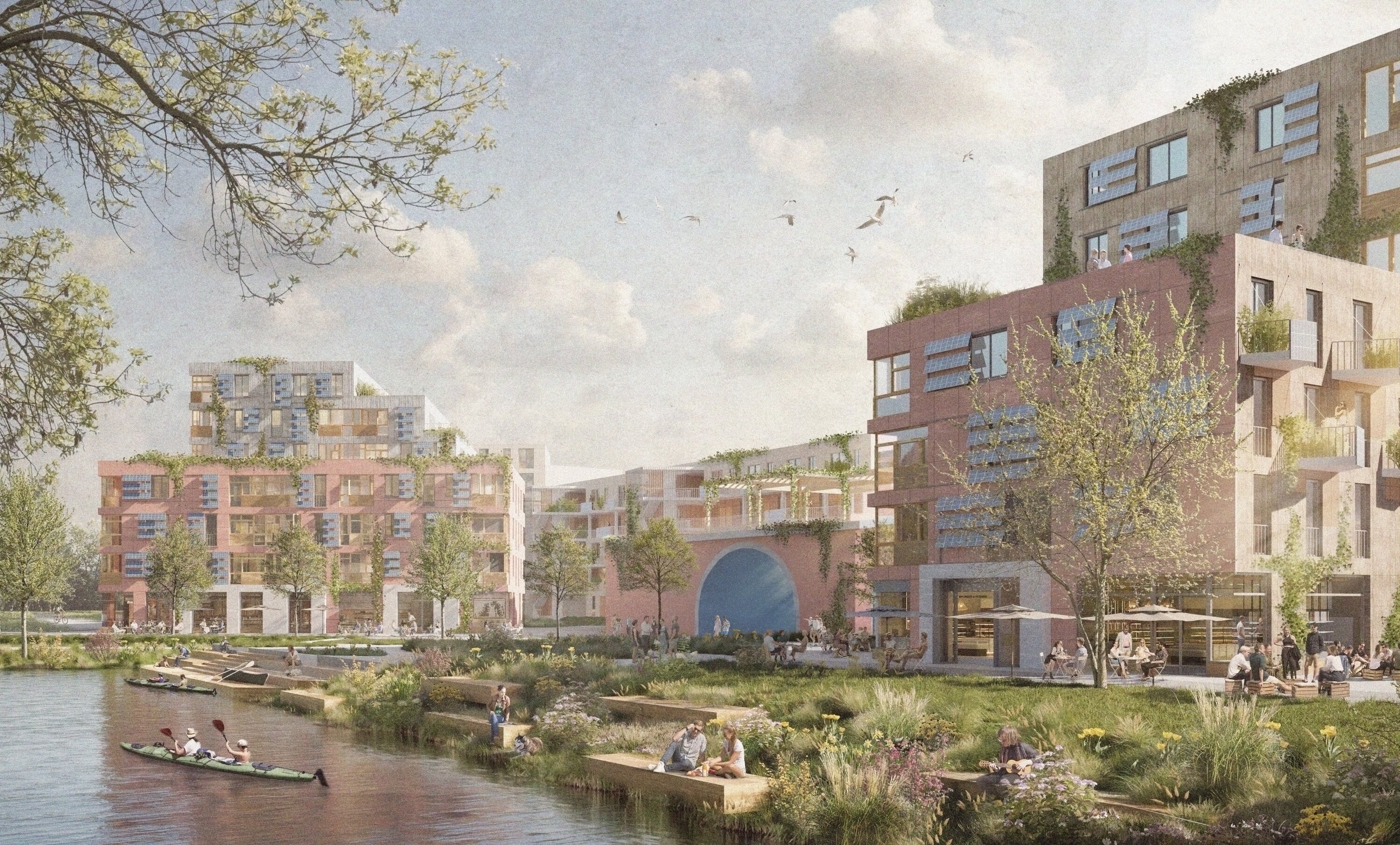
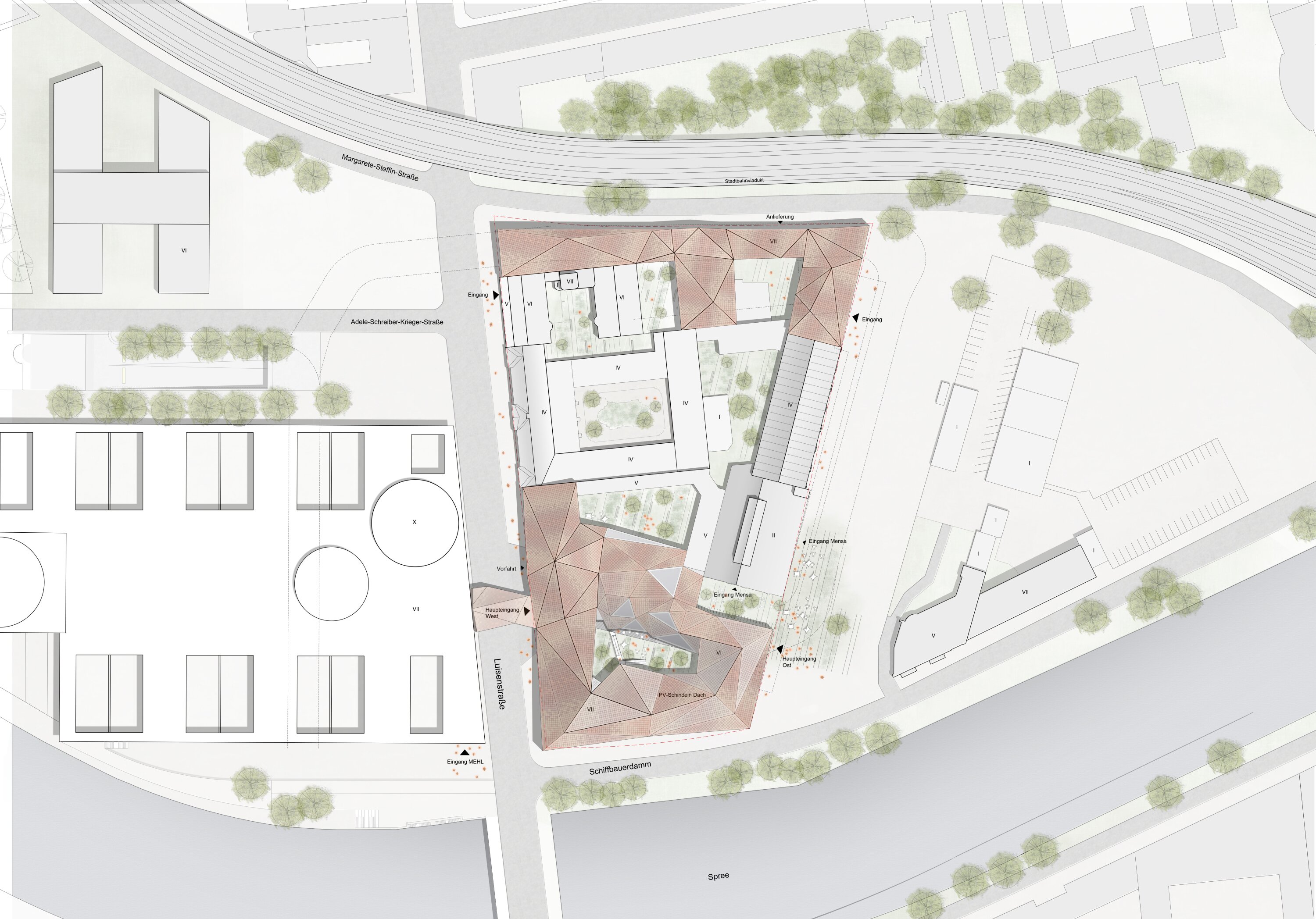
Rather than continuing the Band purely as a formal gesture, the project extends its internal organizational principle: a dominant circulation and communication spine connecting the parliamentary buildings. Movement and encounter spaces are continued as a programmatic and conceptual extension rather than as a rigid urban axis. Urbanistically, the project adopts the Berlin block typology with a staggered system of inner courtyards, carefully integrating the historic buildings into a coherent ensemble without overpowering them. A freely formed roof structure spanning the new northern and southern building wings mediates between the historic fabric and the new architecture, completing the closed block.
Site Plan
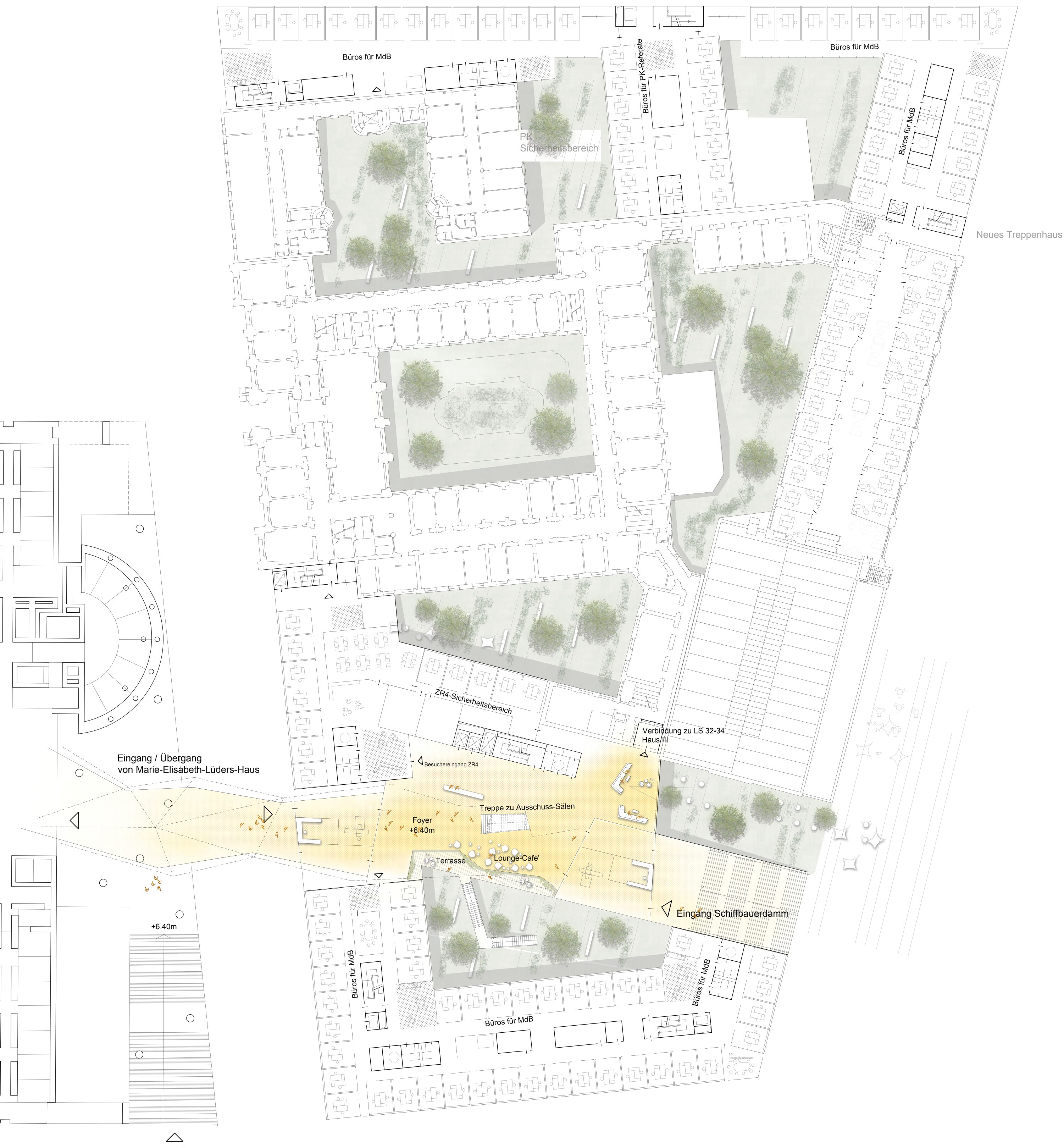
Level 3
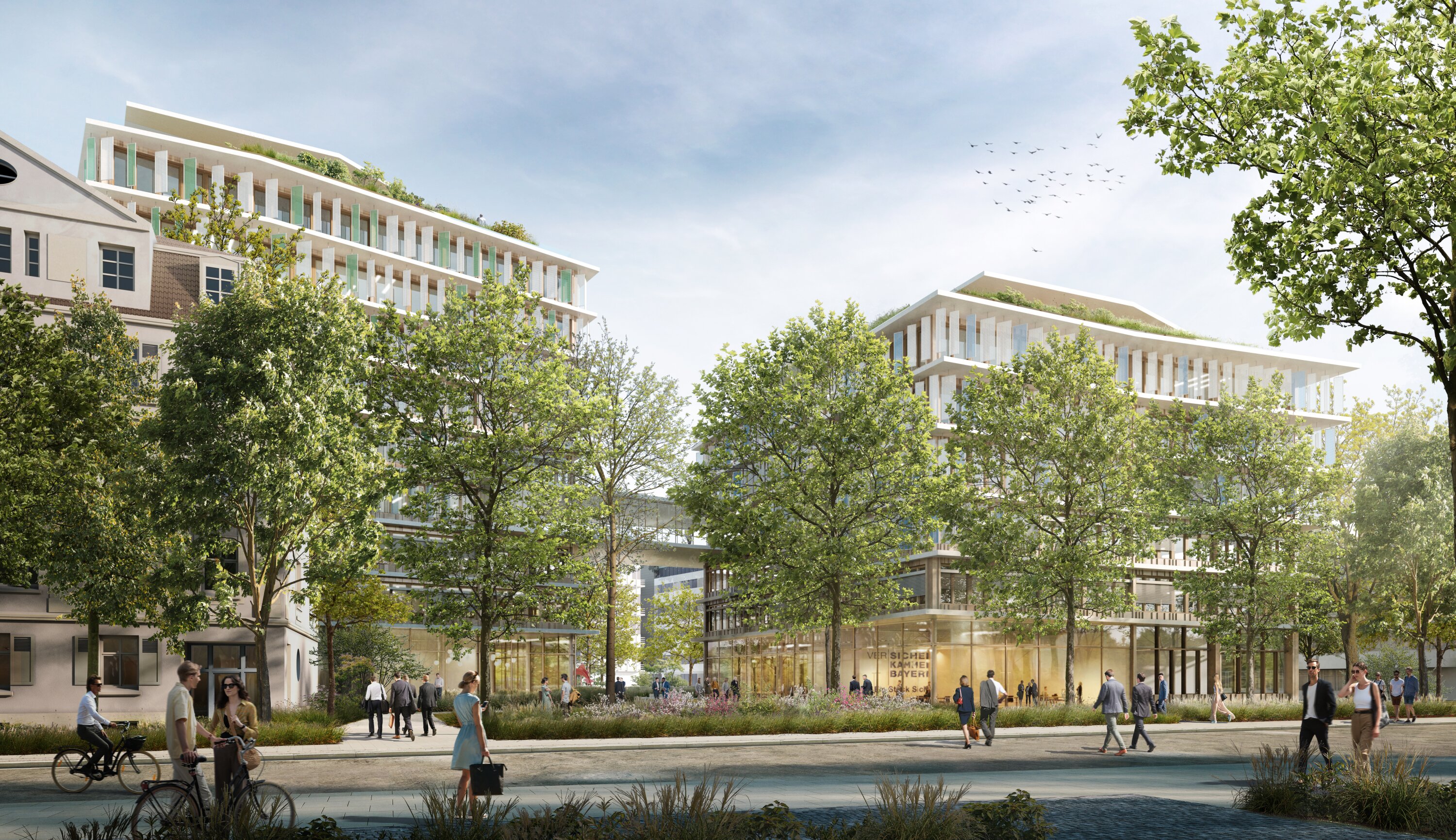
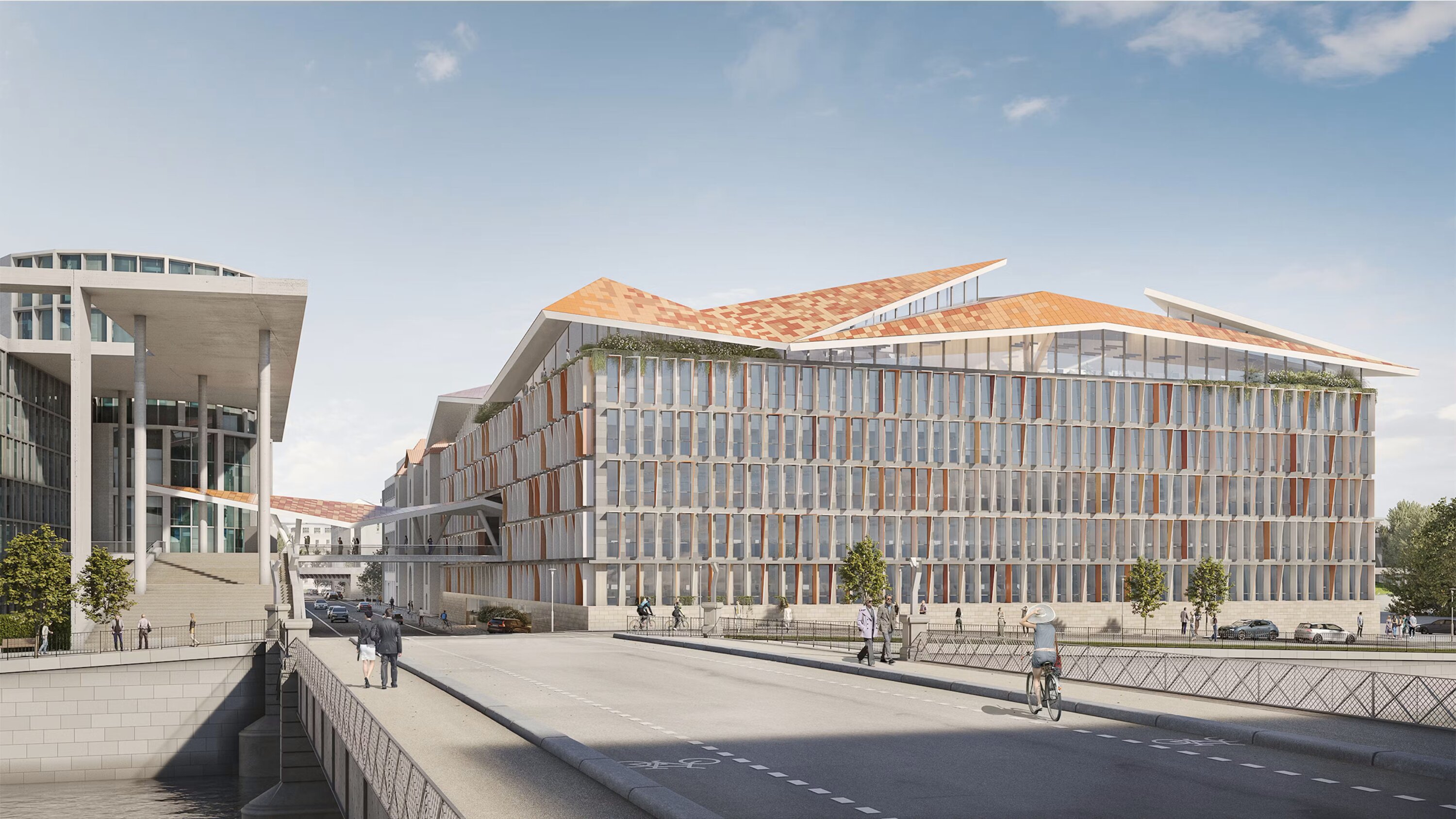
The architectural expression is defined by a robust stone base at ground level, meeting security requirements, and refined stone-clad office façades above with vertically proportioned openings. Fixed metal sun-shading elements modulate light and transition chromatically from the reddish roofscape to the more monochrome base. The dynamic roof is clad with reddish photovoltaic panels, referencing the historic roofs and brick industrial buildings of the site
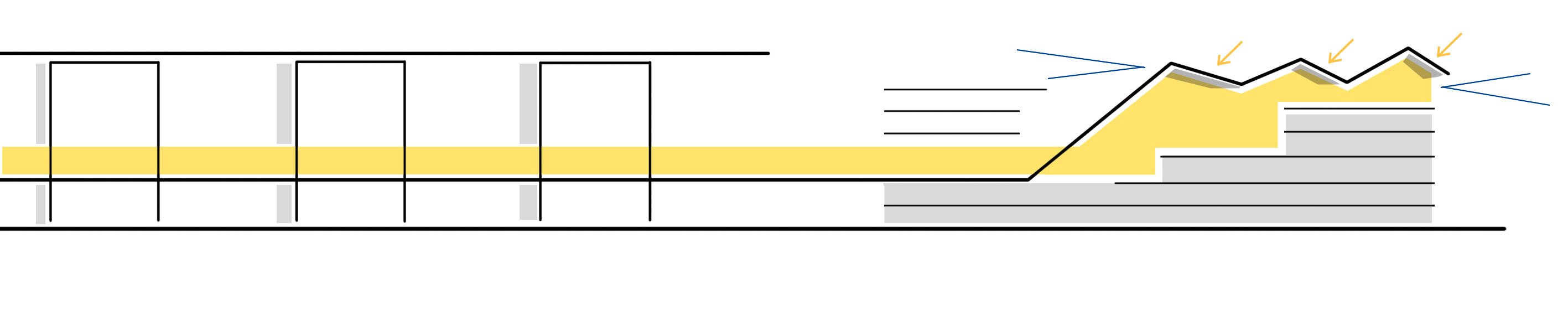
Access is provided from the west via a bridge at second-floor level, leading into a generous entrance hall. A linear entrance sequence connects the western access with the eastern entrance near Friedrichstraße station, where the listed boiler house and a public square form a prominent address. The central foyer extends over the full height of the building and functions as a key space for orientation, communication, and informal encounter, complemented by meeting rooms and landscaped interior areas. Committee rooms are located beneath the expressive roofscape, forming large column-free spaces and clearly visible as a symbol of parliamentary work. The office floors below are efficiently organized, primarily as three-bay layouts, with service zones in the center and acoustically secure rooms oriented toward the inner courtyards. Historic buildings accommodate cellular offices; due to differing floor heights, full barrier-free connections between old and new structures are not possible on all levels.
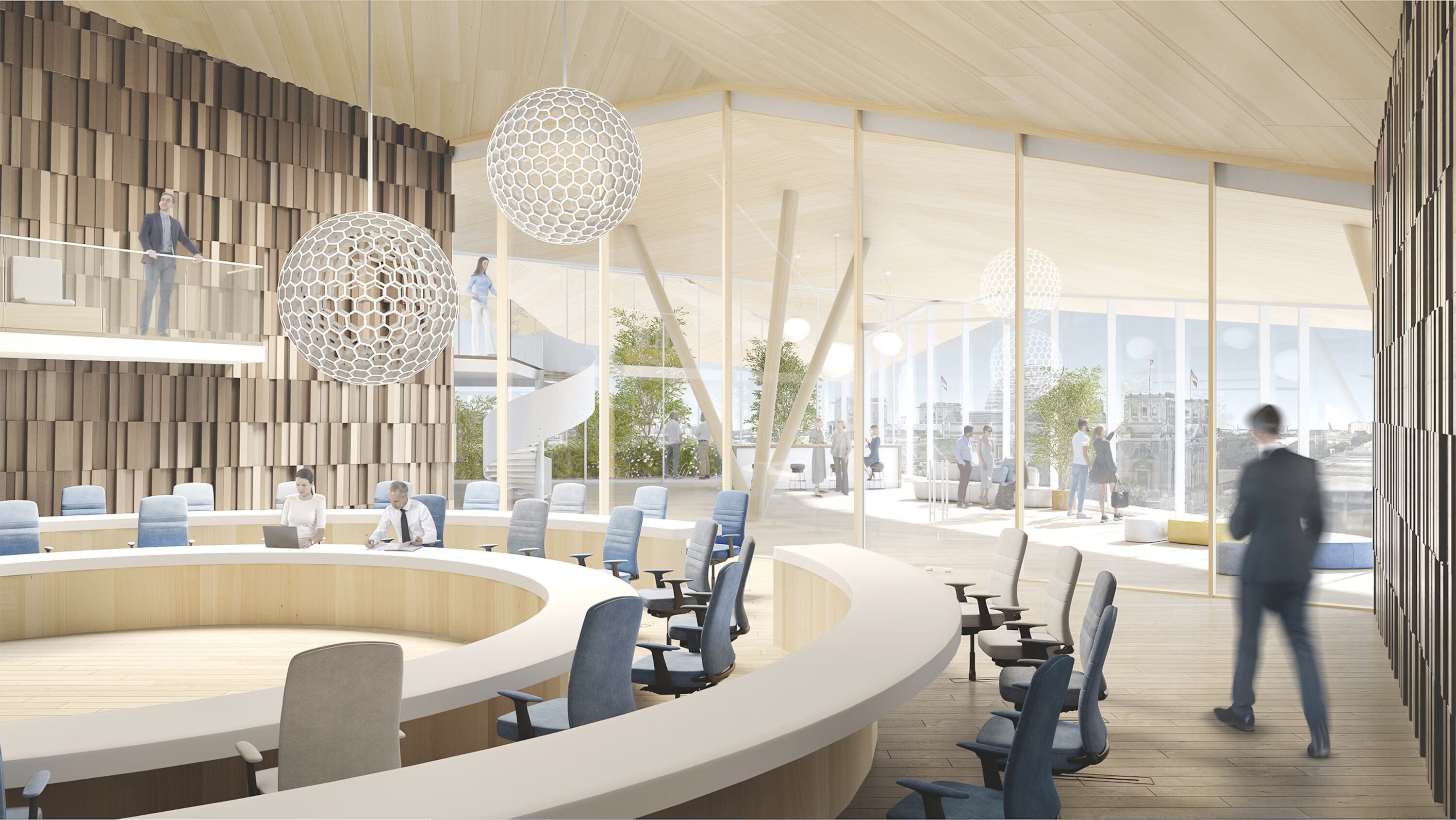
Internally, the building emphasizes material authenticity. Above the concrete ground floor, the structure is executed in solid timber construction, largely left exposed. Activated clay elements enhance thermal performance and indoor climate. Transparent and translucent partitions ensure daylight-filled circulation areas, while green “oases” support informal communication. The historic buildings retain their character wherever possible.
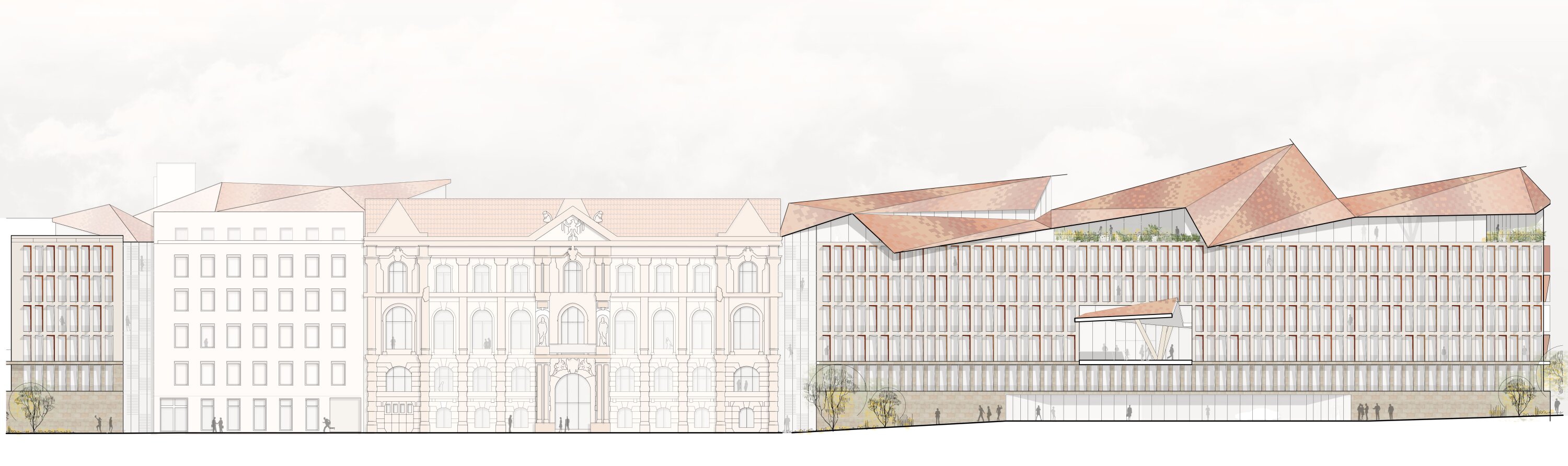
Section AA
The building comprises a reinforced concrete ground floor and basement levels, with five upper floors in a timber–steel hybrid structure. Stability is provided by reinforced concrete cores. The office floors follow an efficient structural grid, combining glued-laminated timber columns, flush steel beams, and solid timber deck elements. Fire protection is achieved through a combination of charring allowance and protective cladding, allowing the timber structure and columns to remain exposed. The roof structure consists of glued-laminated timber girders and cross-laminated timber panels, enabling large column-free committee rooms. The hybrid system ensures flexibility, low embodied carbon, and long-term adaptability, with steel components designed for reuse and timber used as a renewable primary material.