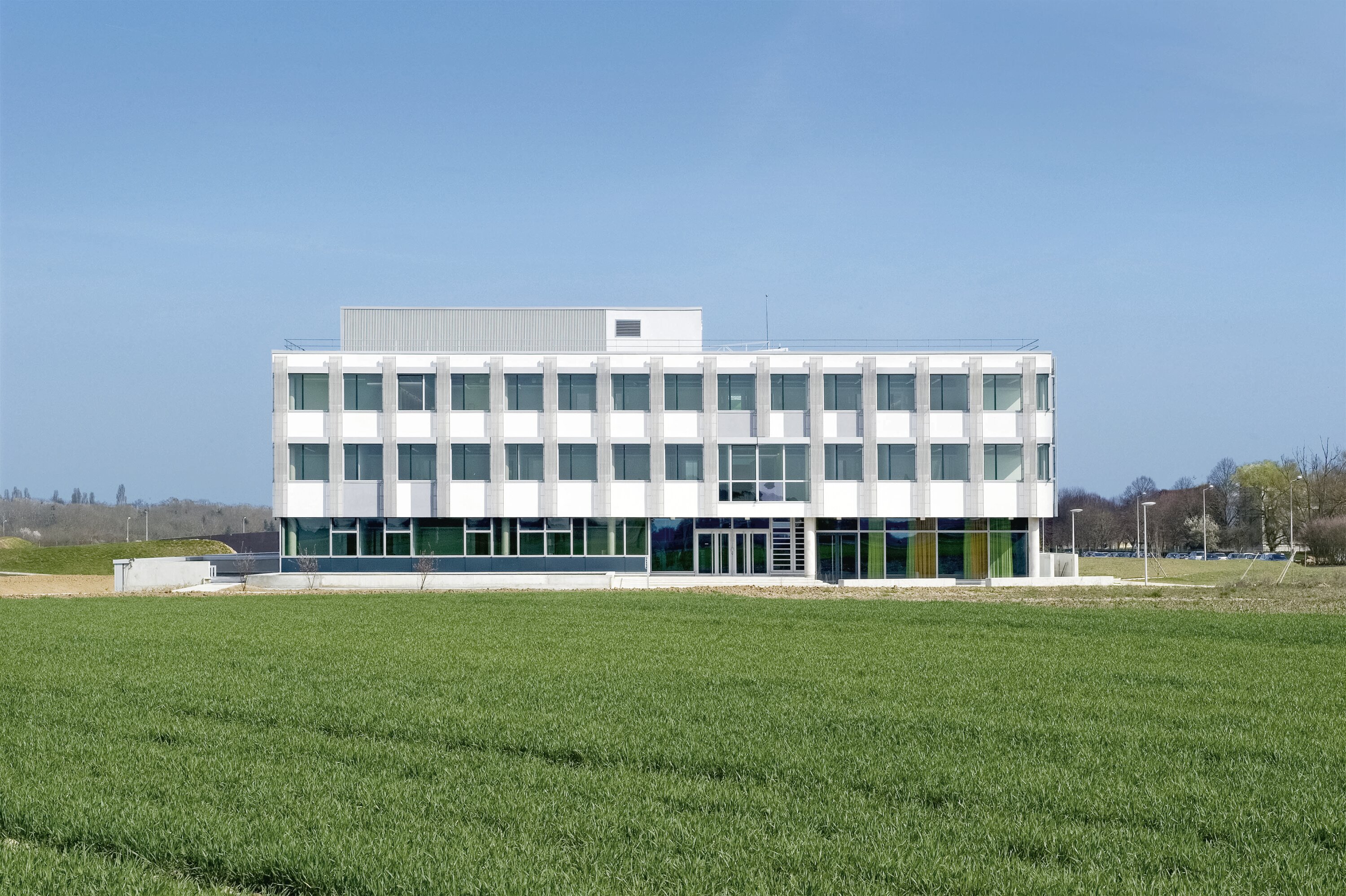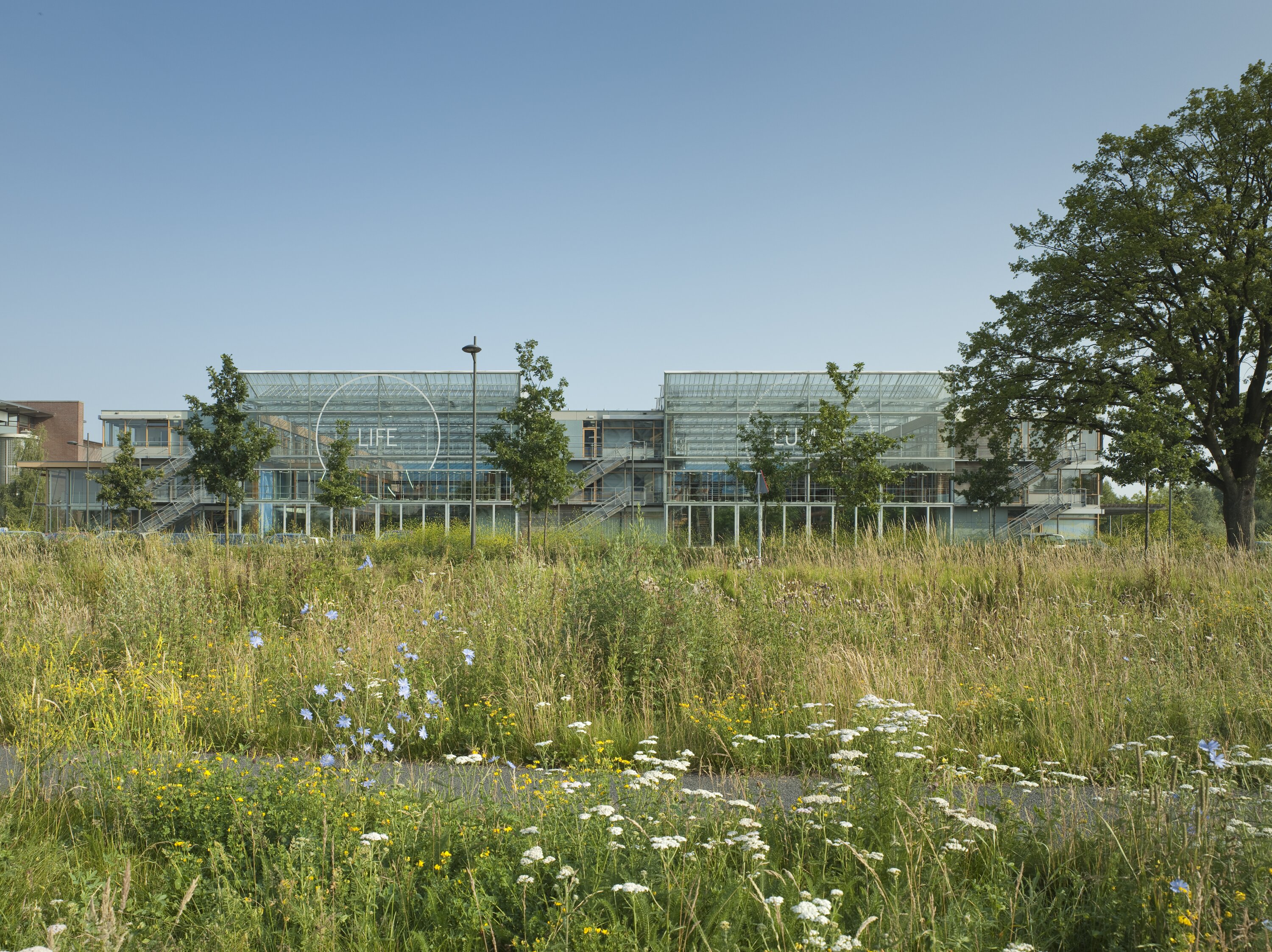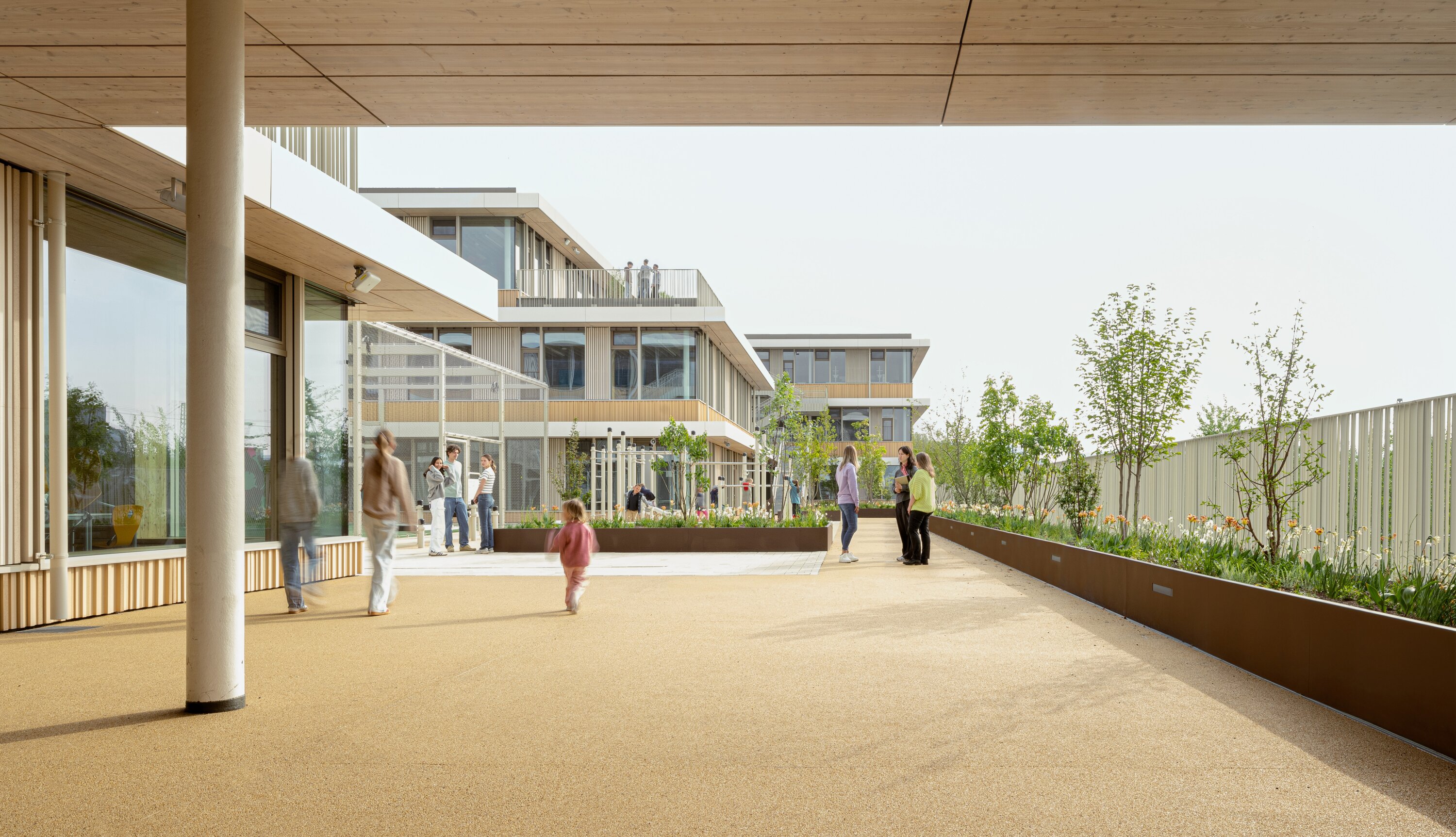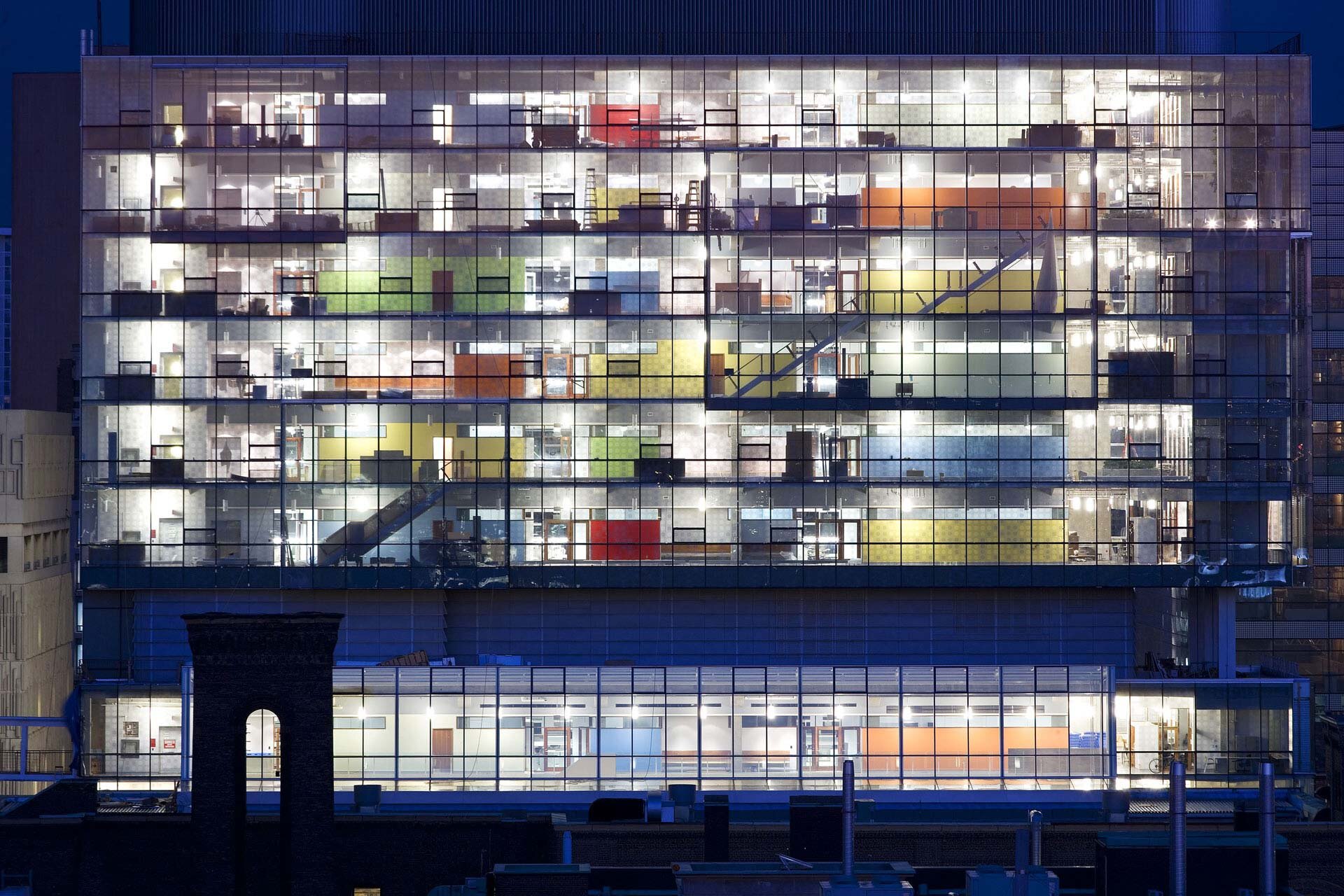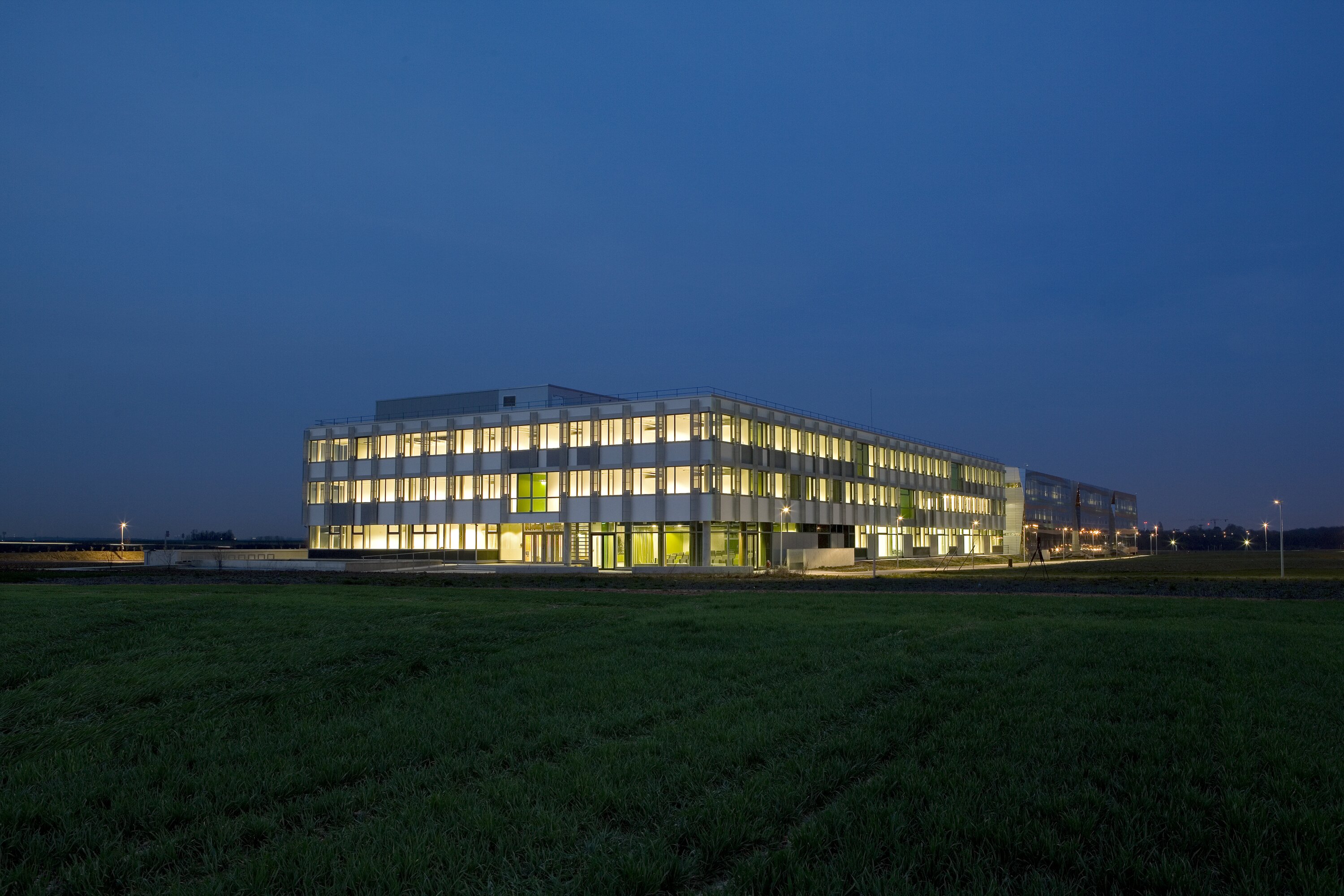
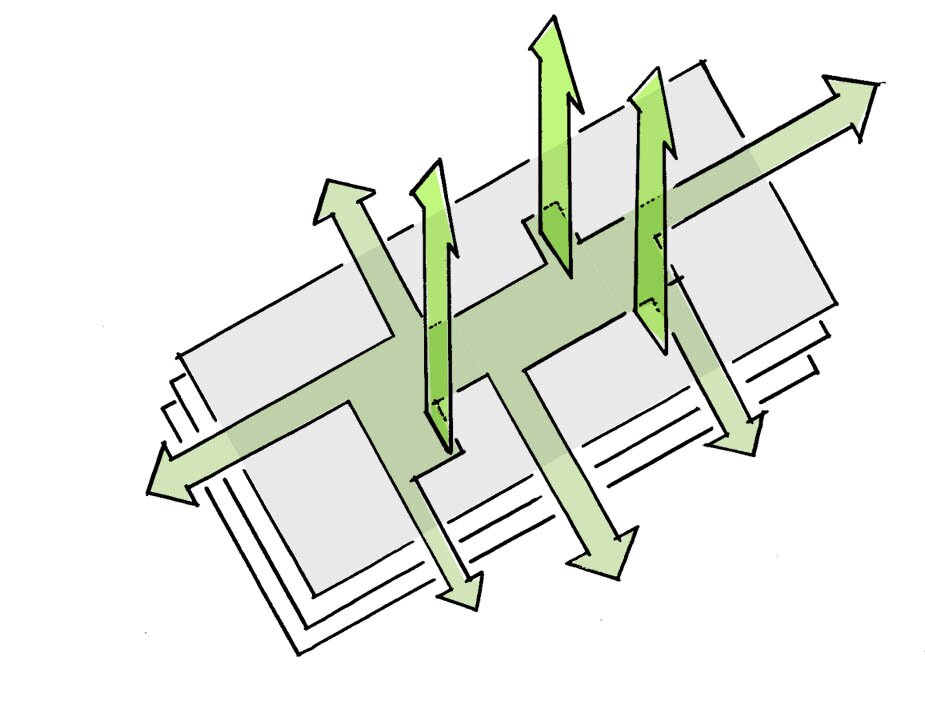
Each of the facilities is used by a variety of research institutions. The workshops, which occupy around 40% (ca. 8,000 square meters) of the usable floor area, are equipped for materials research, metals processing, computer simulation, and research in electronics. The workshops extend in part over two floors to accommodate the delivery of large items.
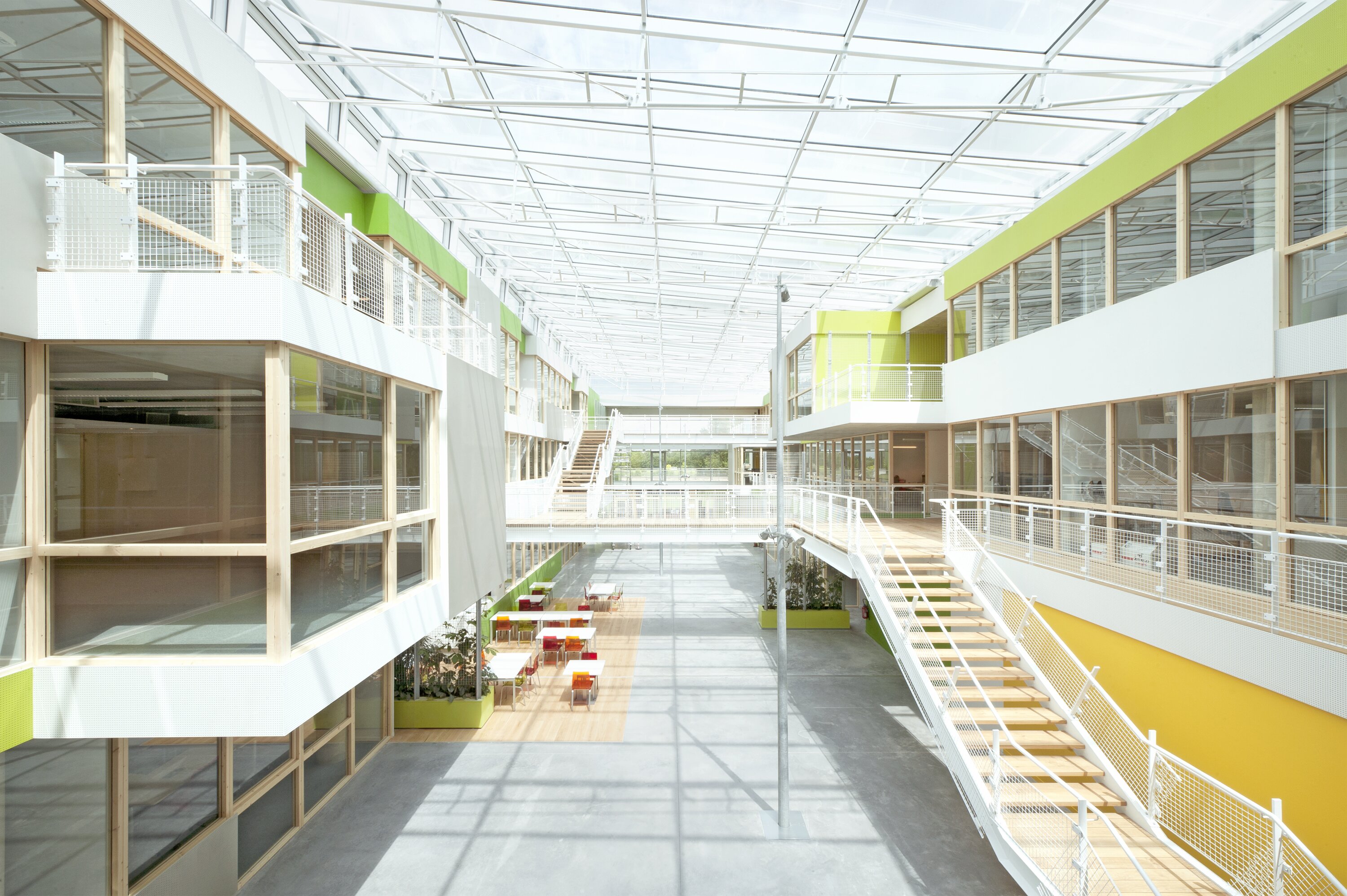
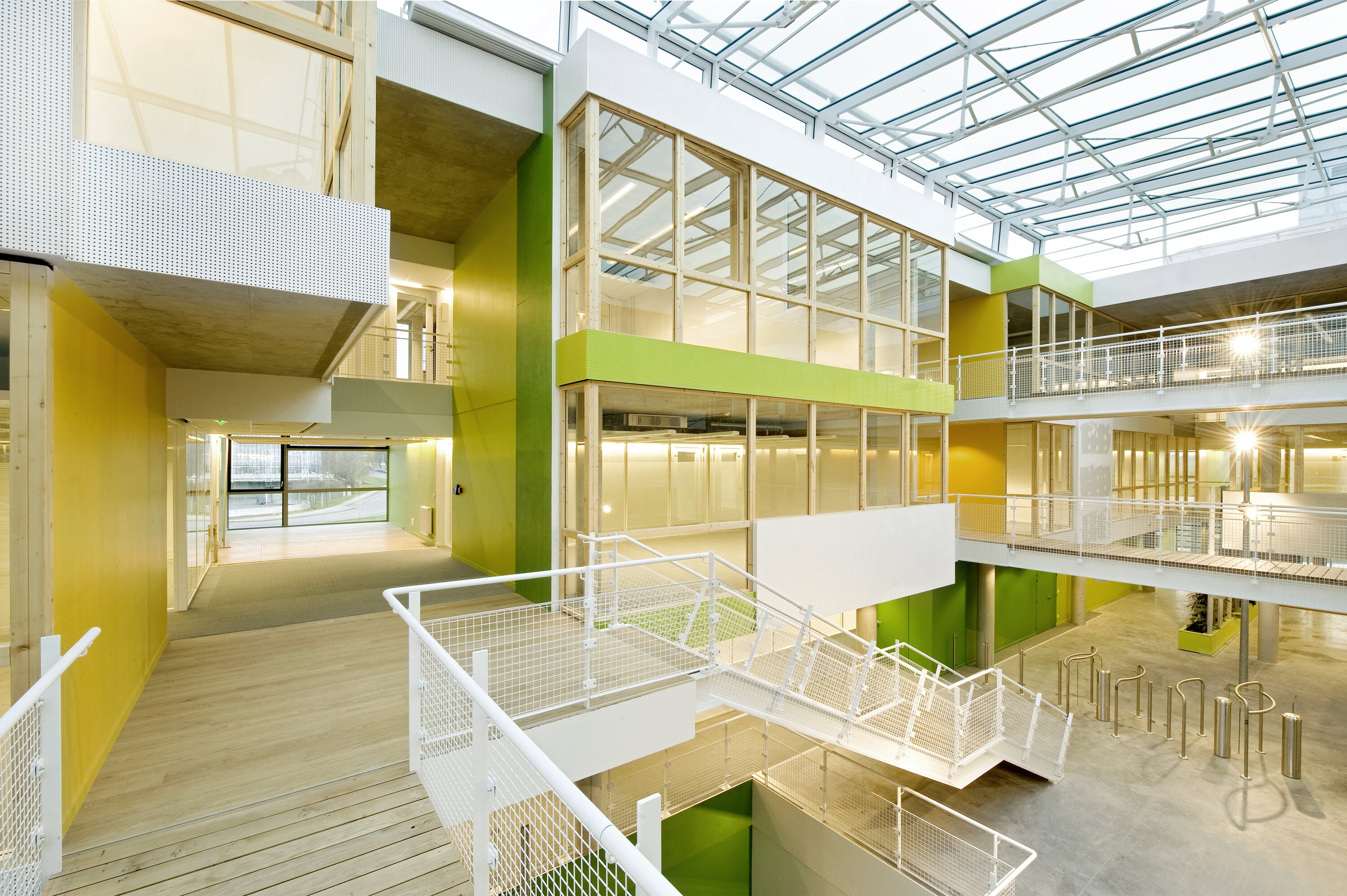
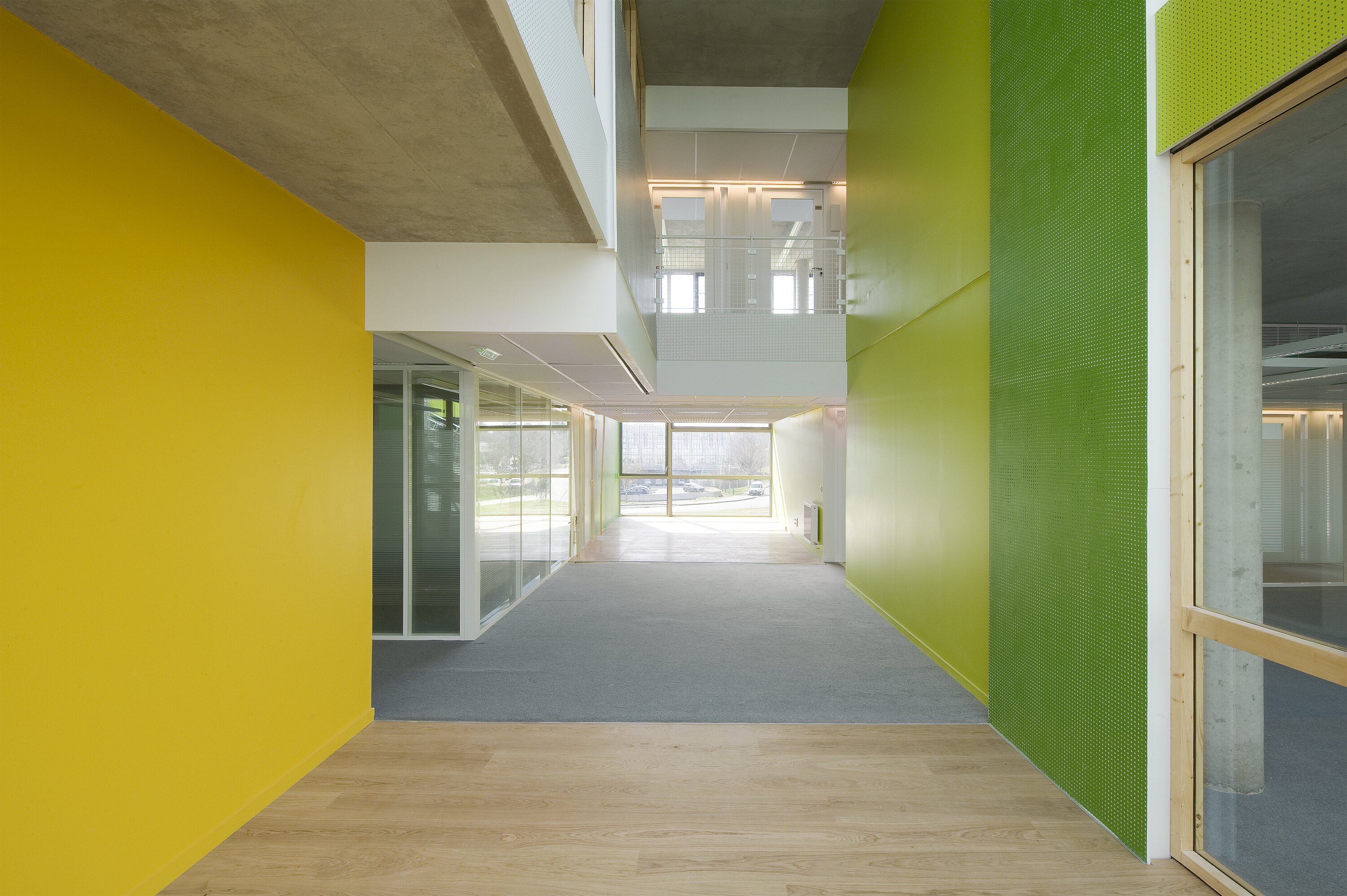
The three Digiteo buildings follow a similar logic: Each one features a large central atrium that runs in certain places all the way through to the exterior facade, establishing visual connections to the outside and allowing daylight into the interior. The atrium also plays a key role in the ventilation concept, as it delivers fresh air to non-lab spaces.
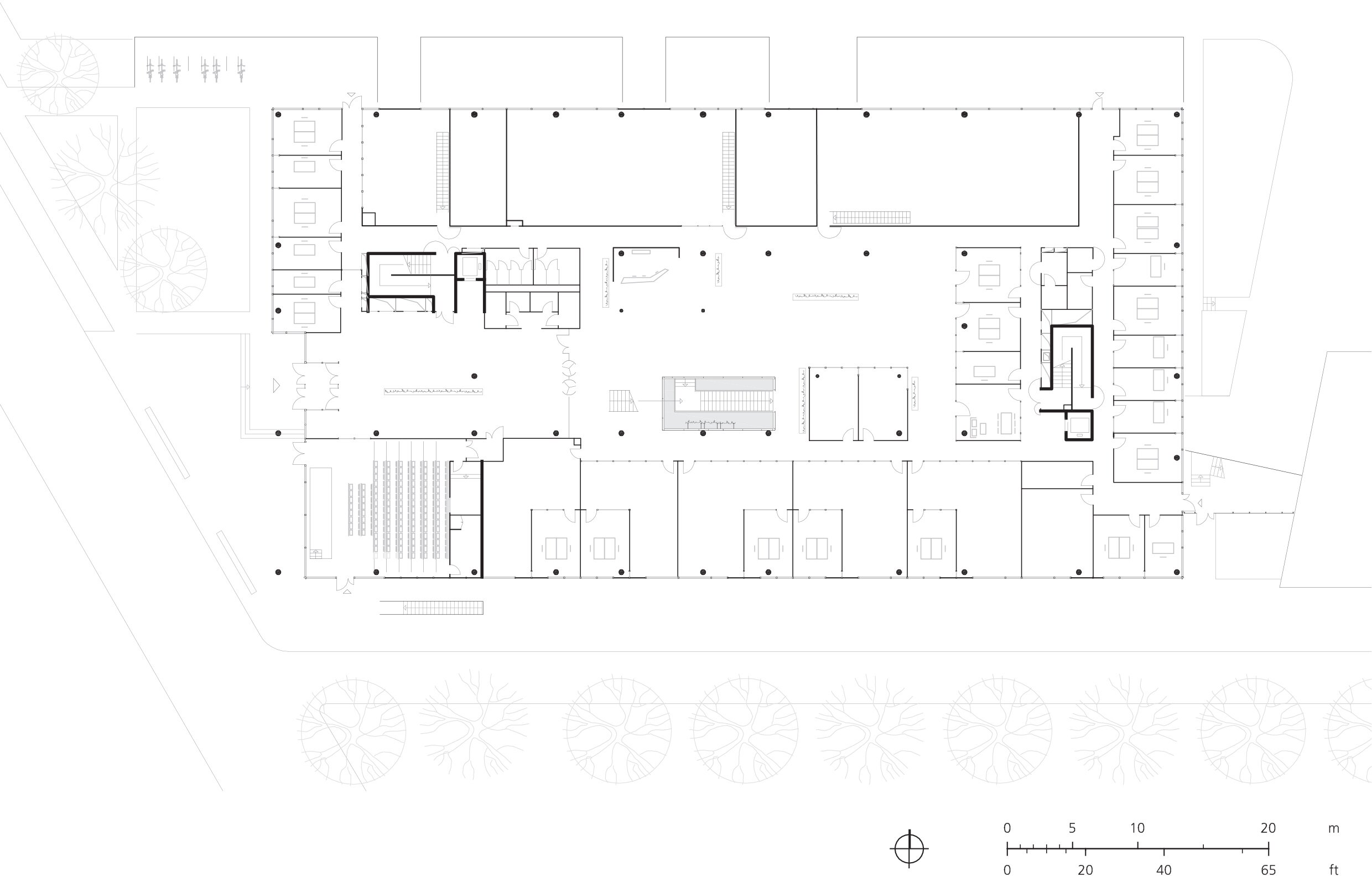
Level 1
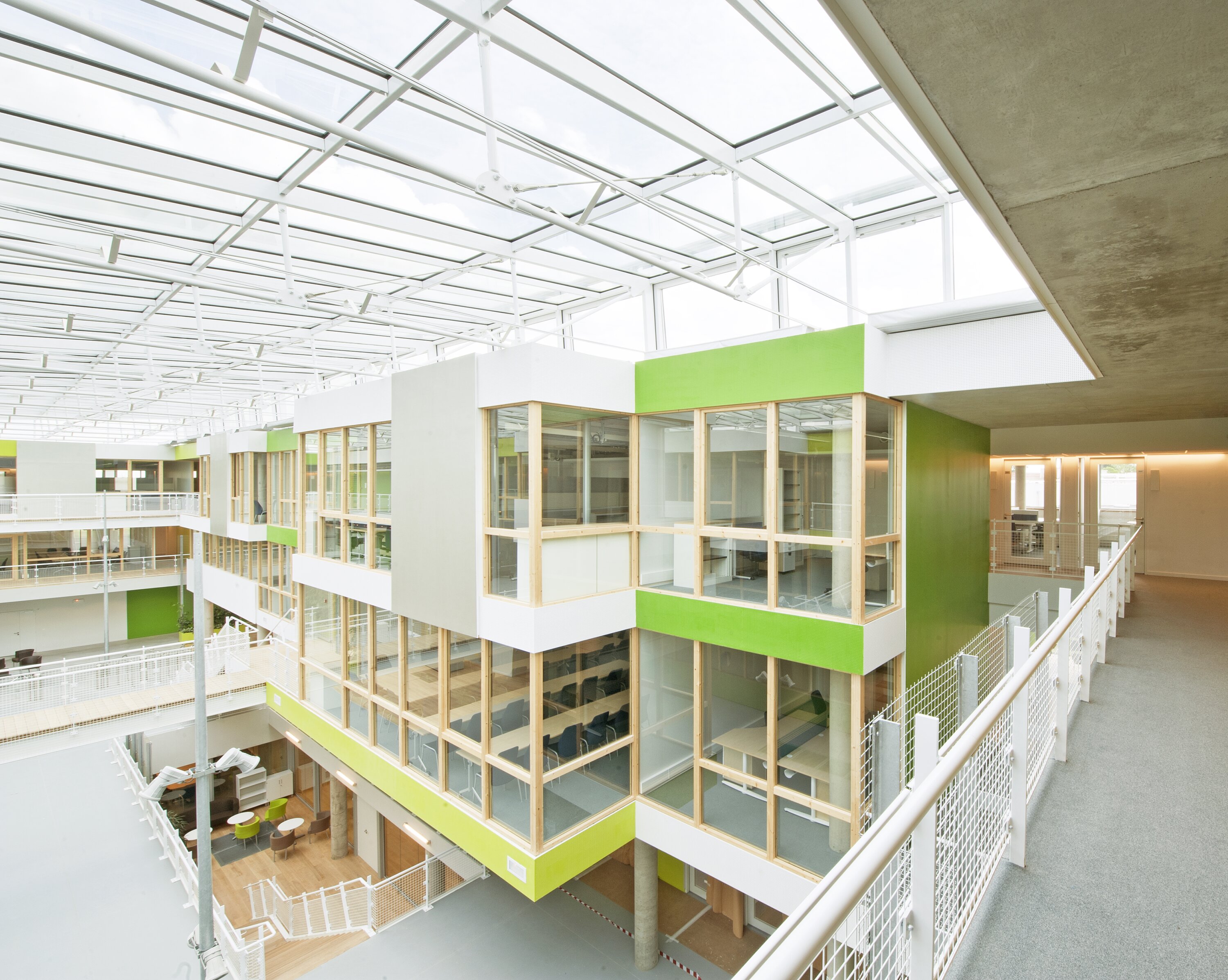
In each building, the communal spaces are arranged around the central atrium. They include not only seminar rooms, computer pools, the library, and teaching workshops, but also open stairways, footbridges, a cafeteria, as well as a variety of multi-functional zones, referred to as “terraces.“ We designed these shared spaces to foster interdisciplinary work and casual communication among the scientists. With all their similarities, each building responds to its particular site and the needs of its users. All three are also designed to be highly flexible, enabling them to easily adapt to the user’s changing modes of work.
- Client
- Digiteolabs (CEA - Commissariat à l’Énergie Atomique, INRIA - Institut National de Recherche en, CNRS – Centre National de la Recherche Scientifique)
- Architects
- Behnisch Architekten with BRS Architects
- Address
CNRS: Avenue de la Terrasse Bâtiment 17, 91198 Gif-sur-Yvette
CEA: Centre de Saclay PC 143, 91191 Gif-sur-Yvette
INRIA: 2, rue Jacques Monod Bâtiment H., 91893 Orsay
France- Gross Area
27.000 qm / 290,628 sq.ft
- Gross Volume
83.700 cbm / 2,955,866 cu.ft
- Competition
2006, 1st prize
- Downloads
-
Download PDF
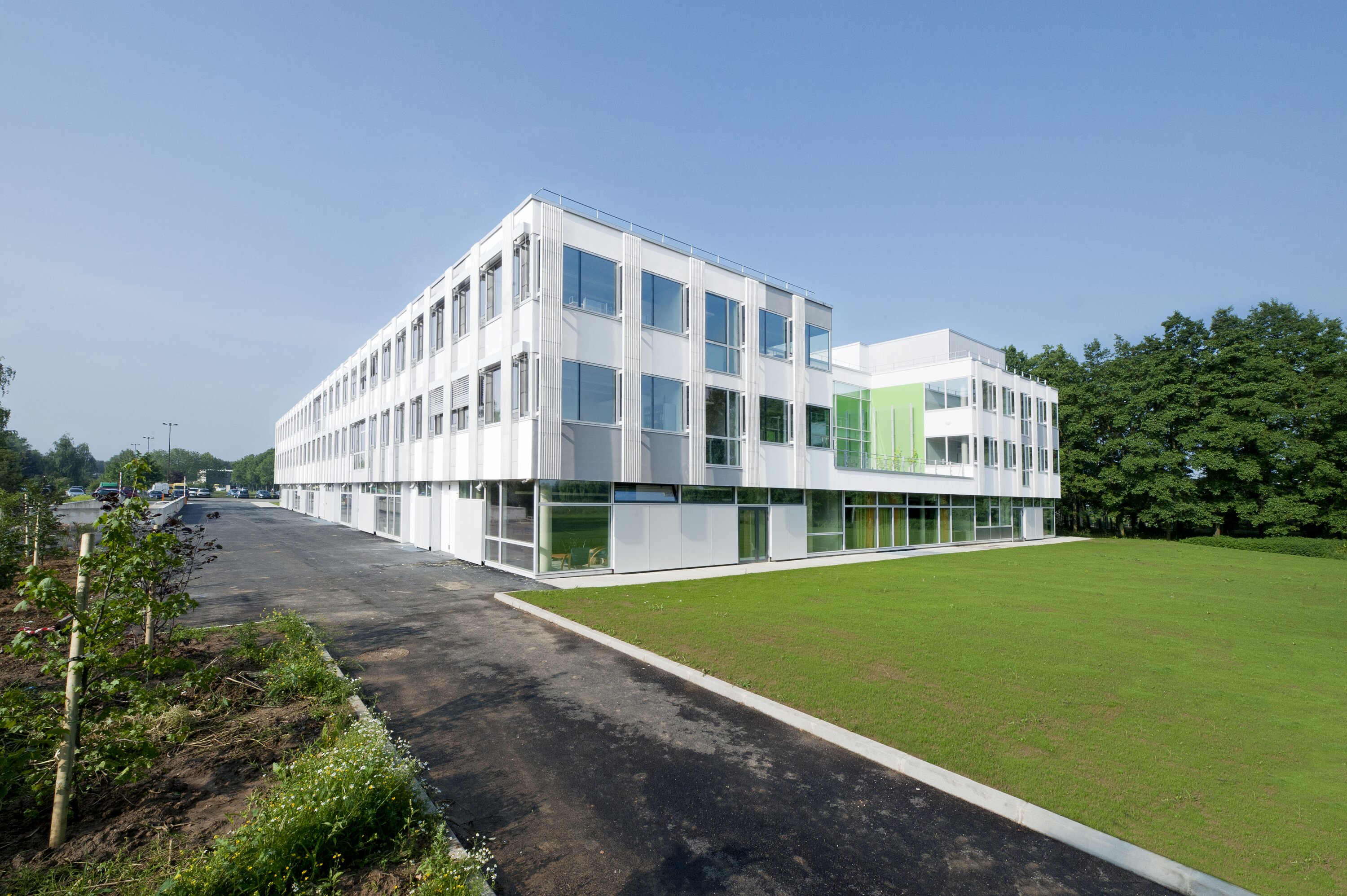
From the outset, the client expressed a clear desire for a series of highly efficient and ecologically responsible buildings. Accordingly, each building integrates a range of strategies to ensure a healthy and pleasant working environment while maintaining a strong commitment to sustainability. The workspaces rely on natural ventilation. In addition, cold air is flushed at night, and heat is recovered from the exhaust system. All materials meet the regulations of the French HQE (Haute Qualité Environnementale). Inside the atria, vertical ”green gardens” provide sound absorption, help regulate humidity, and create a pleasant, relaxing ambience for people in the interior.
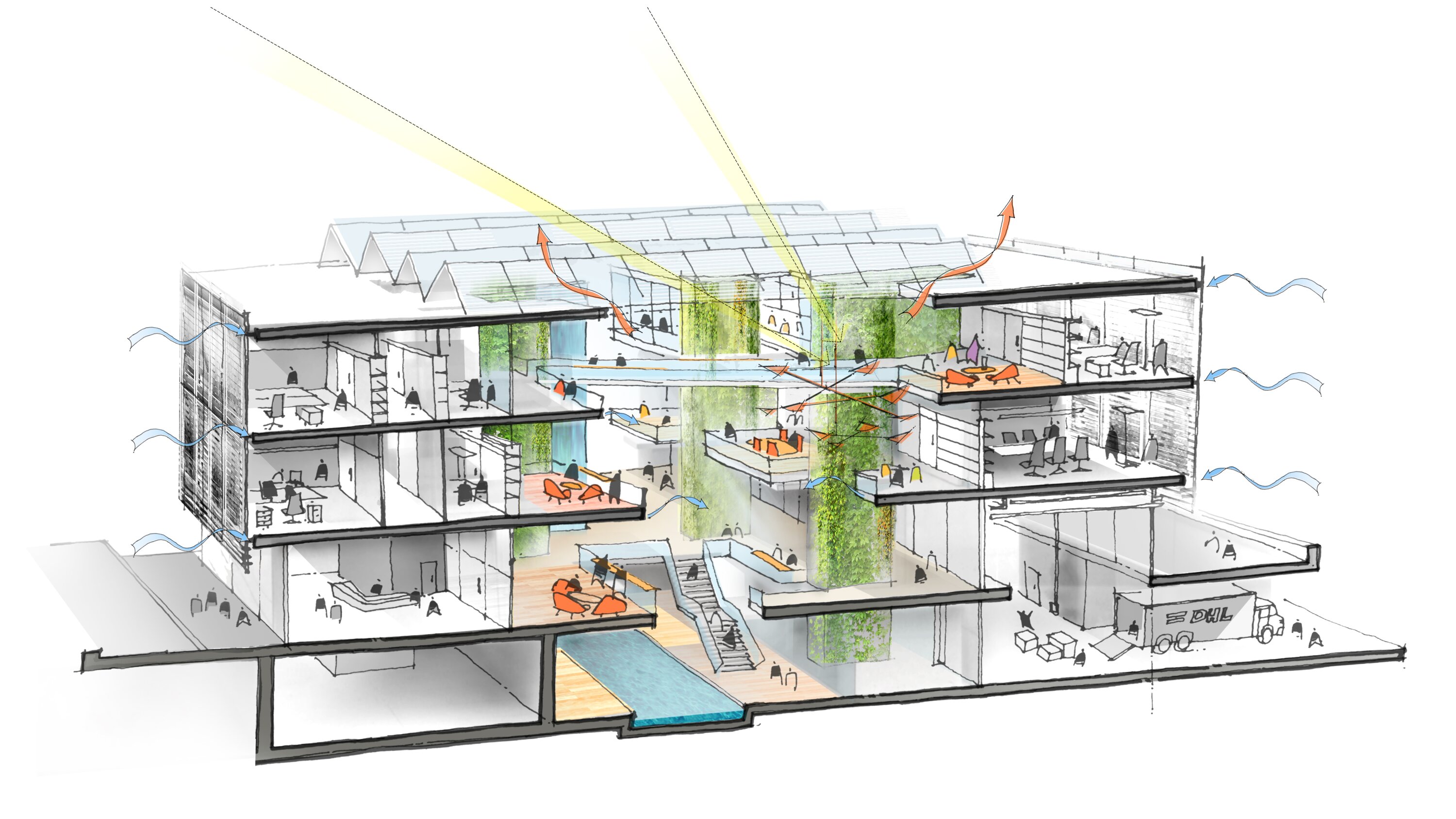
Section AA