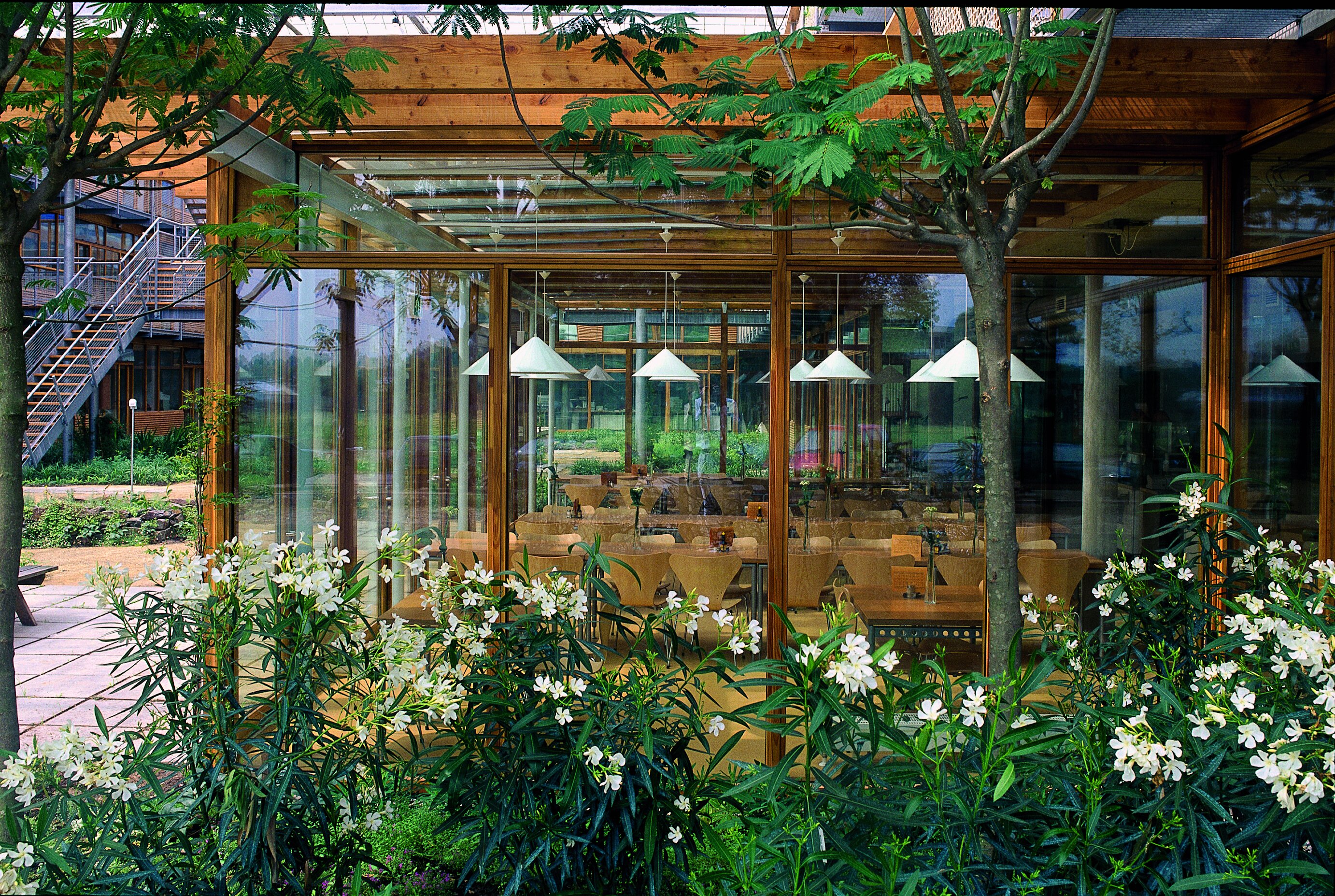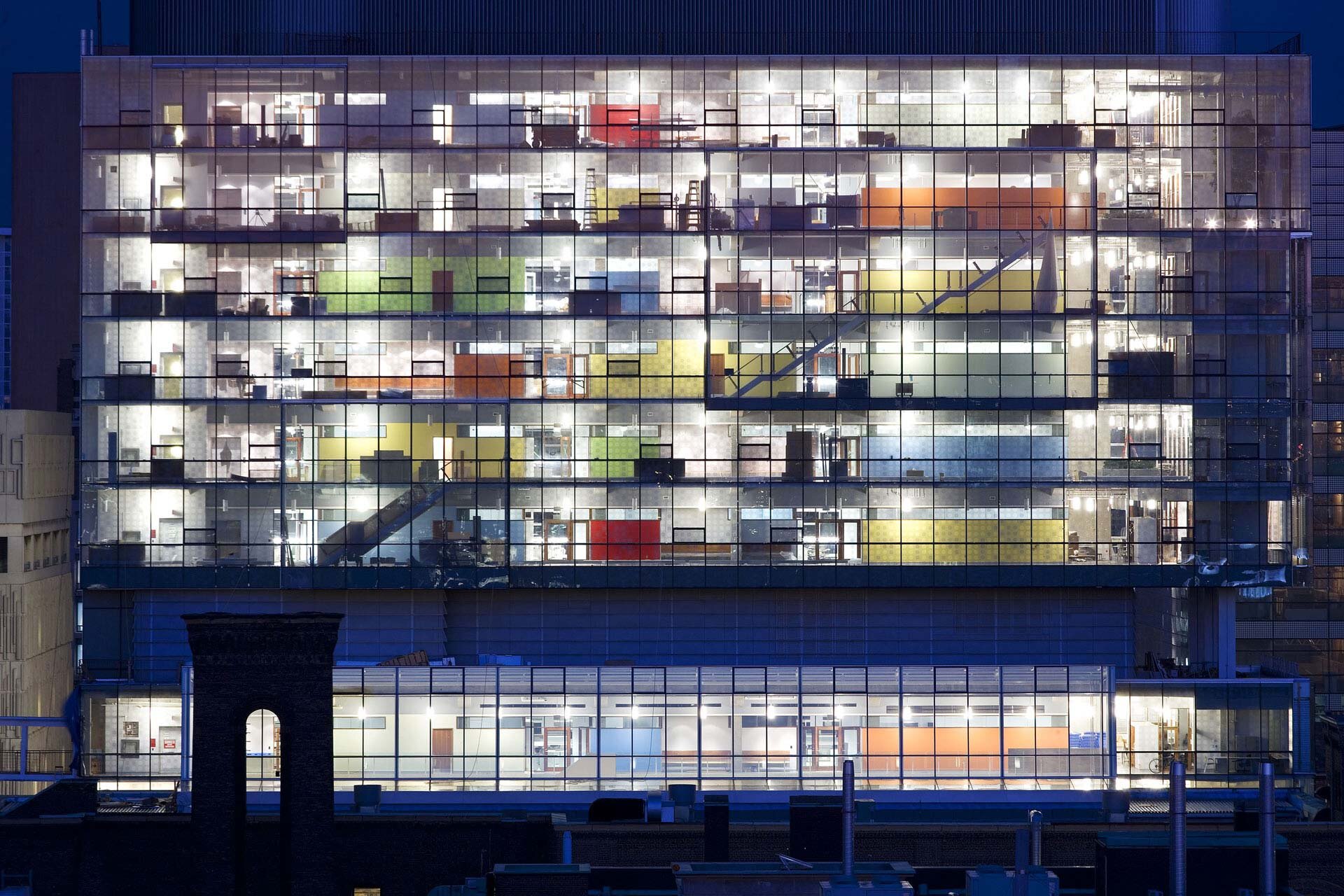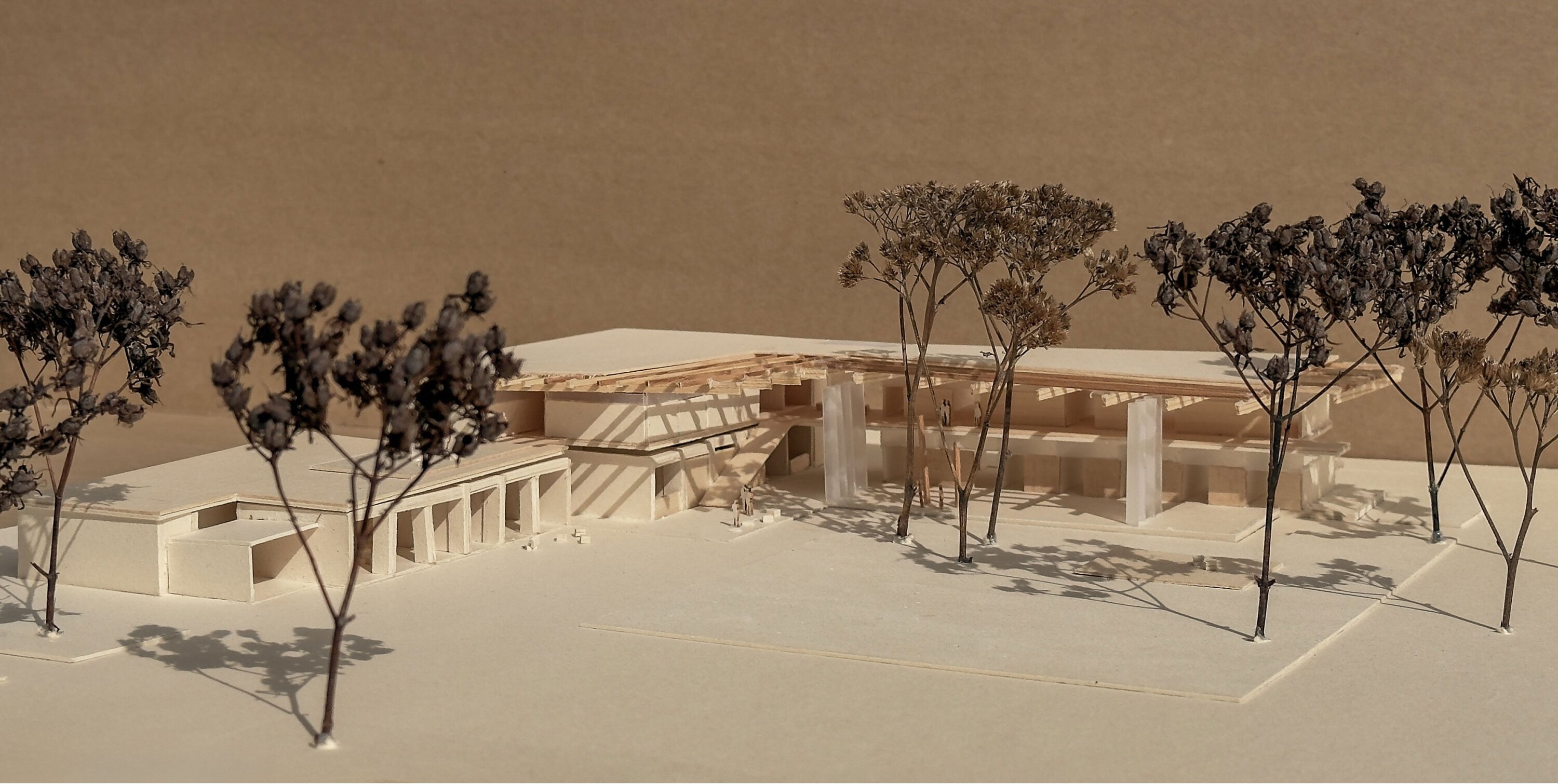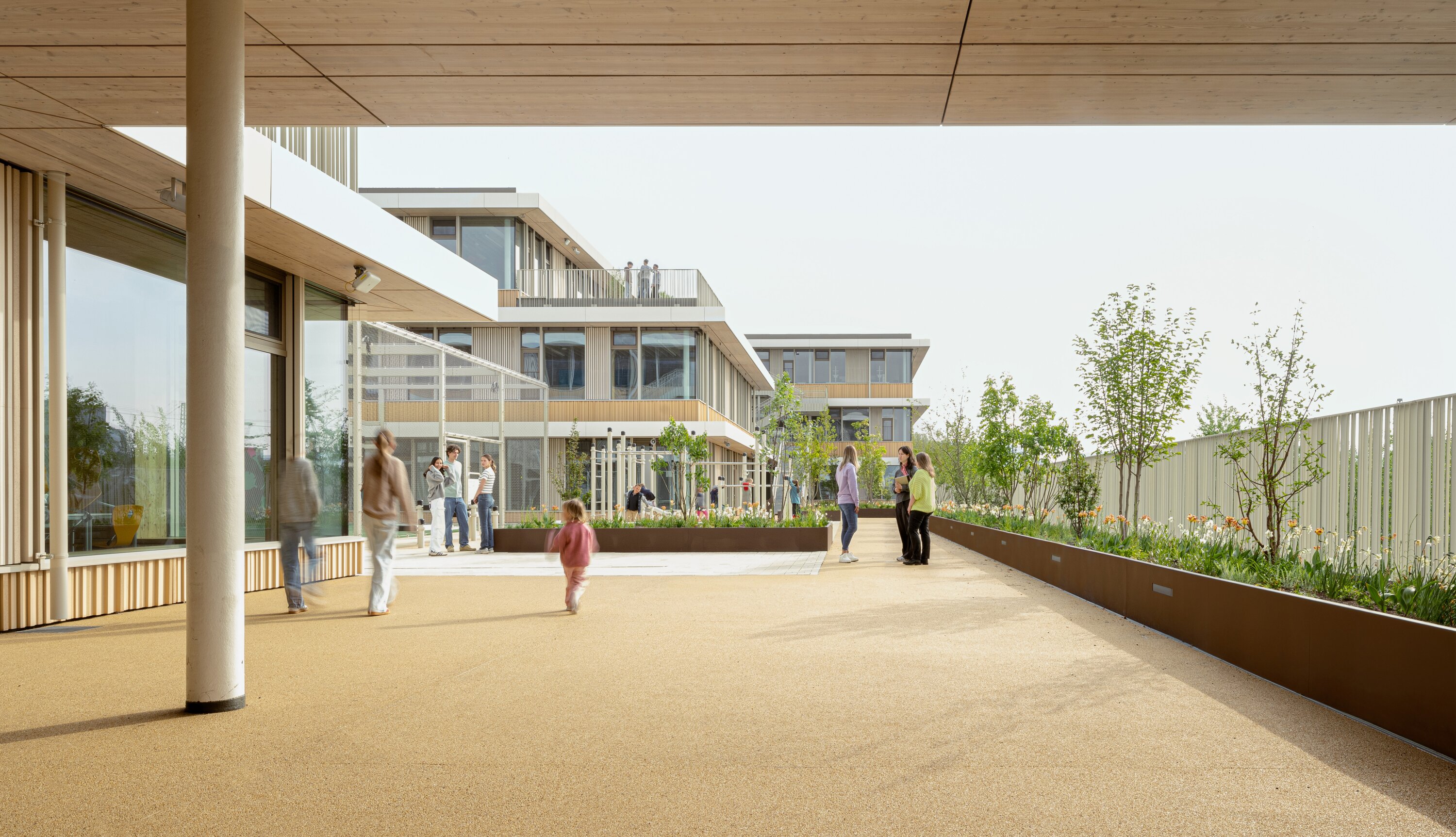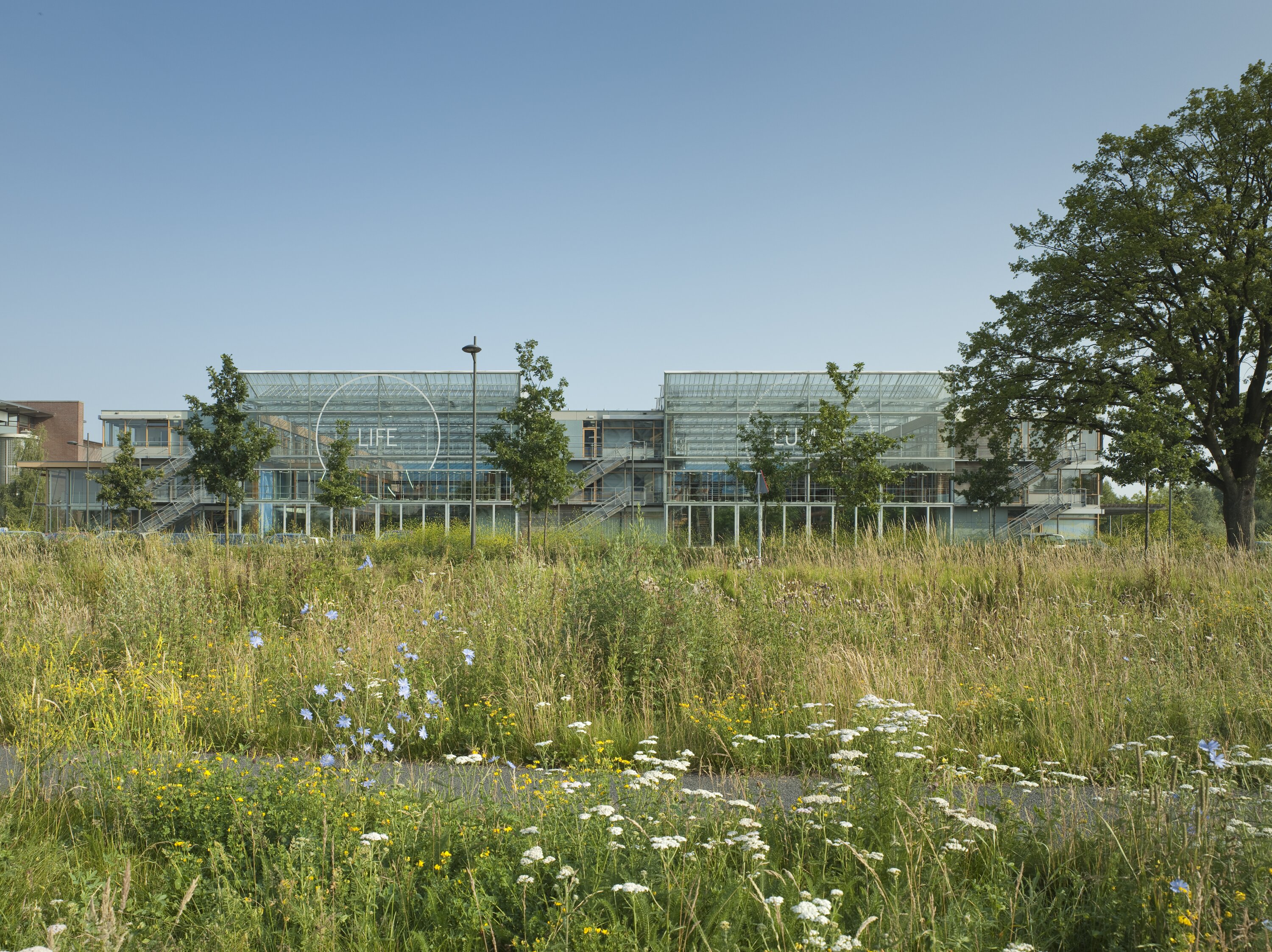
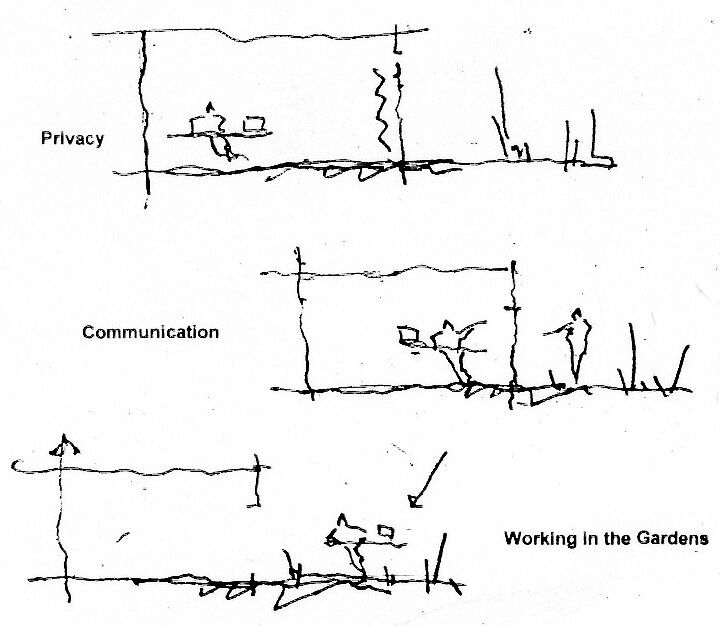
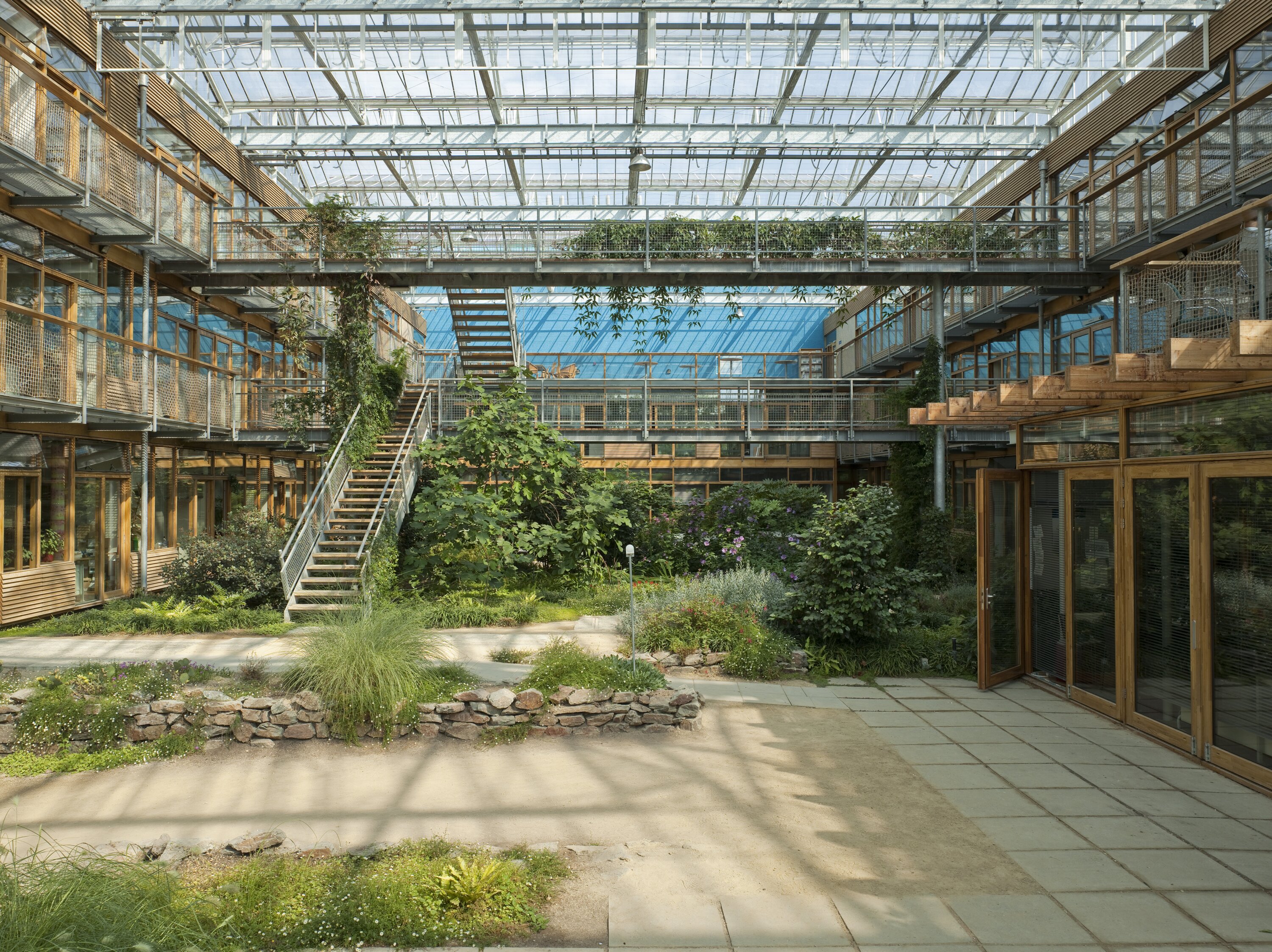
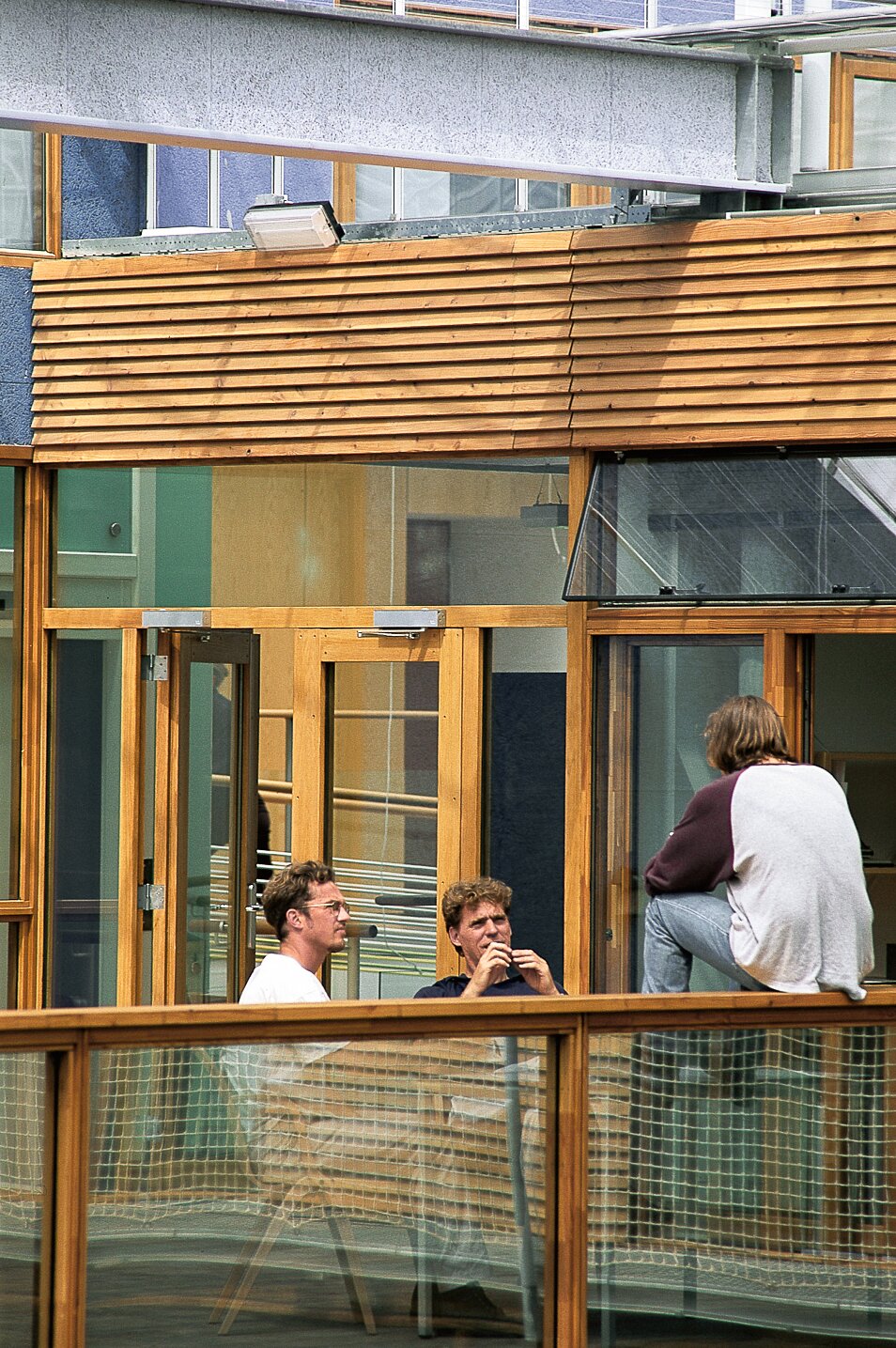
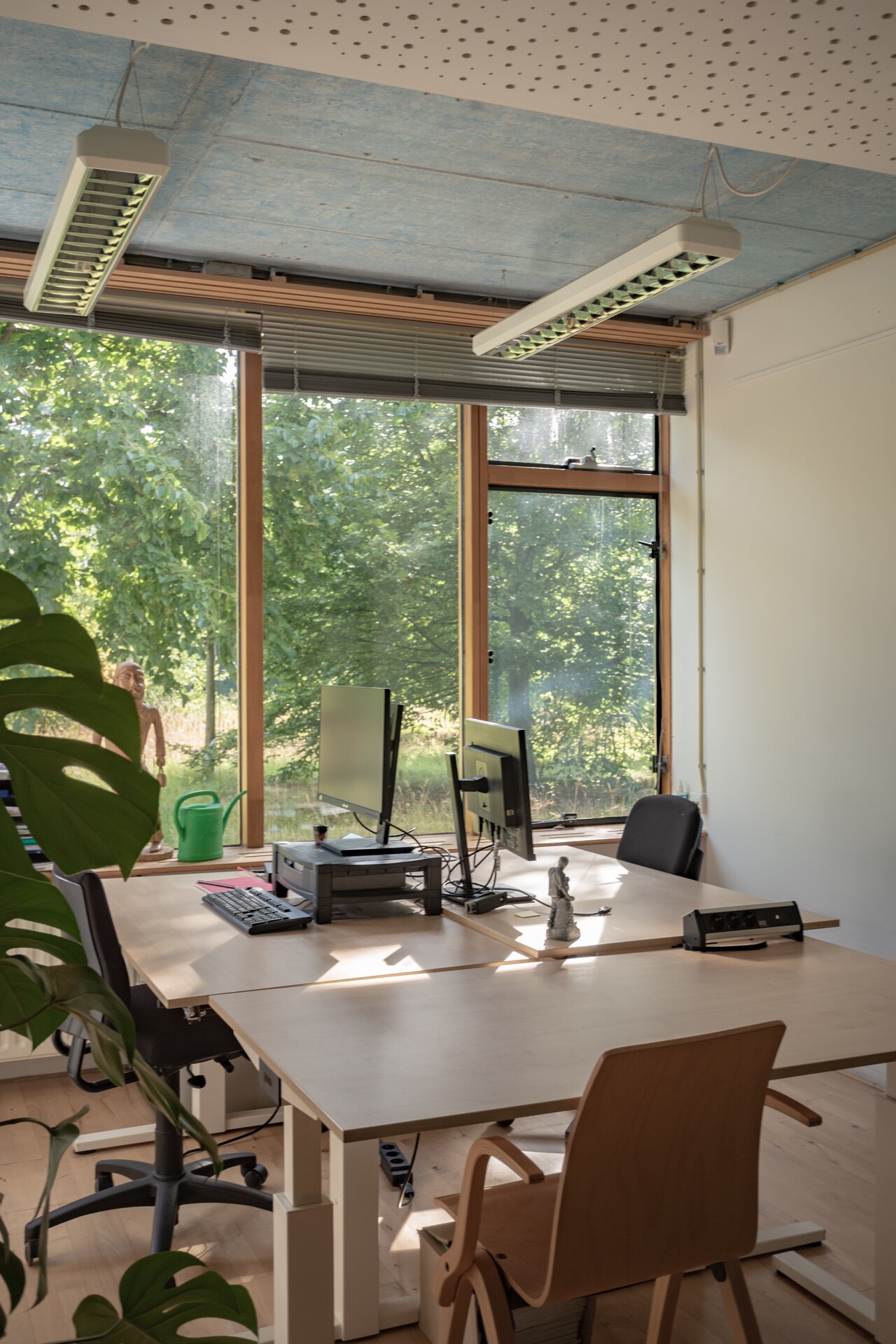
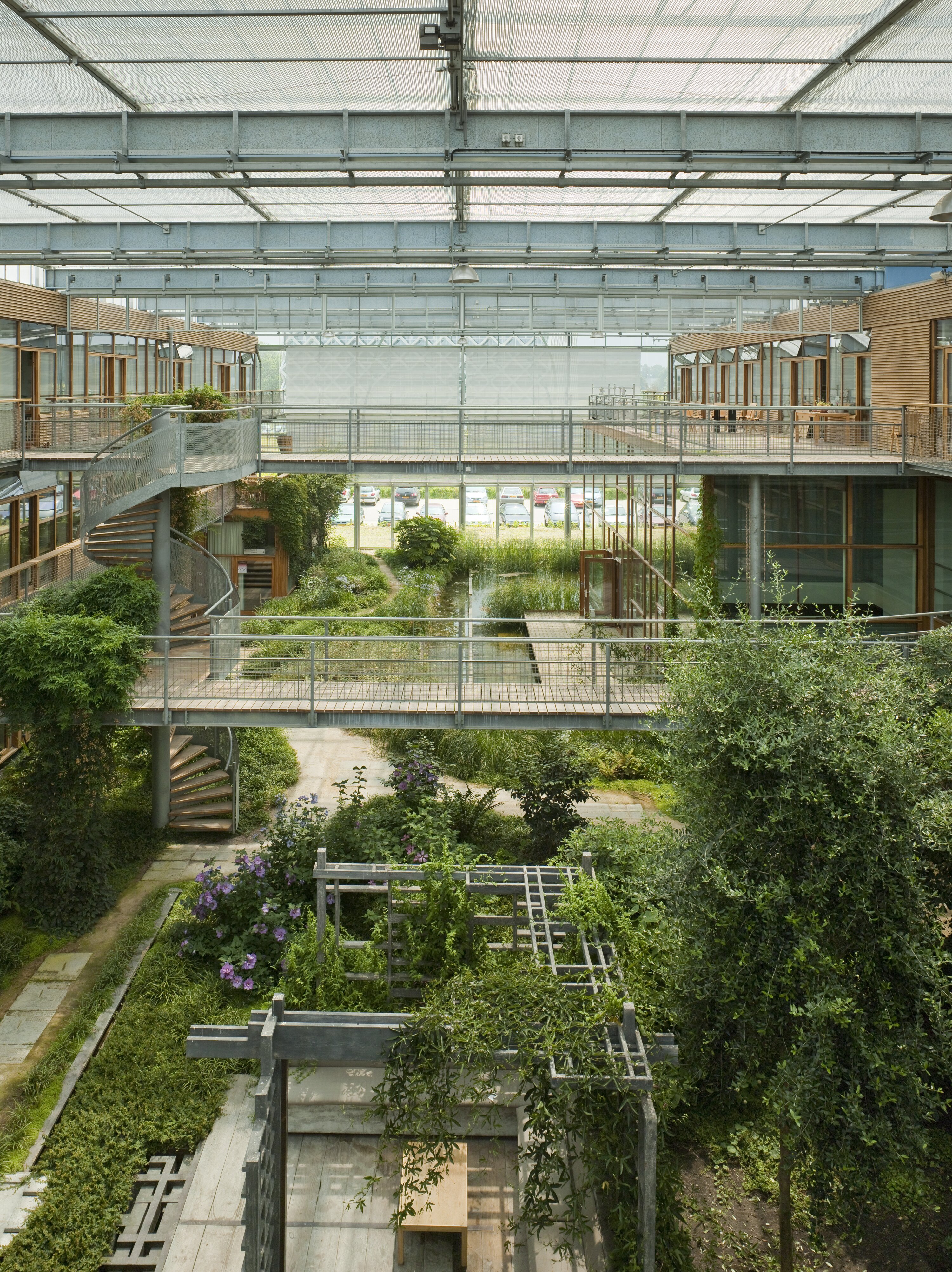
As an approachable research center, the building is designed to embrace its surrounding landscape rather than overpowering it, with all workspaces having a direct visual and physical connection to indoor and outdoor gardens—offices become part of the garden.
level 1
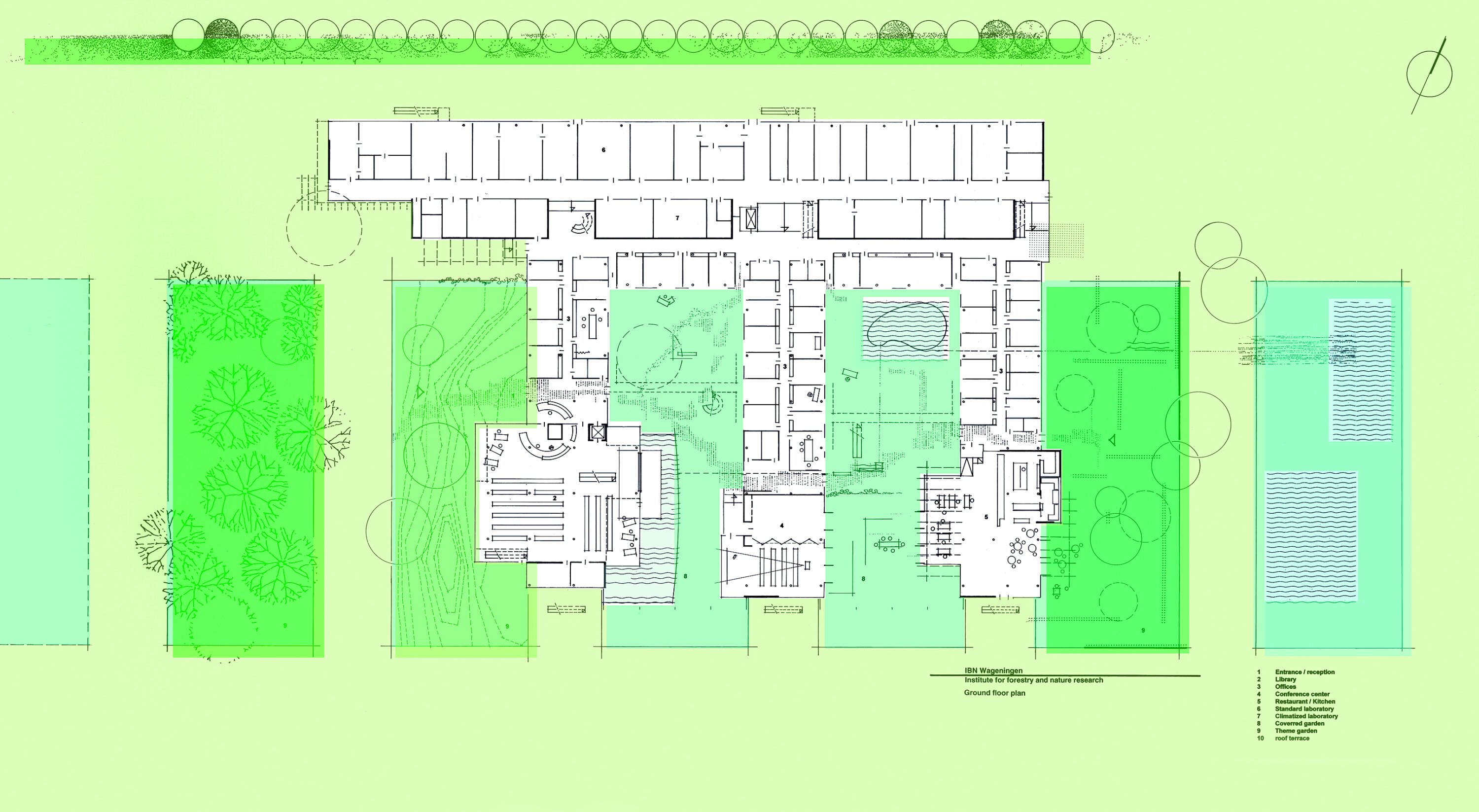
The functional areas are logically organized and interconnected in several ways. The laboratories are located in the longer building to the north, while the offices occupy three wings to the south. Covered gardens are positioned between these office wings, serving both as access and as gathering spaces. These gardens accommodate a variety of uses, including spaces for informal and social functions.
- Client
- Rijksgebouwdienst Direktie Oost
- Architects
- Stefan Behnisch
- Address
Droevendaalsesteeg
6709 PB Wageningen
Netherlands- Competition
1993, 1st prize
- Gross Area
11.800 qm / 126,970 sq.ft
- Gross Volume
70.000cbm / 2,471,700 cu.ft
- Photography
Christian Kandizia
Frank Ockert
Stefan Behnisch- Downloads
-
Download PDF
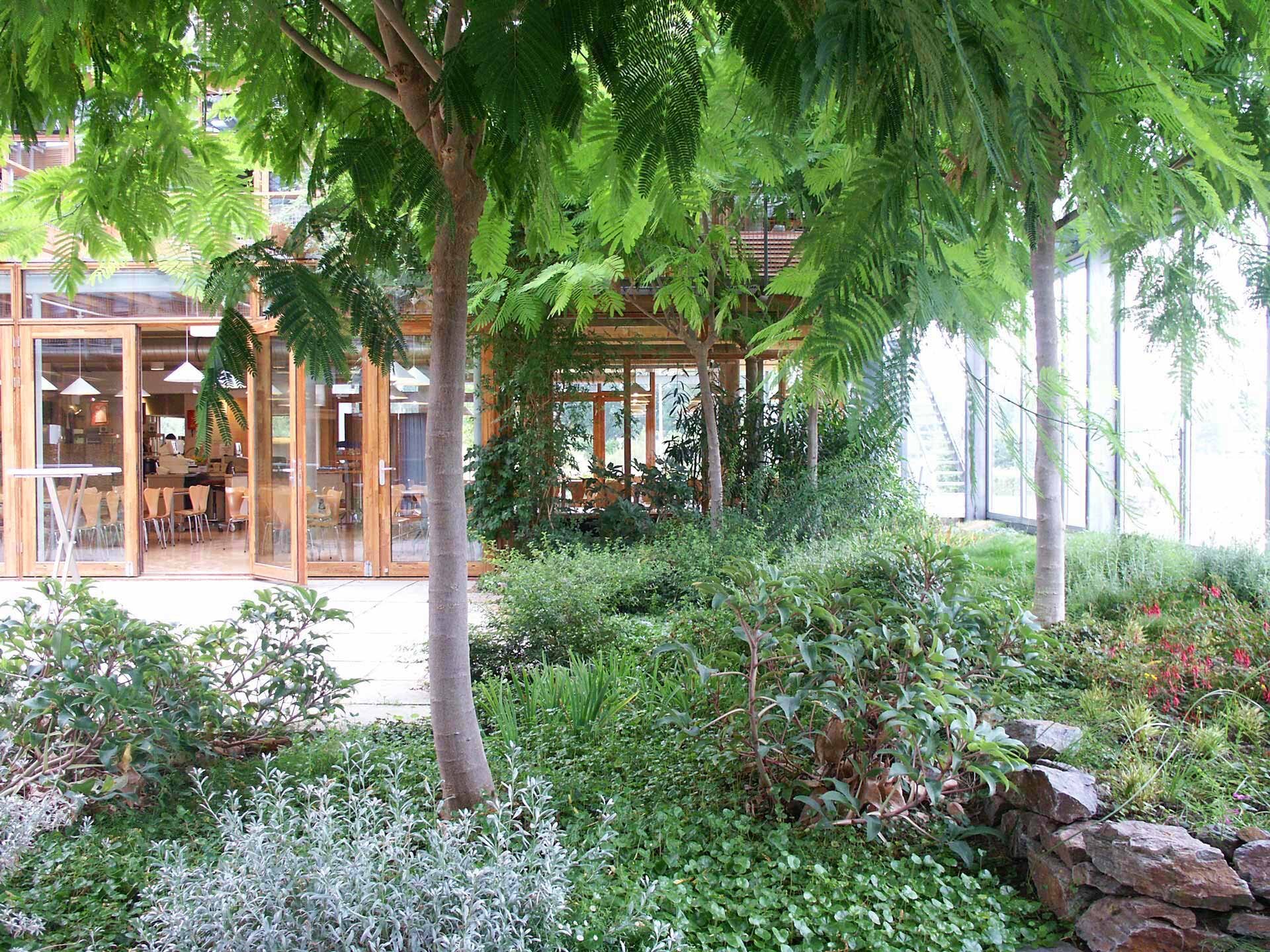
The project embodies what we today understand as cohabitation: it leveraged the site’s remaining ecological qualities to create a biodiverse habitat that supports local fauna while providing a welcoming environment for staff. Within the covered gardens, diverse plant populations thrive, each adapted to locale climatic conditions. Outside, nature gardens—a marsh, wildflower, grassland, and woodland—extend the landscape, representing the diverse ecosystems found across the Netherlands, providing both structural variety and fostering natural processes. The grounds around the building feature dry stone walls, hedges, and other landscaping elements—scattered tree groves, alleys, berms, ponds, swamps, and water channels—that have become home to birds, insects, and small animals.
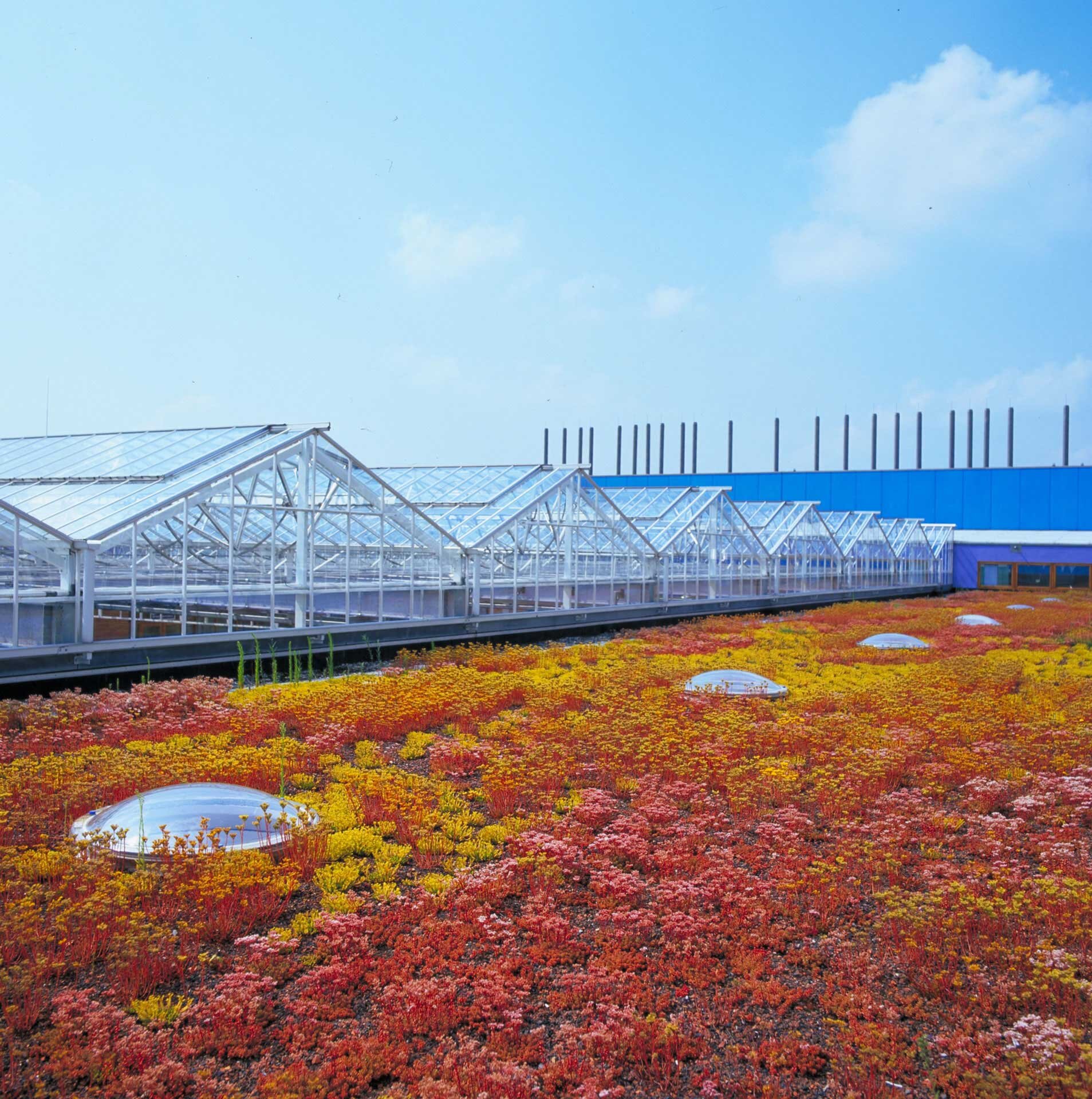
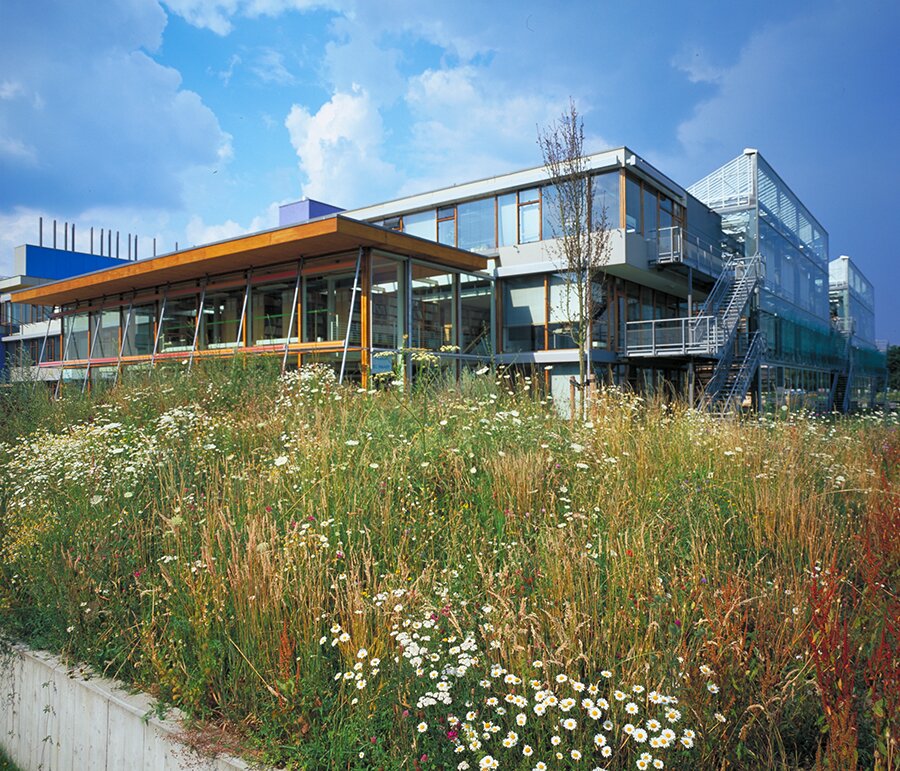
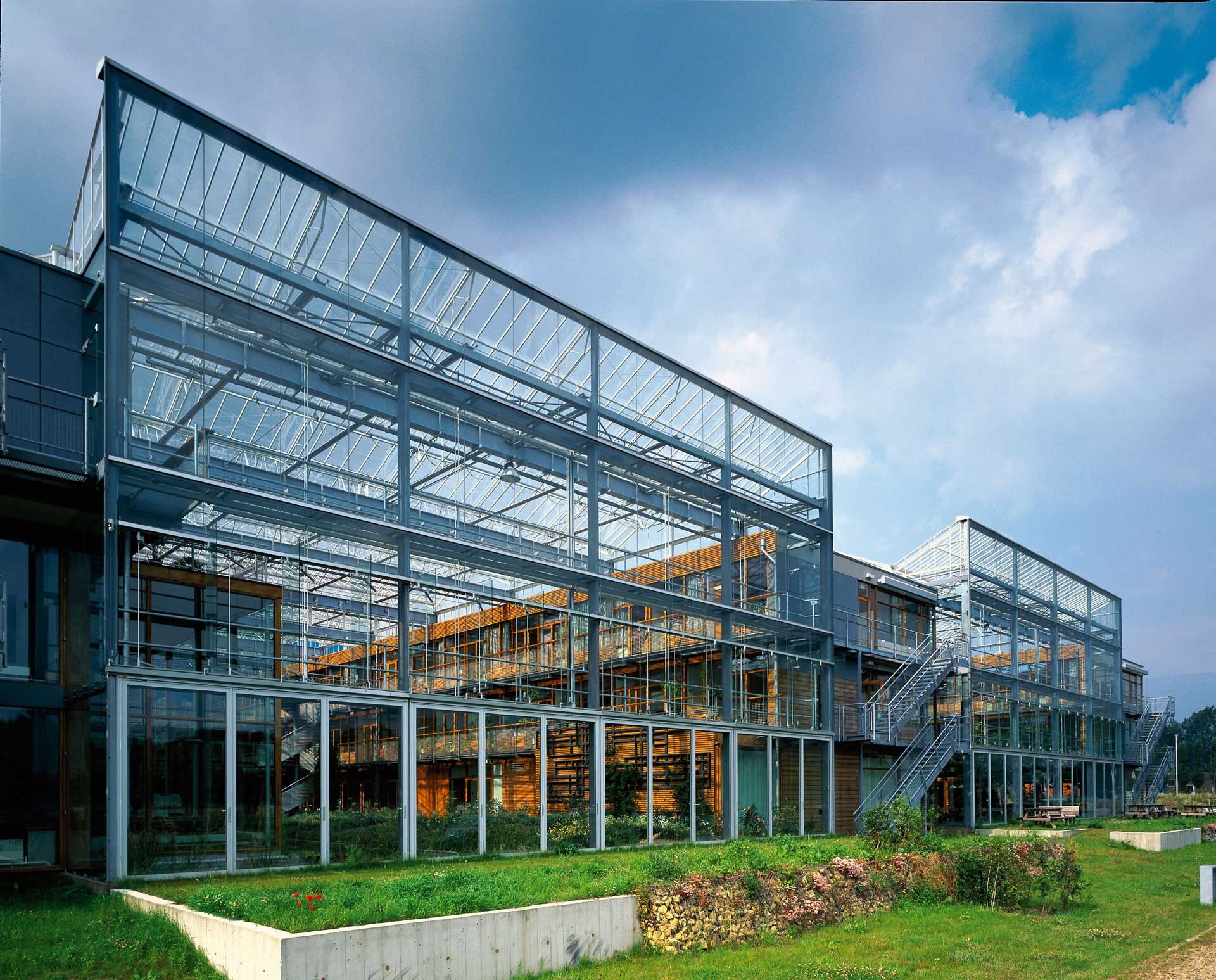
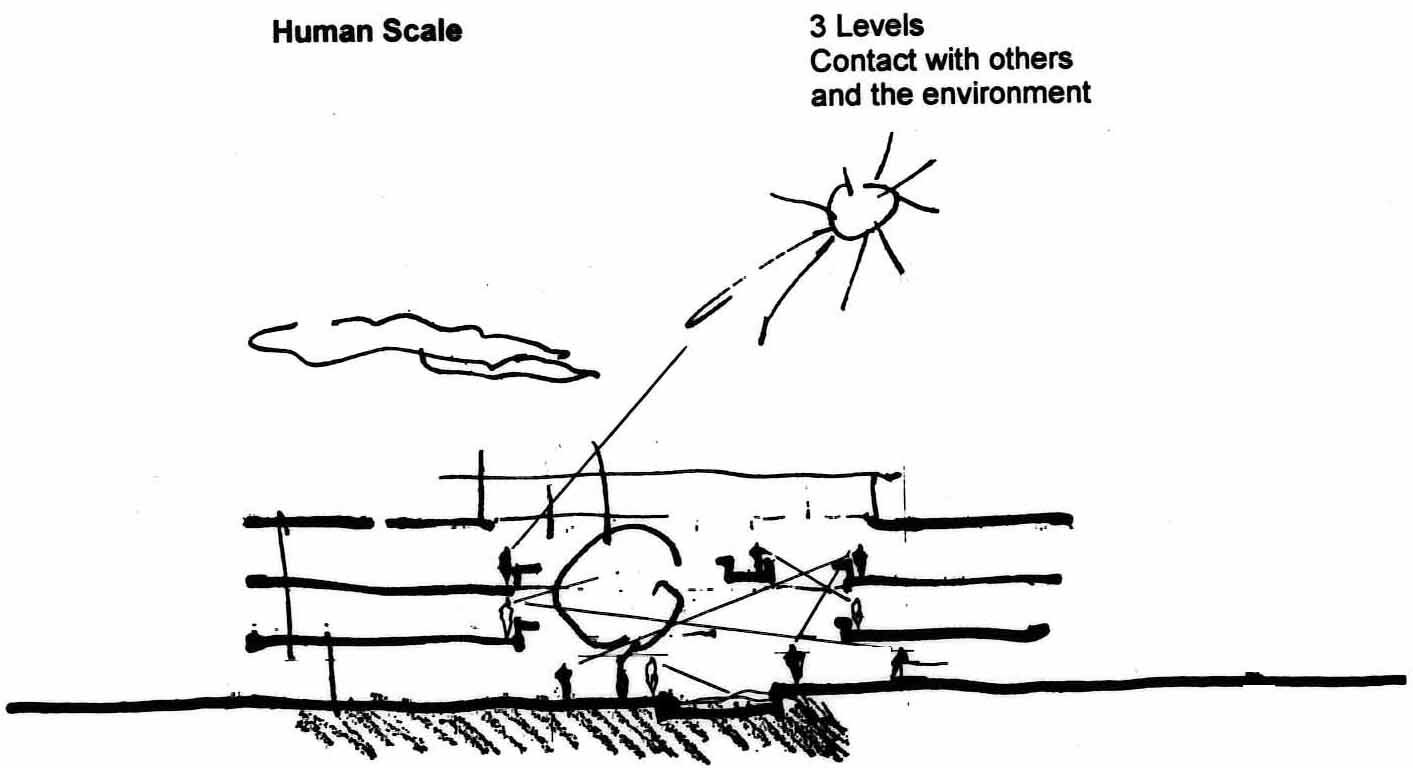
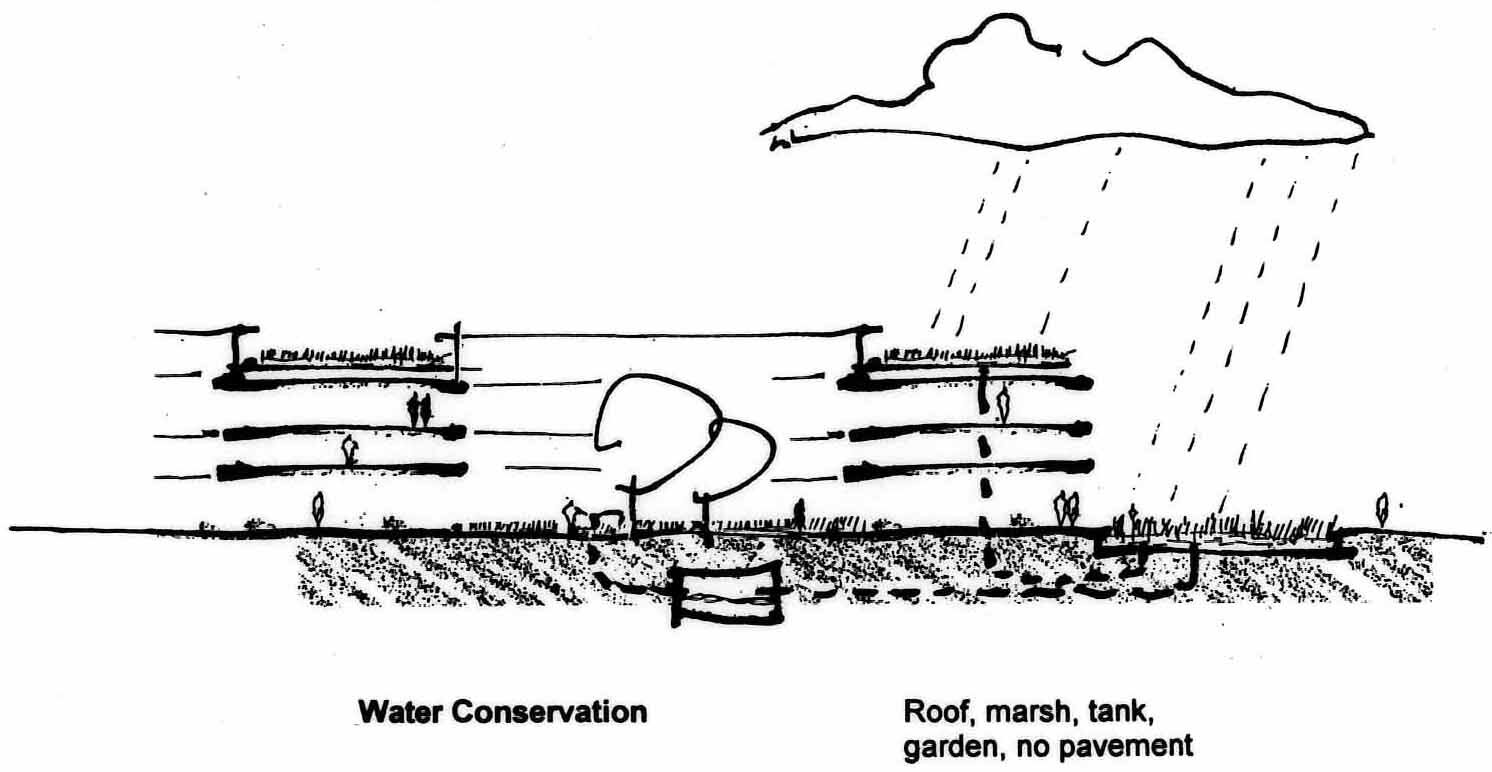
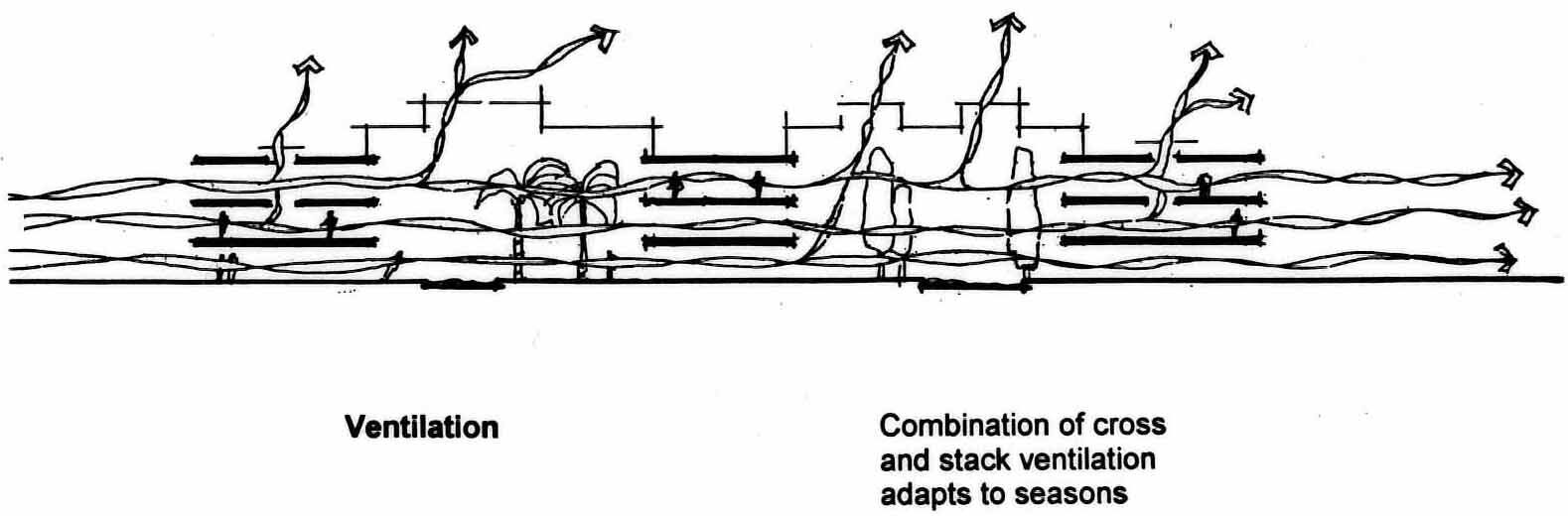
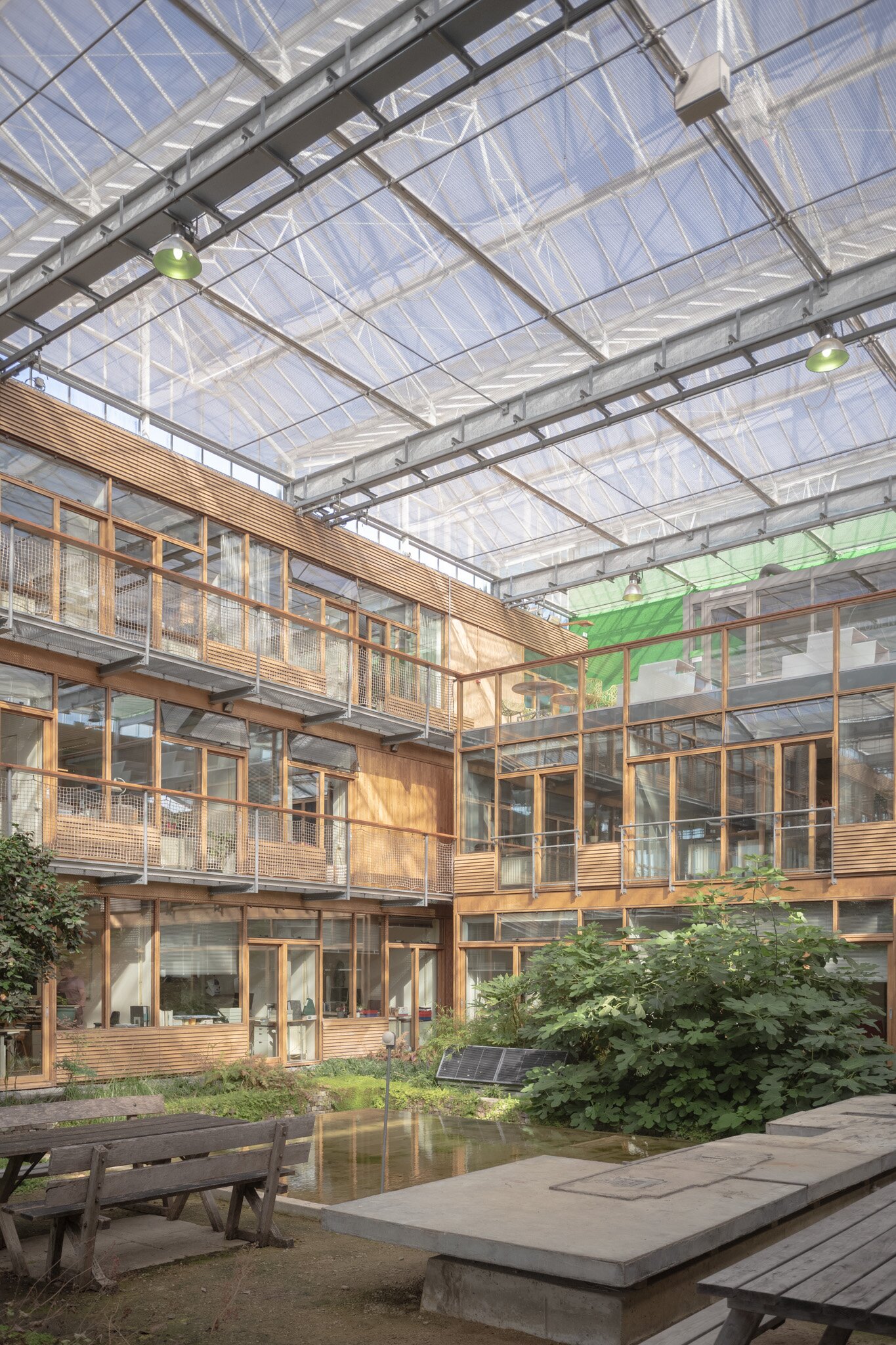
The covered gardens are single-glazed and resemble the greenhouses abound in the area. The climate in these covered gardens changes both the living and working habits, offering new opportunities. In addition to being focal points for daily activities and informal gatherings, two indoor gardens central to the structure are essential to its energy concept.
As an EU pilot project for ecological construction, the building incorporates progressive ideas from both the client and user groups, creating a multi-layered framework capable of meeting the complex demands of such a research establishment. The project was realized within a standard budget demonstrating that durable and sustainable building techniques can be applied without incurring additional costs.