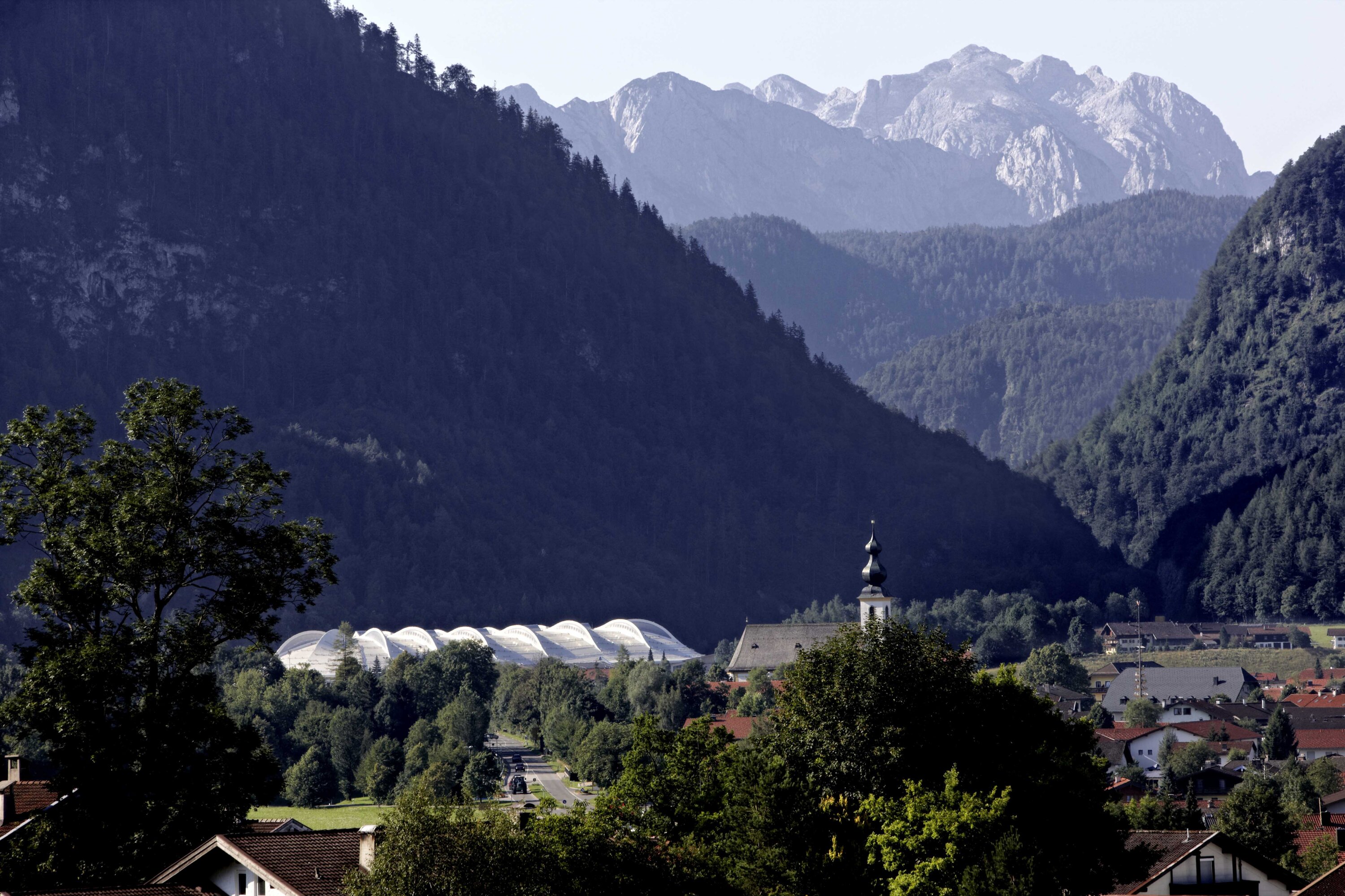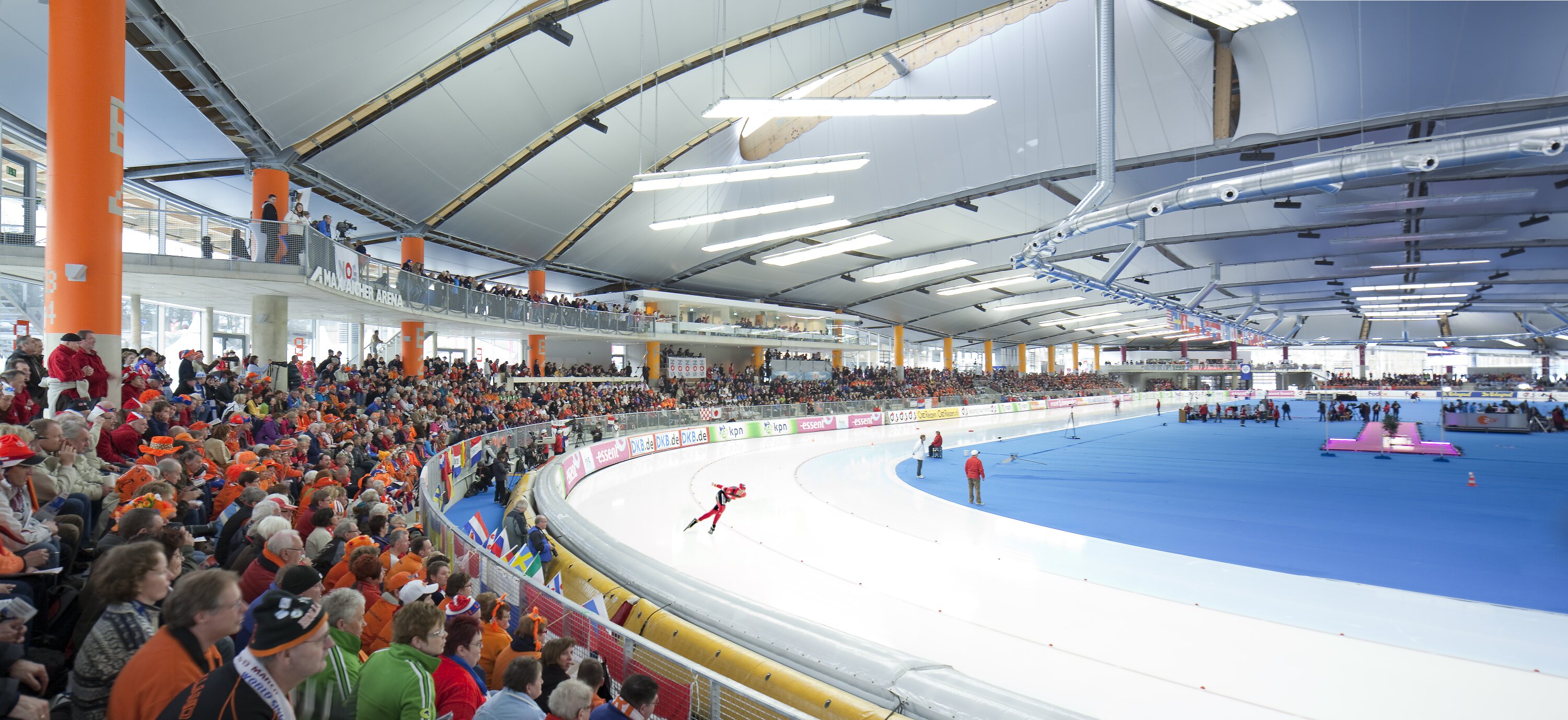


The Max Aicher Arena is an indoor speed skating venue in Inzell, a small Bavarian Alps municipality with an international reputation for winter sports. Many World and Olympic speed skating champions hail from this town. Since 1959, athletes trained on natural ice from Lake Frillensee—Germany’s coldest lake—until an artificial rink was built in 1965. That facility remained largely unchanged until the need for precisely controlled conditions led to the construction of a new stadium.

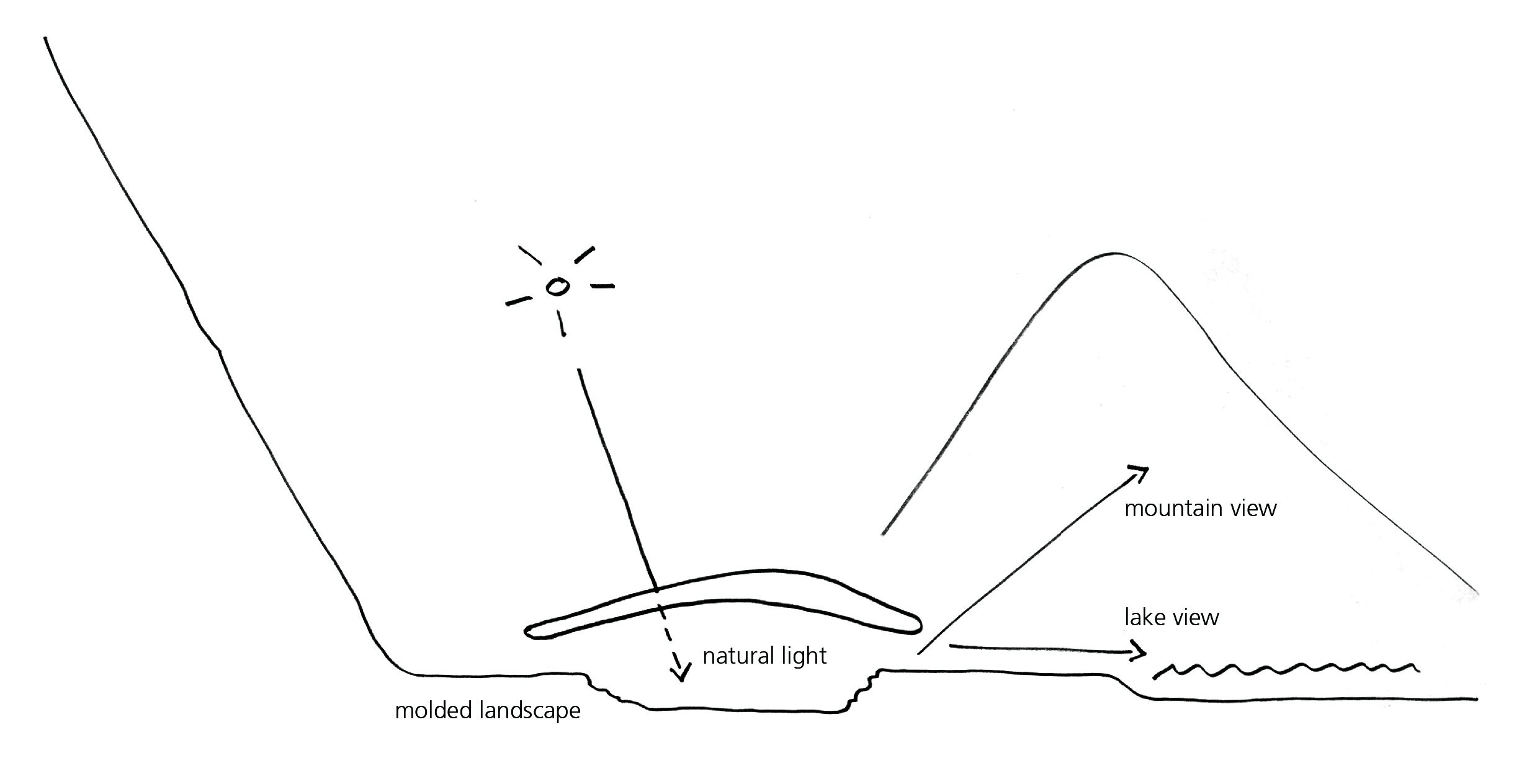
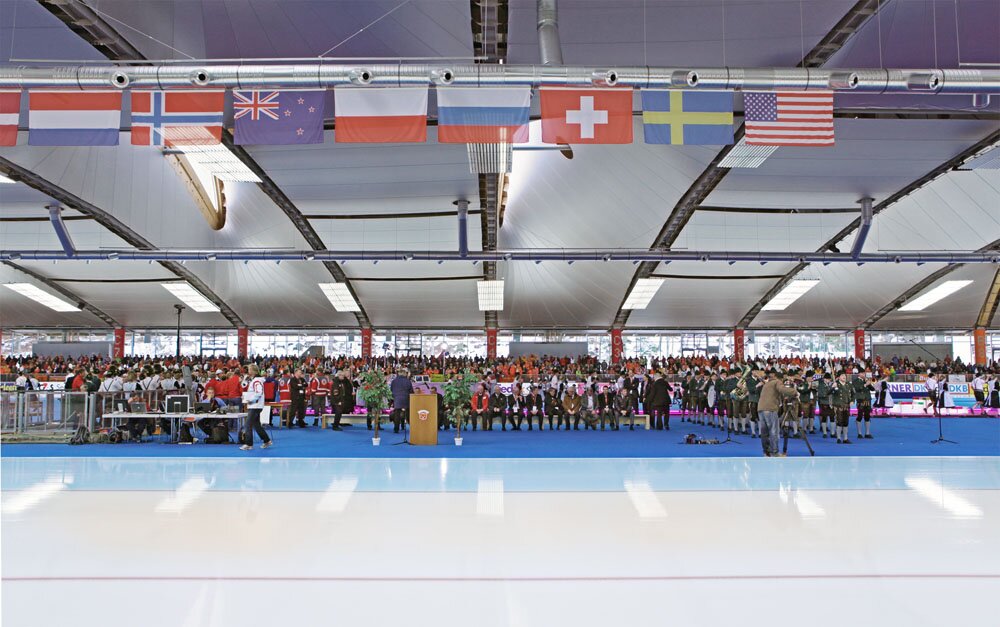
The client’s brief was clear: provide seating for 6,000 spectators and deliver the world’s fastest ice. The resulting design is a thoughtful intervention that respects the surrounding landscape. A concrete grandstand wraps the rink, appearing to rise from the terrain, while athlete and technical facilities are tucked below ground to preserve the natural flow of the site.



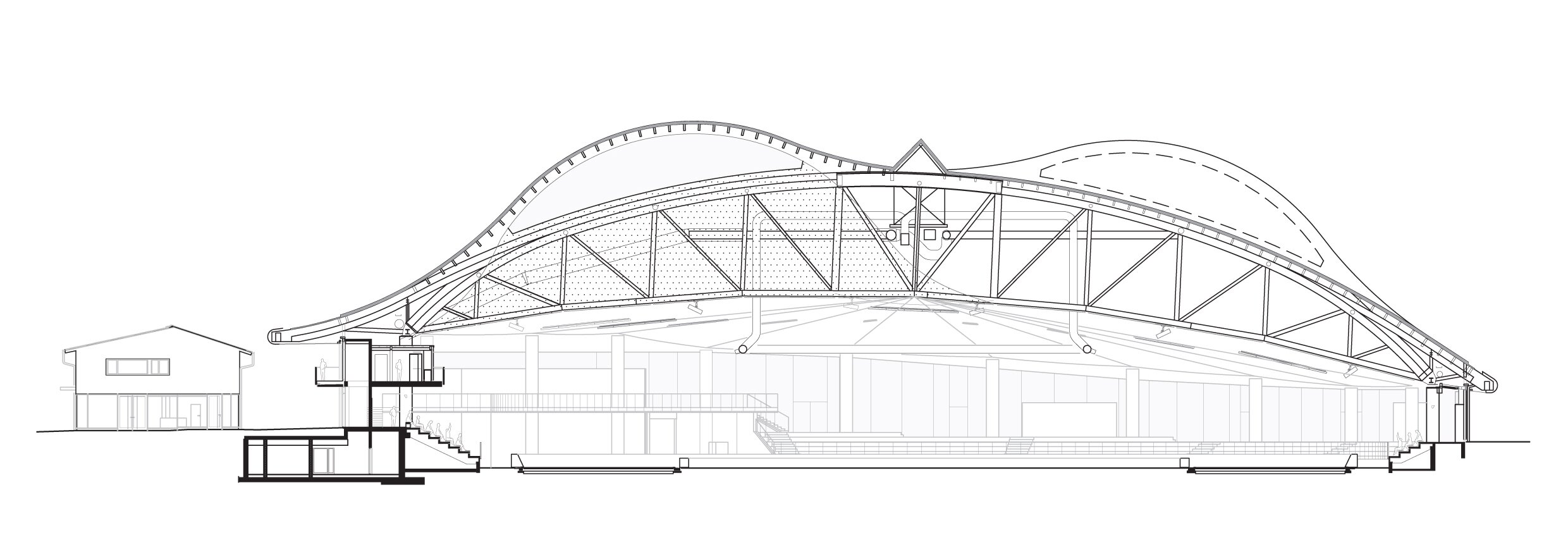
Section AA
Combining cutting-edge engineering with Bavaria’s historic context and breathtaking scenery, the stadium has become a new landmark for Inzell—both a world-class sports facility and a symbol of the town’s deep connection to winter sport.
- Client
- Gemeinde Inzell
- Architects
- Behnisch Architekturbüro
- Address
Reichenhaller Straße 79
83334 Inzell
Germany- Gross Area
20.750 qm / 223,351 sq.ft
- Gross Volume
308.237 cbm / 1,088,529 cu.ft
- Competition
2008
- Photography
Maike Hansen
- Photography
David Matthiessen
- Downloads
-
Download PDF
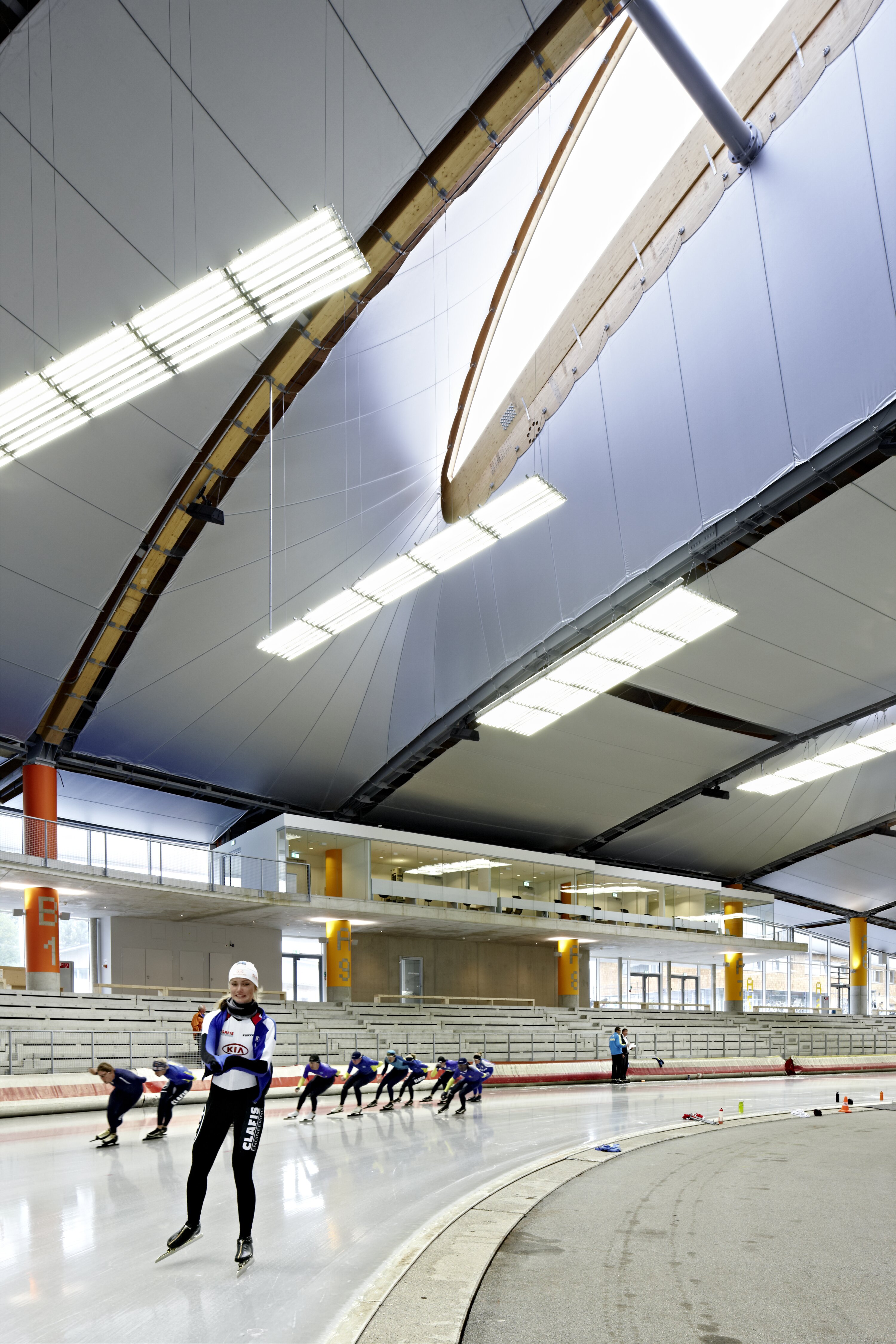
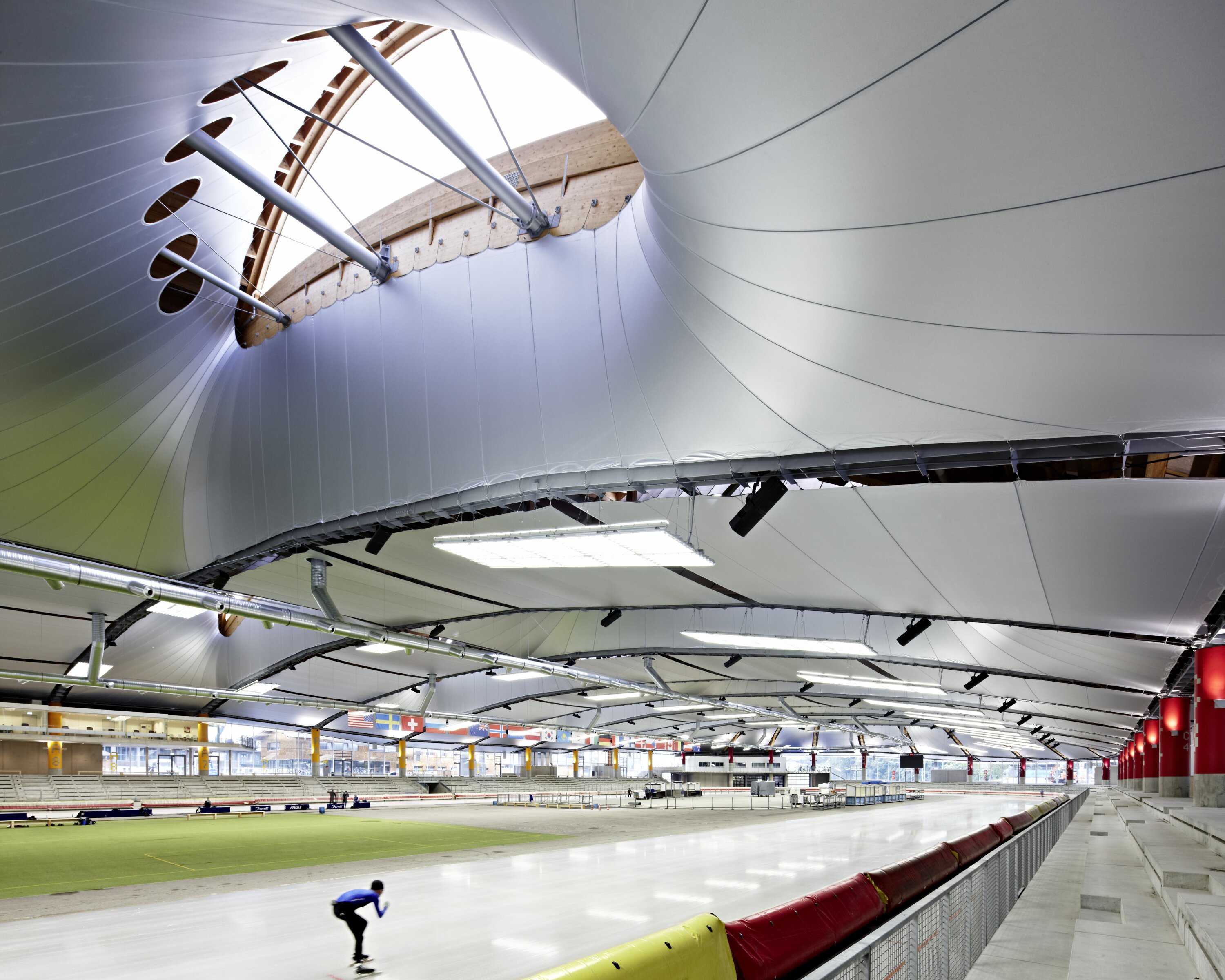
Above, a gently contoured roof with rhythmically placed skylights seems to float over the structure. These skylights, aligned with the underlying girders, along with the surrounding glass facade, establish a strong visual link between the ground and sky. By day, they flood the interior with natural light; by night, they glow like beacons, illuminating the Inzell skyline.

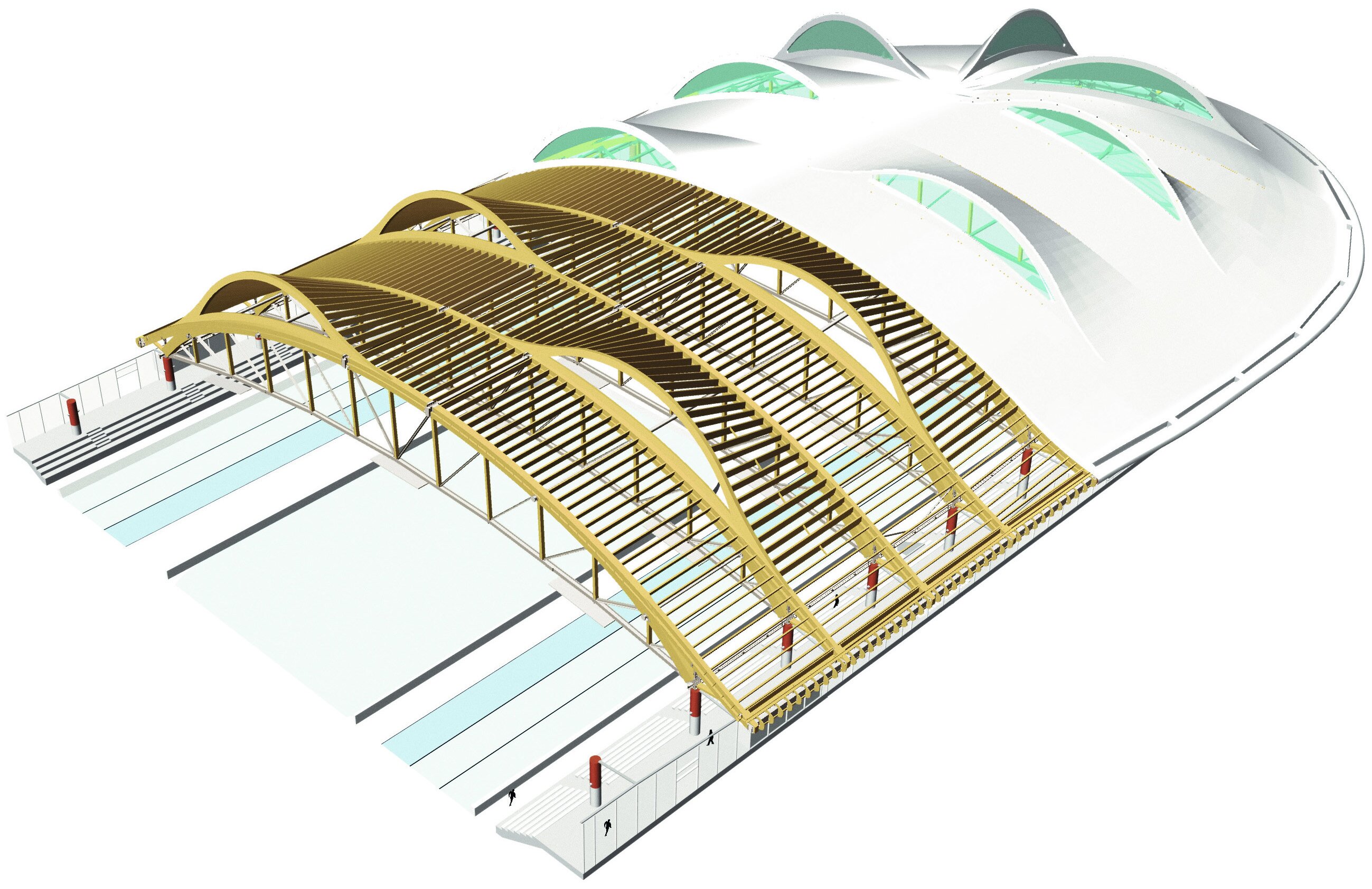
Roof Diagram
Unlike most ice speed skating stadiums, which typically require significant energy to cool the ice and heat the interior, the arena uses about 30% less energy than comparable facilities. This efficiency results from detailed digital analysis that shaped the stadium's design. The roof plays a critical role in optimizing the stadium's energy use. A “Low-E” membrane beneath the roof reflects the ice’s cold thermal radiation back onto the track, maintaining the necessary low temperature. Seventeen north-facing skylights allow ample diffuse, glare-free daylight into the space.

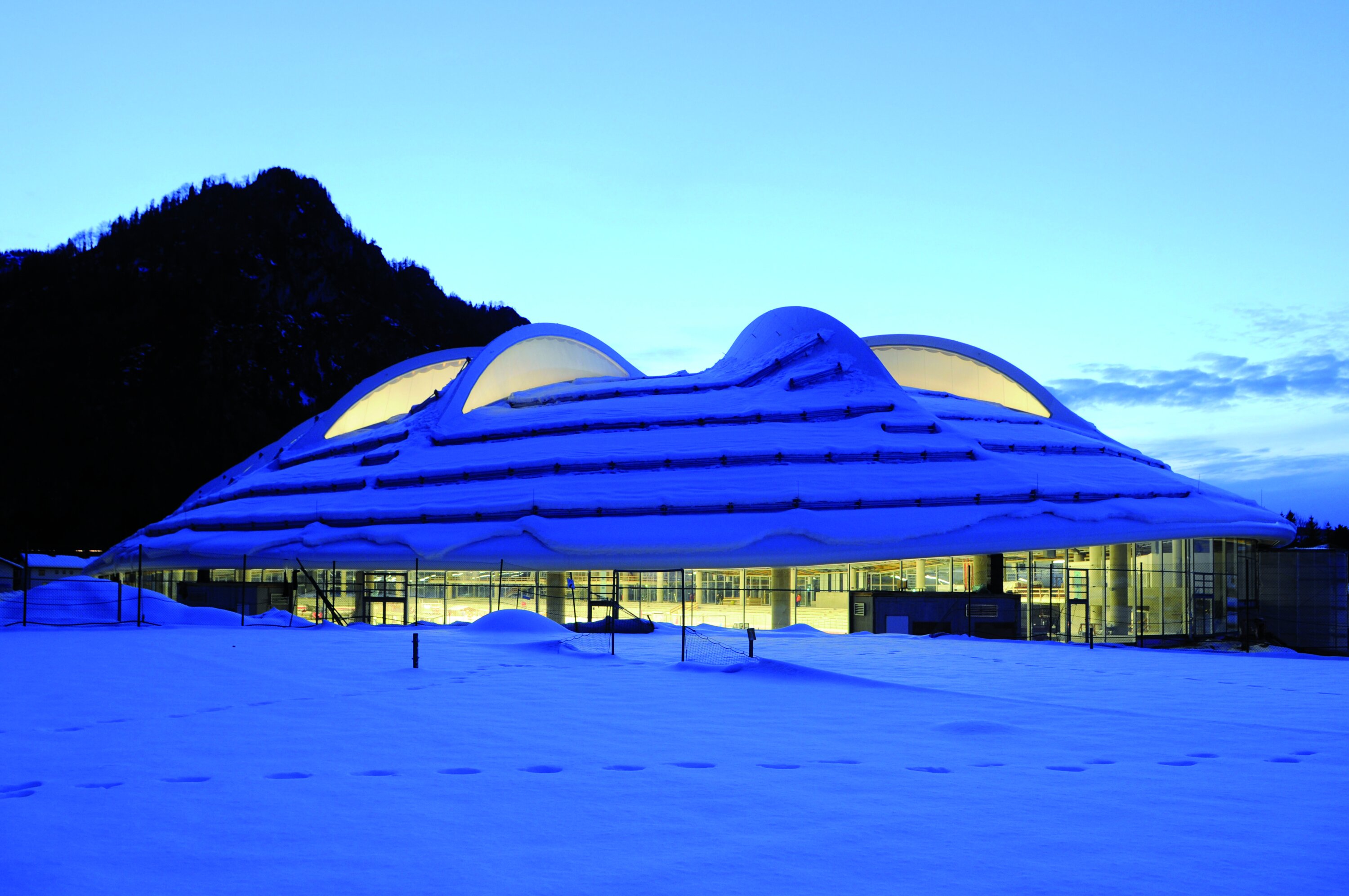

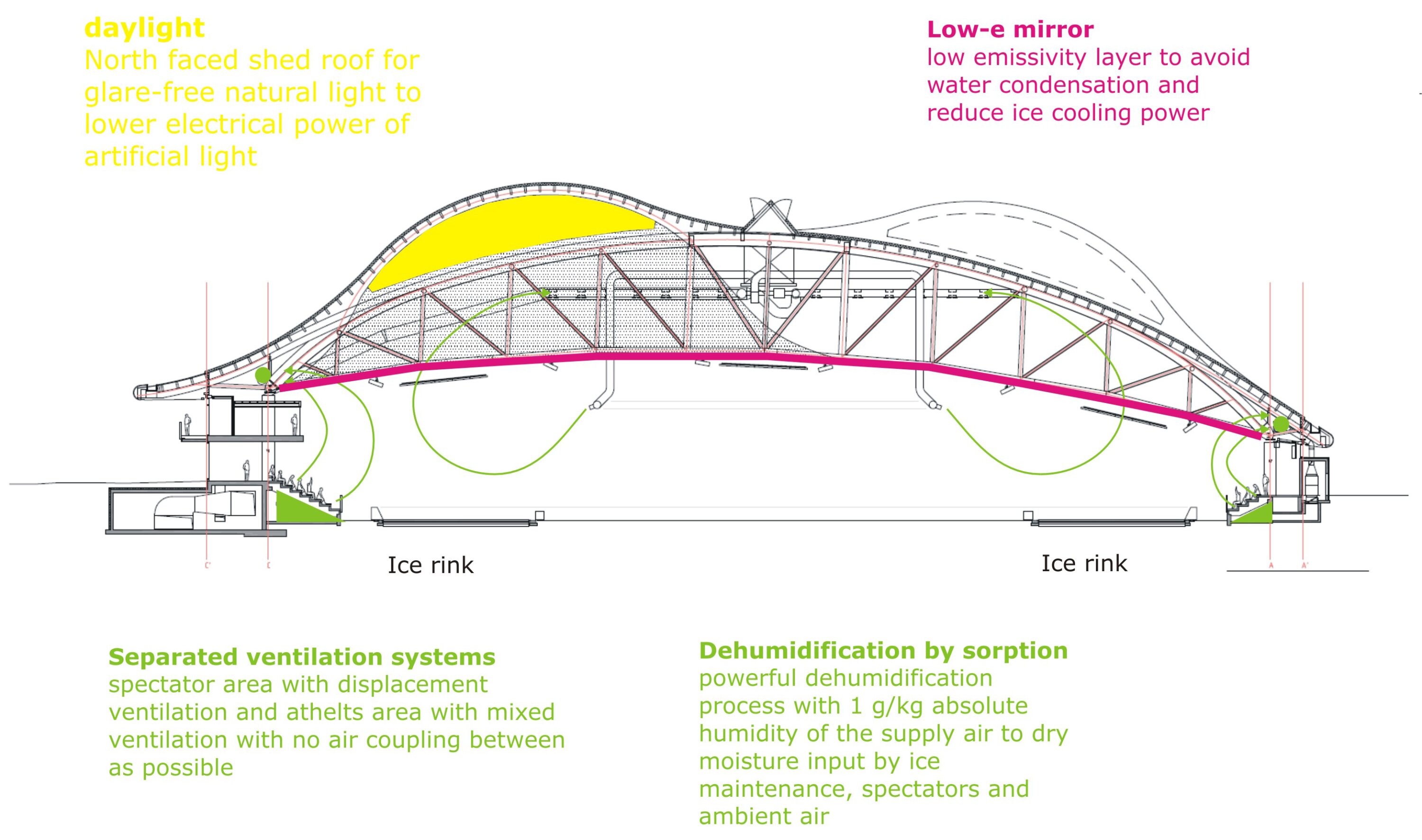
ClimateConcept
The energy concept also includes sustainable features such as wood pellets with a neutral energy balance and reuses waste heat from the ice cooling system to warm the grandstands. This integration of natural light—pioneering in ice stadium design at the time of construction—along with a strong connection to the surrounding landscape, enhances both the structure’s sustainability and the well-being of its athletes.