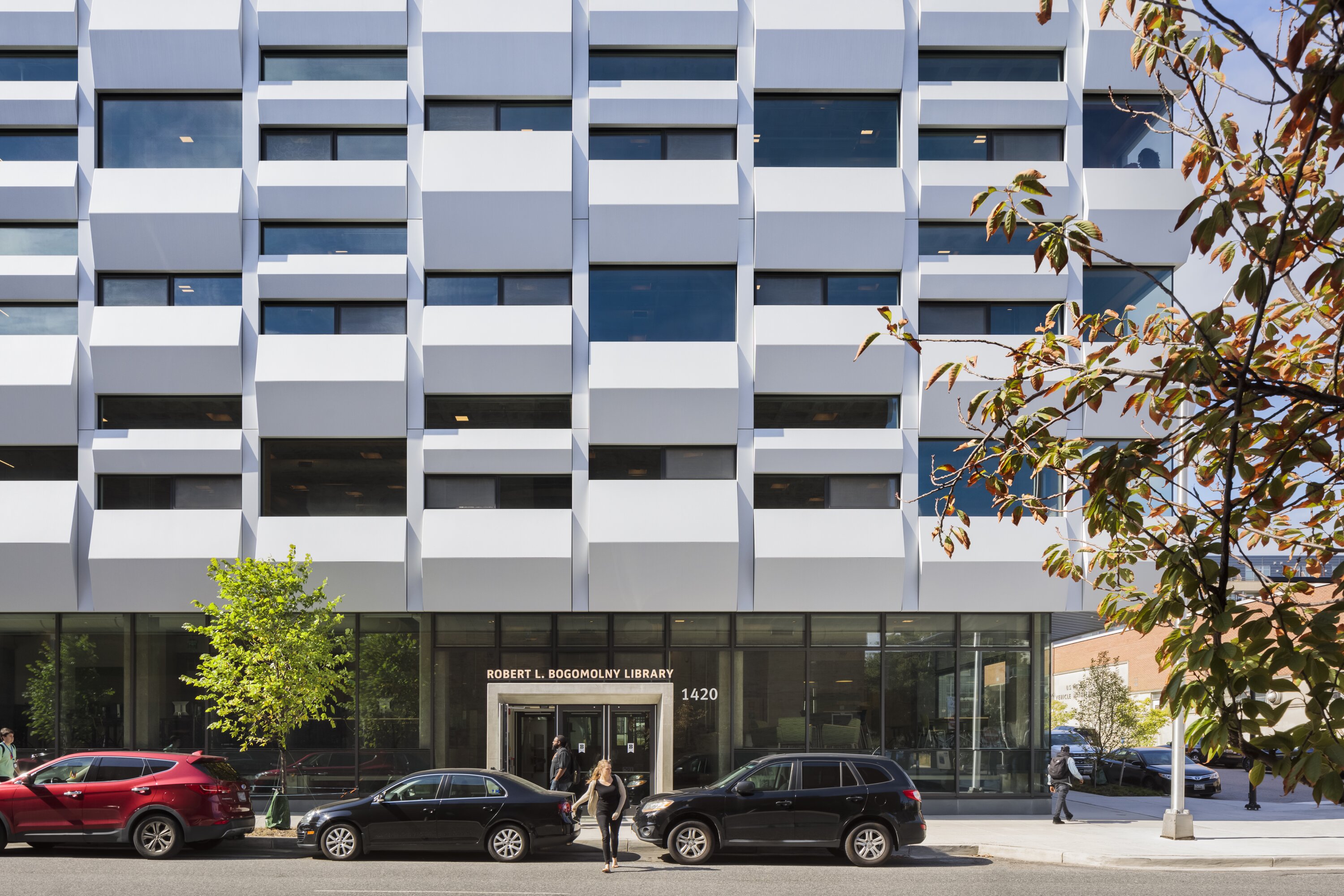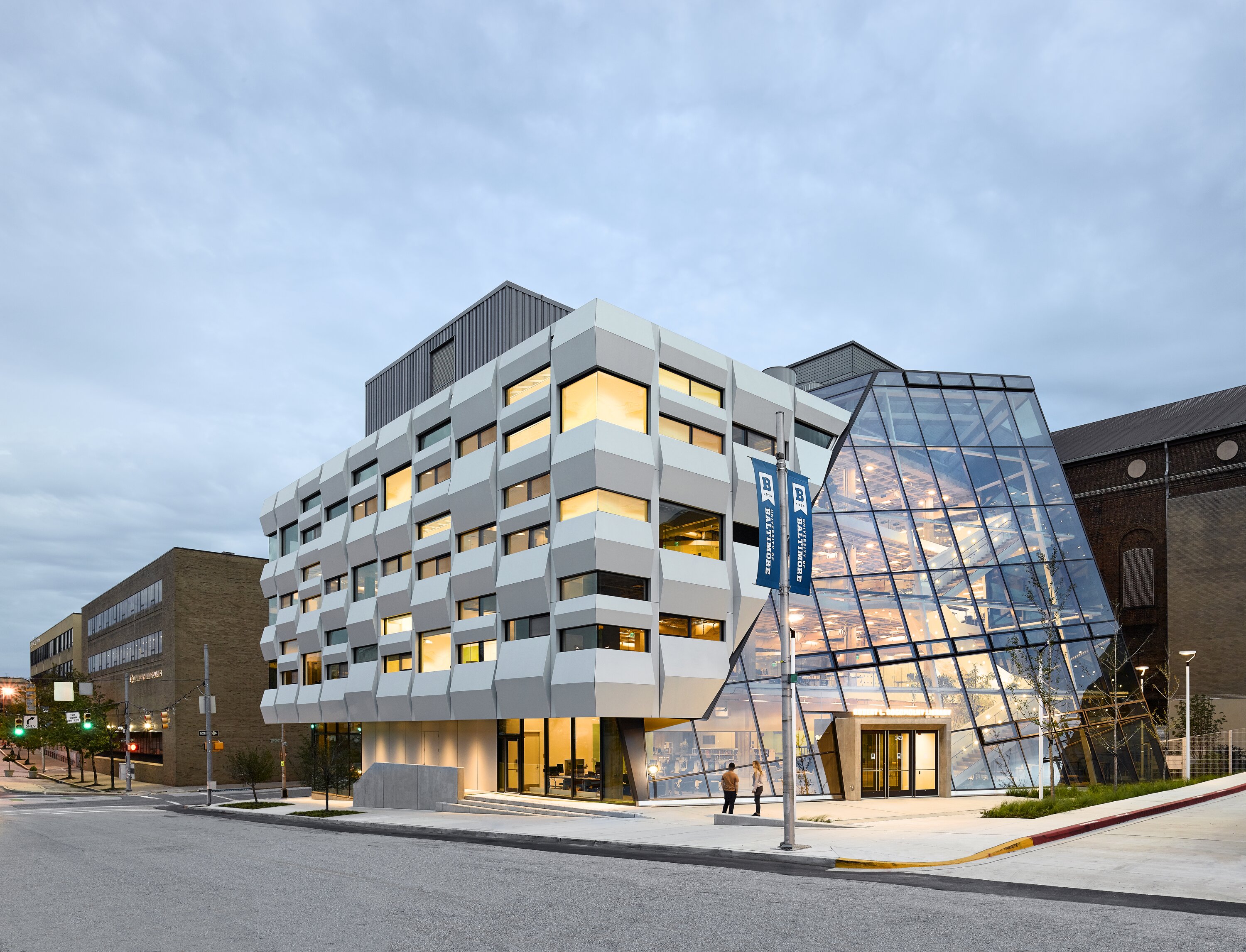
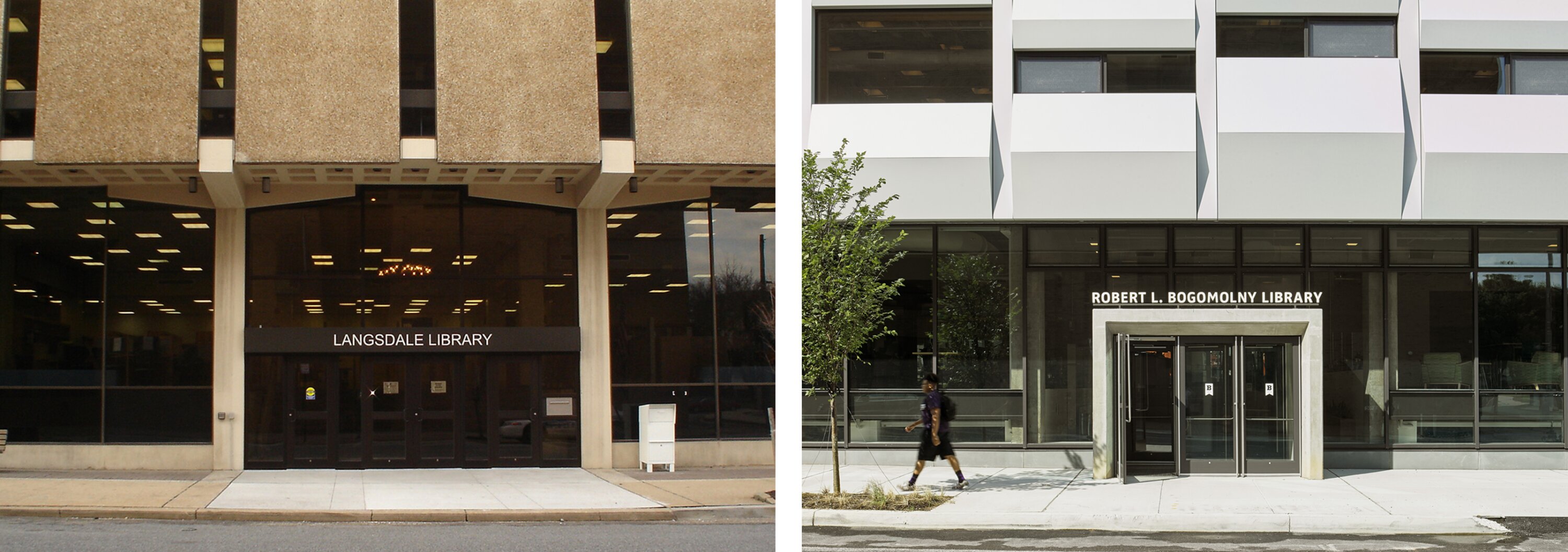
After an initial study, we convinced the client to forgo demolition of the 1960s building in favor of its rehabilitation and re-cladding. Located at the intersection of two prominent streets in Baltimore, the structure has visual connections to Penn Station and other important landmarks on campus, establishing a strong entry point to the university.
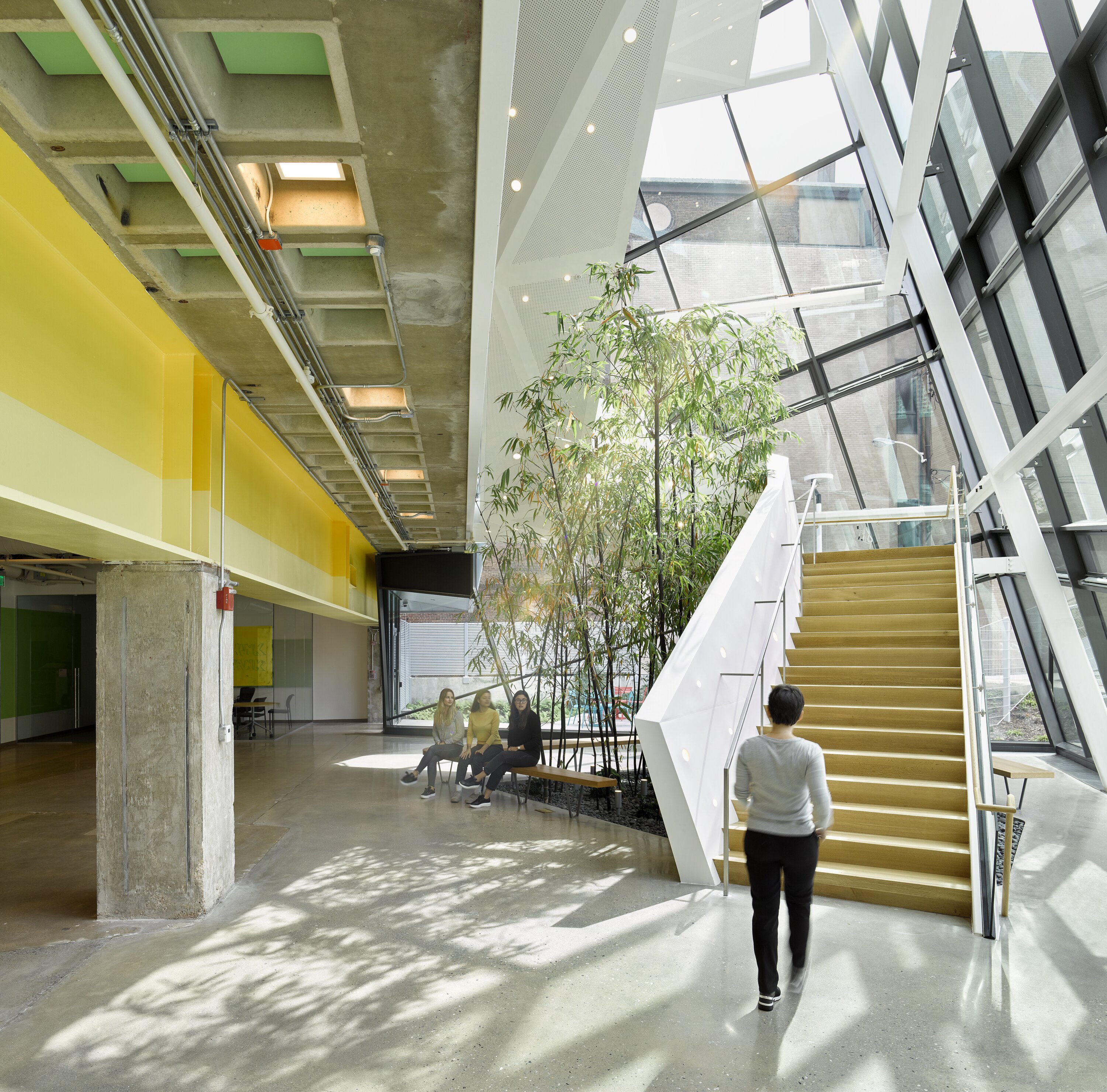
The 1960s library retained its original massing, which can be described as a floating box. Our spatial interventions sought to bring daylight into the building while enhancing vertical communication. A newly added glass hall on the west side forms an academic and public space that complements the original structure, its geometry distinguishing the addition while preserving the elemental simplicity of the original cube. The west atrium establishes a prominent urban presence along the adjacent street, signaling a renewed life for the building.
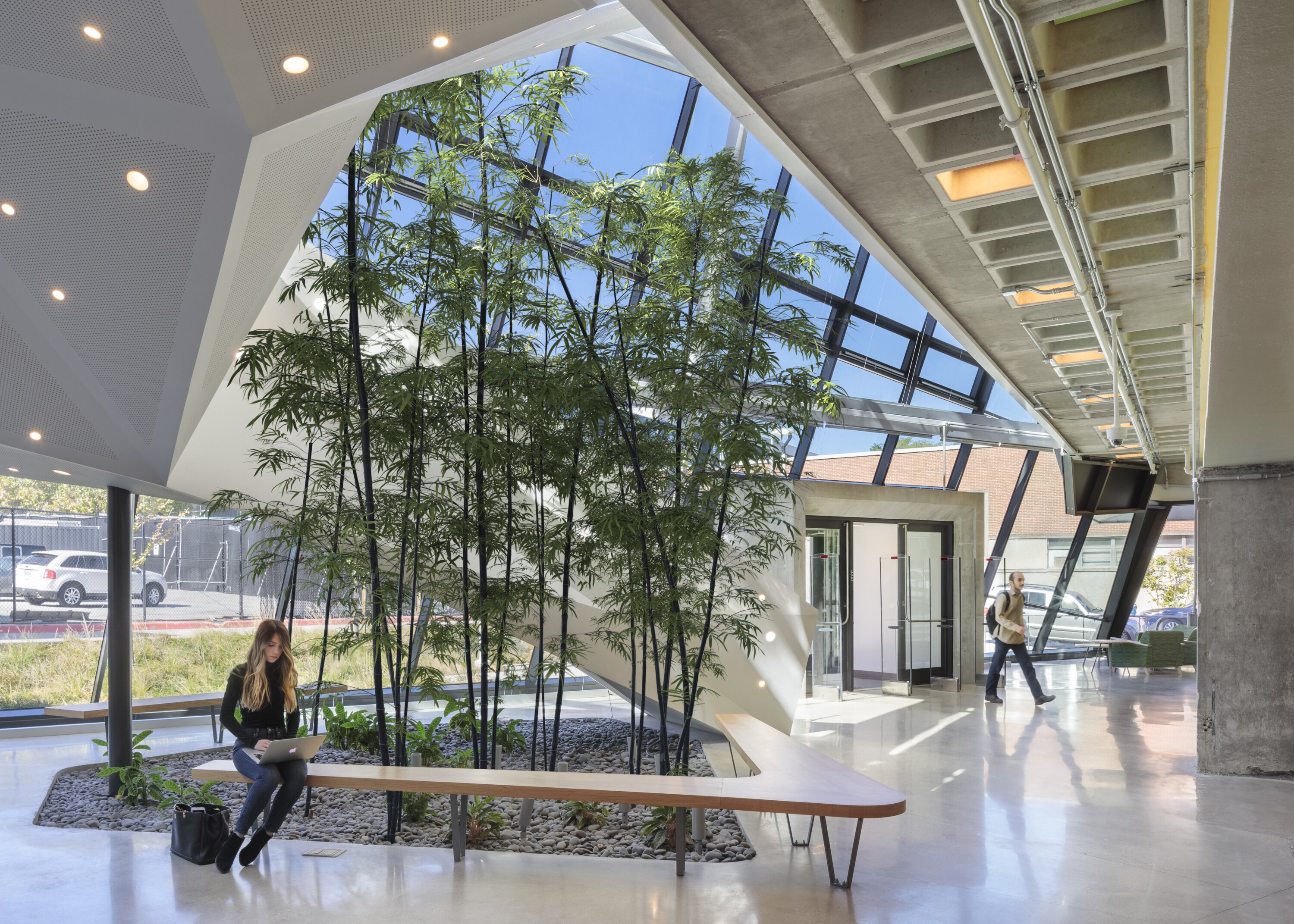
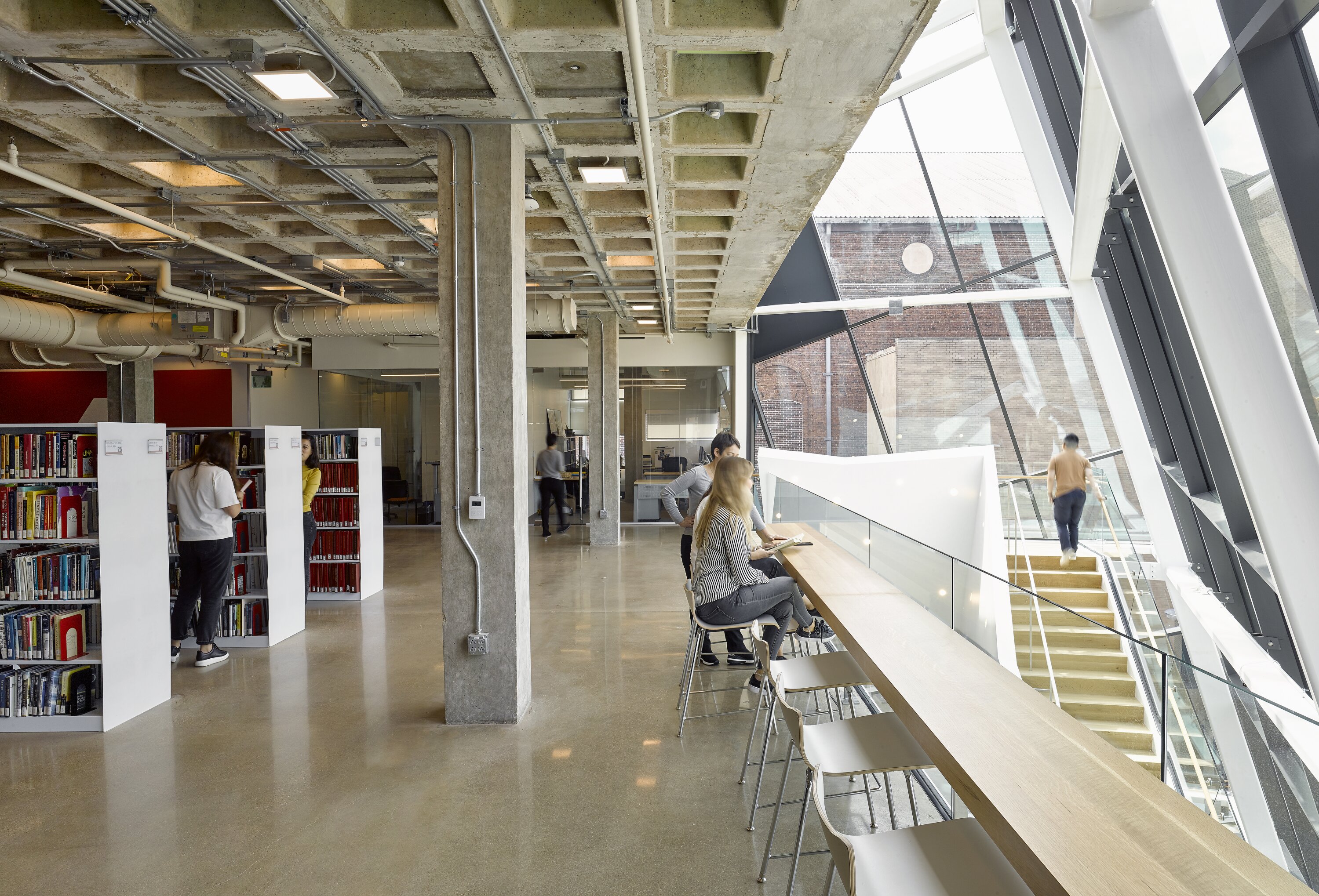
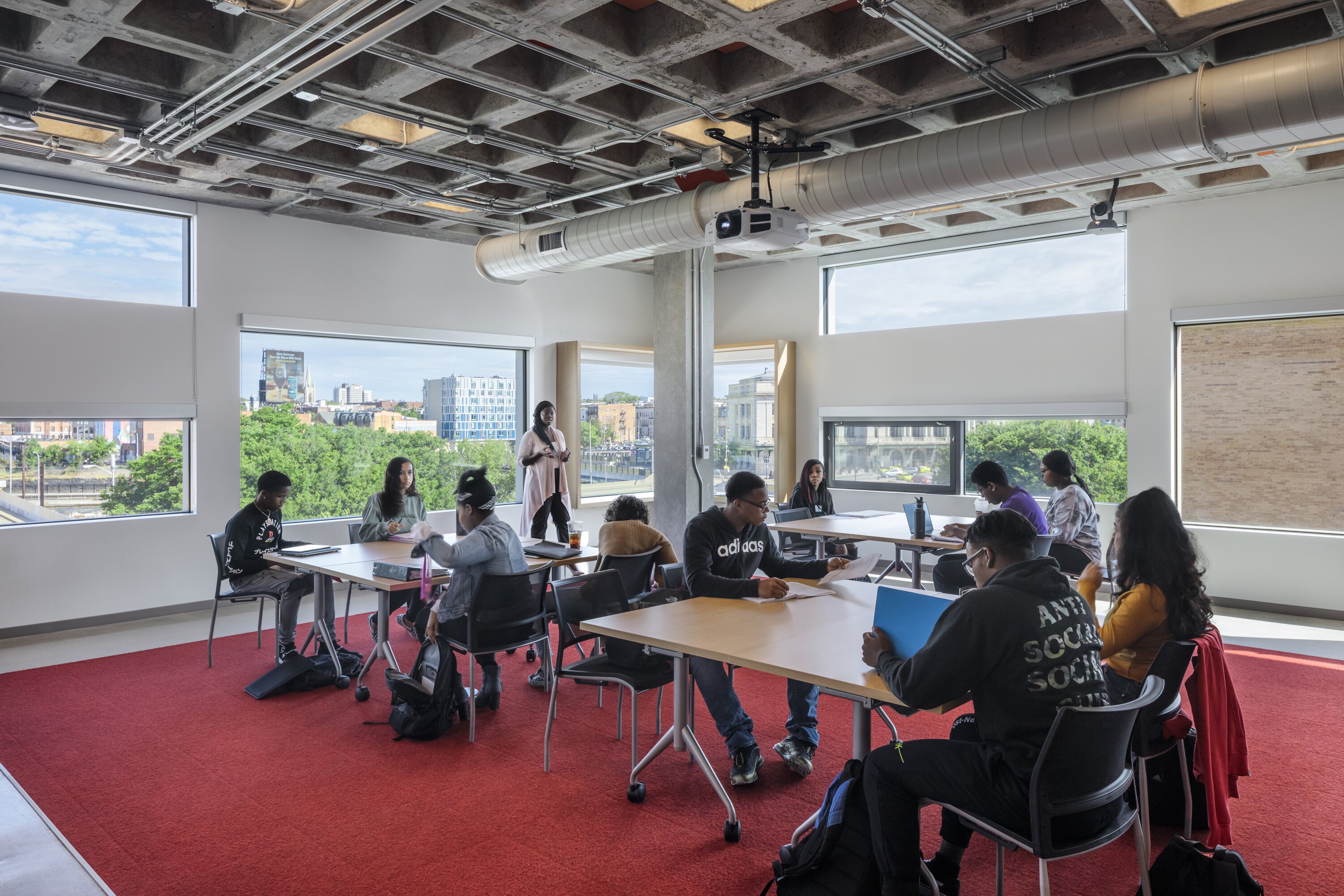
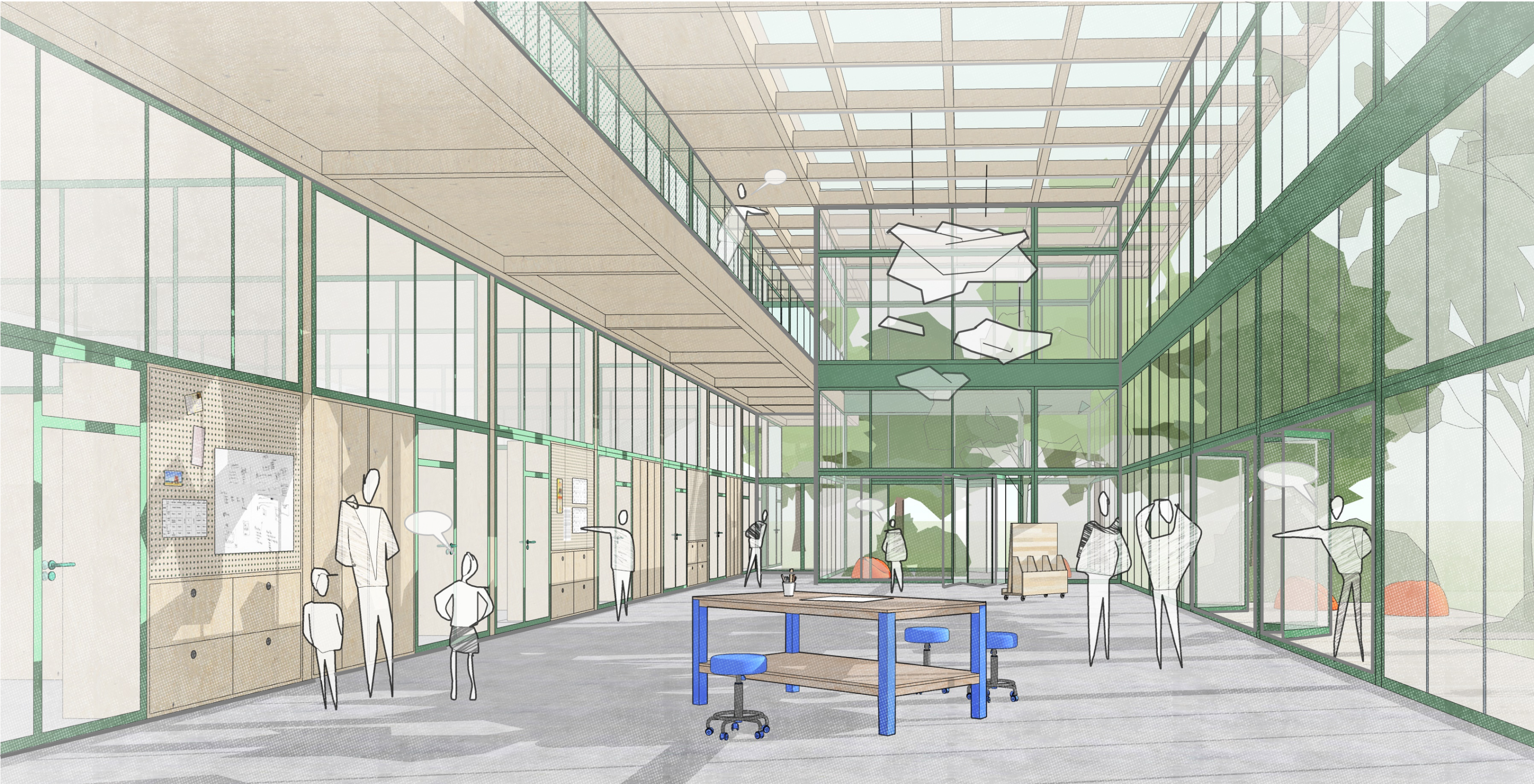
Inside, this glass hall promotes interior circulation, brings daylight and views into the original floor plate, and creates new informal study and meeting perches within its enclosure. Such spaces reappear on the library floors as well, acknowledging a new era of library use that privileges learning and interaction. Our strategy minimizes the impact of the renovation on the building structure, which is nearly all maintained for the accommodation of the library program, and it minimizes the risk of costly modifications to the existing two-way waffle slab.
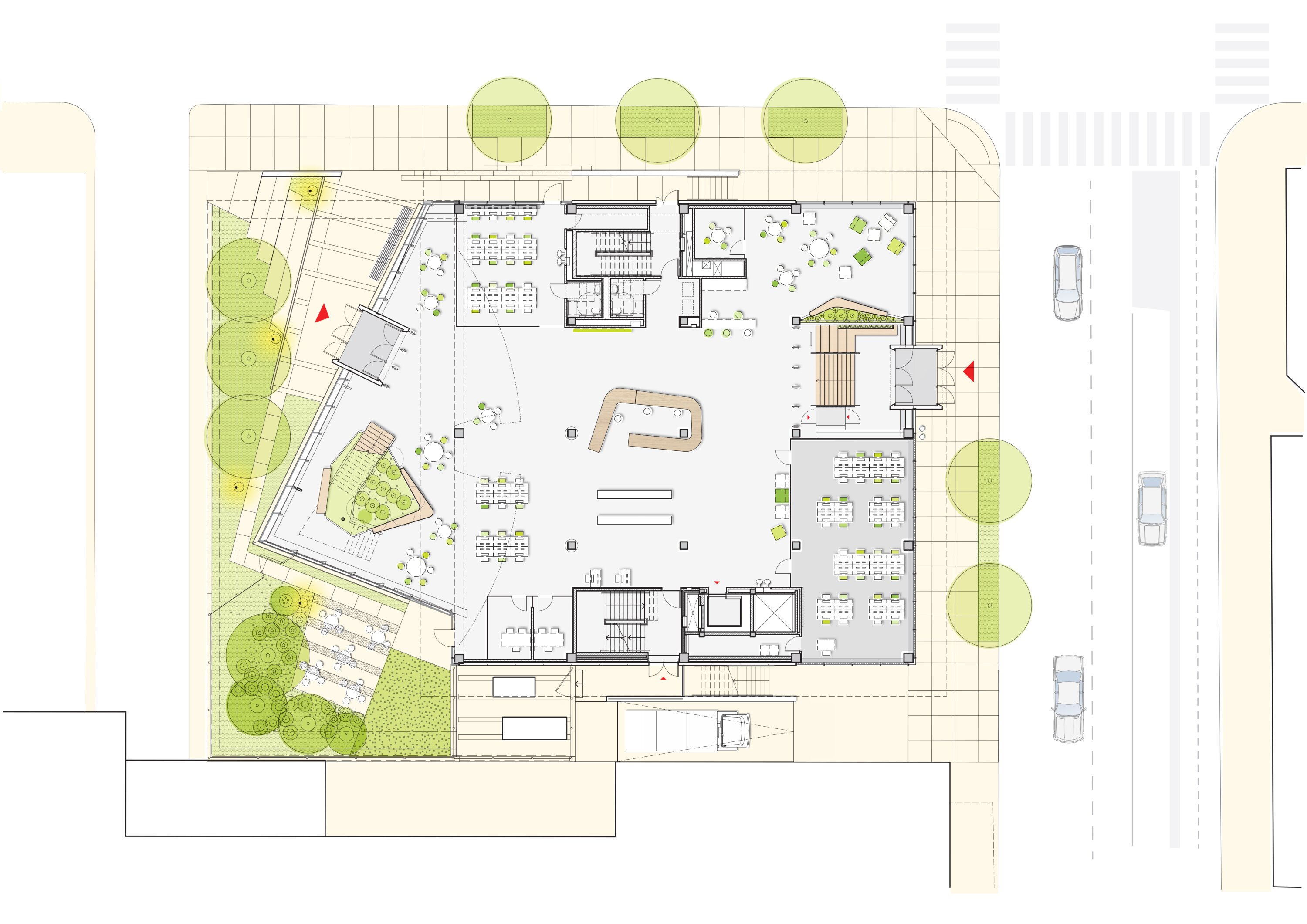
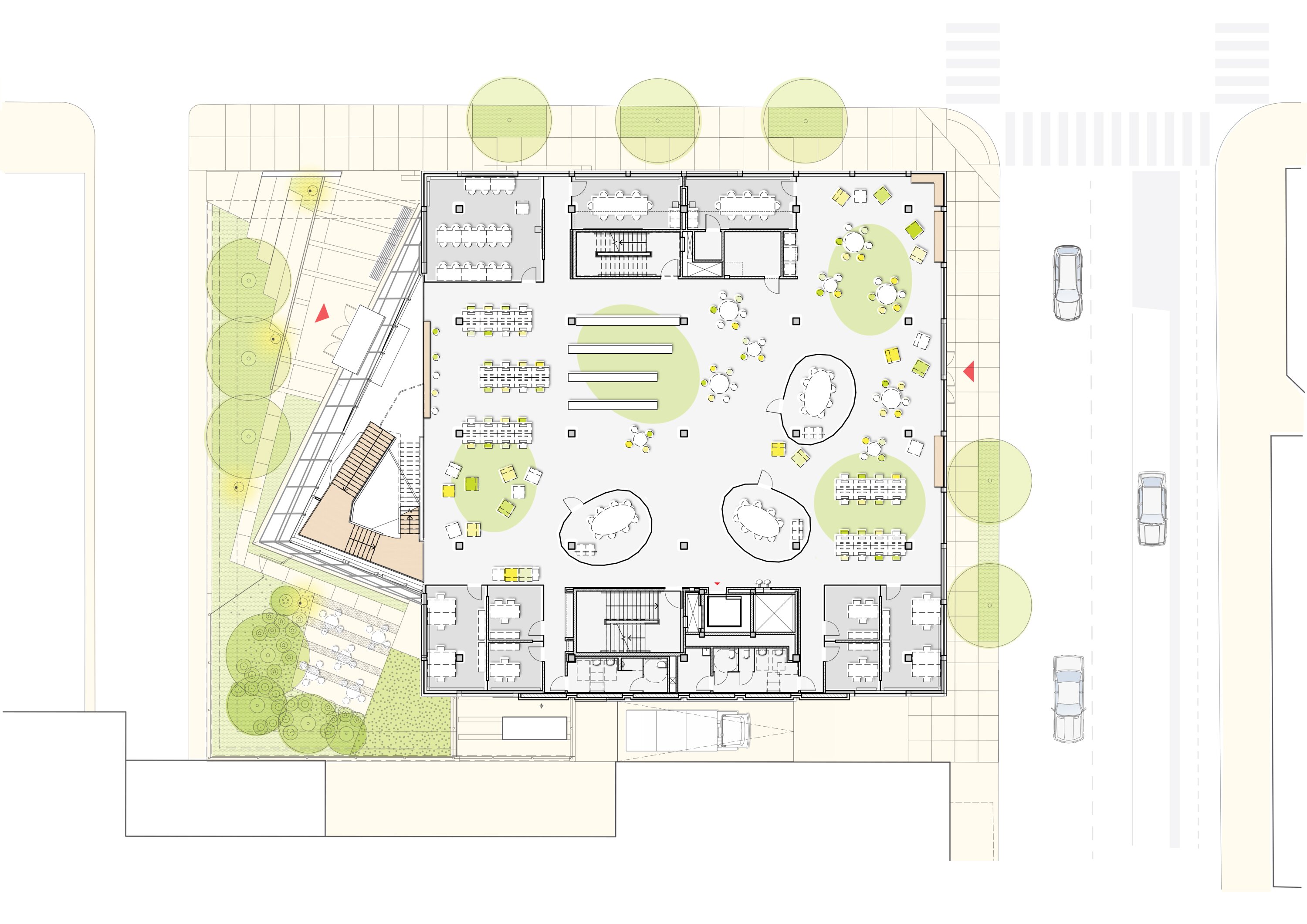
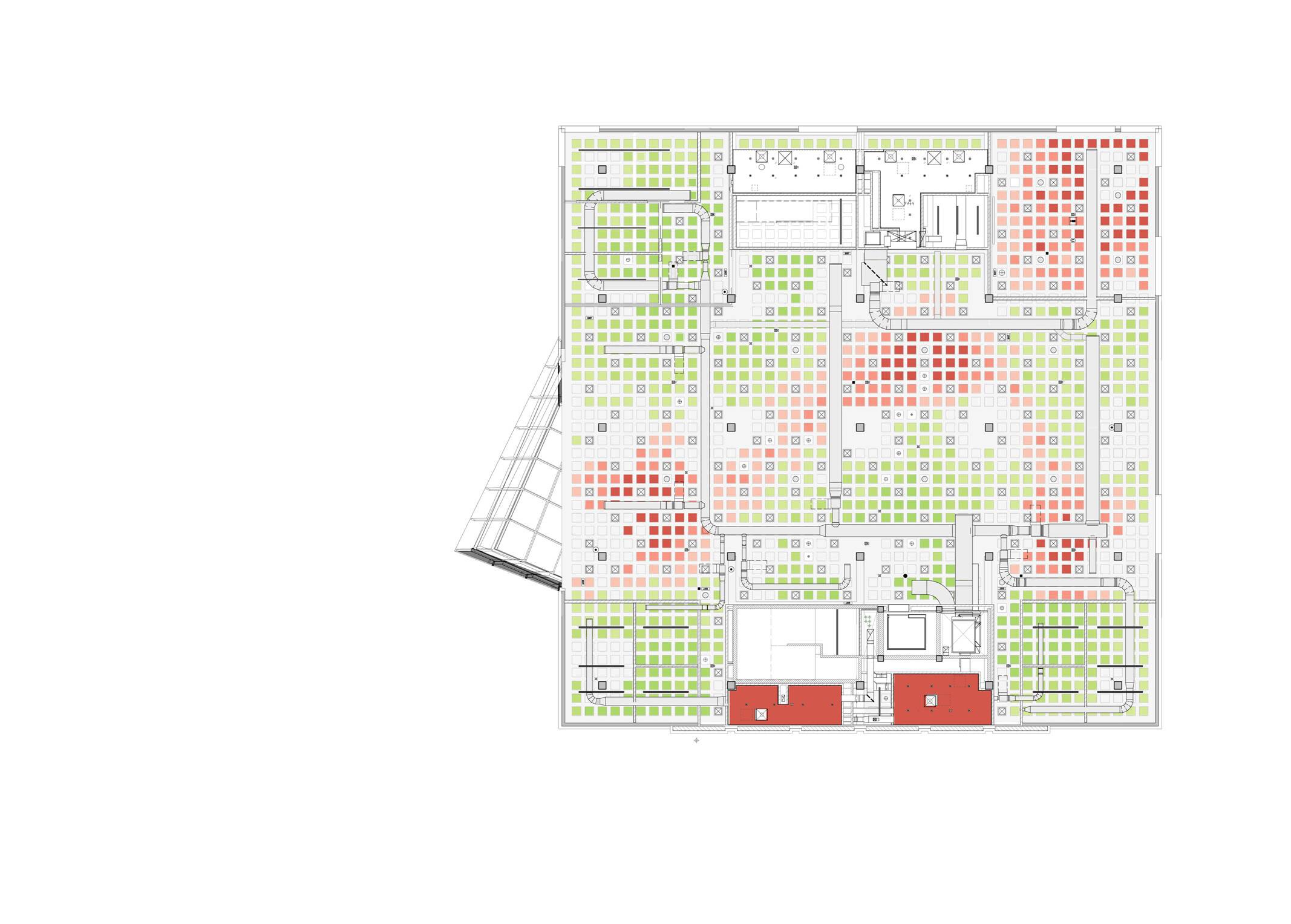
Level 1, 2, 4
- Client
- University of Baltimore, University of Maryland, Baltimore
- Architects
- Behnisch Architekturbüro
- Address
1420 Maryland Ave
Baltimore, MD 21201
United States- Competition
2014, 1st prize
- Gross Area
5.388 qm / 58,000 sq.ft
- Gross Volume
19.449 cbm / 686,820 cu.ft
- Photography
David Matthiessen
Brad Feinknopf- Awards
2019 Baltimore Business Journal, 3rd place
2019 Construction Management Association of America, National Capital Chapter Project Achievements Award, Building New Construction, winner
2021 U.S. Green Building Council: Green Schools Higher Education Award- Downloads
-
Download PDF
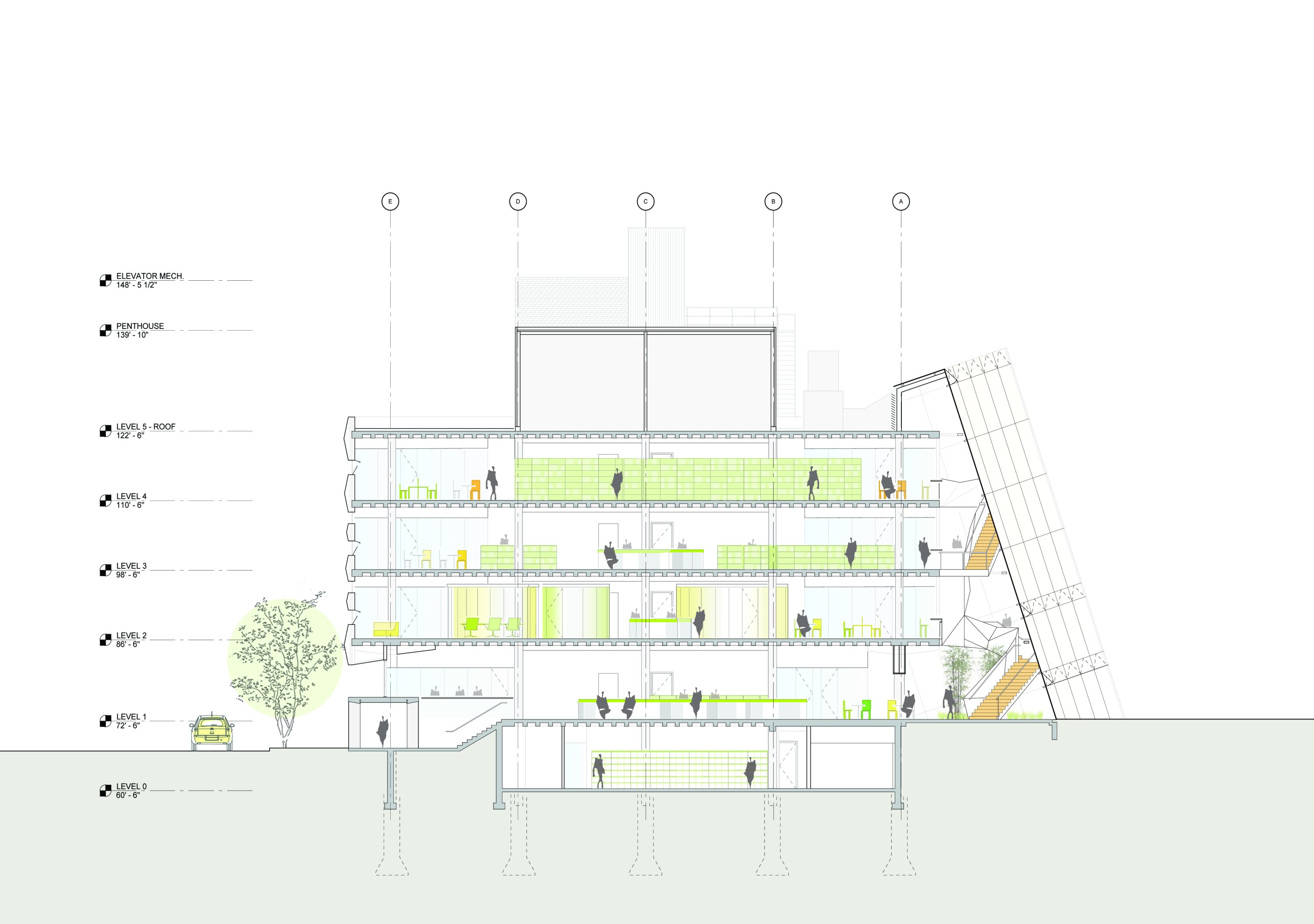
Section AA
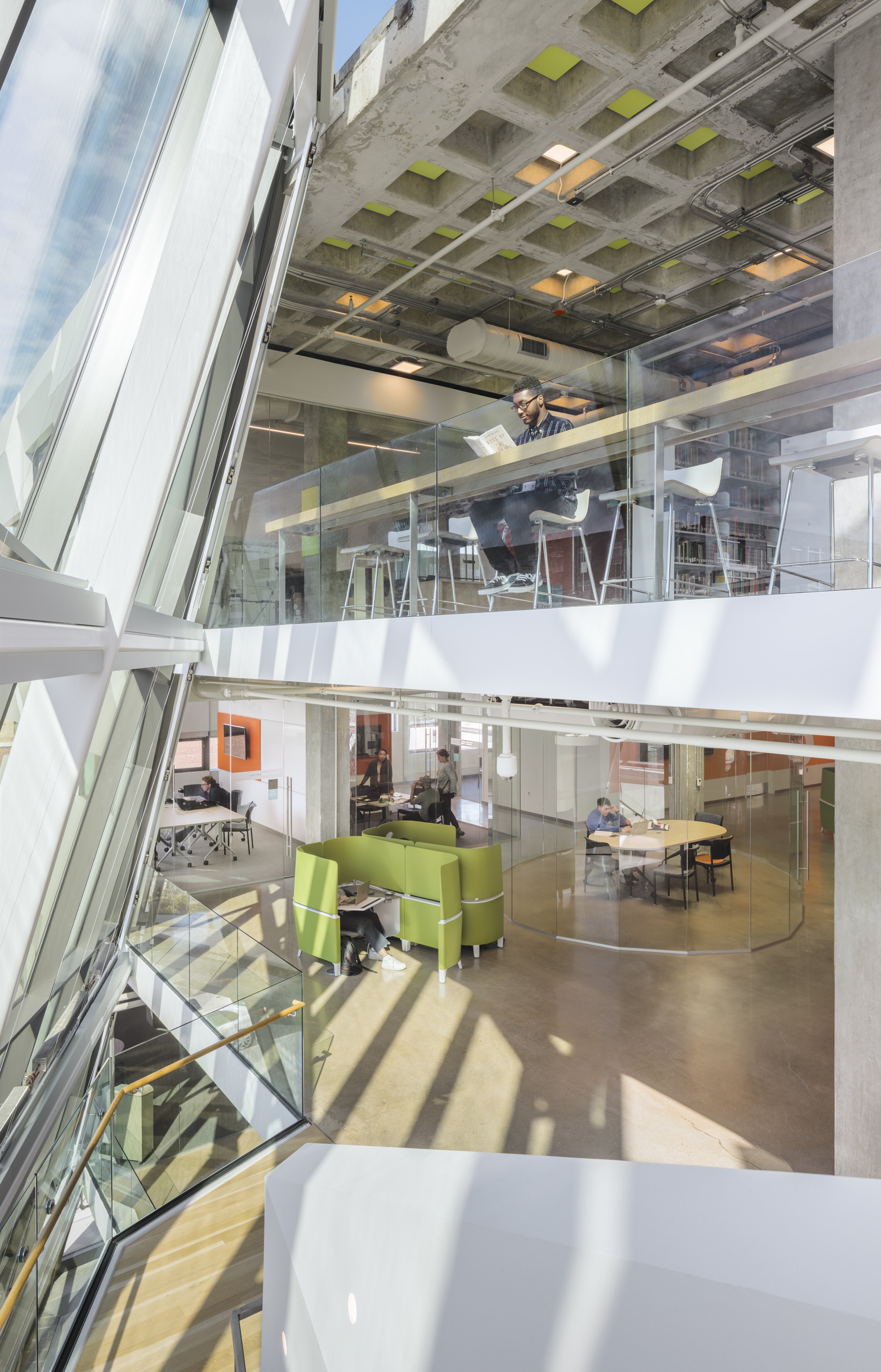
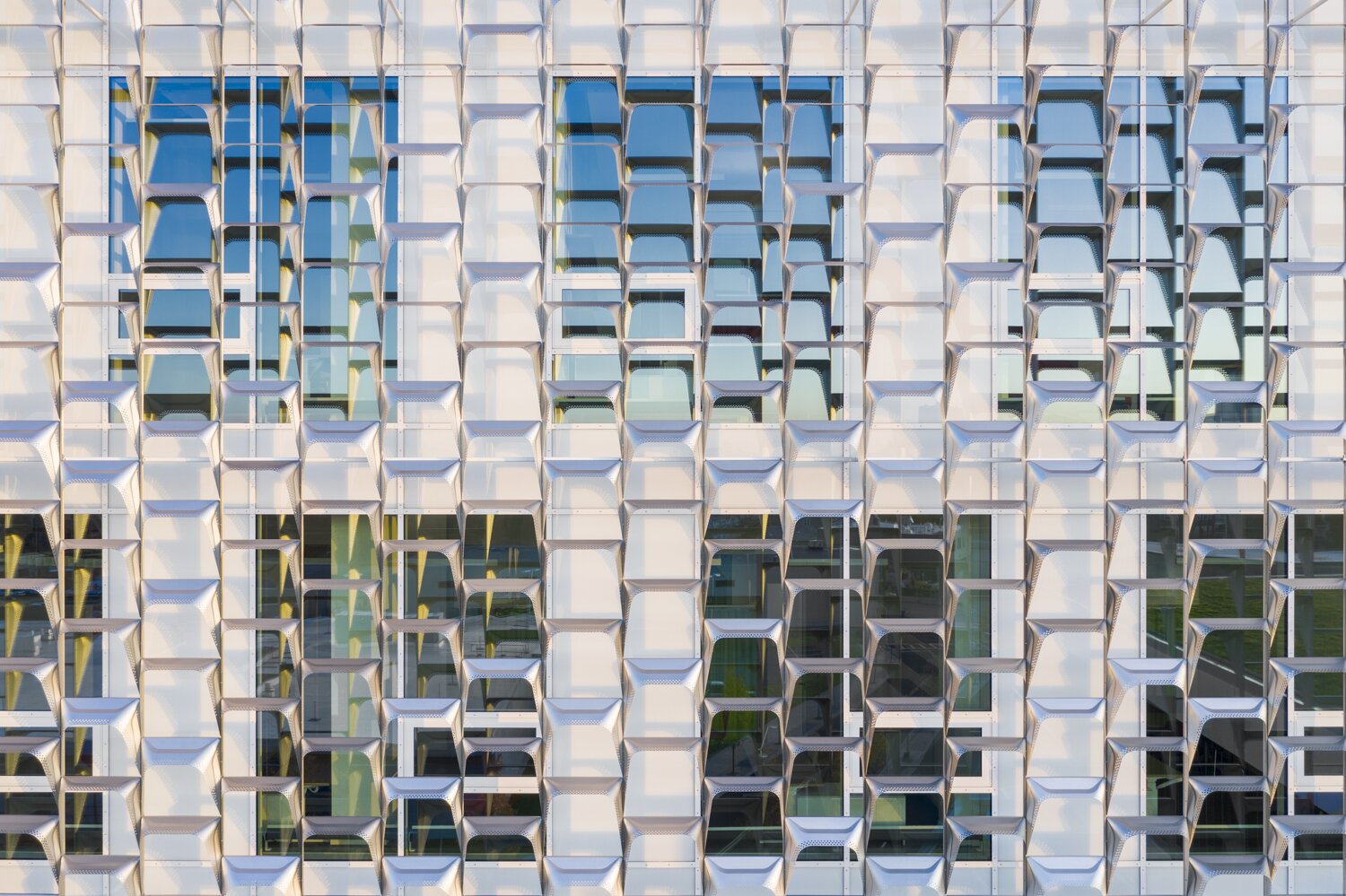
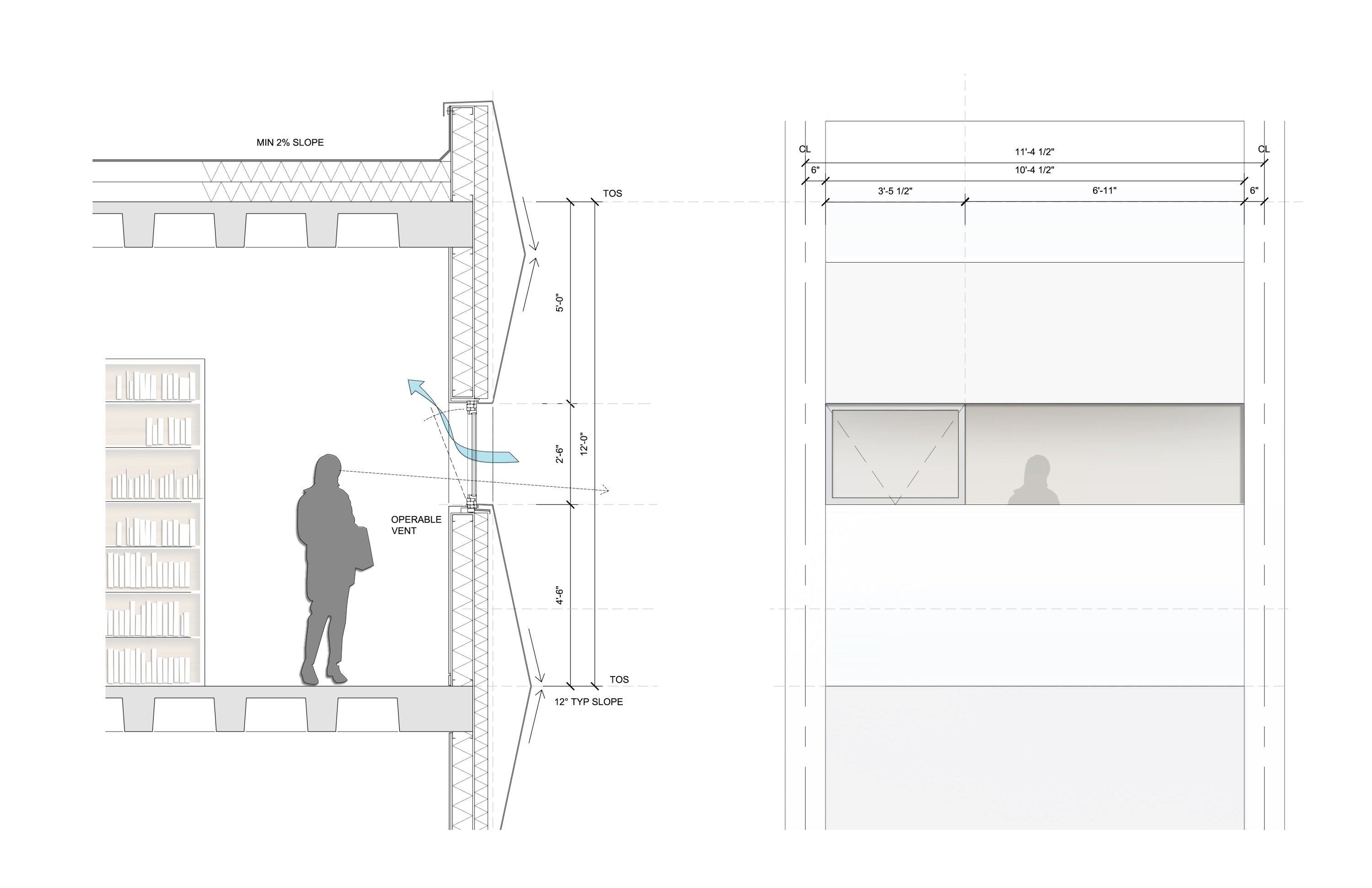
The stacks are located towards the interior zone of the floor, between the cores, to mitigate any impact of sunlight on the printed material. This also preserves perimeter floor space for more regularly occupied functions that are able to take advantage of the daylighting as well as the natural ventilation afforded by the new upgraded facade. Positioned deep within the plan, away from the facade, the glazed interior partitions maximize visual transparency and transmission of daylight. Within the waffle slabs, colored acoustic panels generate a gradient, pixelated composition that emerges from the cores, animating the ceiling as one walks across the space.
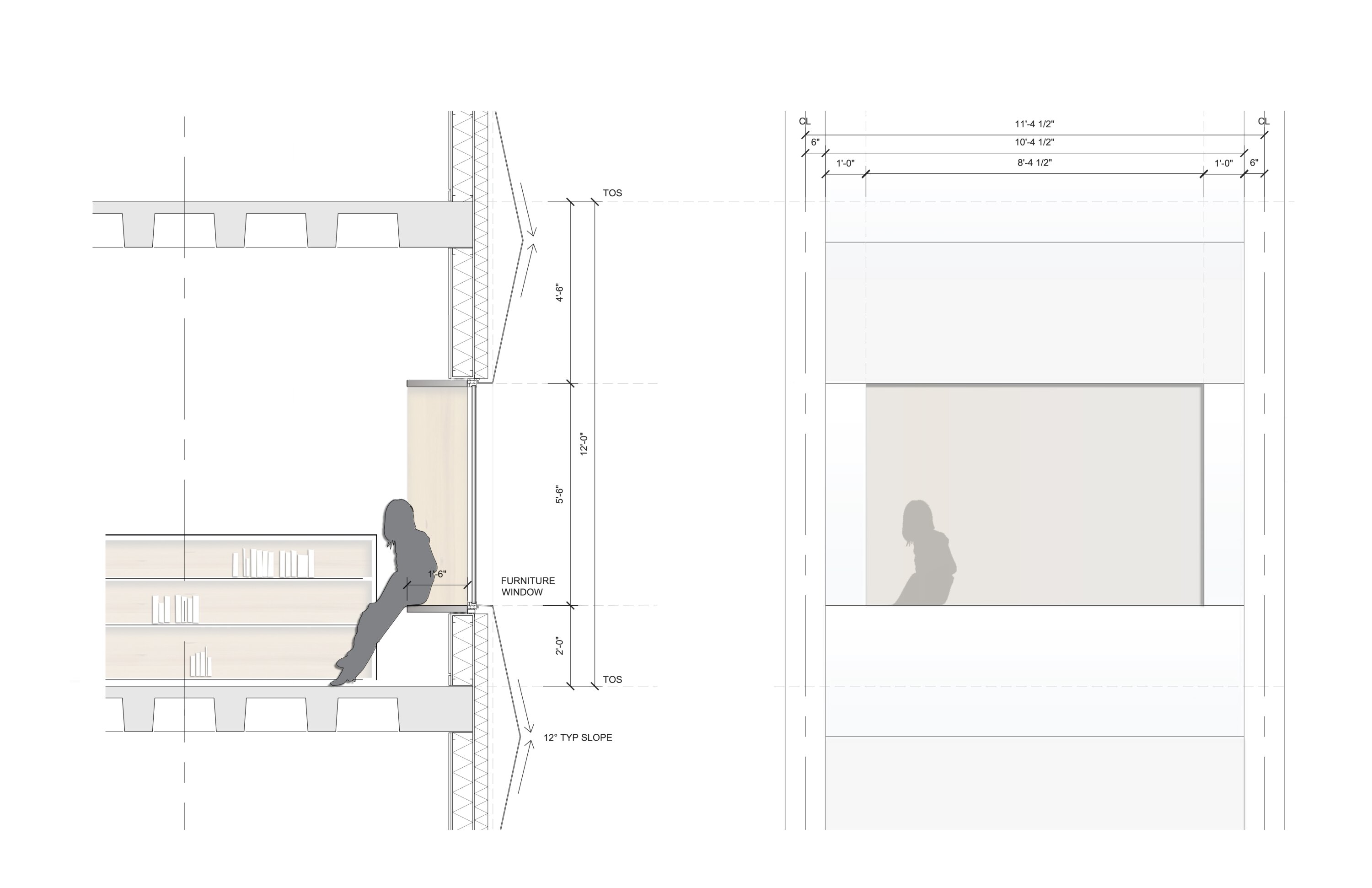
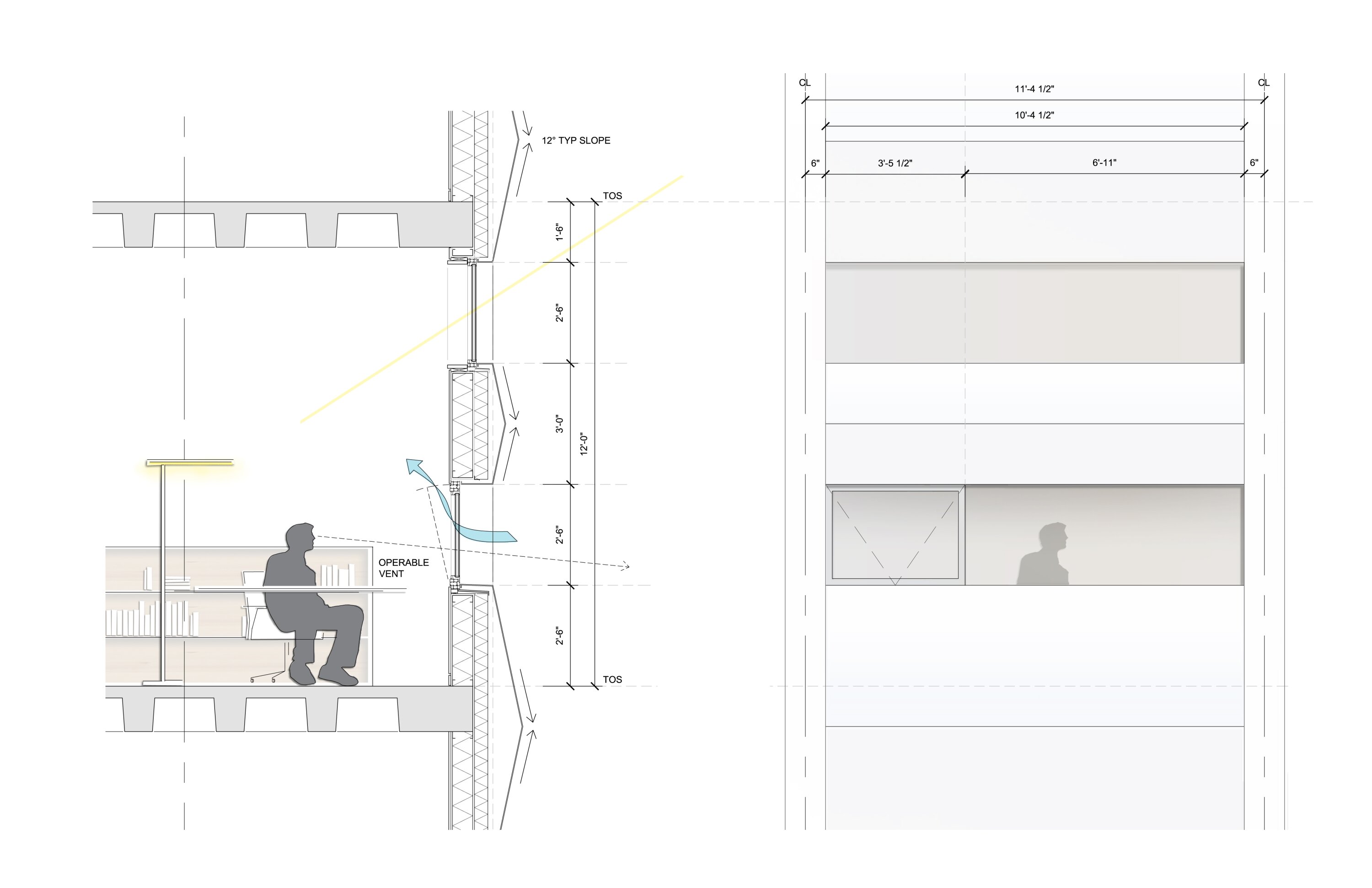
Facade Details