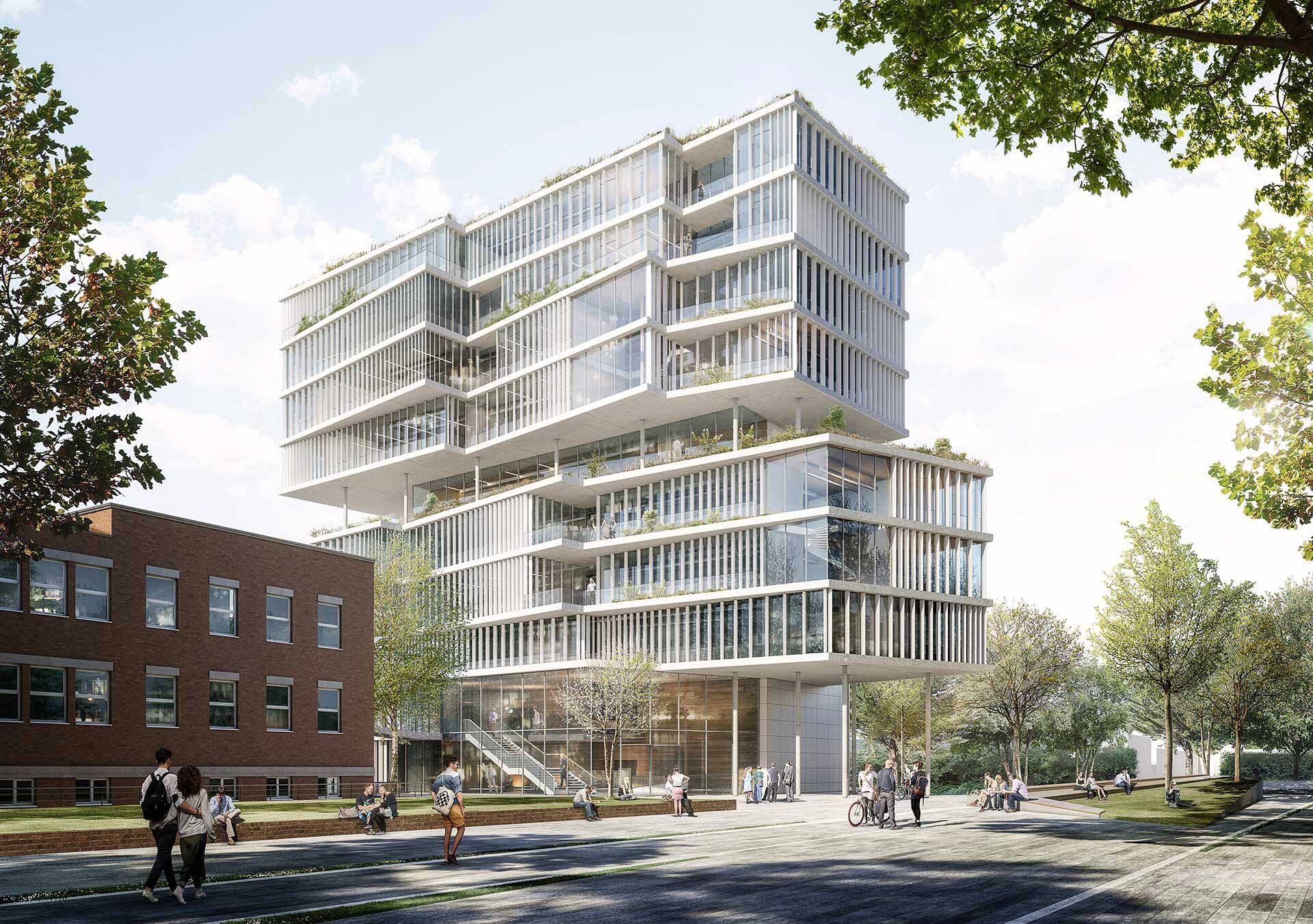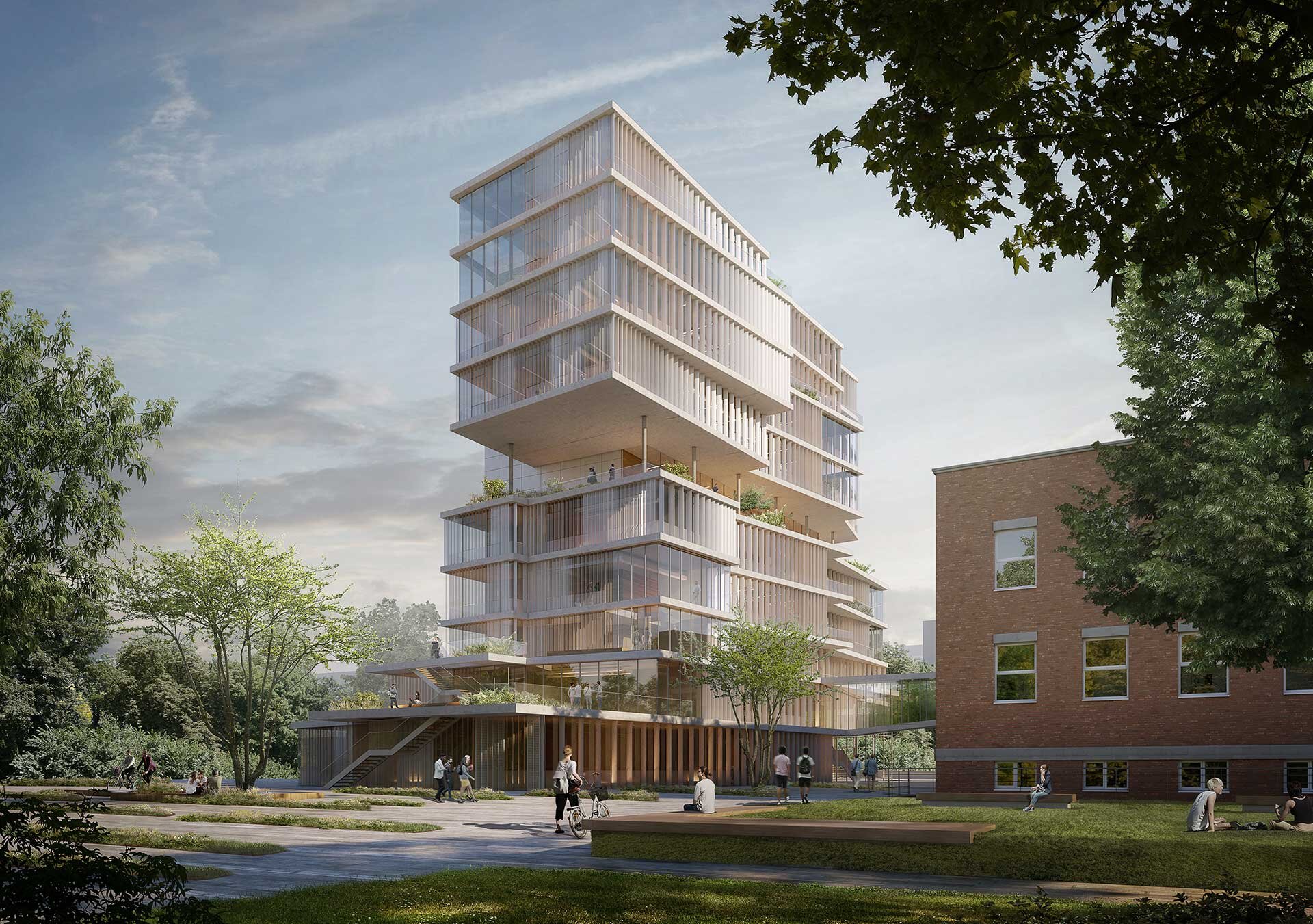
The new 45 m high building appears to float weightlessly off the ground. Its thirteen floors and some 6,000 square meters of floor space will provide future users with plenty of room to pursue top-quality research. The architects were tasked with designing a building that would accommodate a reframing of the institute’s scientific approach and a fresh take on interdisciplinary research work. In addition to highly specialized laboratory facilities, essential auxiliary spaces, and technical areas, the design includes offices, seminar and meeting rooms, workshops, a cafeteria, and an underground car park.
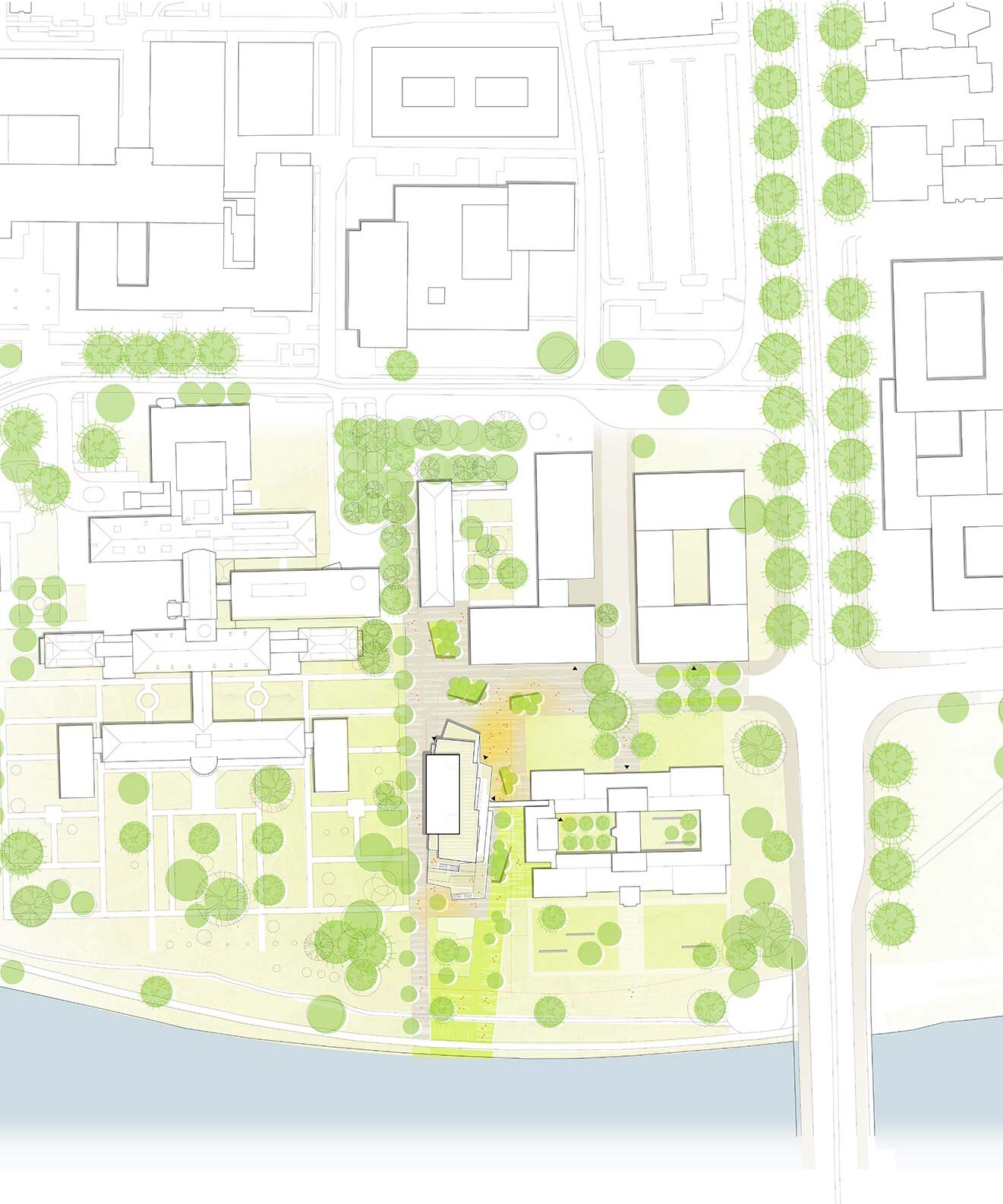
Site Plan
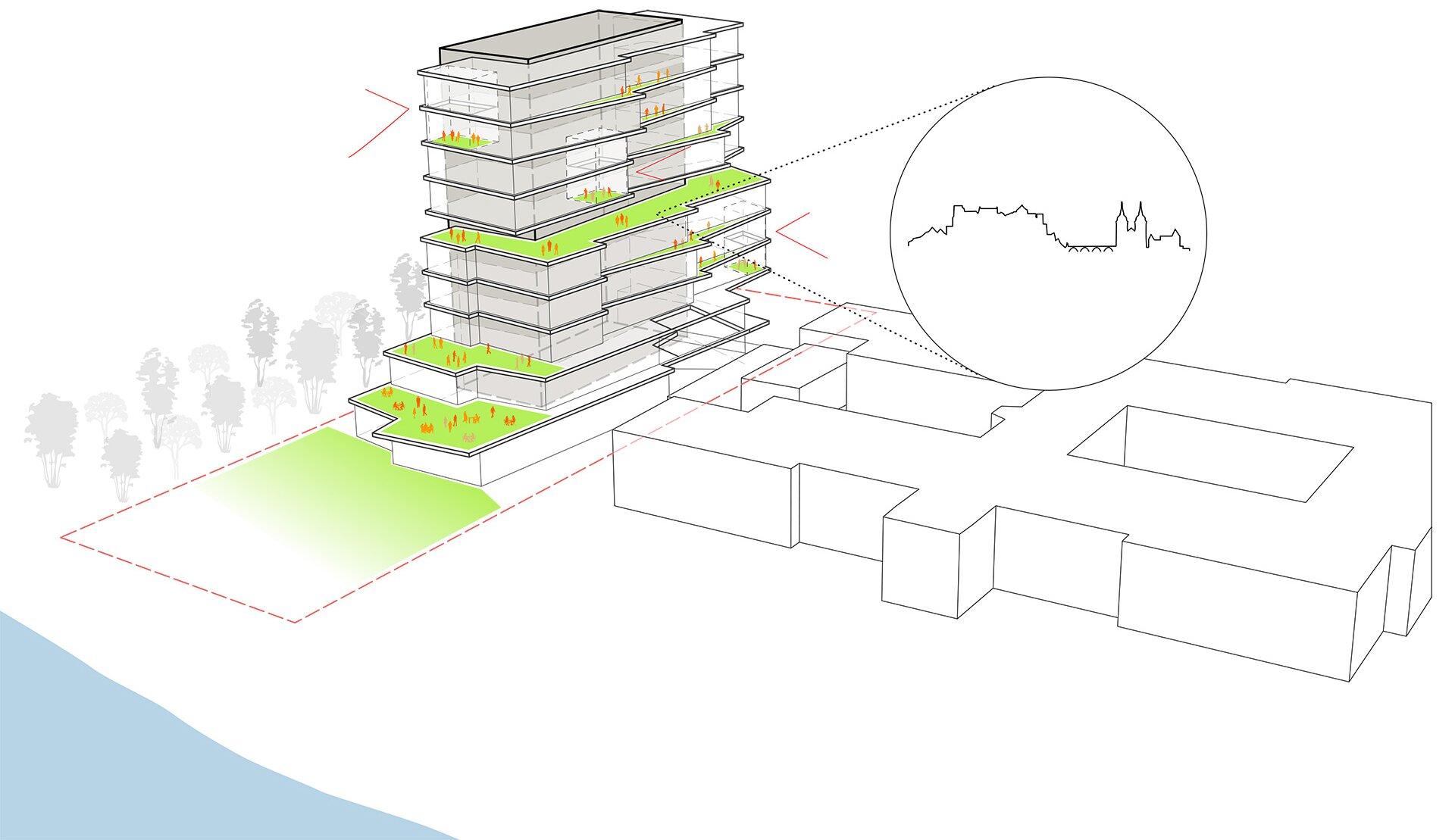
Set apart by its distinctive form, the institute is sited right next to the original research building, yet without impinging on its space. The building is horizontally articulated by the white bands of the visible ceiling slabs, a conscious design decision, with numerous balconies and roof terraces formed by cantilevered projections. The sixth floor is set into the facade, subtly calibrating the building’s proportions and providing the institute with a roof garden. A sustainable energy concept makes use of synergies, such as heat recovery from the waste heat produced by the laboratories and servers and activation of the building envelope through the inclusion of photovoltaic units.
- Client
- Max-Planck-Gesellschaft zur Förderung der Wissenschaften e.V. München
- Architects
- Behnisch Architekturbüro
- Address
Jahnstraße 29
69120 Heidelberg
Germany- Gross Area
20.313 qm / 218,738 sq.ft
- Gross Volume
76.599 cbm / 2,705,093 cu.ft
- Competition
2019, 2nd prize
- Visualization
MOKA Studio
- Downloads
-
Download PDF
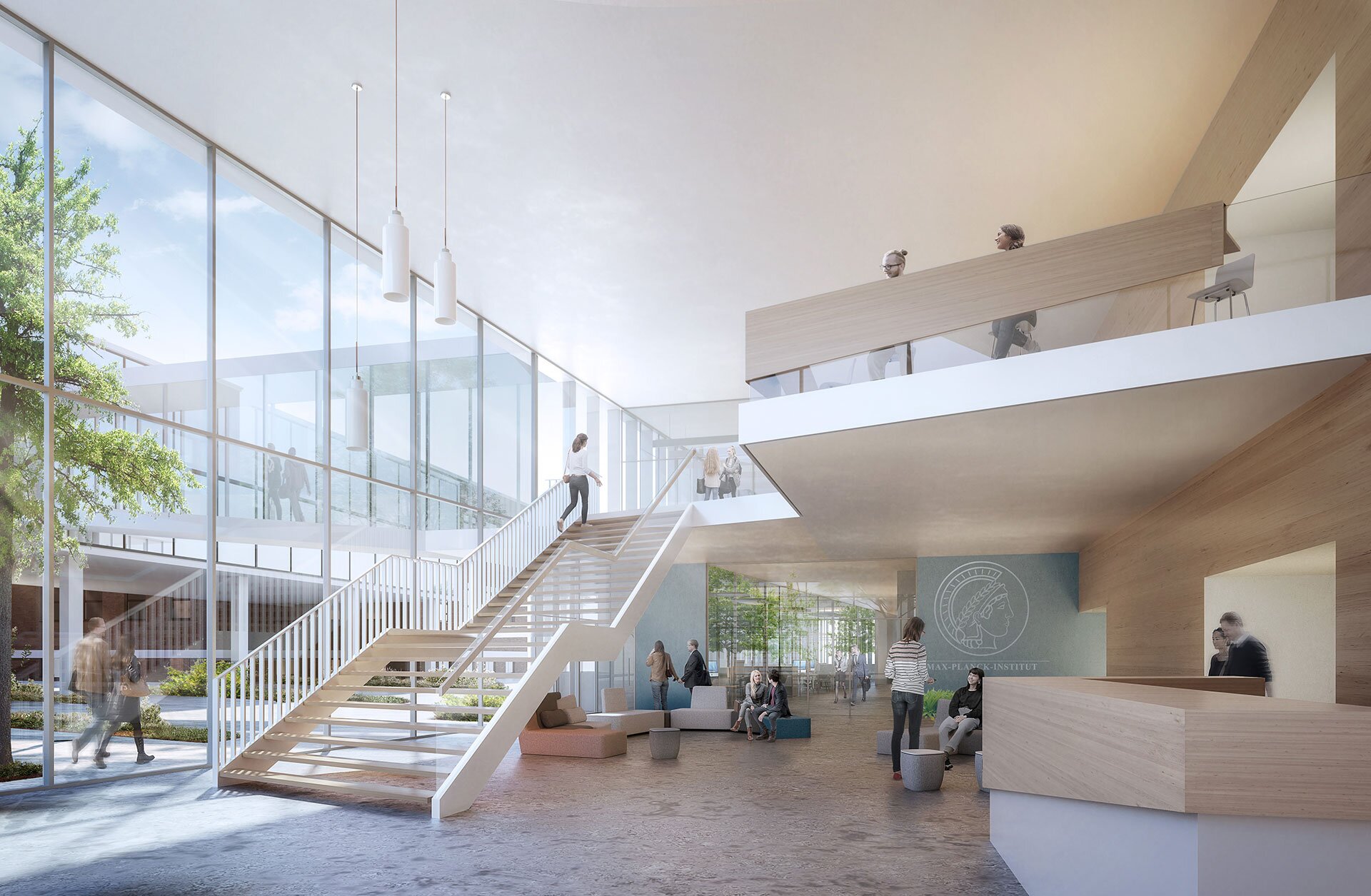
The main entrance on Jahnstraße clearly announces itself as such from a distance. Inside, a two-story atrium welcomes visitors into the foyer, which is flooded with light. The inviting second-floor cafeteria is adjacent to attractive outdoor areas; it is accessible via a spacious open staircase and is connected to the existing building via a bridge. The laboratories are housed in a rectangular core whose specifications are based on an ideal structural grid. There is a playfulness in the layout here, with the work environment, including staff offices, common areas, and communication zones, predicated on a variety of spatial situations that offer a high degree of flexibility thanks to the connected open-plan rooms that can be individually customized. The outdoor concept devised by Glück Landschaftsarchitektur links the campus with the Neckar landscape, creating attractive spots where people can meet or relax during breaks.
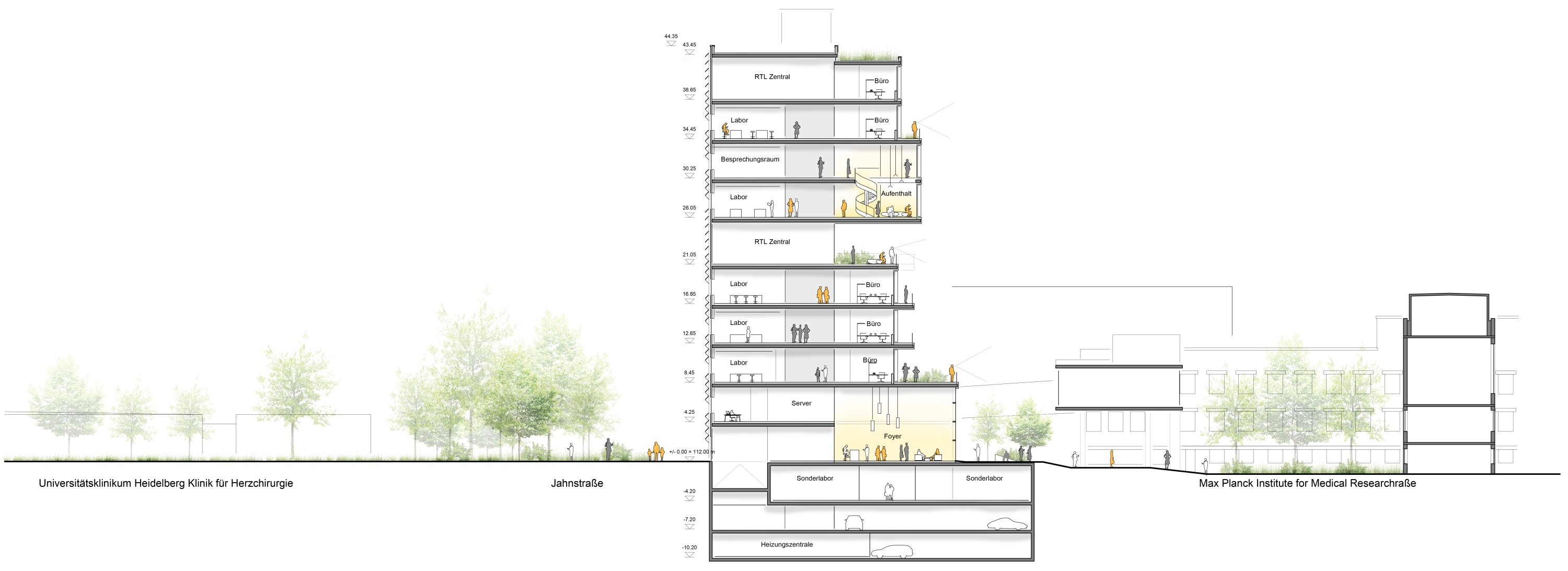
Section AA