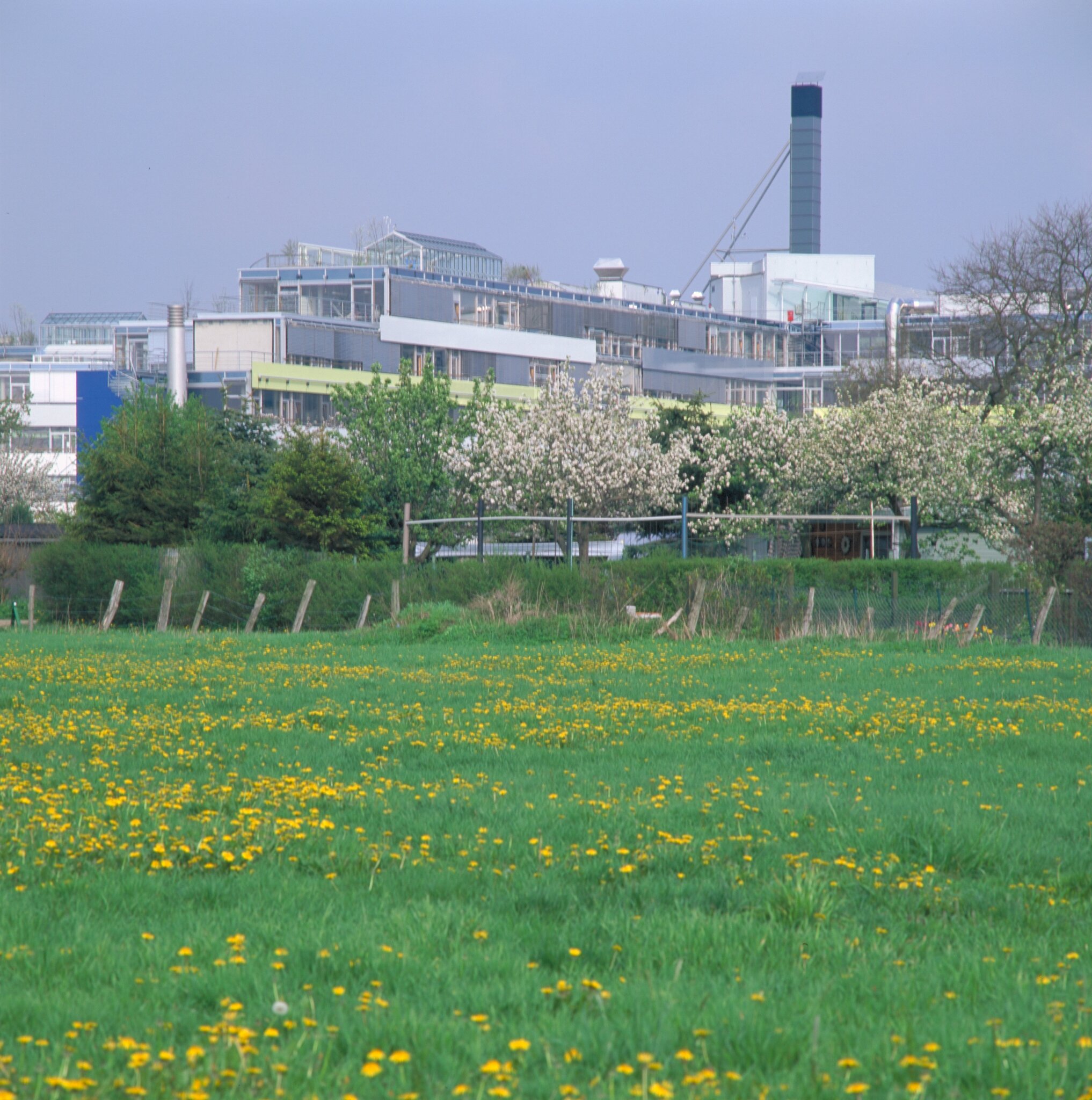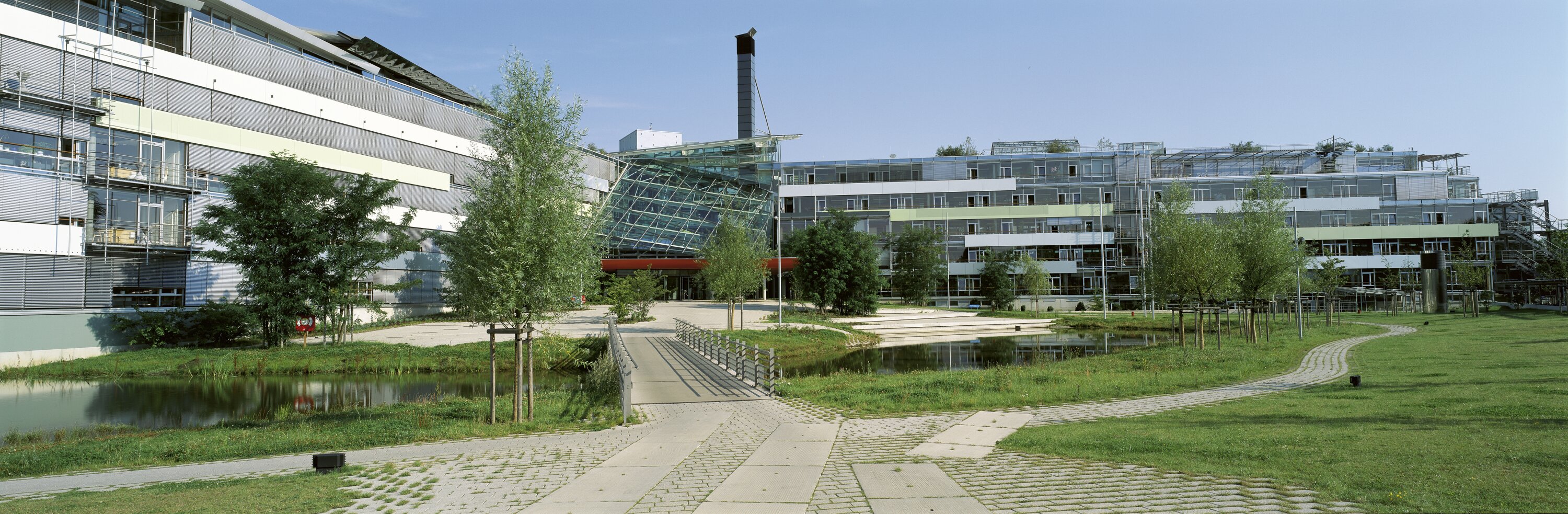



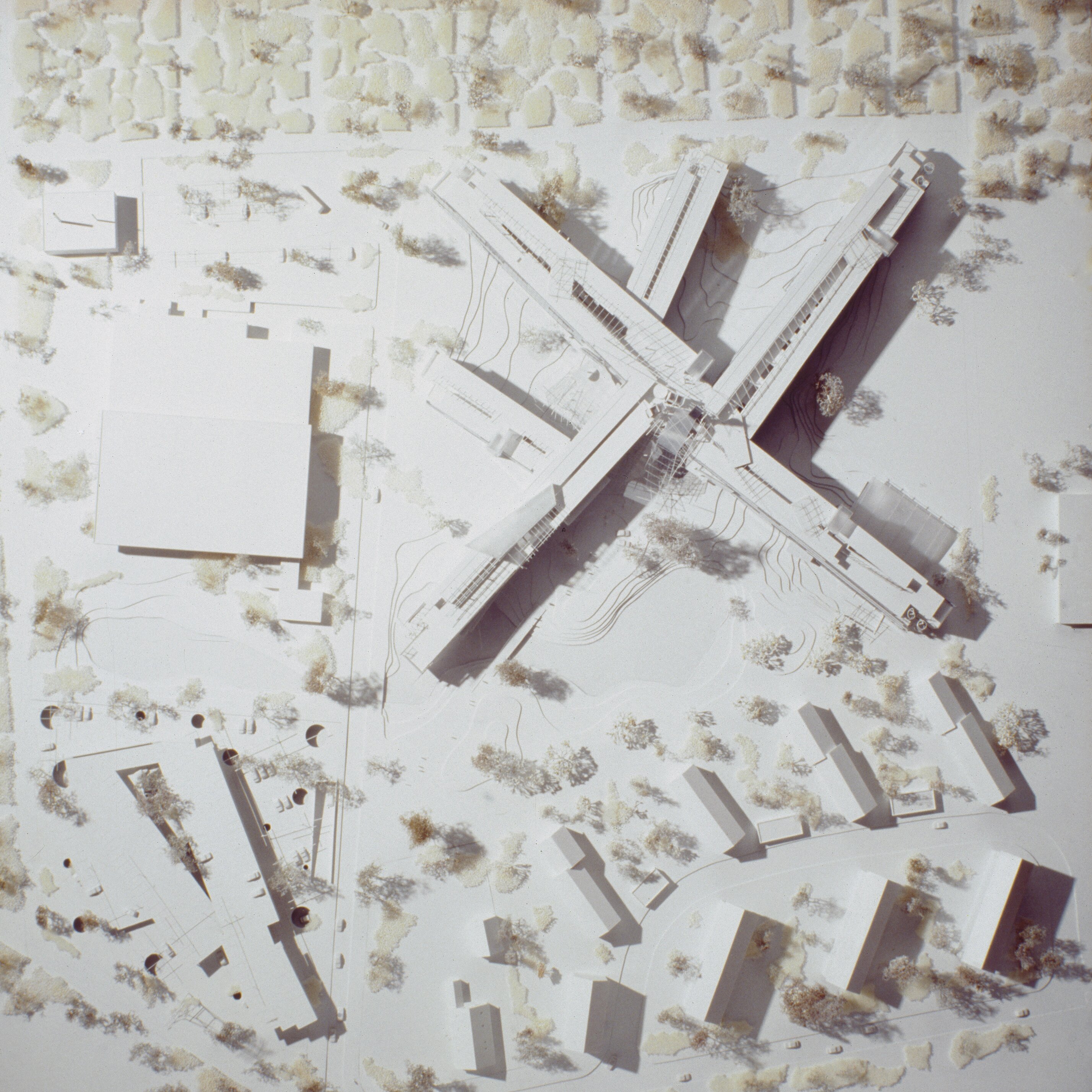
LVA’s new suburban site needed to offer compensatory attractions—chief among them a much improved and more generous working environment allowing panoramic views of the historic city from its upper floors, while gaining the most from the generous natural environment.
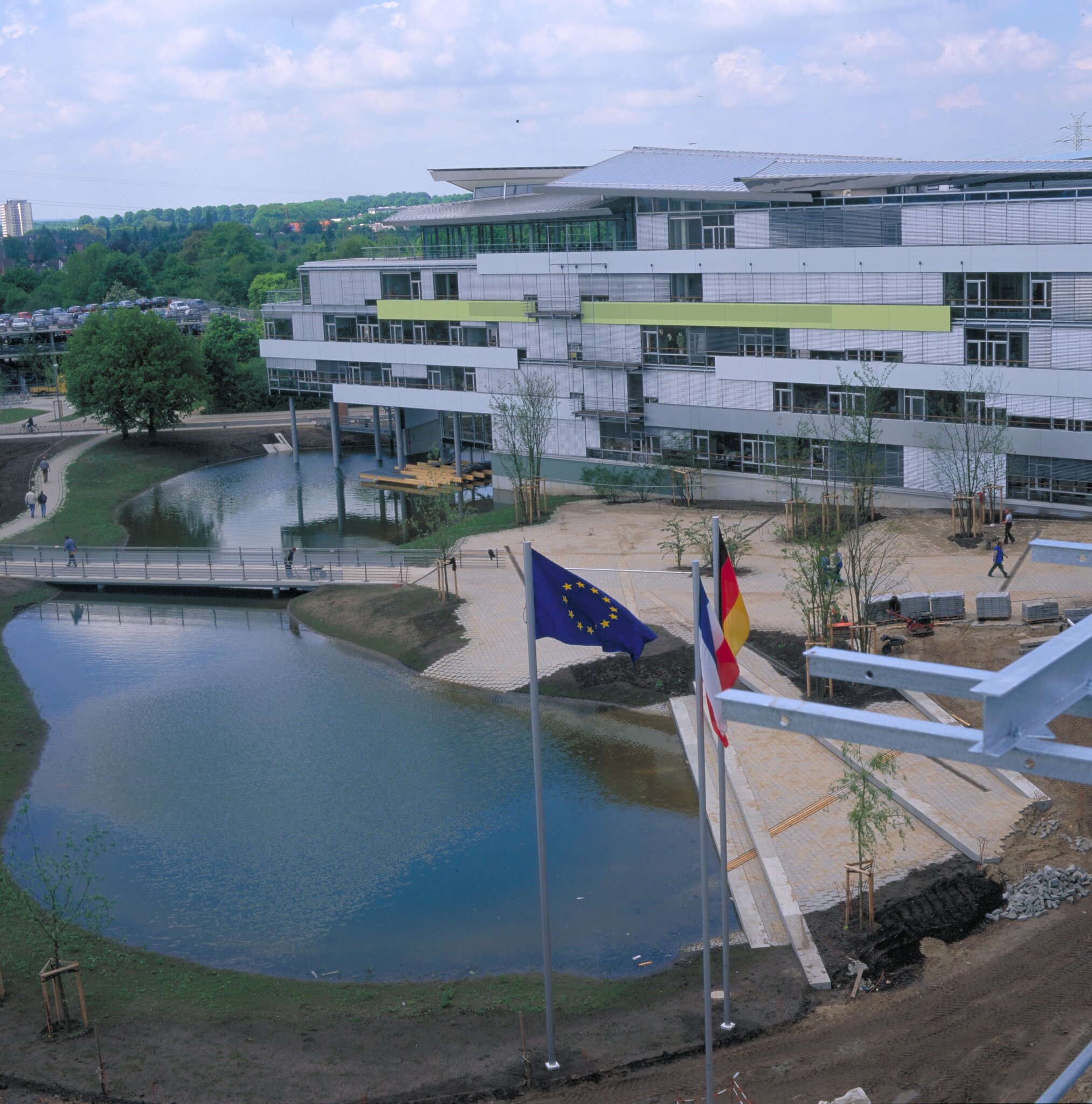
Organized in a pinwheel layout with staggered floors, the office building’s four main arms radiate from a central entrance hall along the site’s diagonals, with two of the arms featuring subordinate volumes. Their slender form ensures natural lighting and ventilation for all workspaces as it provides optimal visual connections to the surroundings.


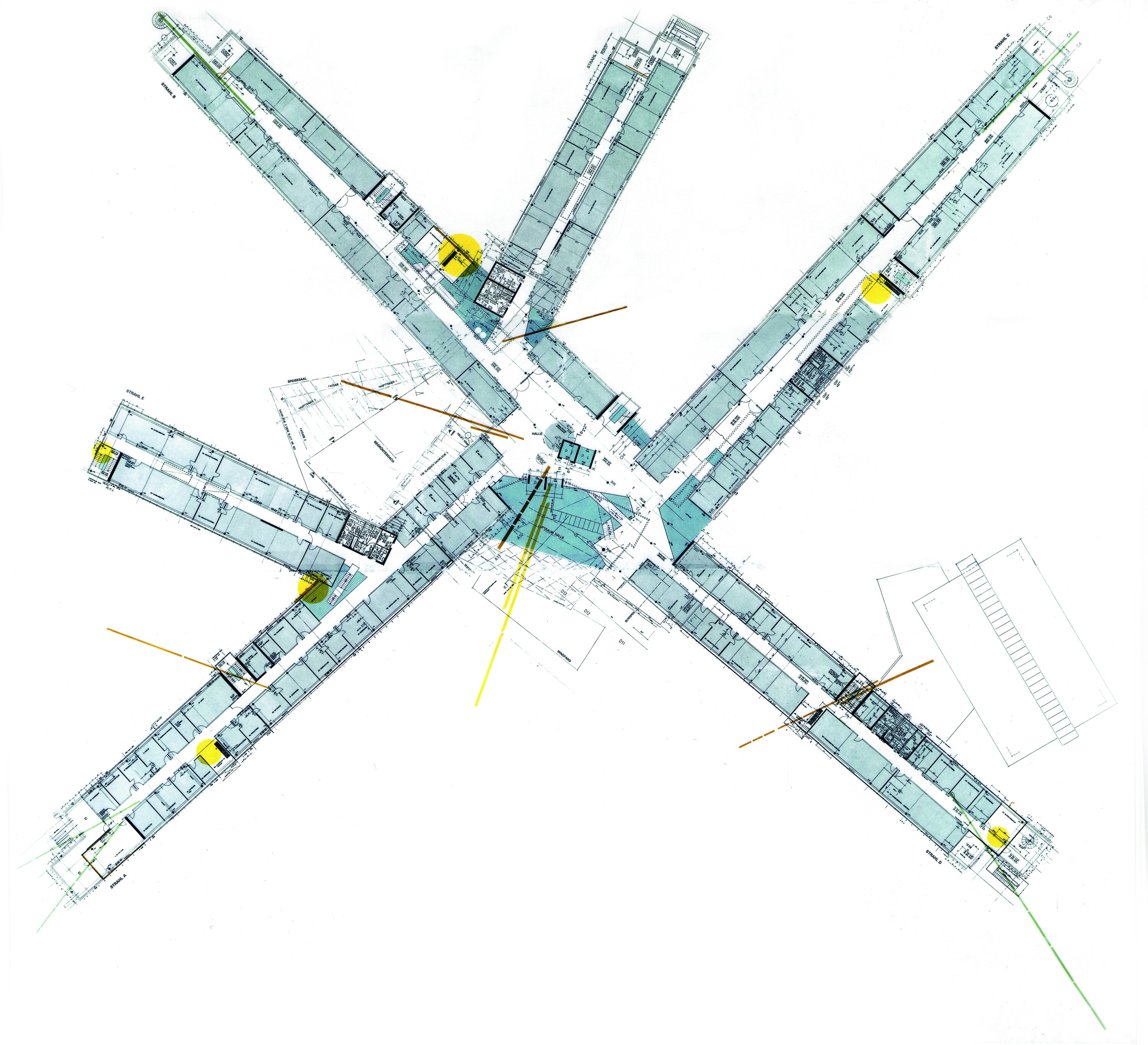
Level 4
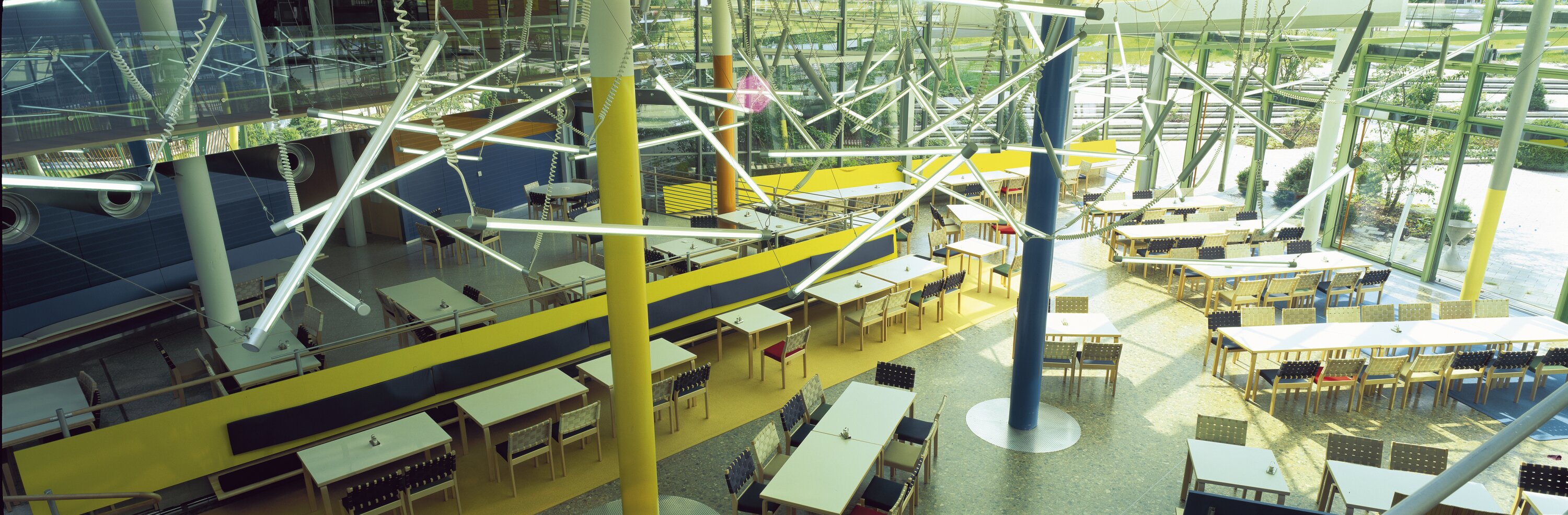
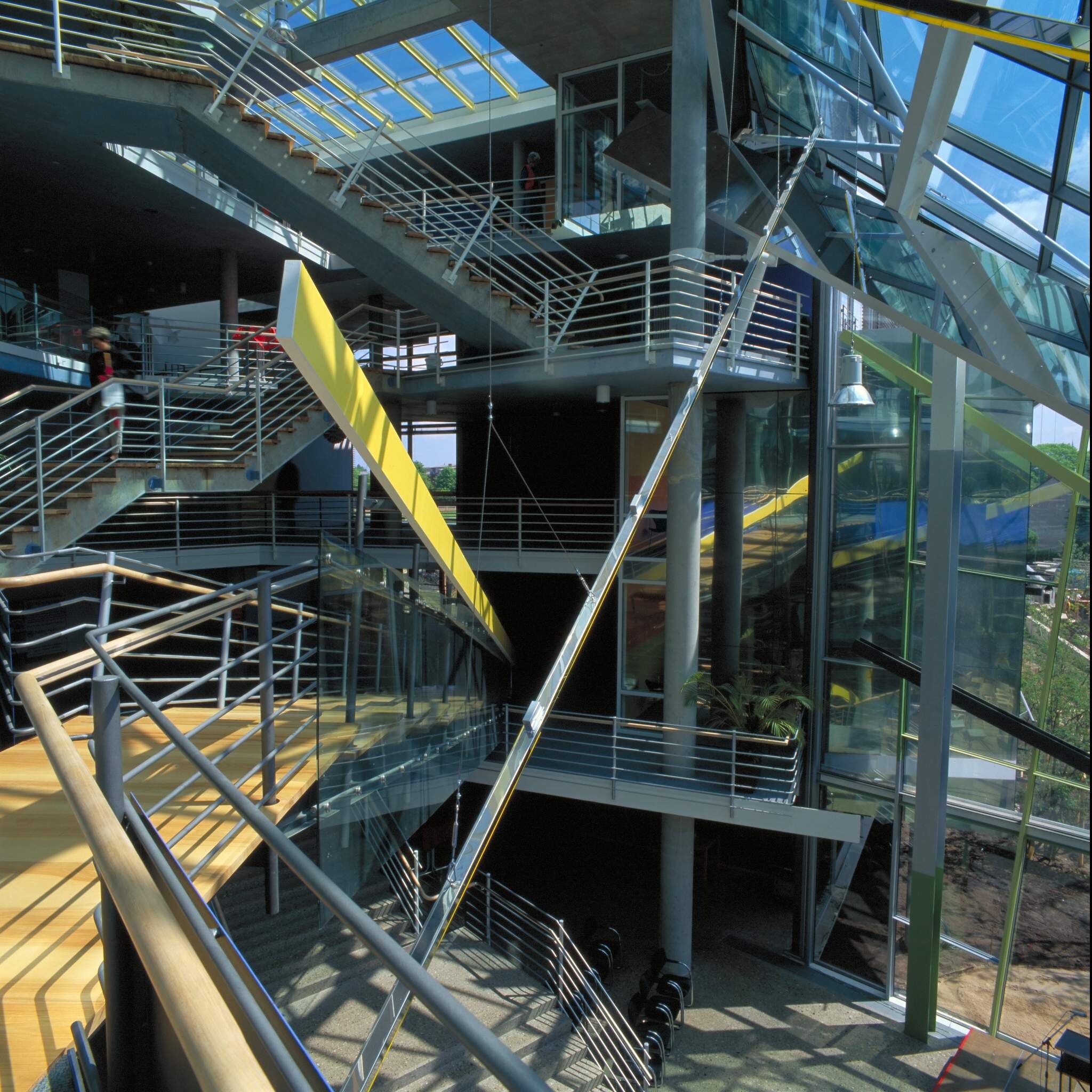
The south-facing, multi-story entrance hall is the structure’s center. The four floors are linked by a series of crisscrossing stairs and ramps within the central void. Two large, inclined glazed planes protect the hall, admitting daylight deep into the interior and capturing valuable solar gain. Natural ventilation, supported by minimal technology, maintains a stable indoor climate.
Since 2024, the building has been listed as a protected historic structure.
- Client
- Landesversicherungsanstalt Schleswig-Holstein
- Architects
- Behnisch & Behnisch
- Address
Ziegelstrasse 150
23558 Lübeck
Germany- Gross Area
37.110 qm / 399,290 sq.ft
- Gross Volume
128.000 cbm / 4,523,280 cu.ft
- Photography
Christian Kandzia
- Competition
1992, 1st prize
- Awards
1998 The RIBA Award for Architecture
1999 BDA Preis Schleswig-Holstein
2002 Trophée Sommet de la Terre et Bâtiment, Paris- Downloads
-
Download PDF
During mild seasons, mechanically operated vents draw in fresh air, while the hall’s geometry allows warm air to rise. The roof form, together with precisely calibrated and controlled openings, and a prominently located solar chimney, harnesses prevailing winds to create a natural exhaust system. In summer and winter extremes, outdoor air is tempered through a 100-meter earth channel integrated into the building’s foundations below the groundwater table, delivering air through floor grates. This system cools incoming air by three to four degrees in summer and pre-warms it in winter.


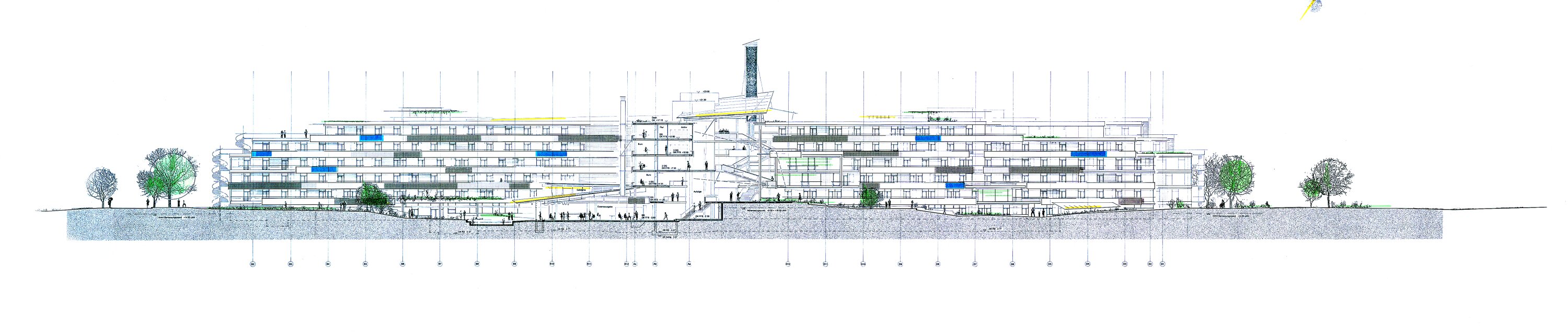
Section AA
The building respects the complex organizational demands of the different departments, while creating a series of focus points to promote staff communication and offer respite from cellular office spaces. These special places include the central multi-story entrance hall, conceived as an internal market square; the restaurant, which extends into one of the landscaped courtyards; the rooftop conference rooms, distinguished by a different geometry; the tea kitchens, designed as sunlit communication areas; the sports hall; and various circulation areas—corridors, galleries and open stairs—that establish horizontal and vertical connections, and create niches and spatial contexts. Complementing this spatial network are the roof terraces and greenhouses.