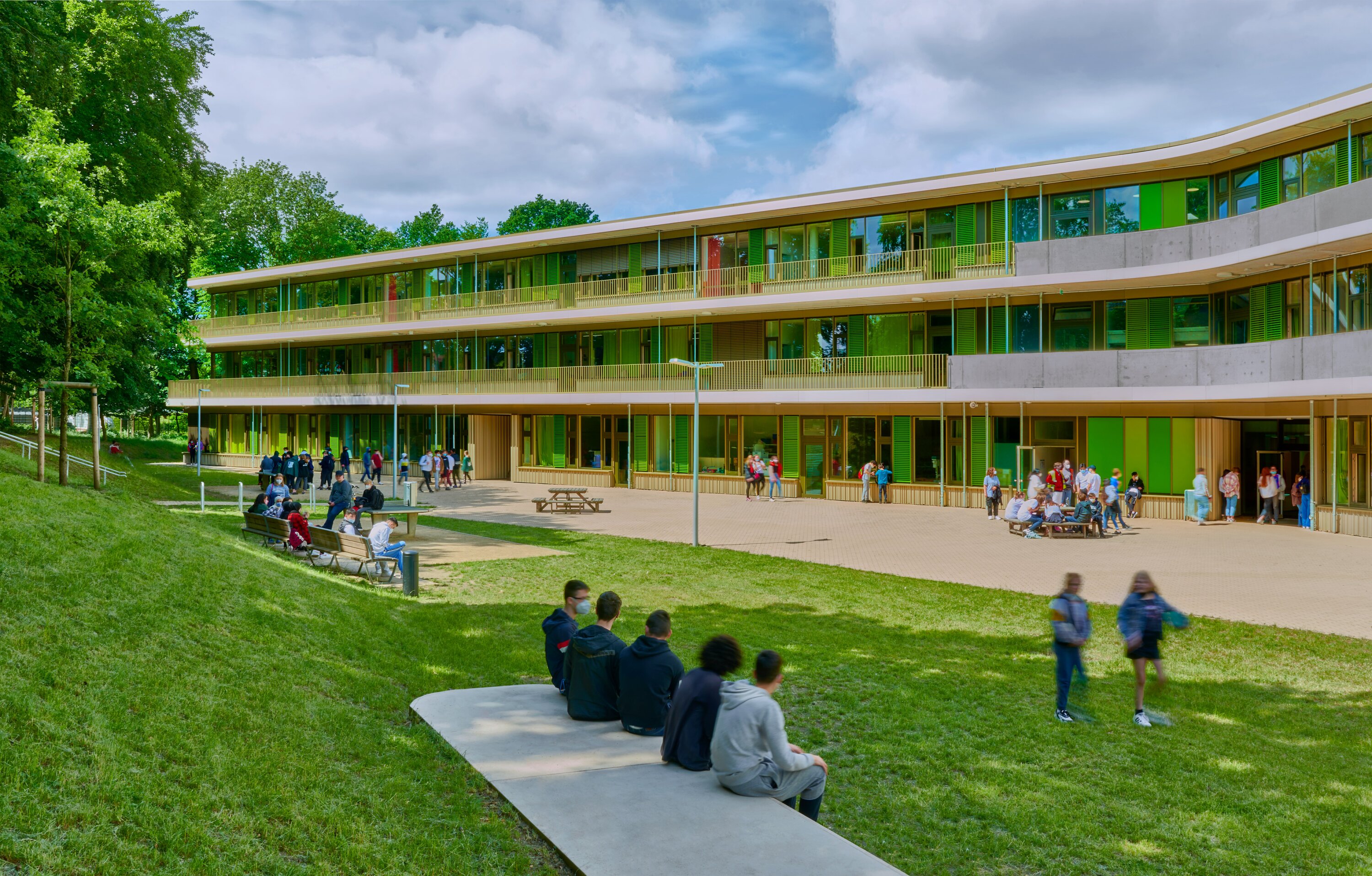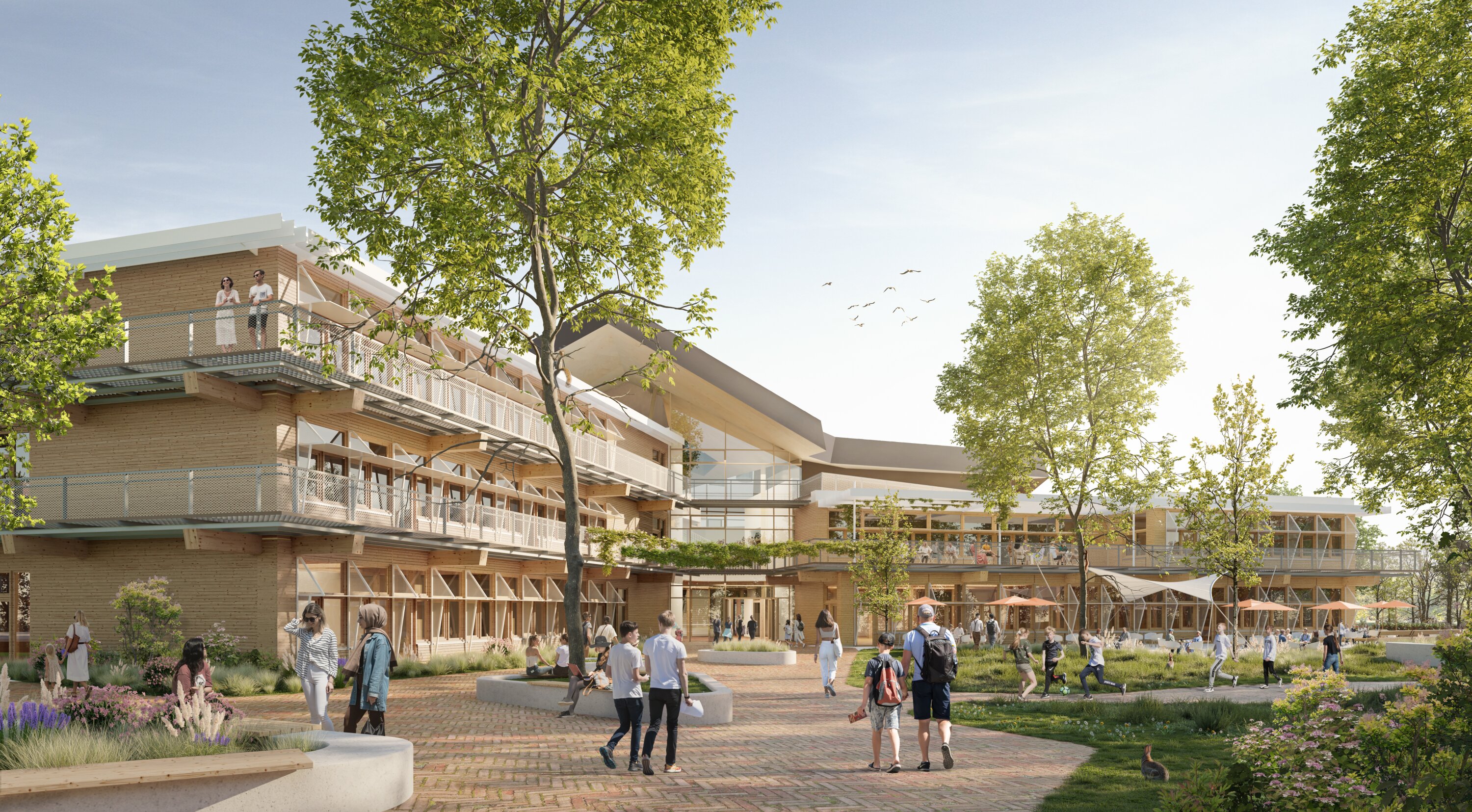
Located in Hamburg’s Lurup quarter near Altona Volkspark, the new neighborhood school accommodates six classes per grade. Previously divided among three sites, the school has been unified in a single home severing approximately 1,000 students and 120 teachers. The new building provides a diverse range of spaces aligned with an educational concept that helps each child in achieving their full potential. An integrated community school transforms the project into a neighborhood center supporting both youth and adult education.
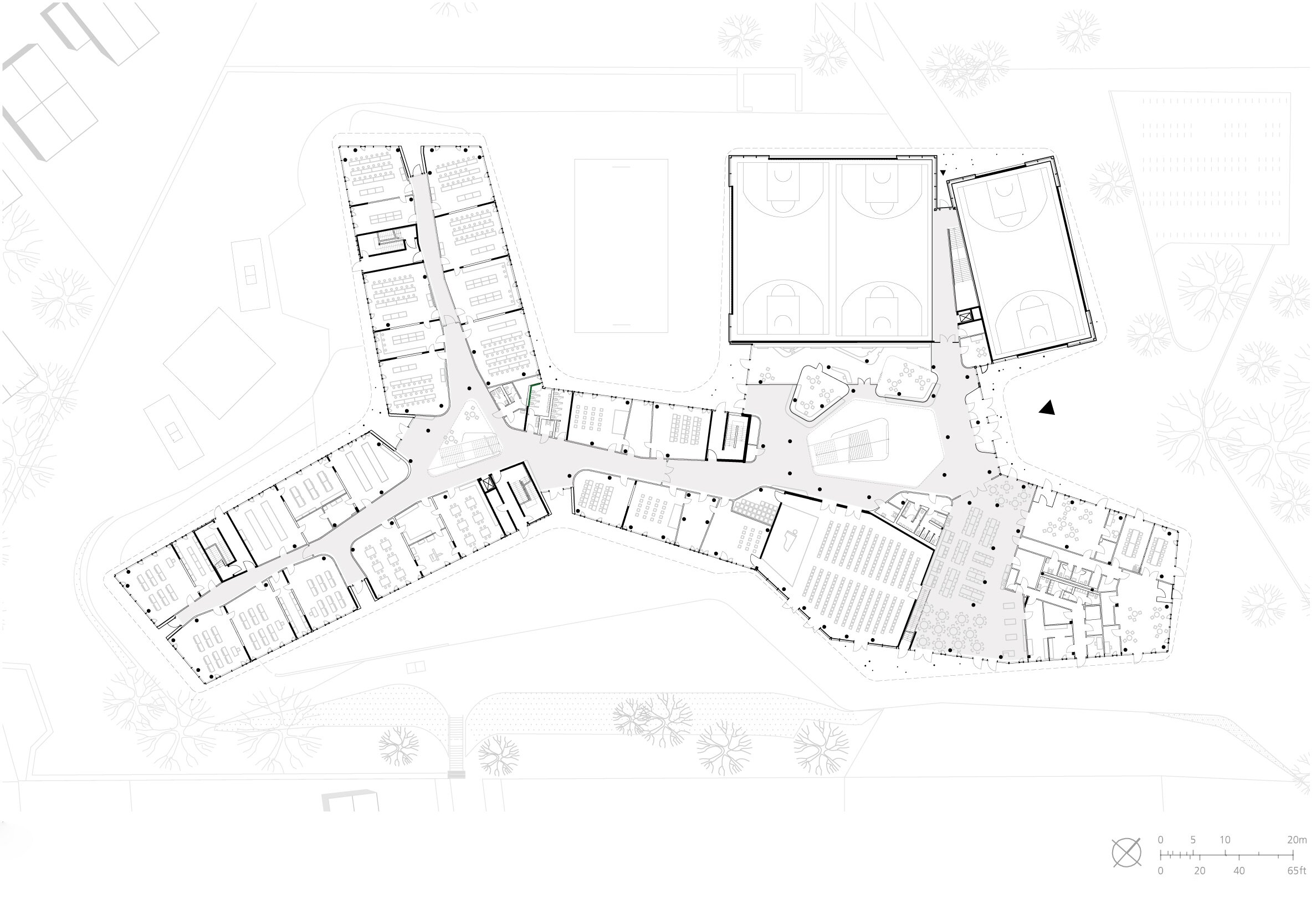
Level 1
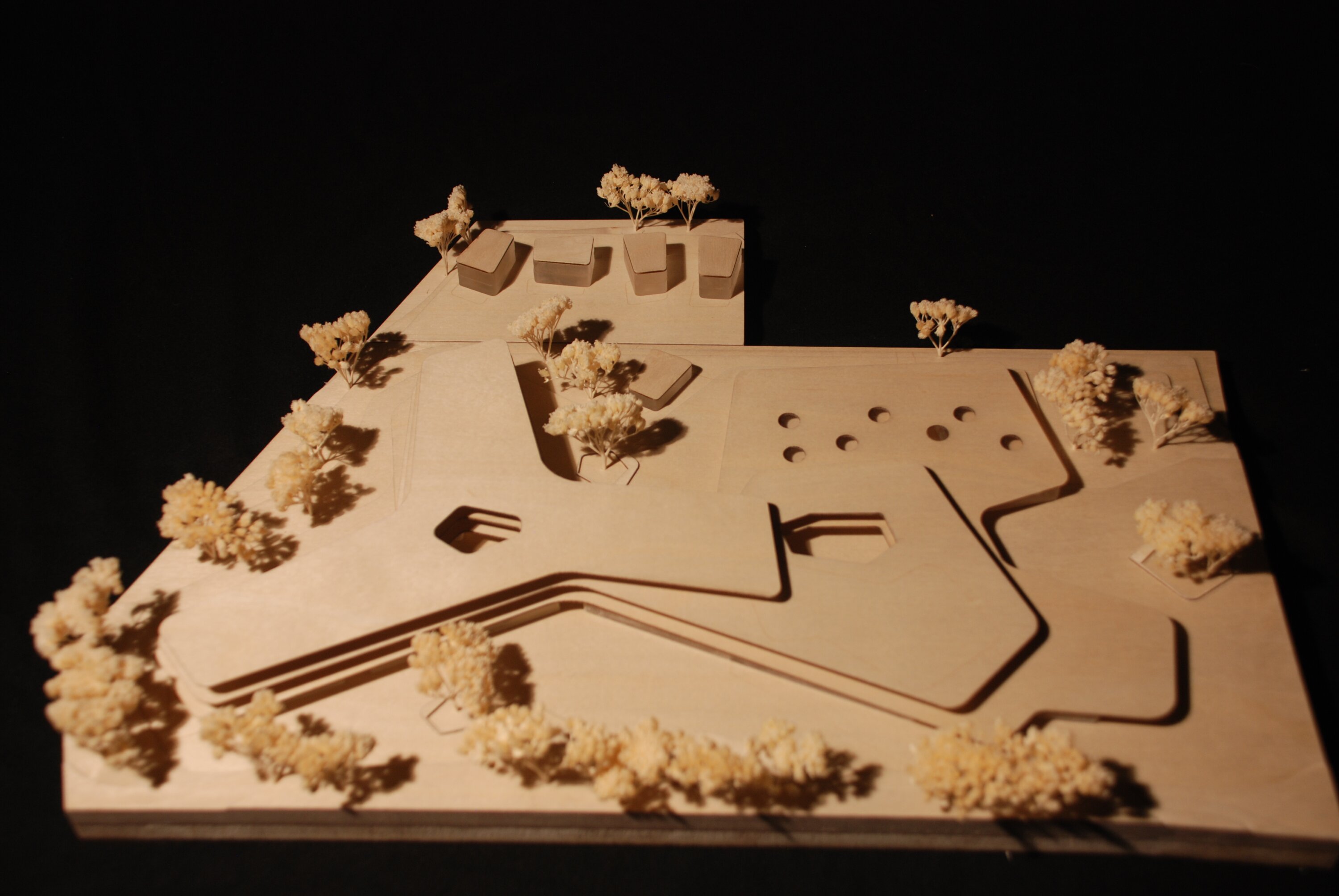
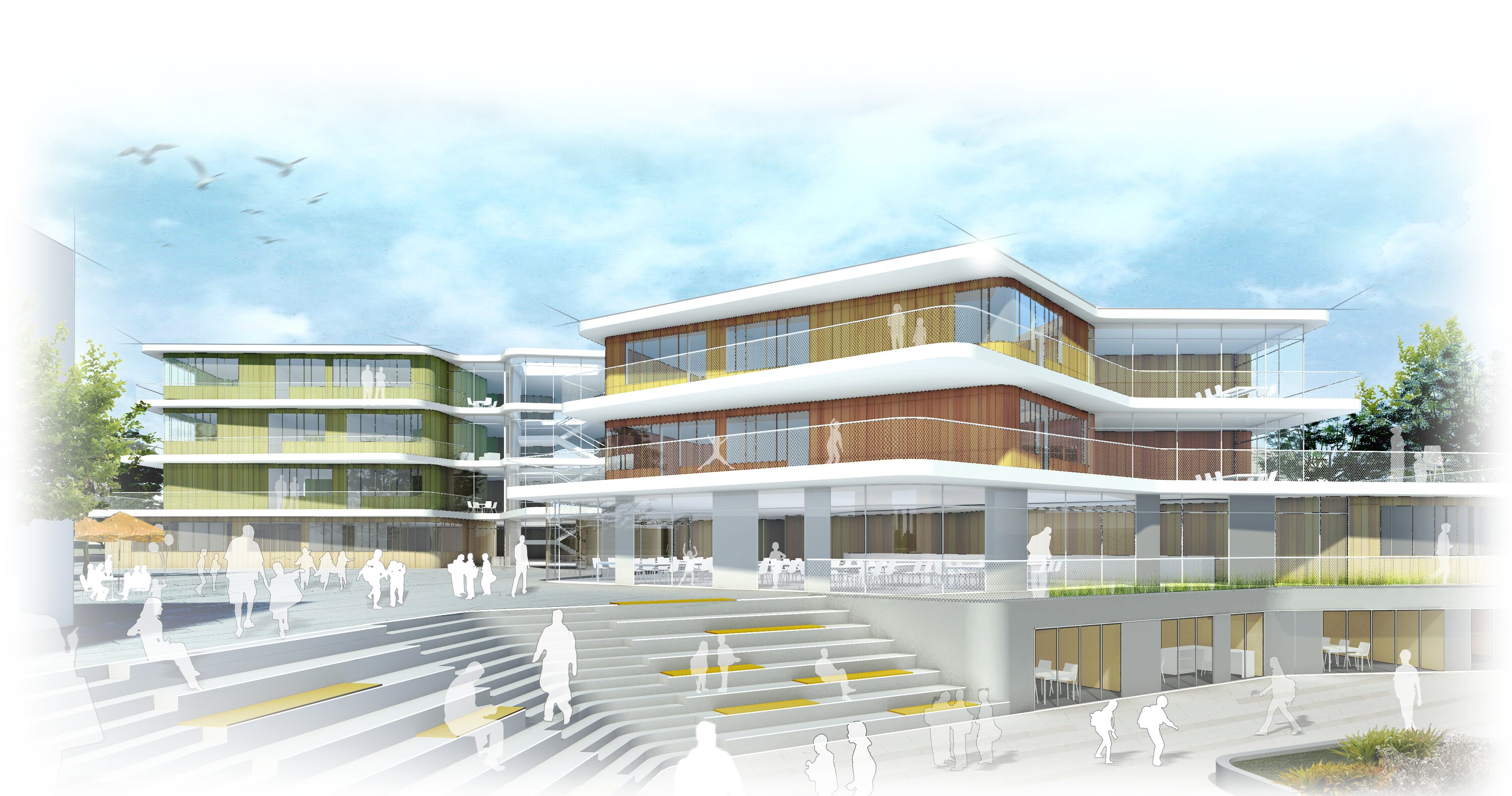
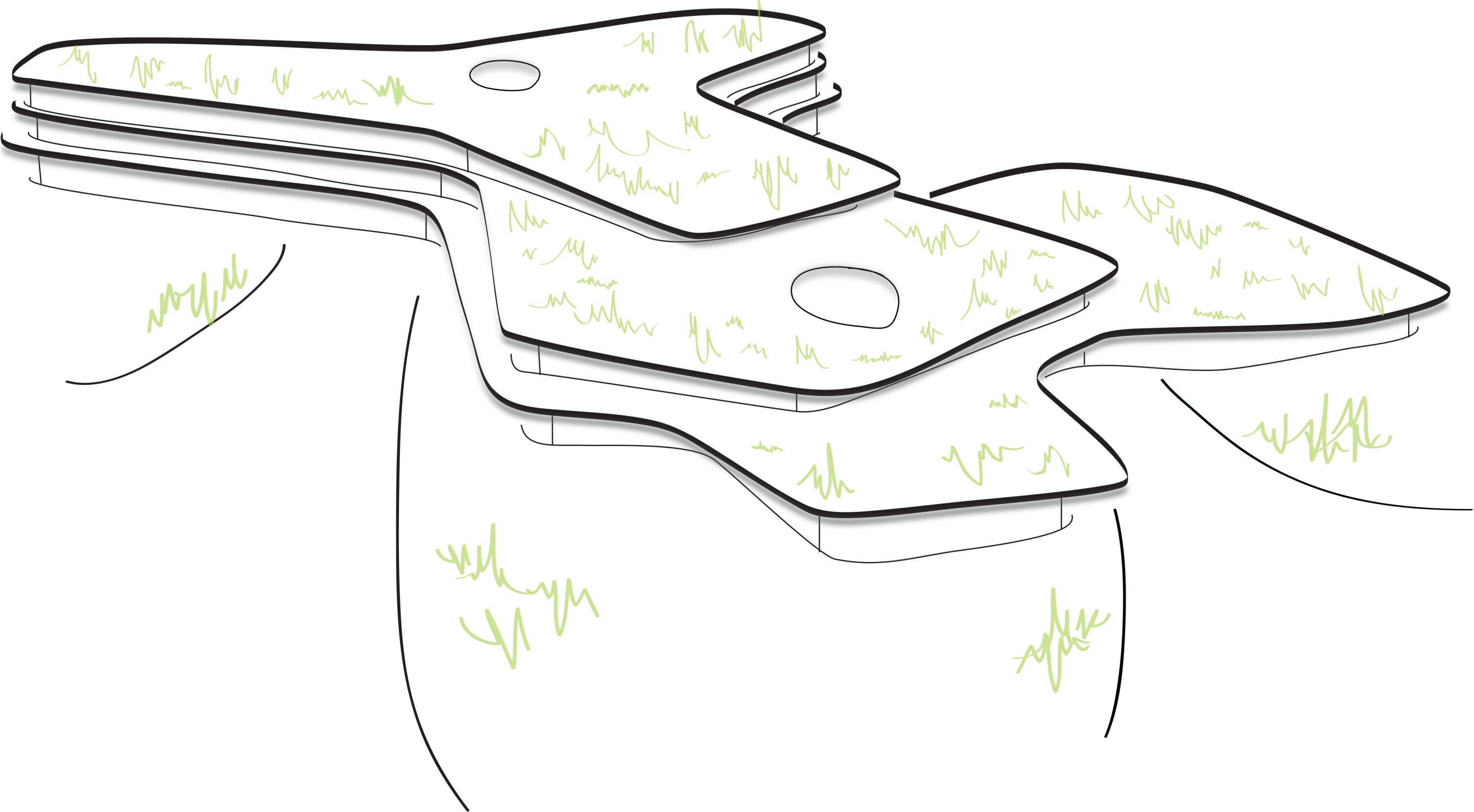
To blend with its surroundings, the building only rises three stories, with staggered heights that create a mediating effect further enhanced by terraces and recessed areas. A harmonious sense of scale and proportions inform the design. The school’s footprint resembles an amoeboid form, with smooth indentations and protrusions creating different wings. The entrance is located between two wings, conveying a sense of protection and welcome.
- Client
- Schulbaubehörde Hamburg
- Architects
- Behnisch Architekturbüro
- Address
Flurstraße 15
22549 Hamburg
Germany- Gross Area
13.982 qm / 150,502 sq.ft
- Gross Volume
80,067 cbm / 2,827,566 cu.ft
- Competition
2014, 1st prize
- Photography
David Matthiessen
- Downloads
-
Download PDF
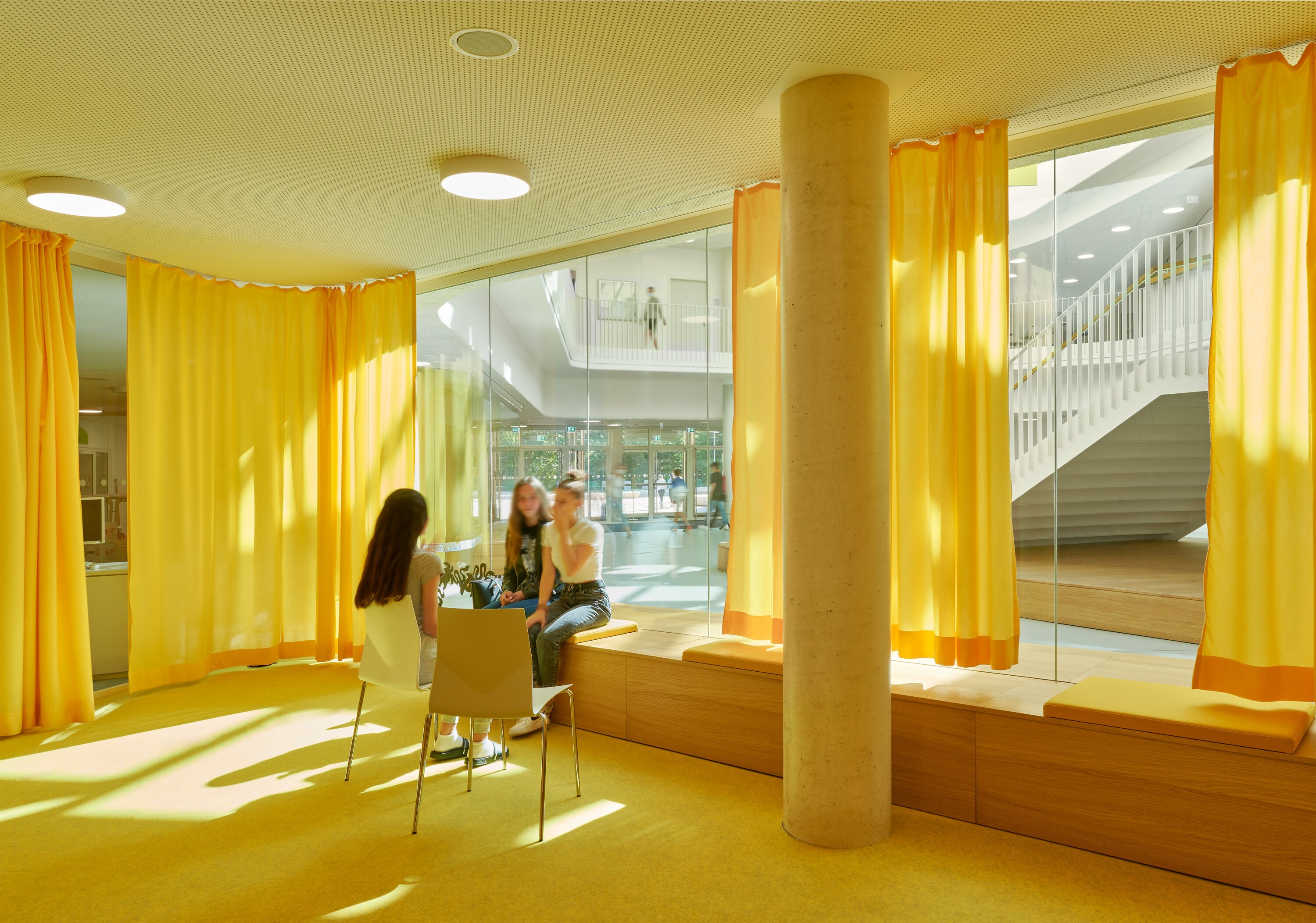
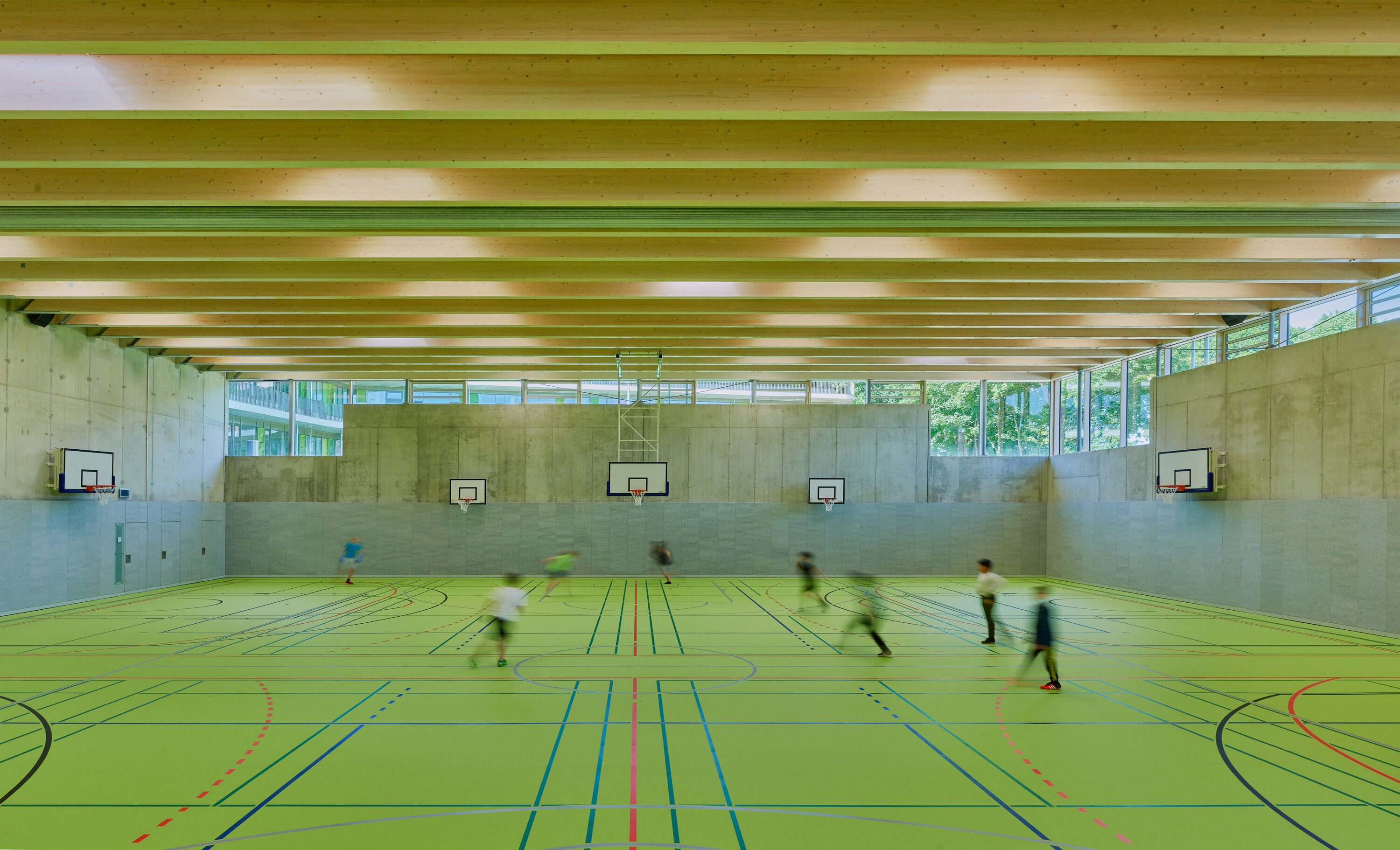
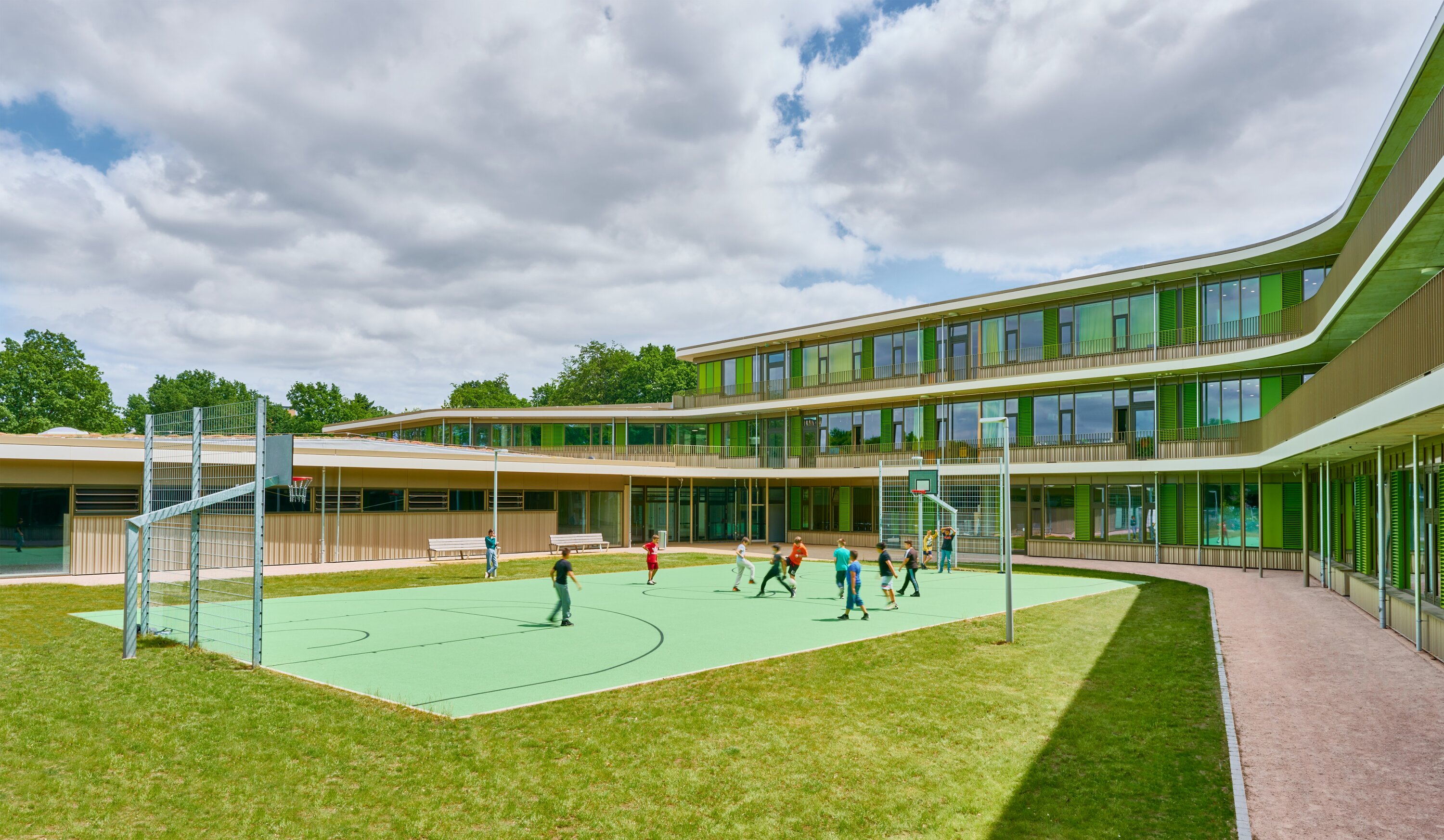
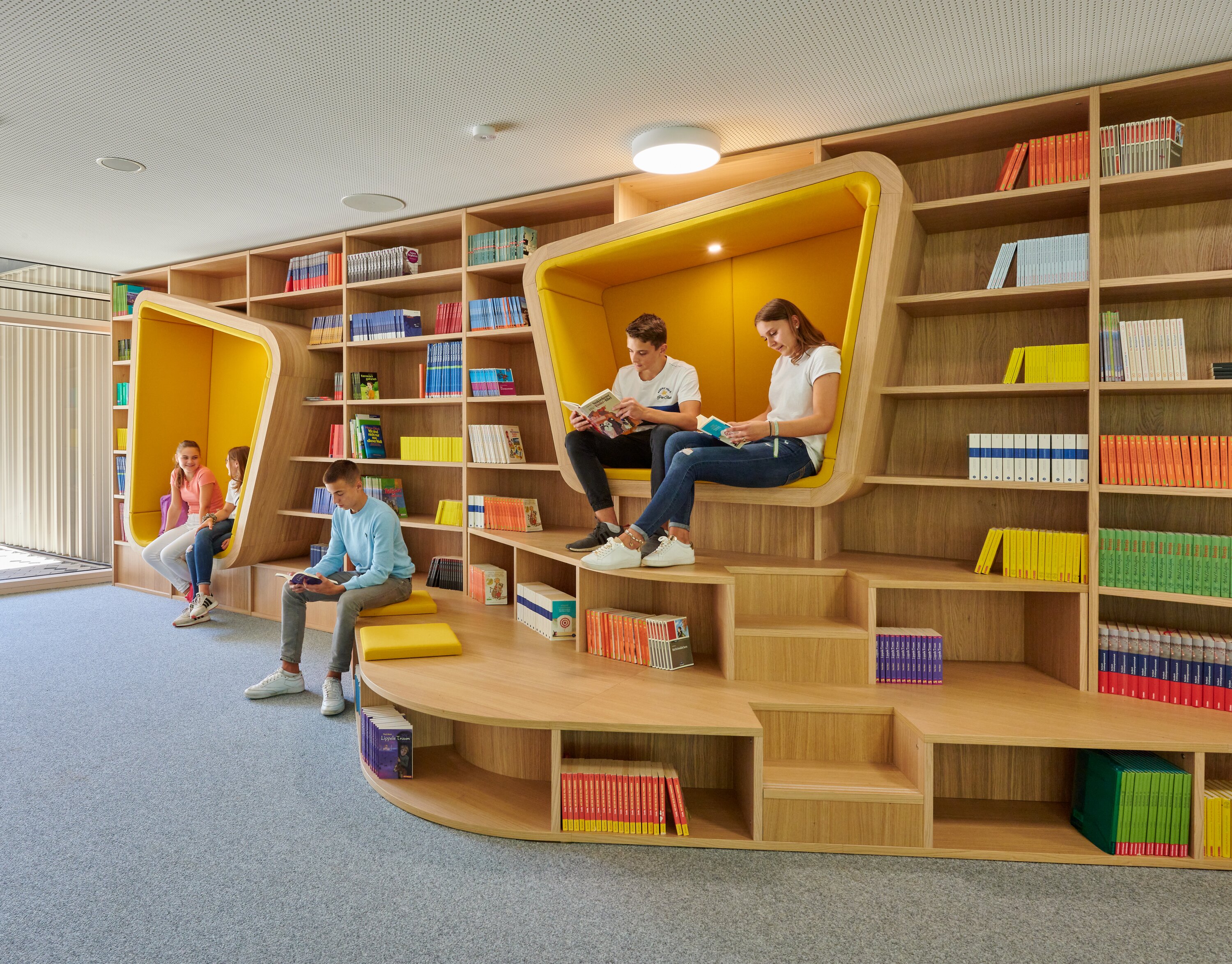
Two sports halls—one single-purpose and one dual-purpose—along with a multifunctional room, are available for physical education classes or club sports. Complementing these are additional amenities, including a media library and a community school with a parents’ café and youth room. The building is open outside school hours, serving as a neighborhood resource for social interaction. Through additional events and programs, the school encourages community engagement across generations and strengthens local ties.
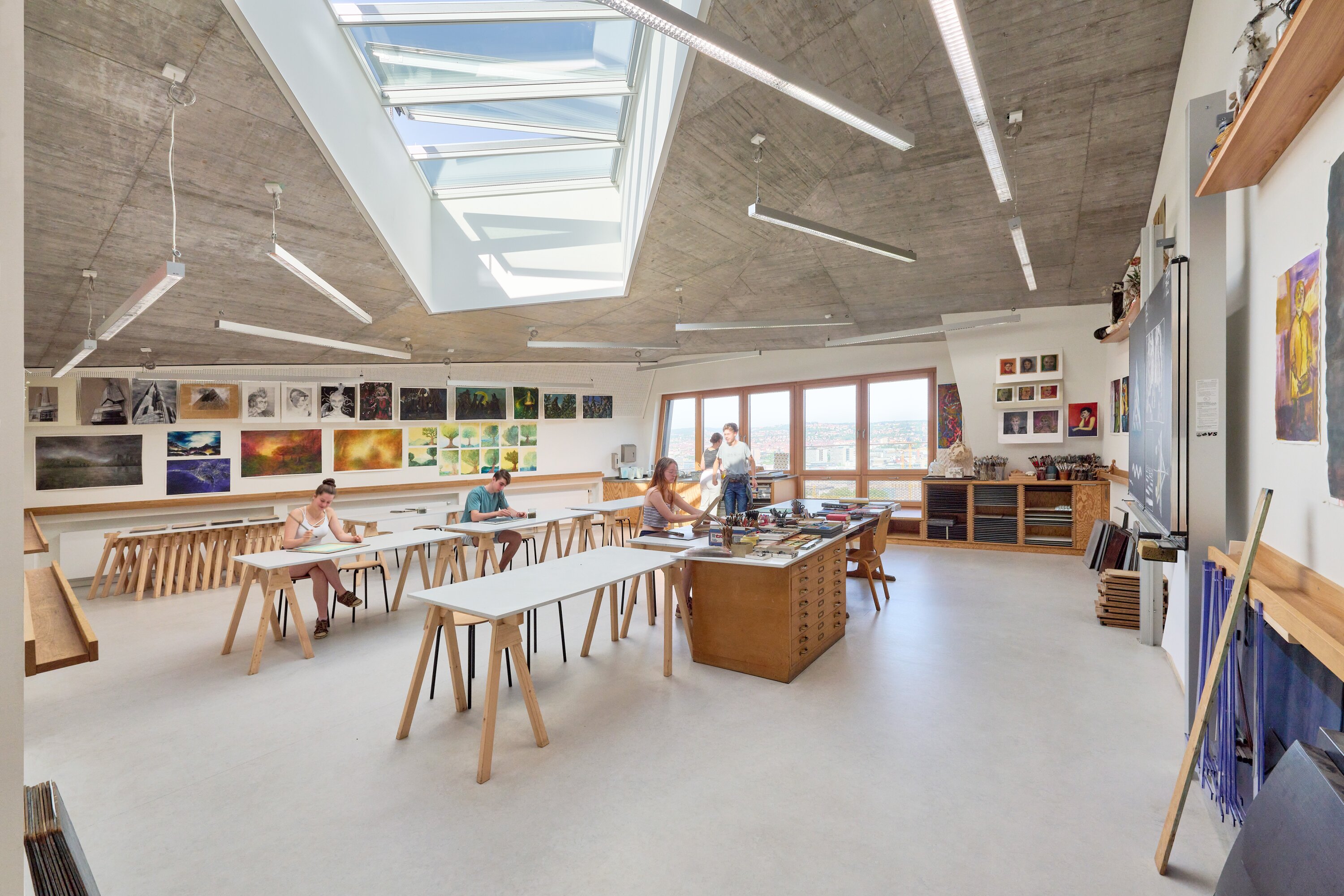
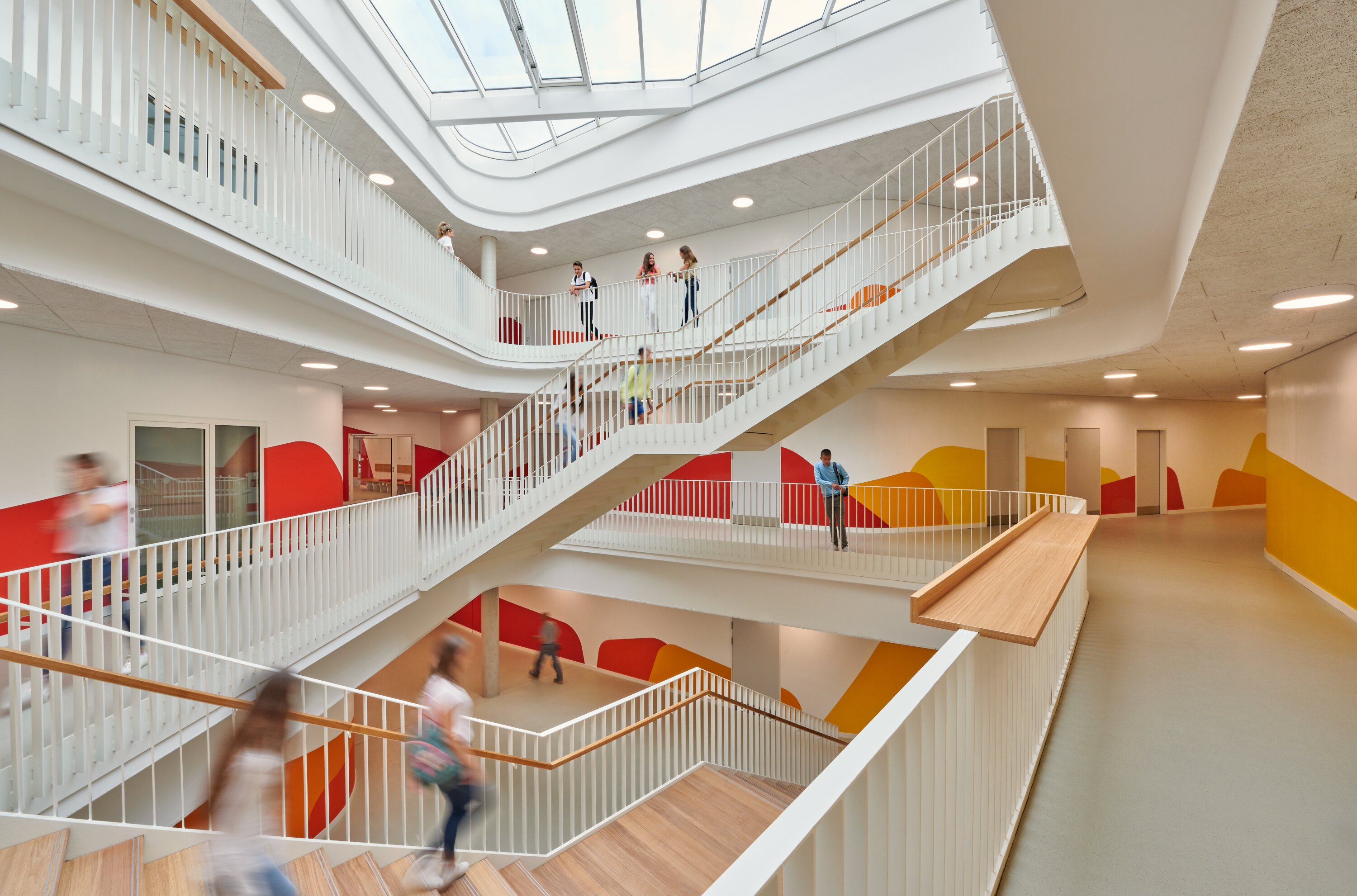
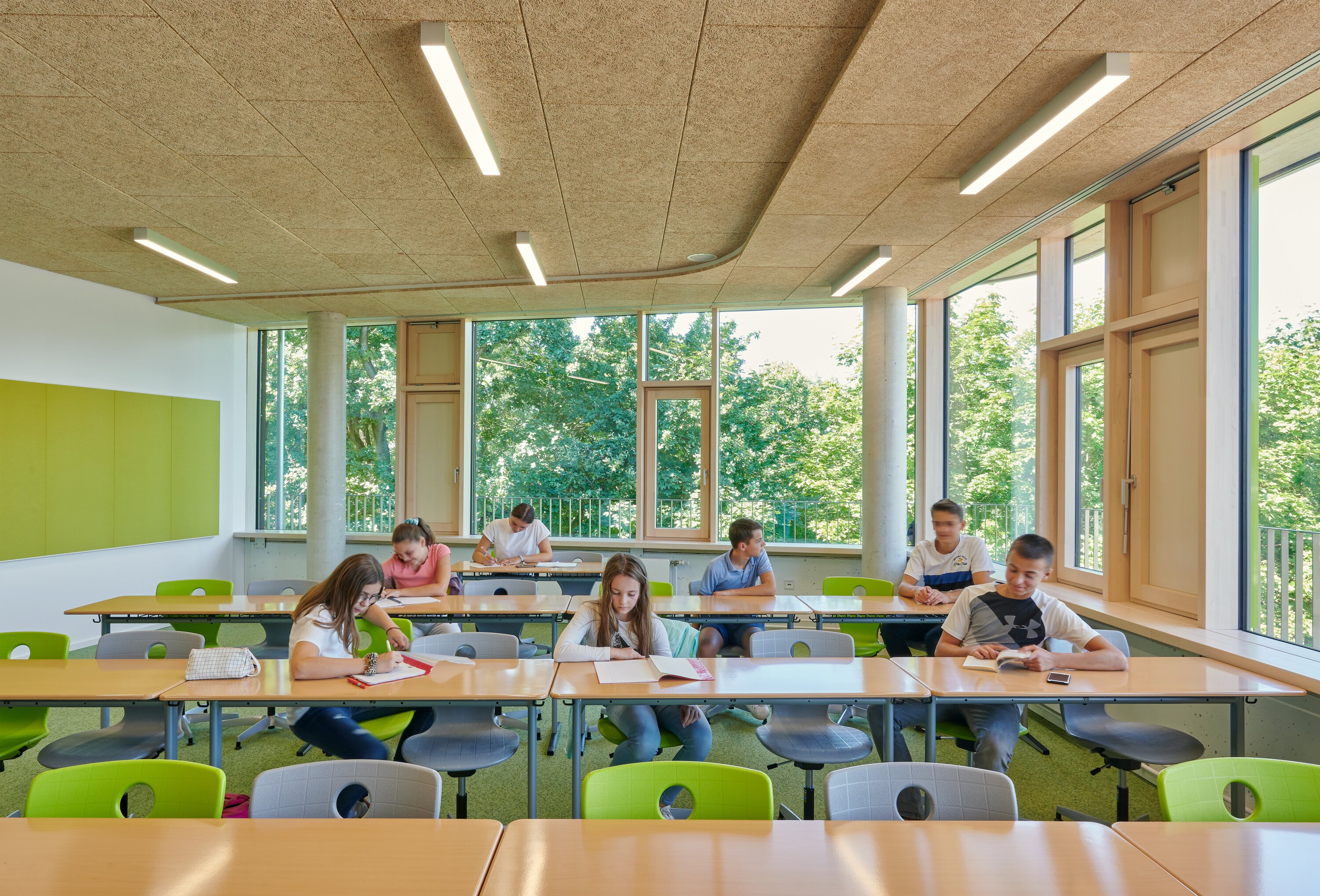
Lightness and openness characterize the interior. Areas inspired by the idea of a market square and other zones bustling with activity create a lively atmosphere. Natural light floods into two atria, which provide vertical connections within the building. The program is diverse. It incorporates classrooms for both general and specialized teaching, common areas, staff rooms, administration spaces, and facilities that support day-to-day operations.