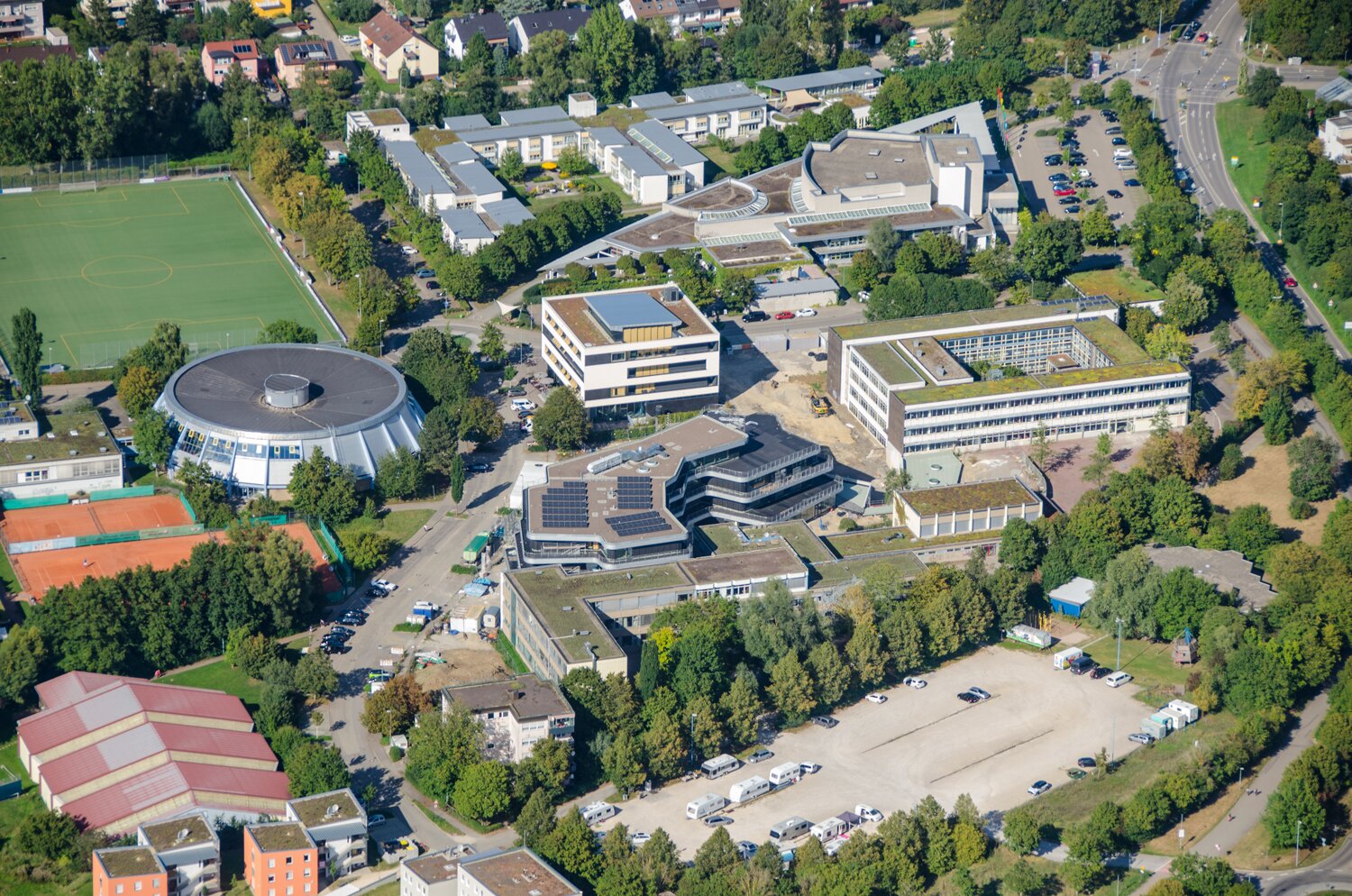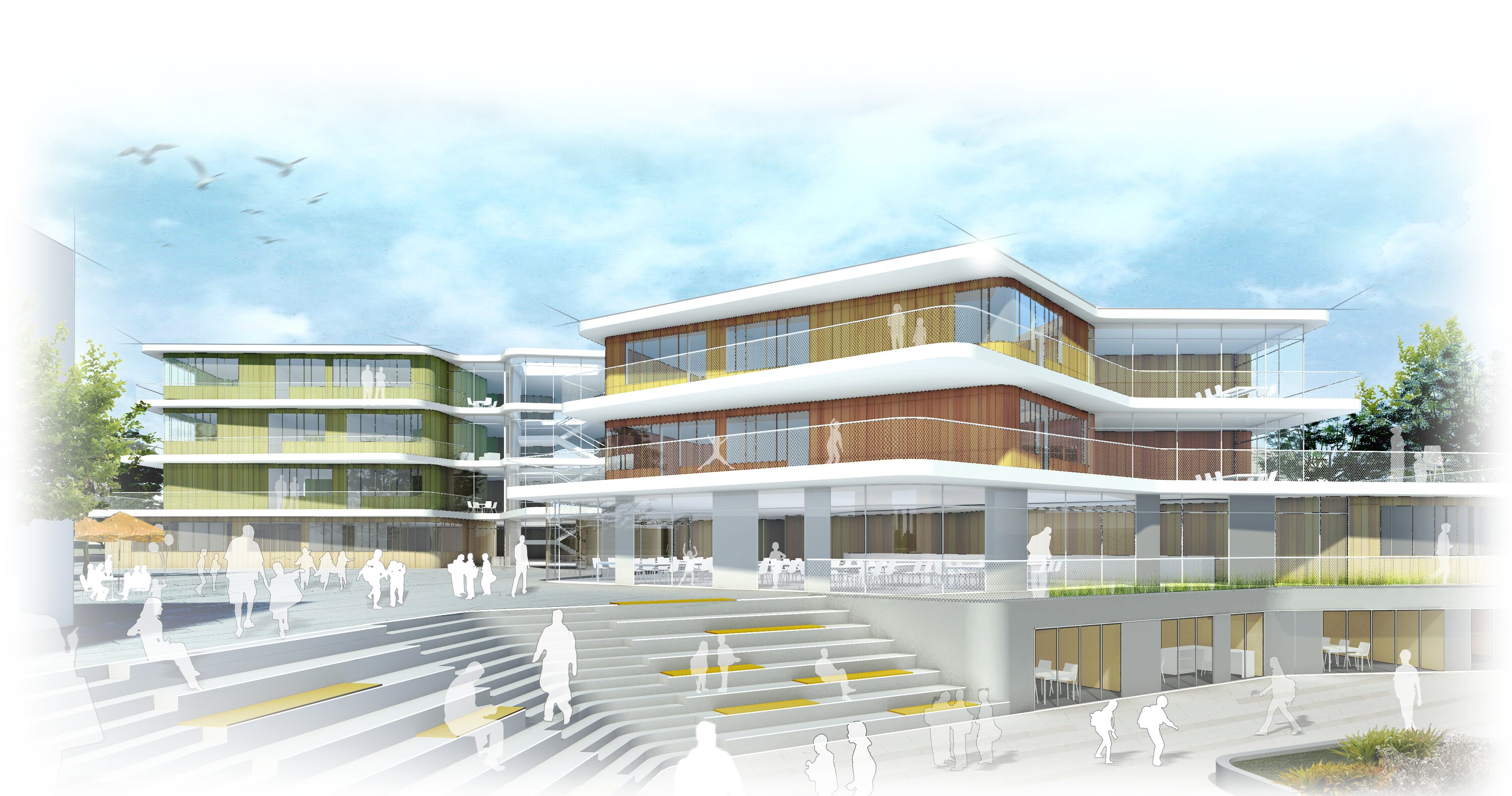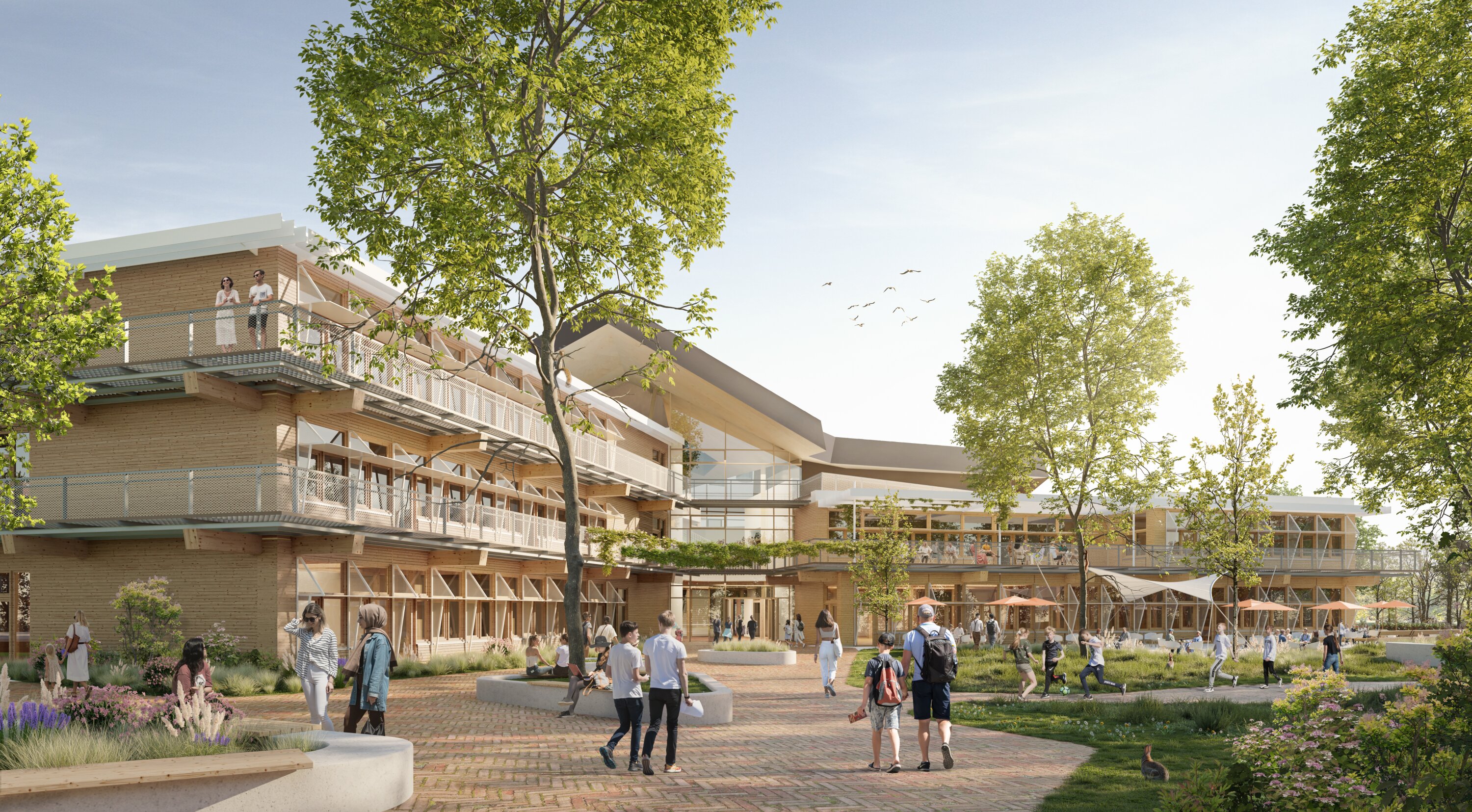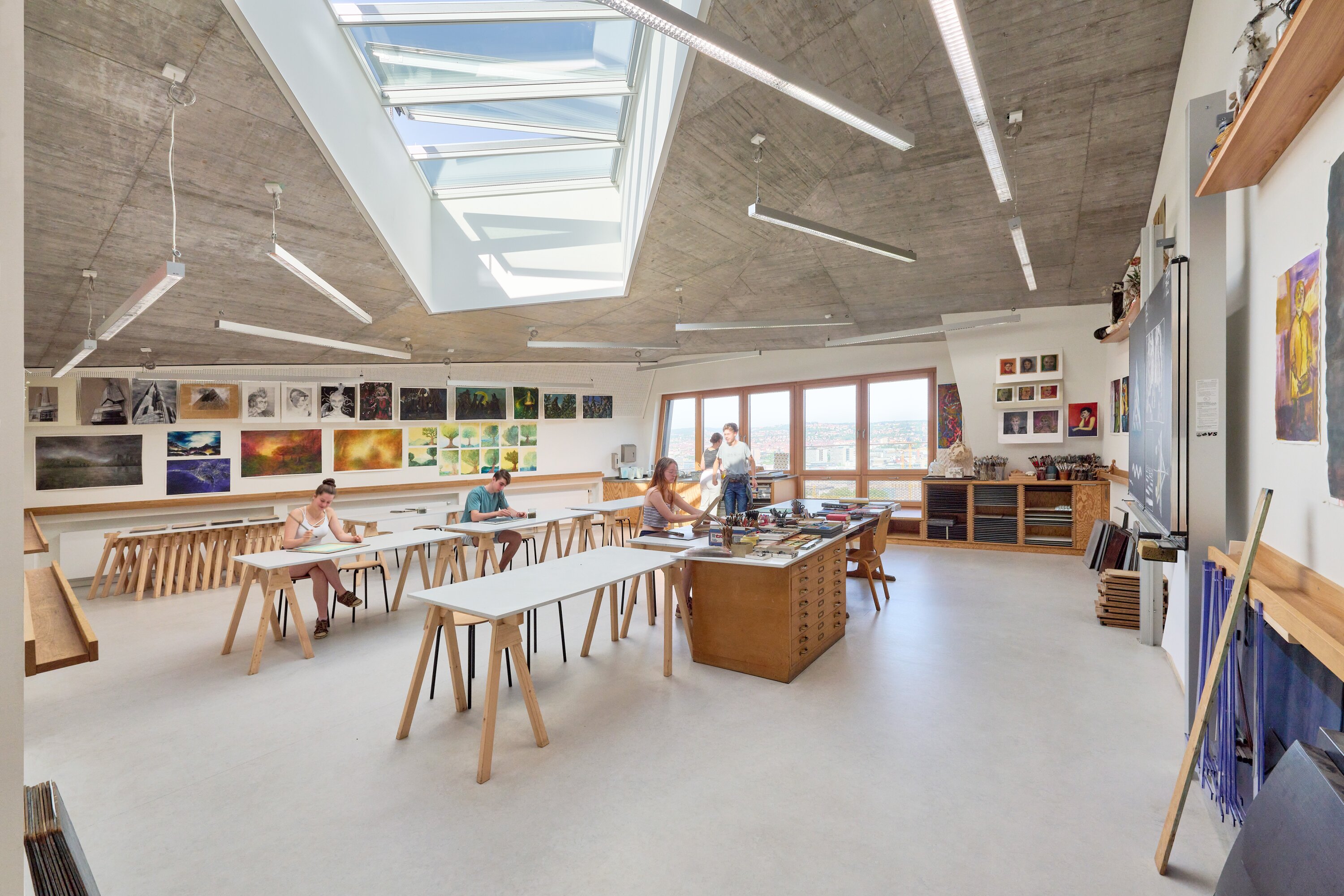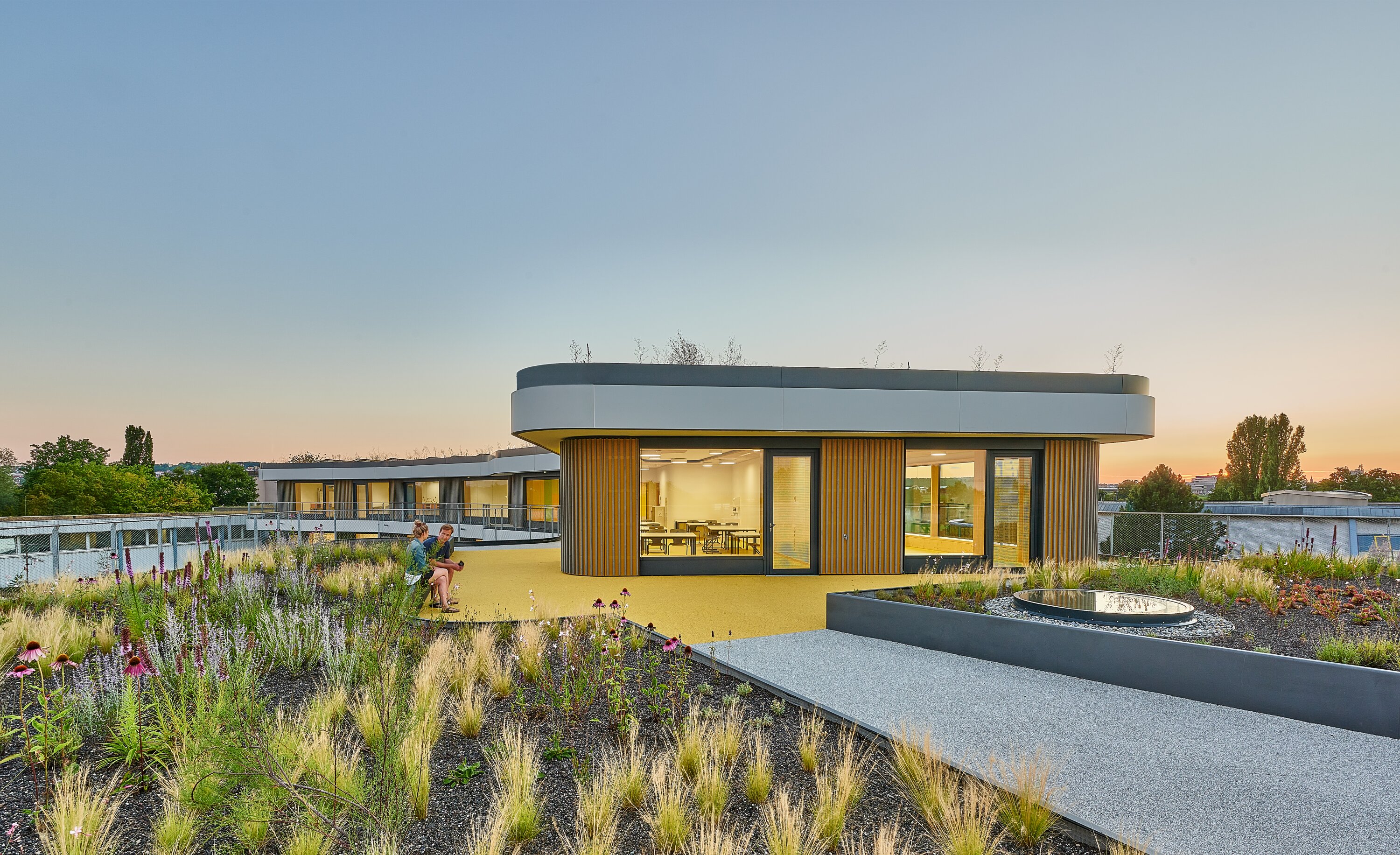


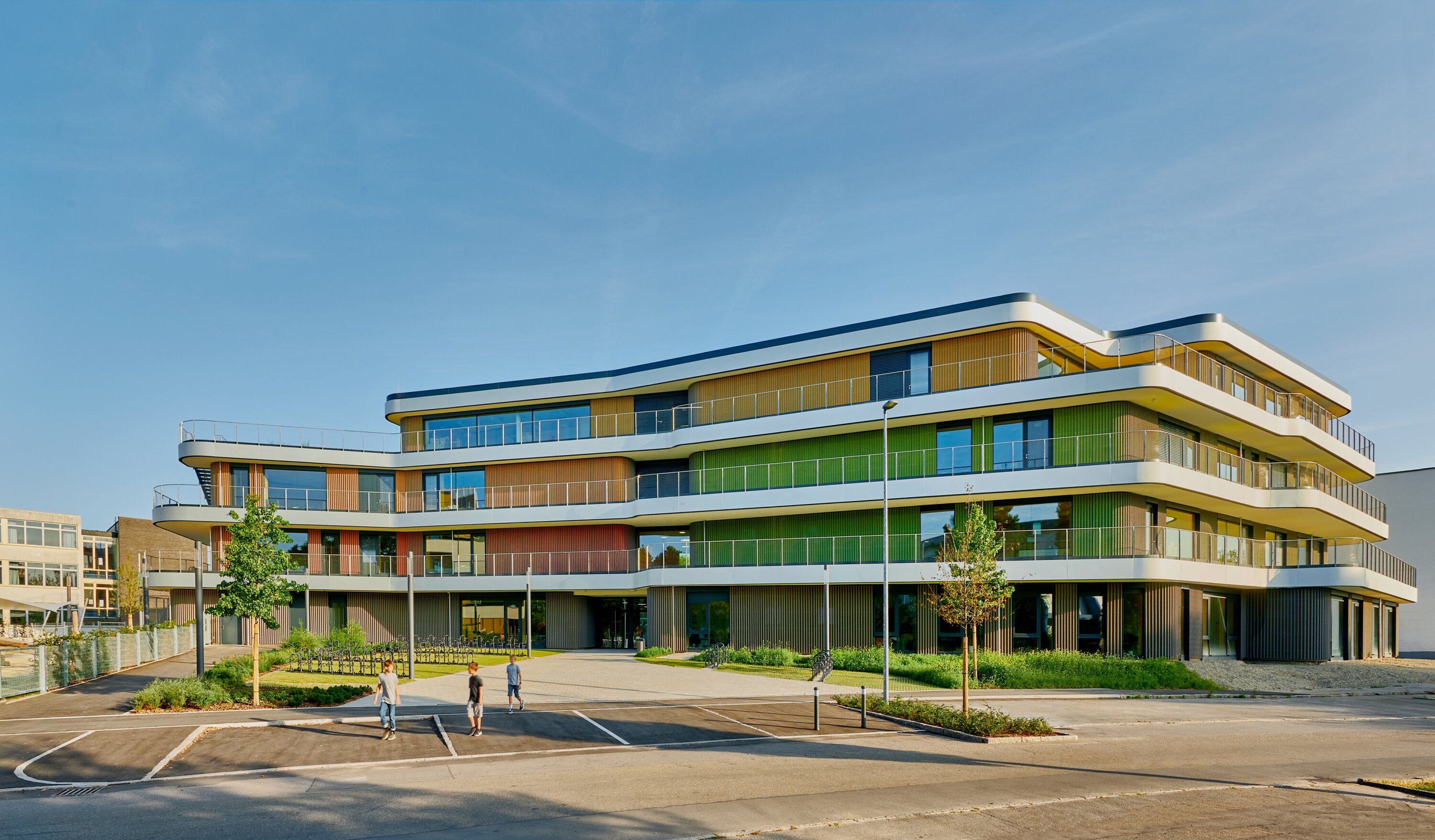



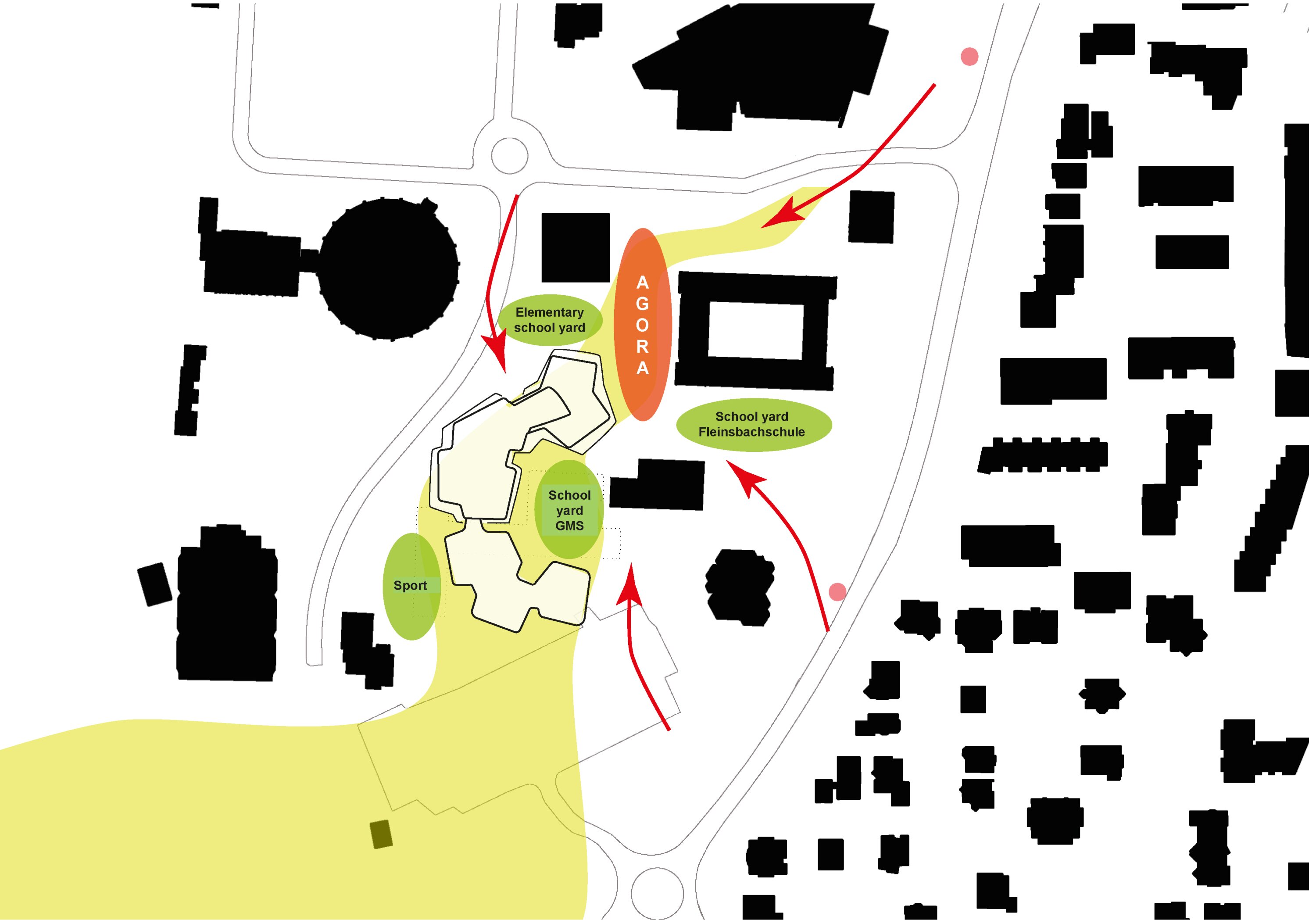
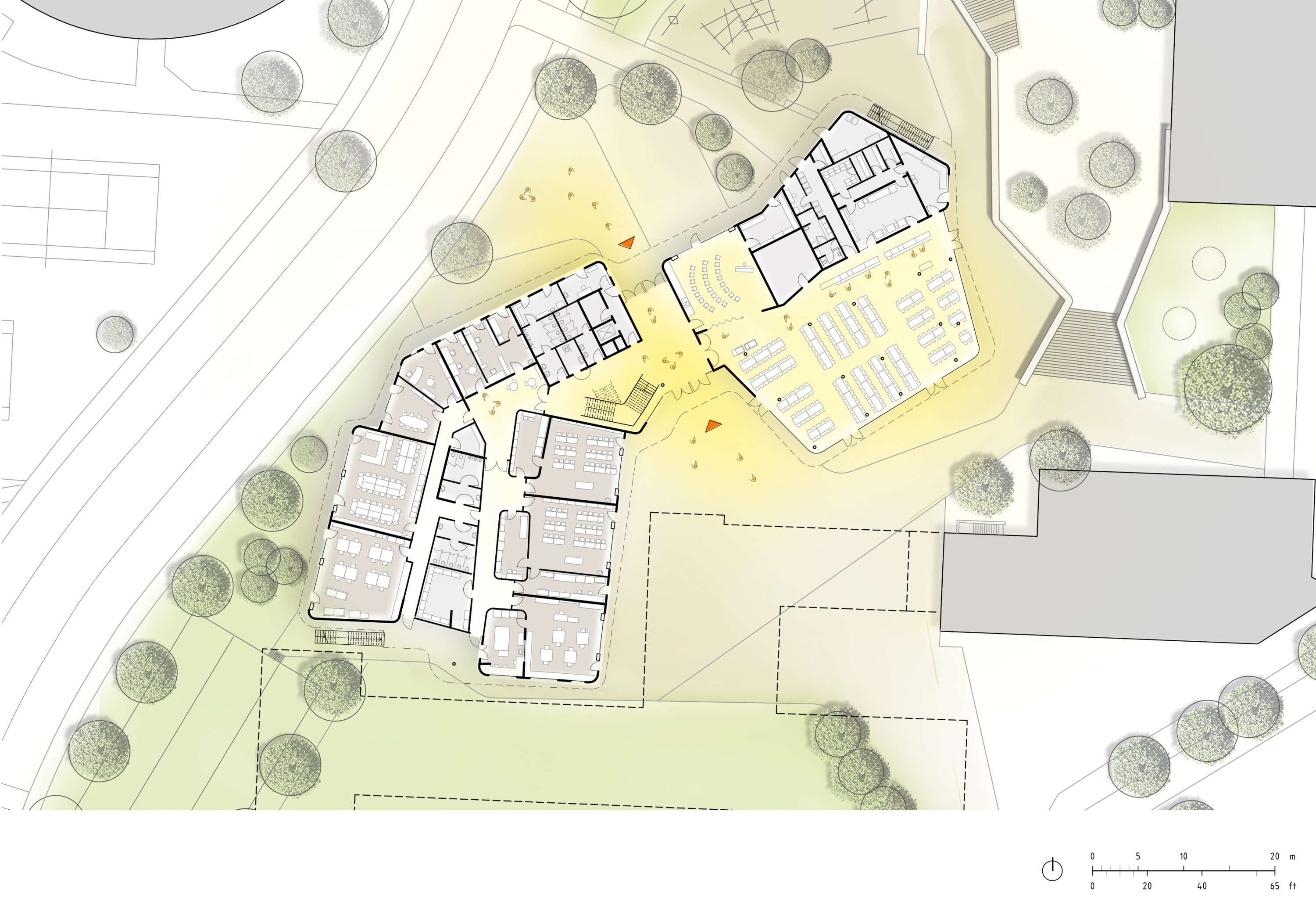
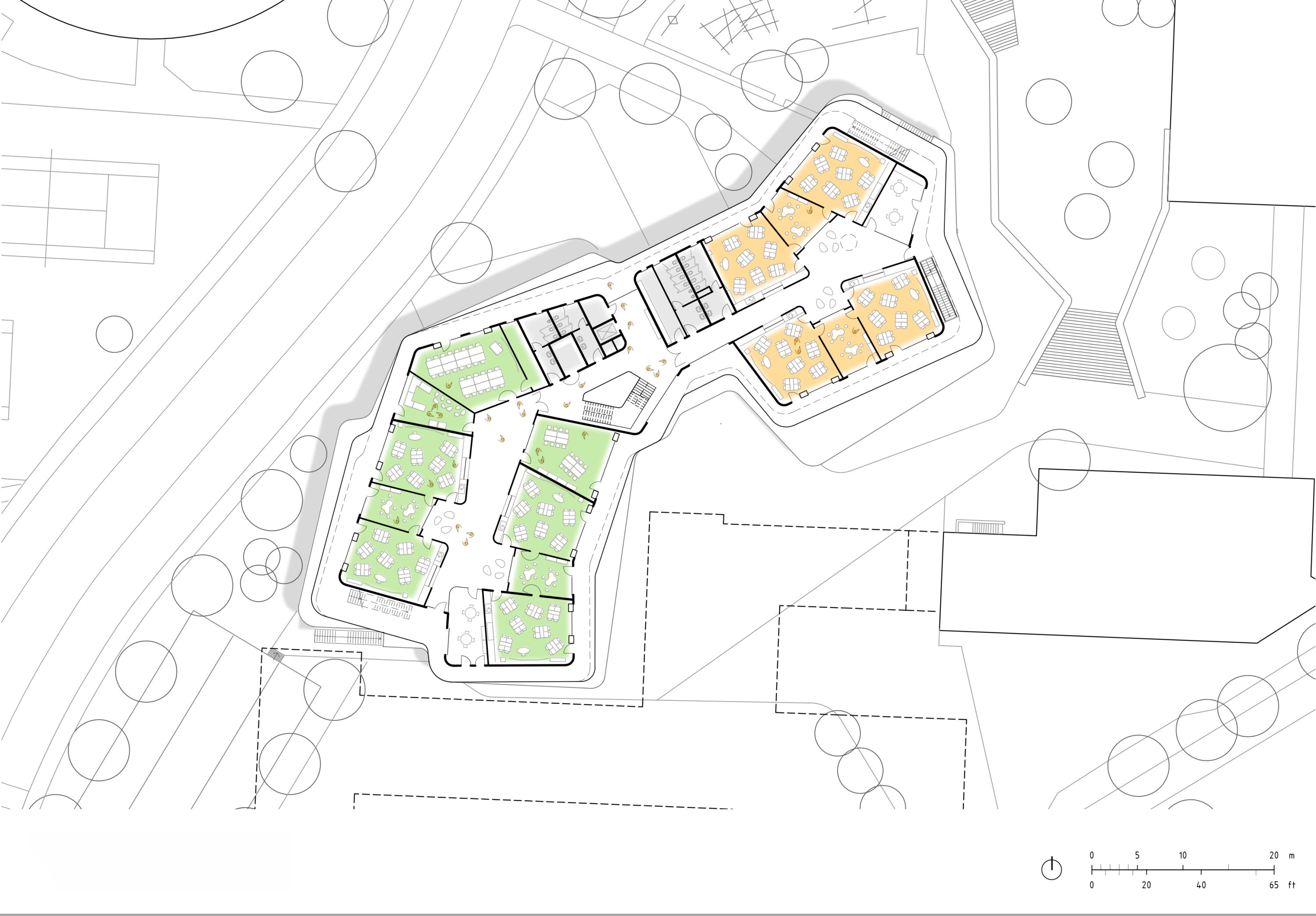
The building is organized around a central foyer that serves as a meeting point and provides access to the cafeteria, library, specialized classrooms, and spaces for teachers and social workers. Twin entrance areas enhance a sense of permeability and establish a clear connection to the outside. Landscaped schoolyards, interlinked outdoor areas, and the Agora—a sunken courtyard with stepped seating—foster community and strengthen the relationship between the two schools. The garden level opens generously onto the Agora through expansive glazing, while a light-filled atrium unifies the interior vertically. Wraparound terraces offer direct outdoor access. The elementary school occupies two floors in the northwest wing, and the community school, which serves grades five through ten, spans three floors in the southeast.

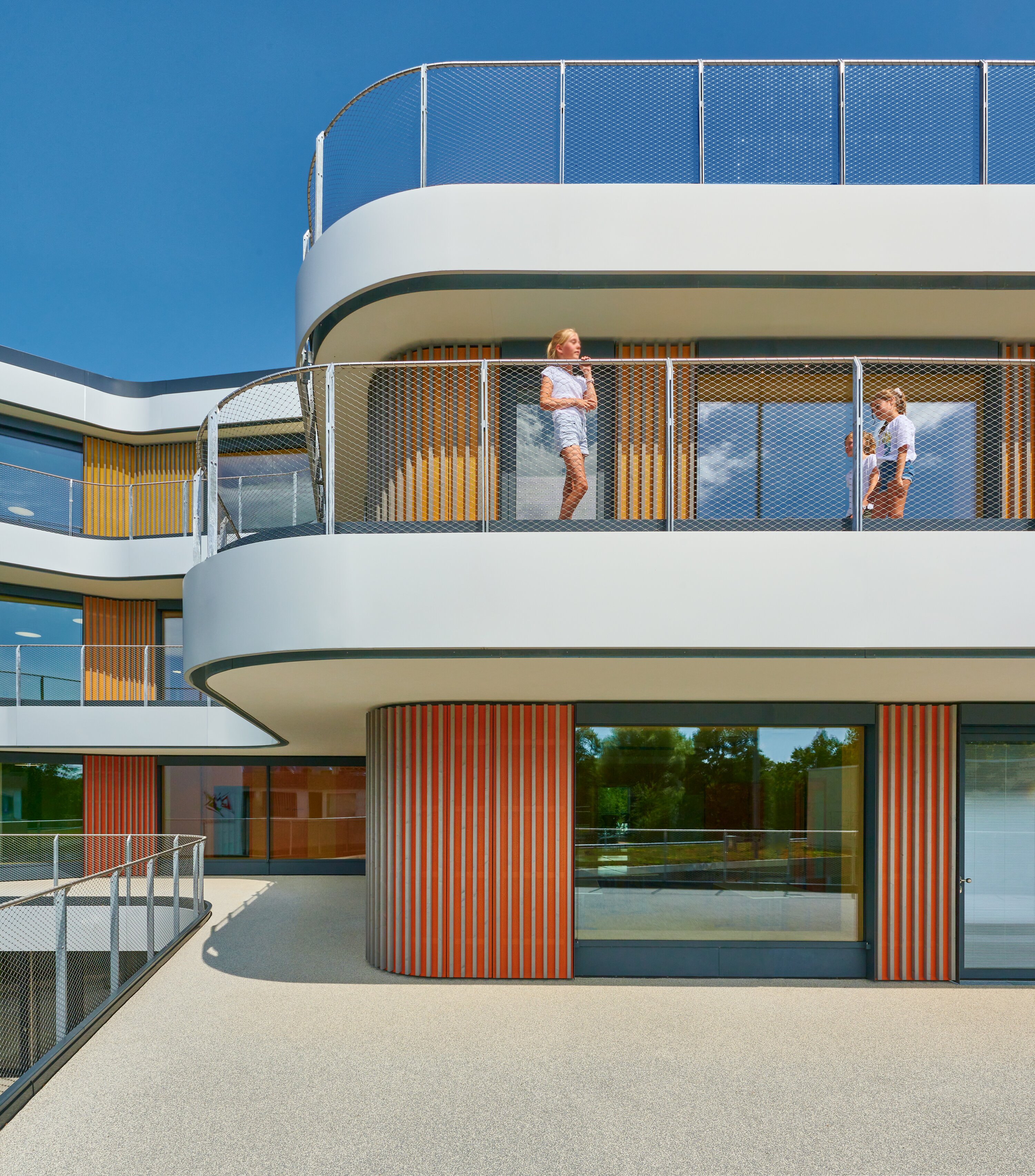

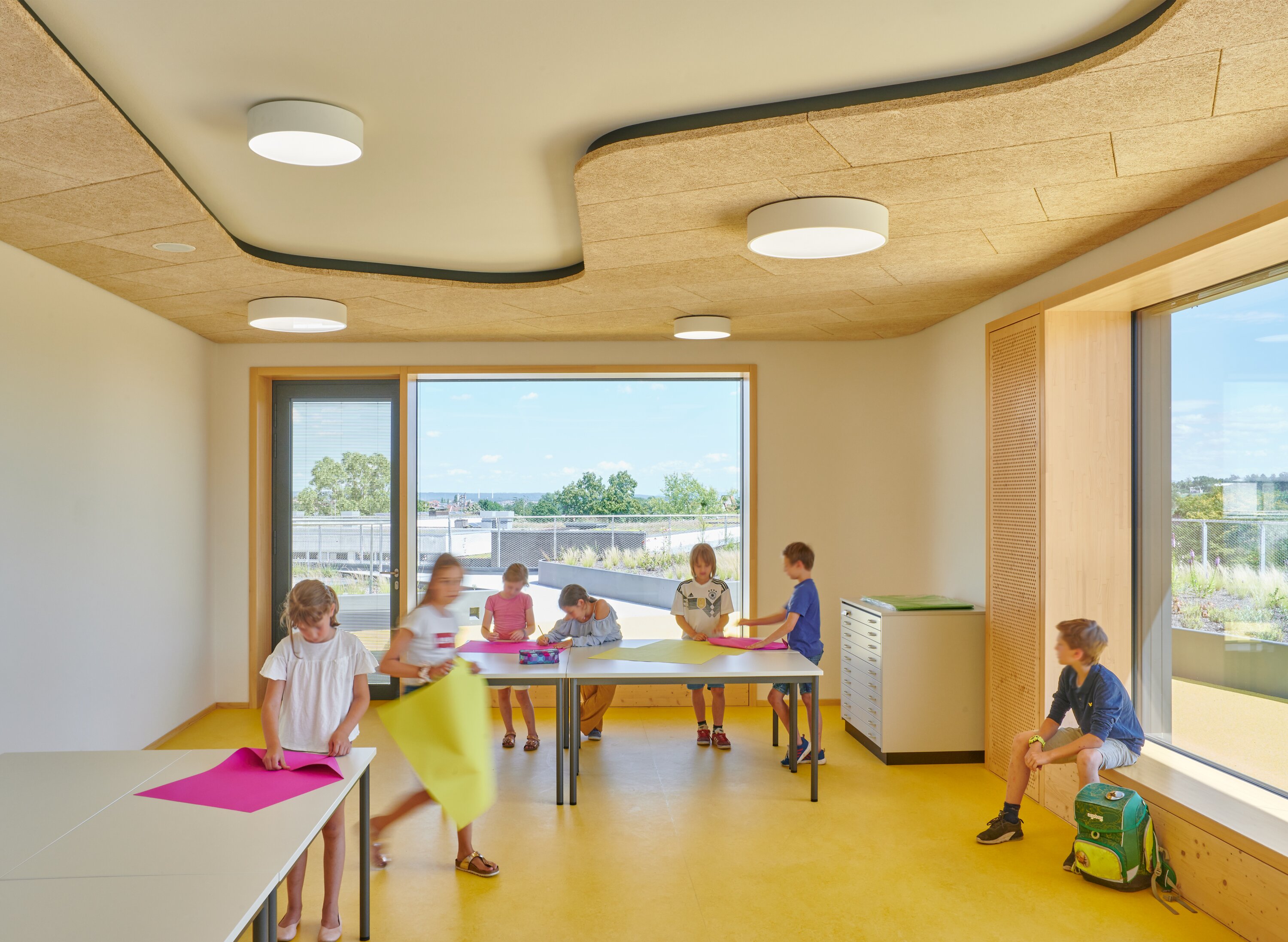
Designed to encourage communication based on pedagogical theories about individual, cooperative, and social learning, the available space is structured into diverse learning landscapes and open room configurations. Classrooms, group rooms, and multipurpose areas are combined into units—so-called learning houses. Teachers can use adjacent access zones and outdoor spaces to expand learning outside the classroom, thus turning the building into a lively place.





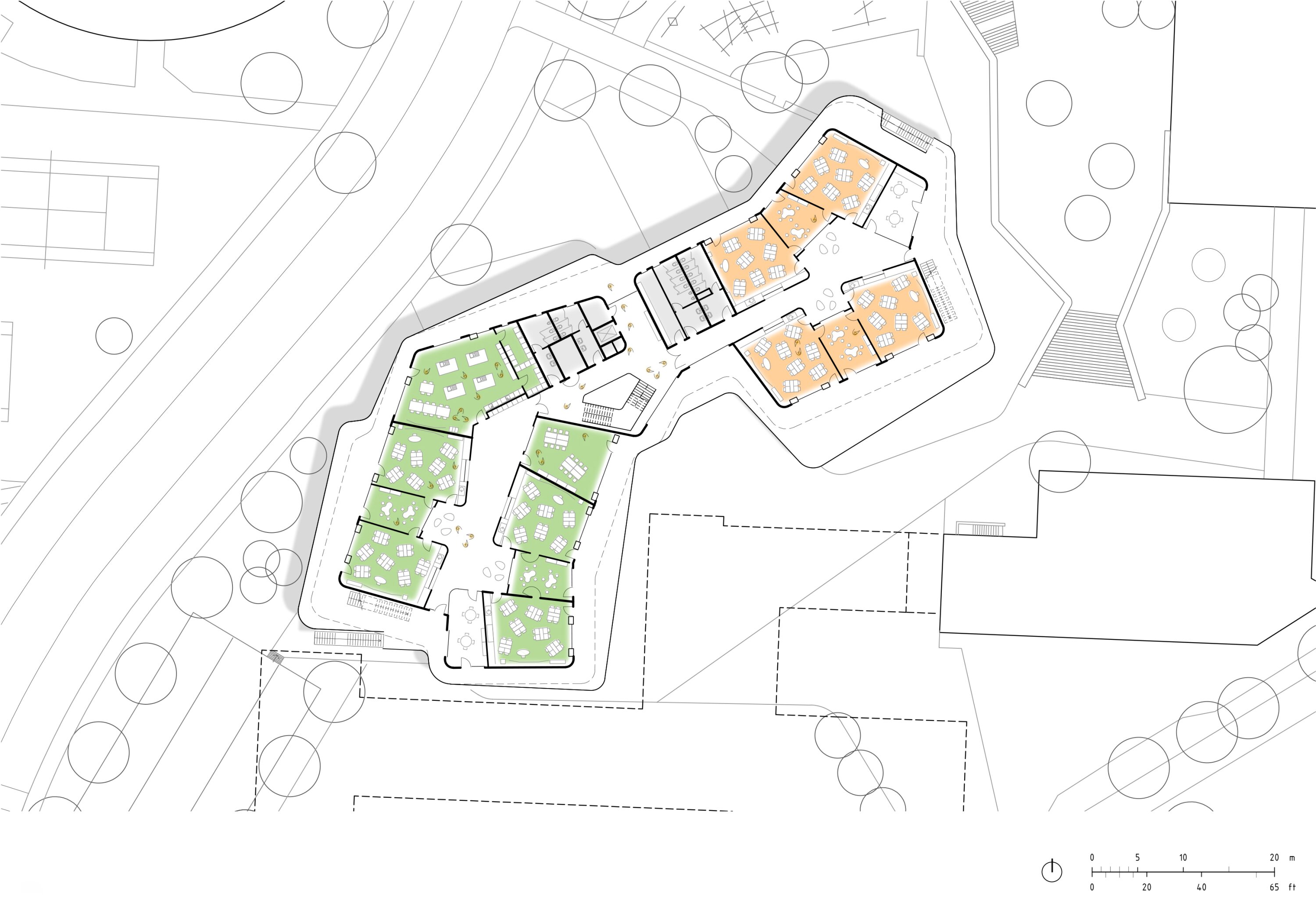
Level 1-3
- Client
- Stadt Filderstadt
- Architects
- Behnisch Architekturbüro
- Address
La Souterrainer Str. 9
70794 Filderstadt
Germany- Gross Area
9.498 qm / 102,237sq.ft
- Gross Volume
33.733 cbm / 1,191,281 cu.ft
- Competition
2016, 1st prize
- Photography
David Matthiessen
- Awards
2021 The Plan Award, shortlist
2021 Brillux Design Award 2021, winner- Downloads
-
Download PDF

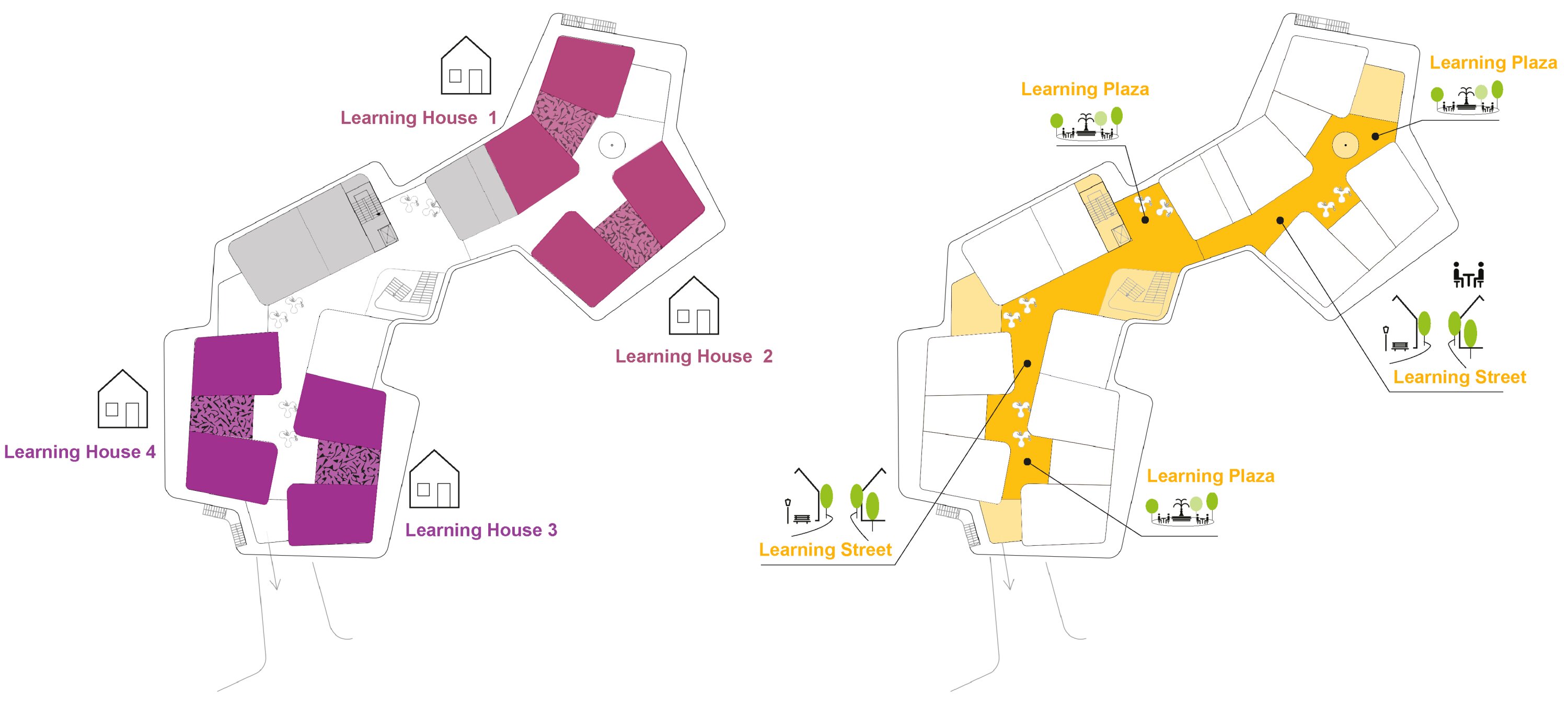
Learning Concept
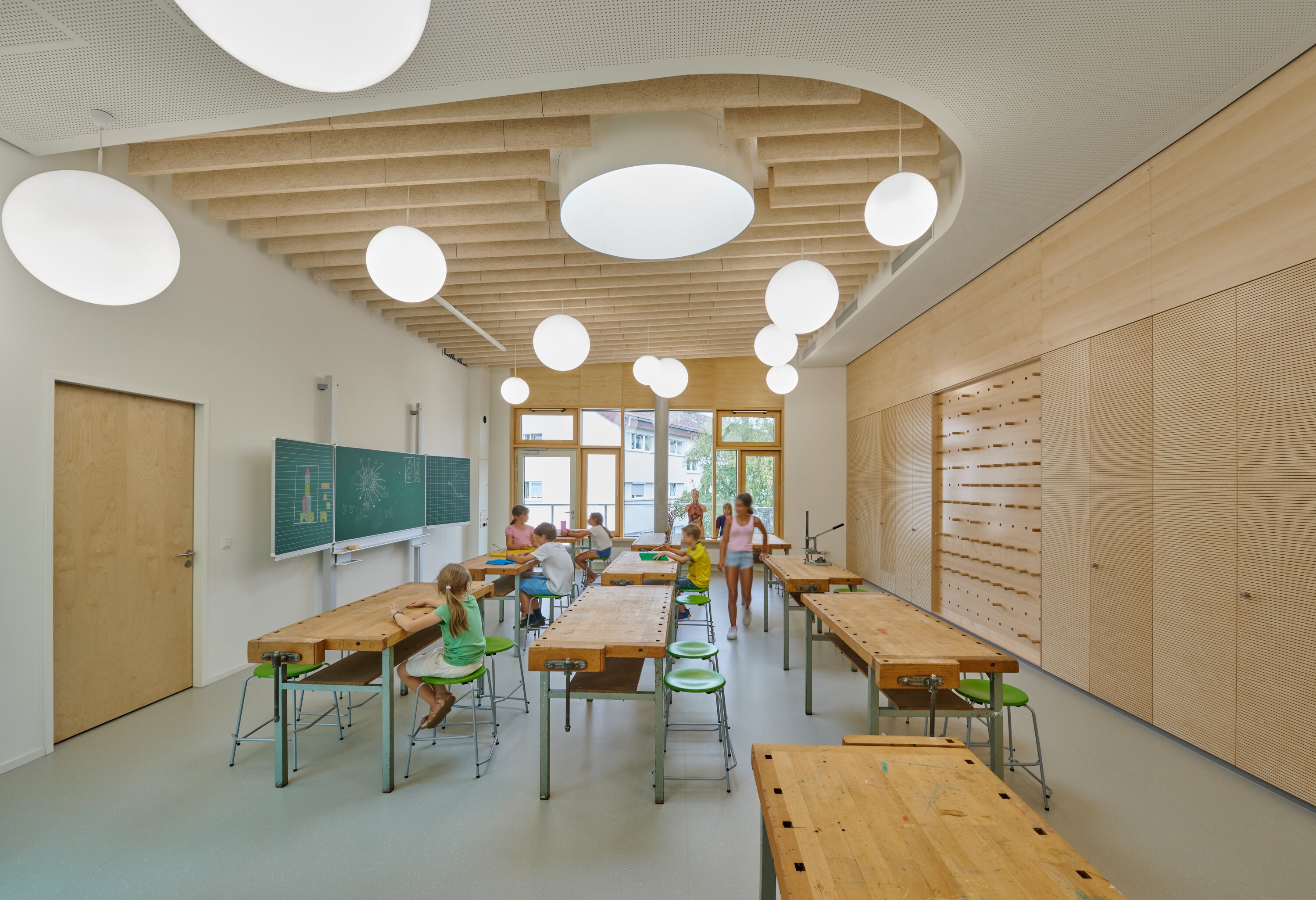
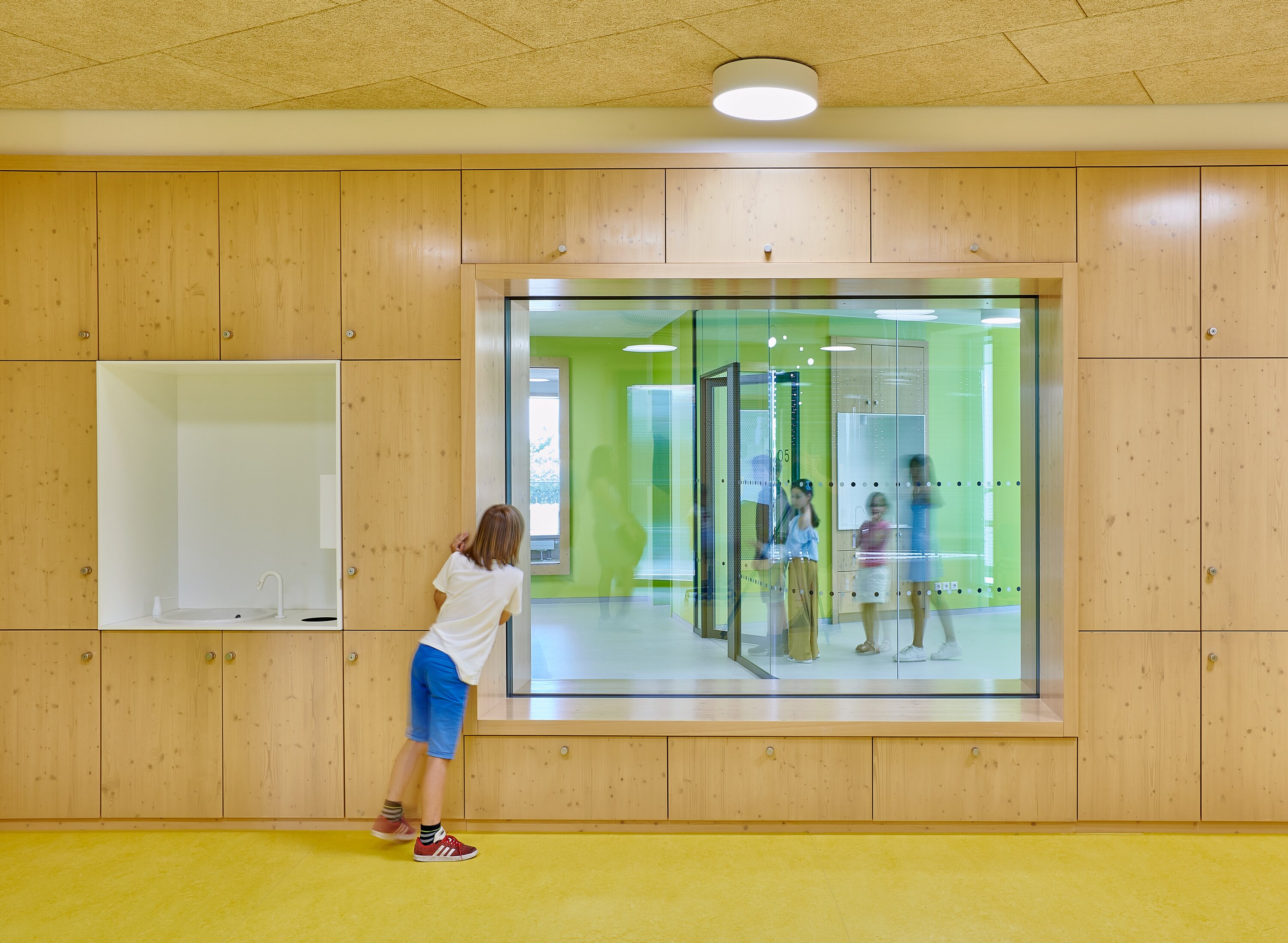
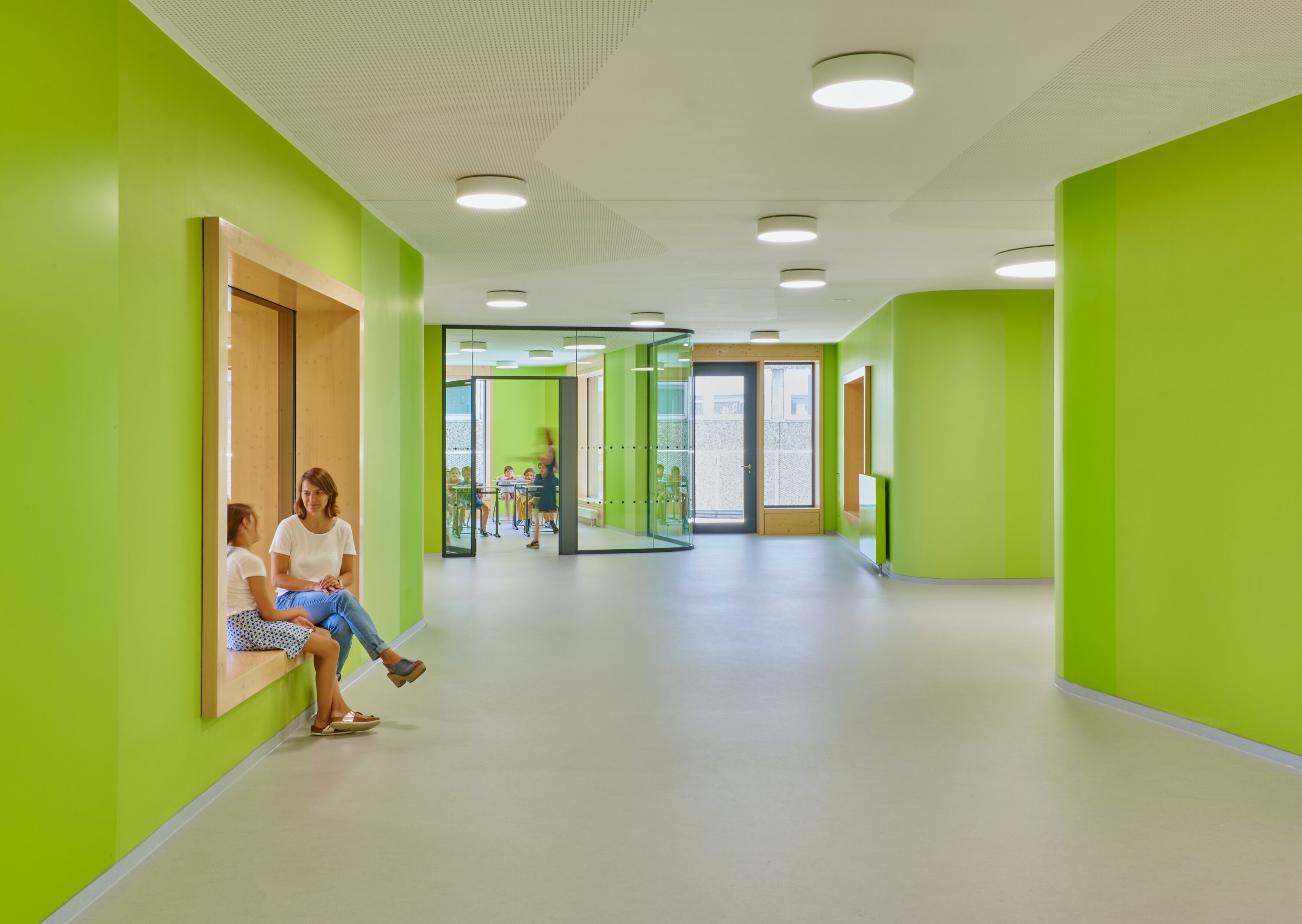
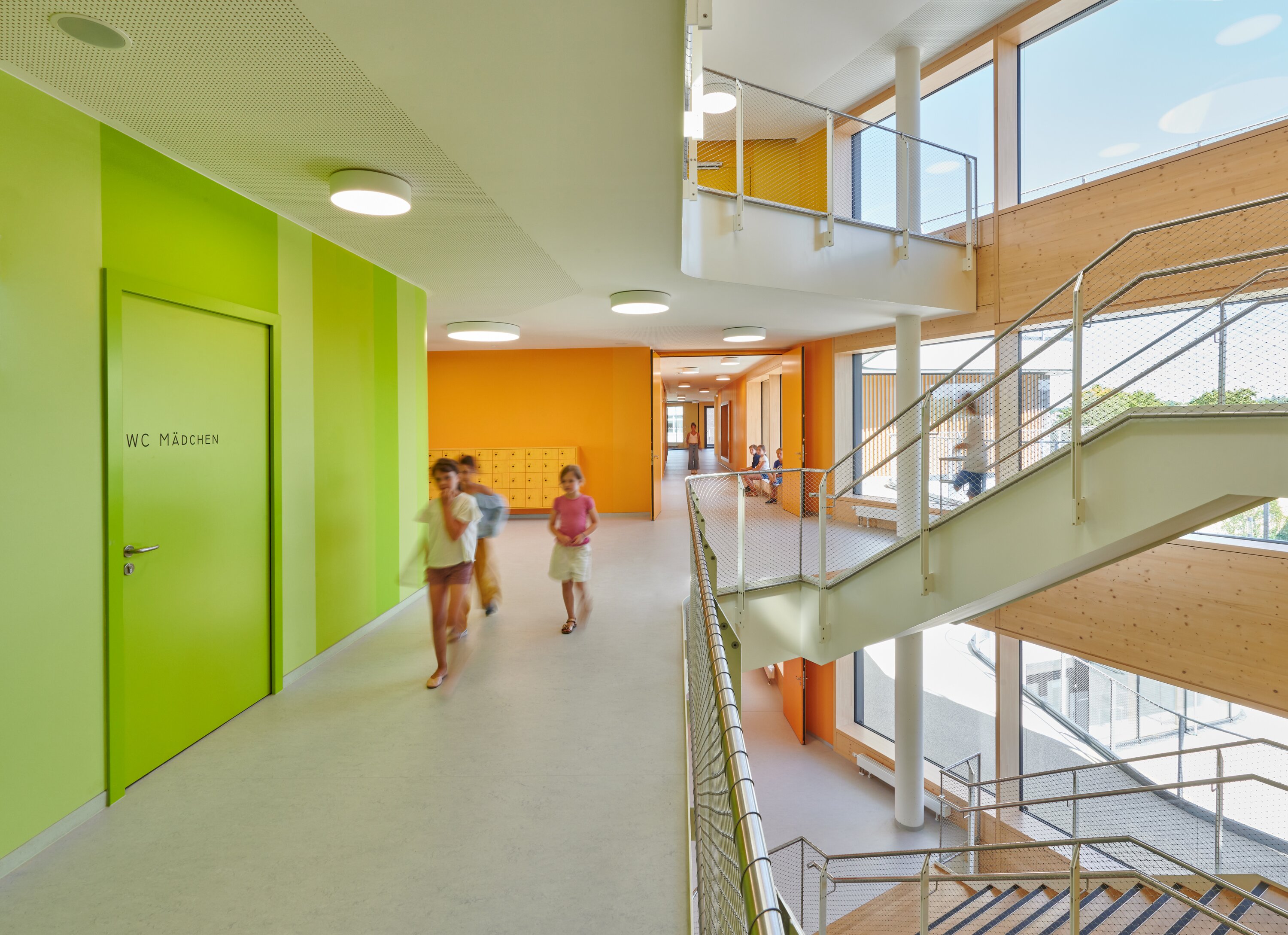
Distinct color schemes lend each learning house a unique identity—intense orange, yellow, green, and earthy hues create a vibrant atmosphere. Warm, haptic materials such as linoleum, wood-based surfaces, and acoustic ceiling materials used in classrooms convey a sense of comfort and well-being.
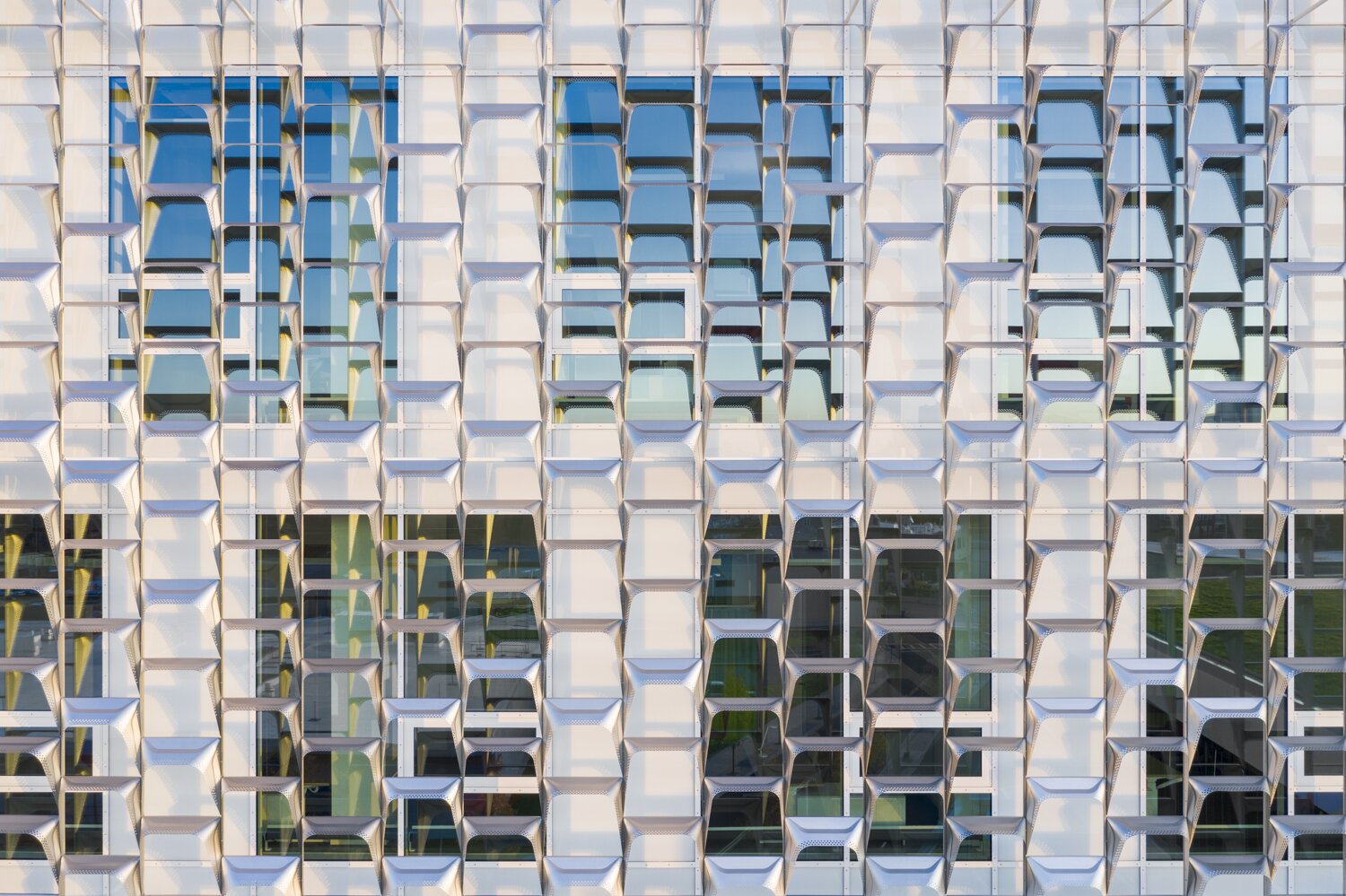
In addition to acting as a thermal barrier, the facade integrates all technical fixtures and has built-in seating that makes it inhabitable. The building’s curved form is traced by perforated colored metal panels covering alternating closed and transparent floor-to-ceiling sections. The permeability of these panels permits constant air exchange and forms the basis for mechanical ventilation. Vertical timber cladding produces a dynamic interplay of color that changes with perspective and movement.