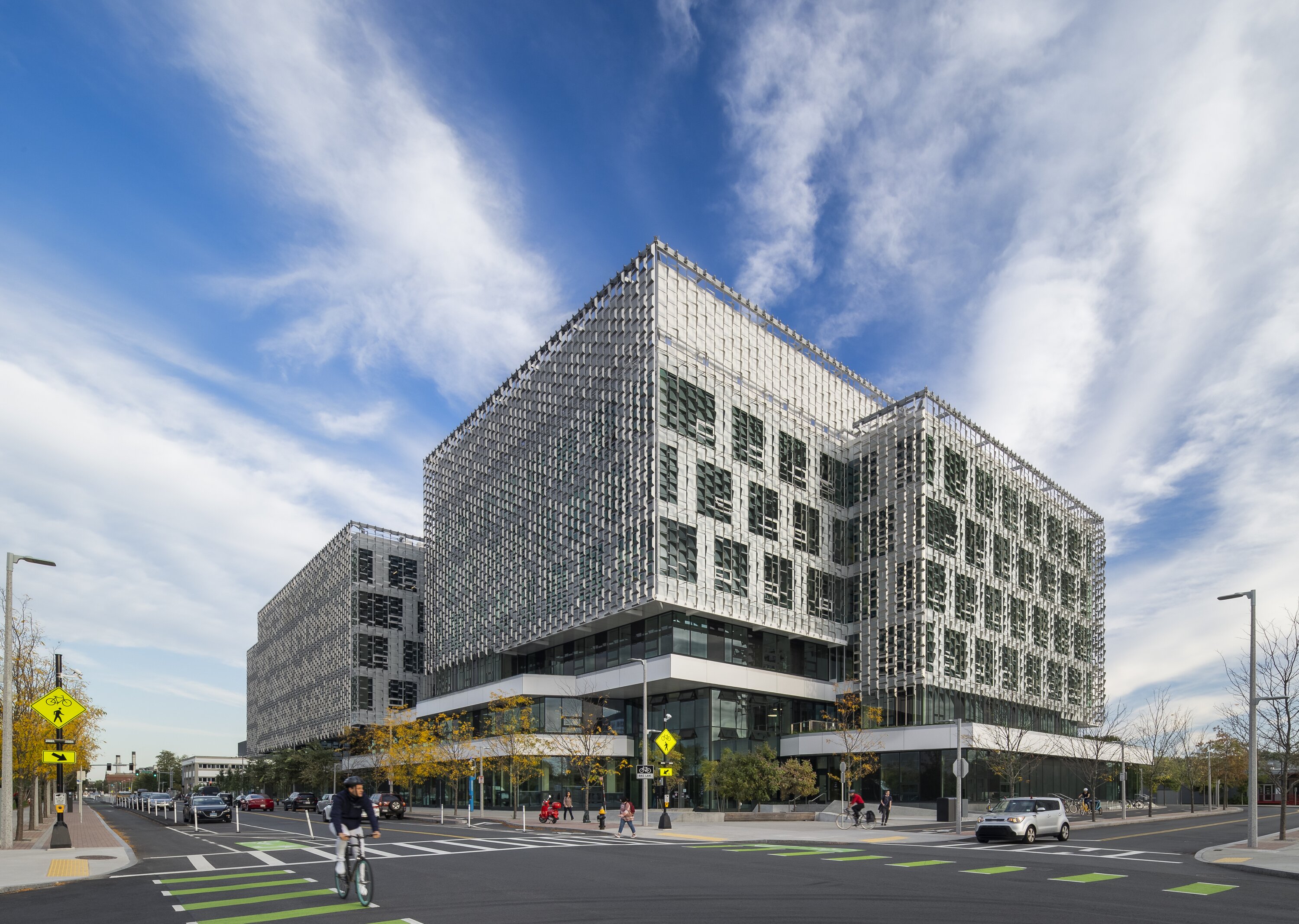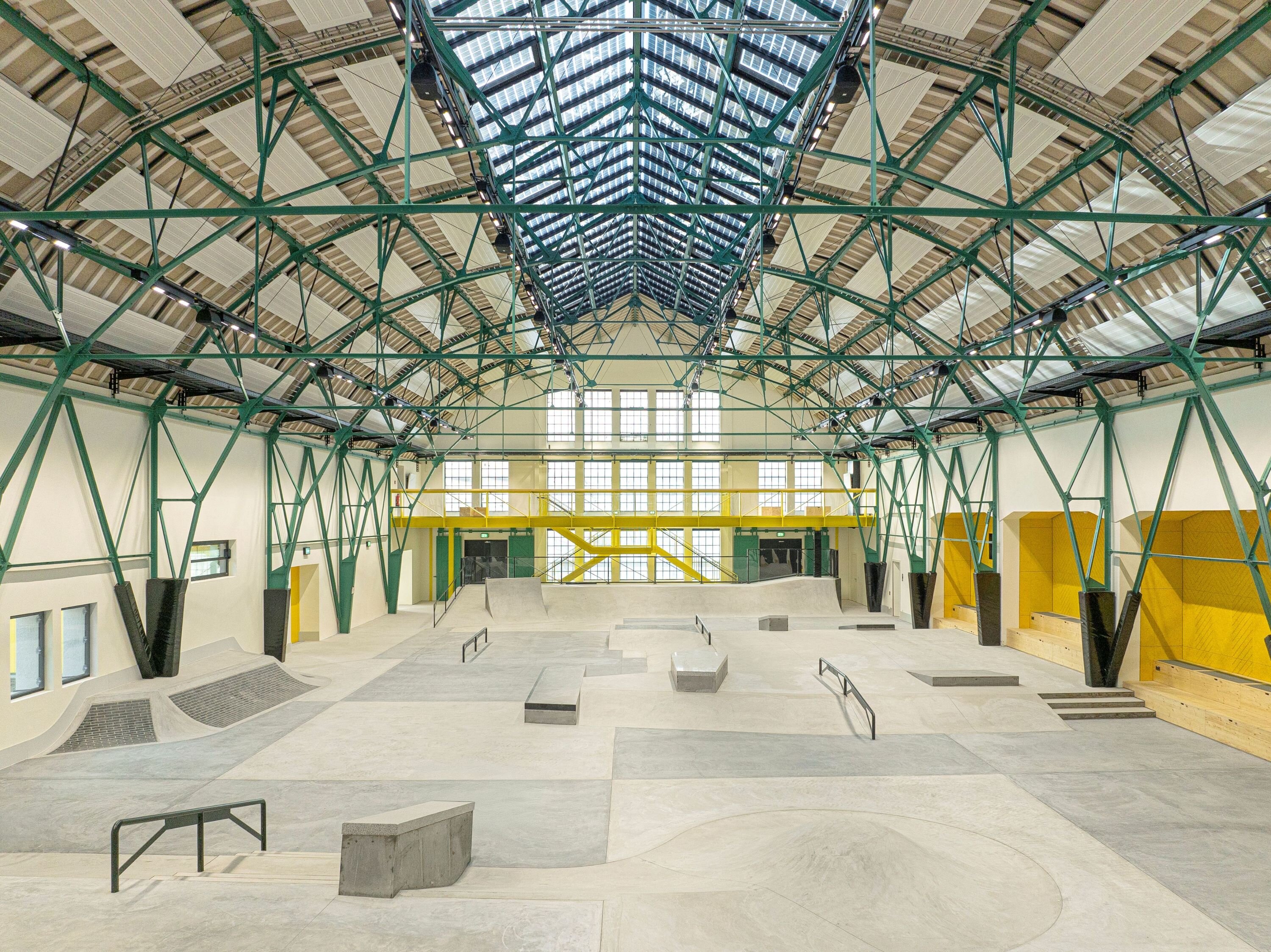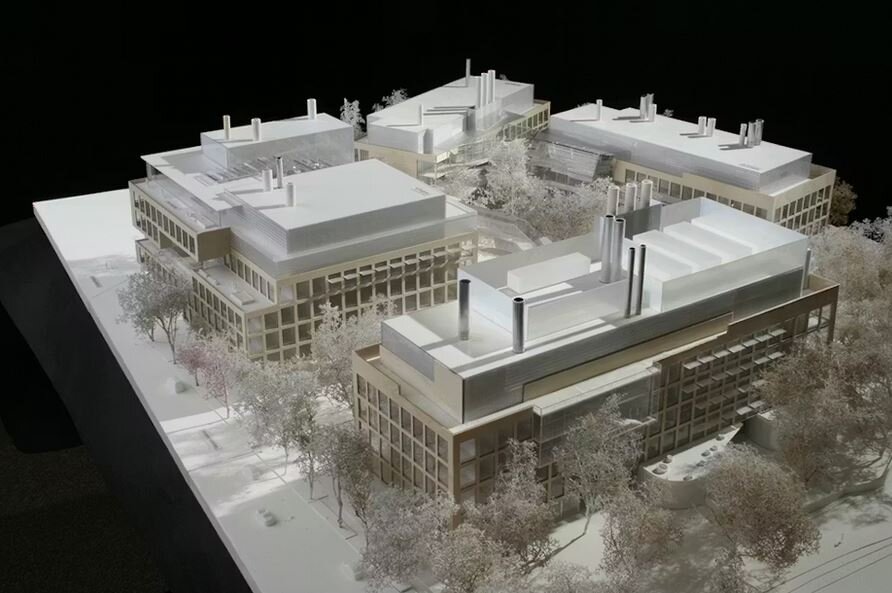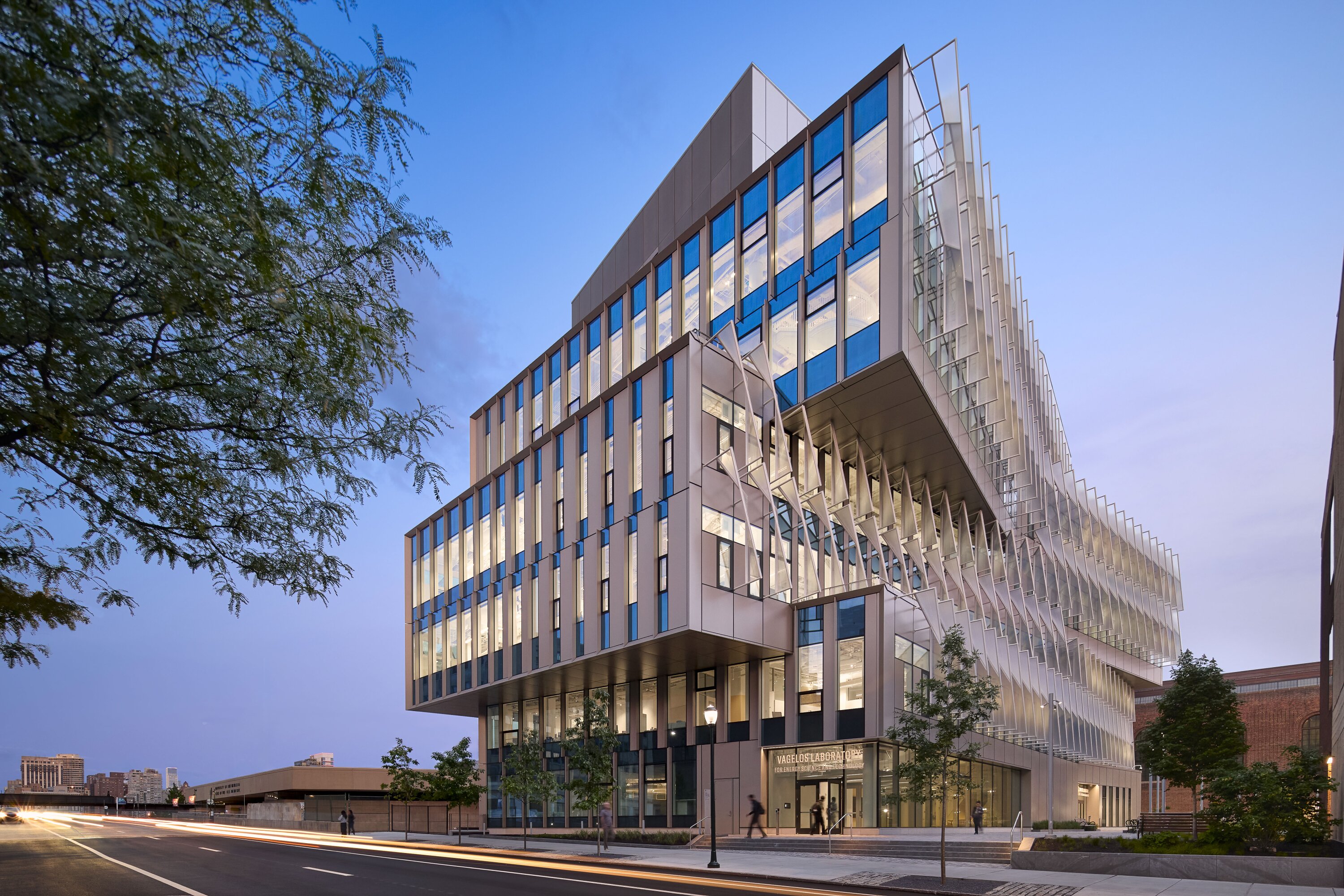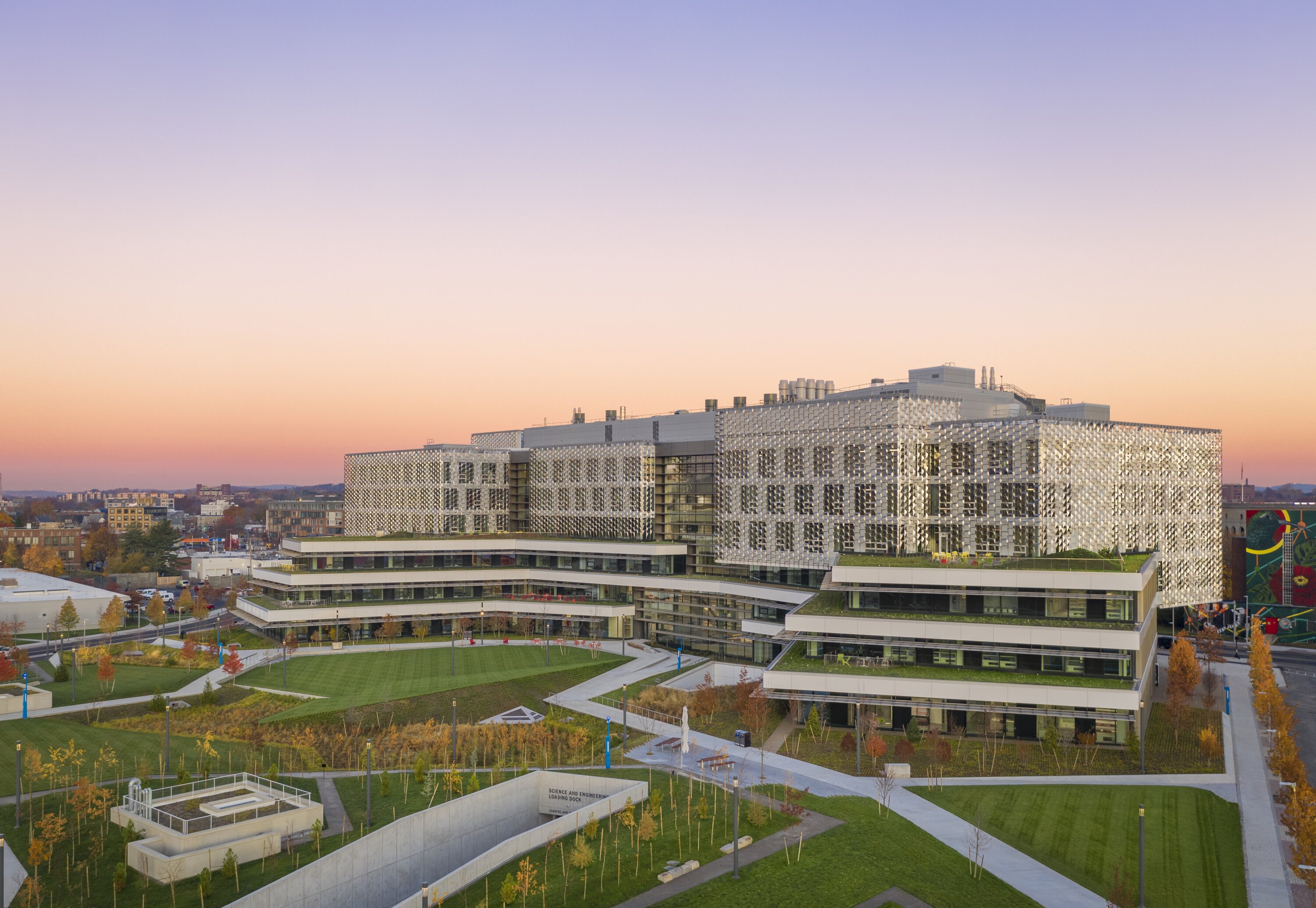



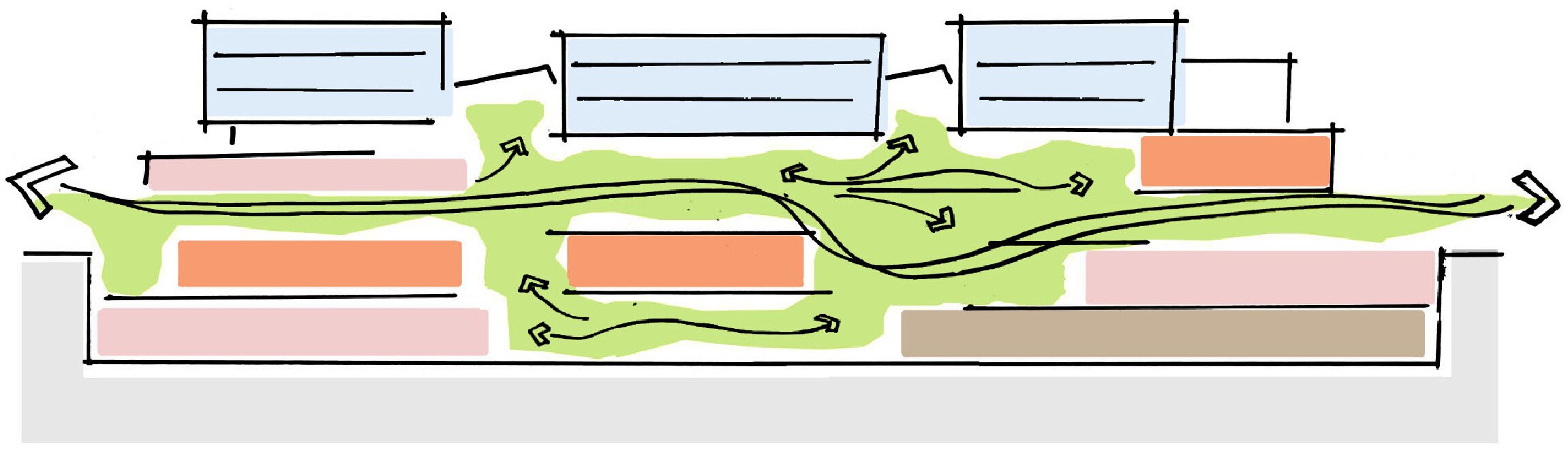

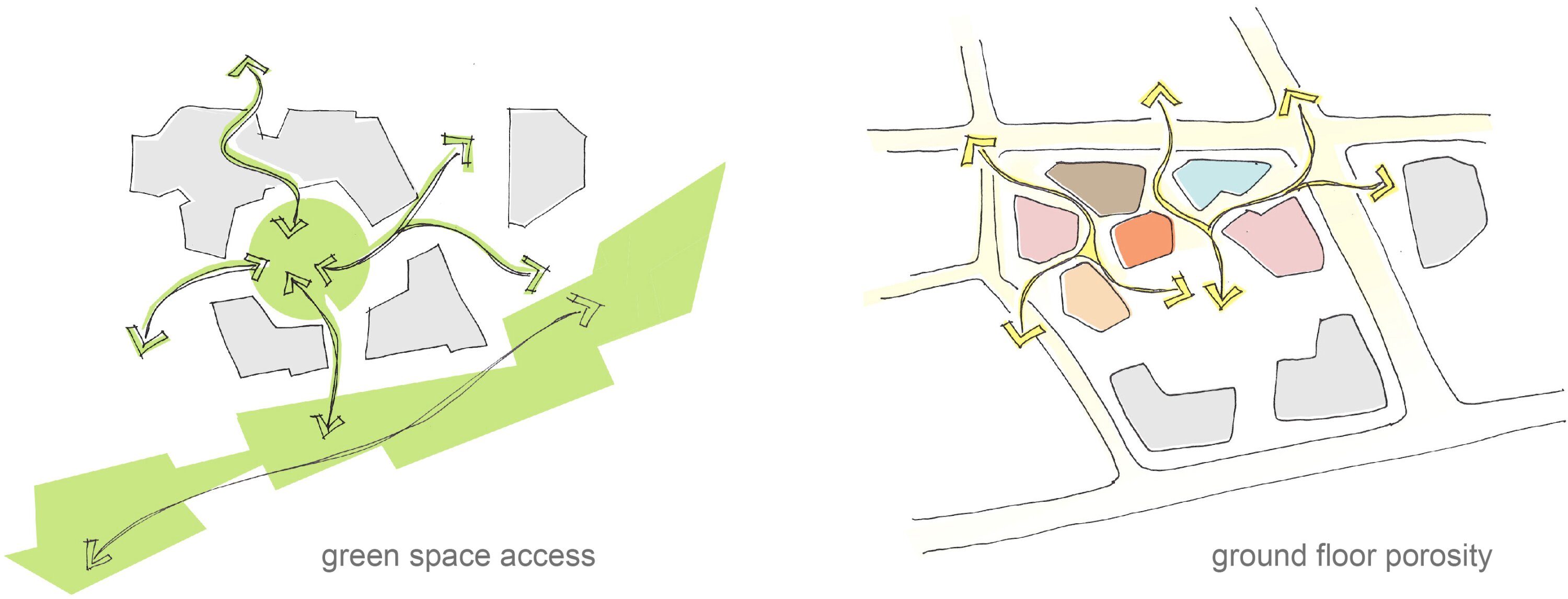
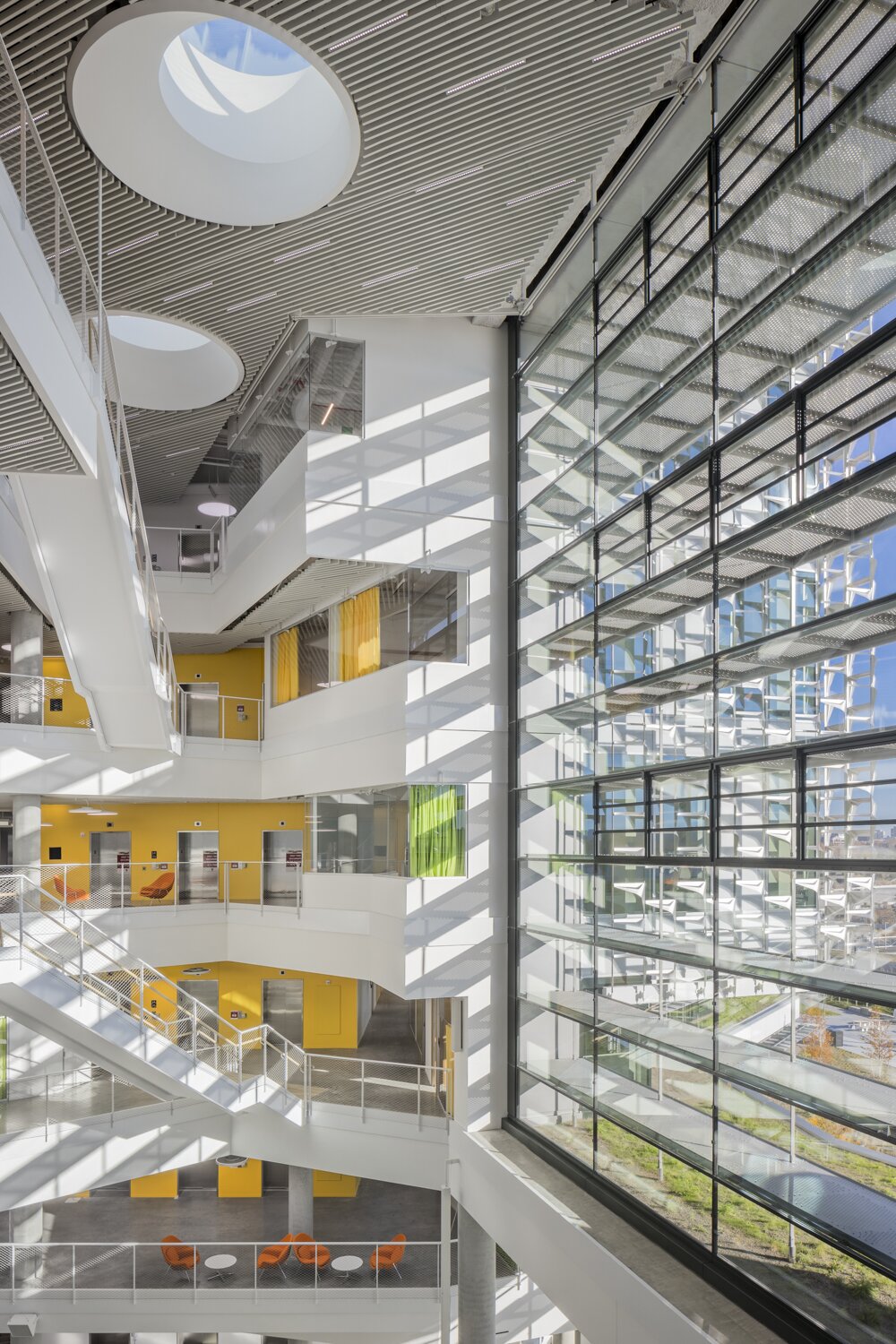
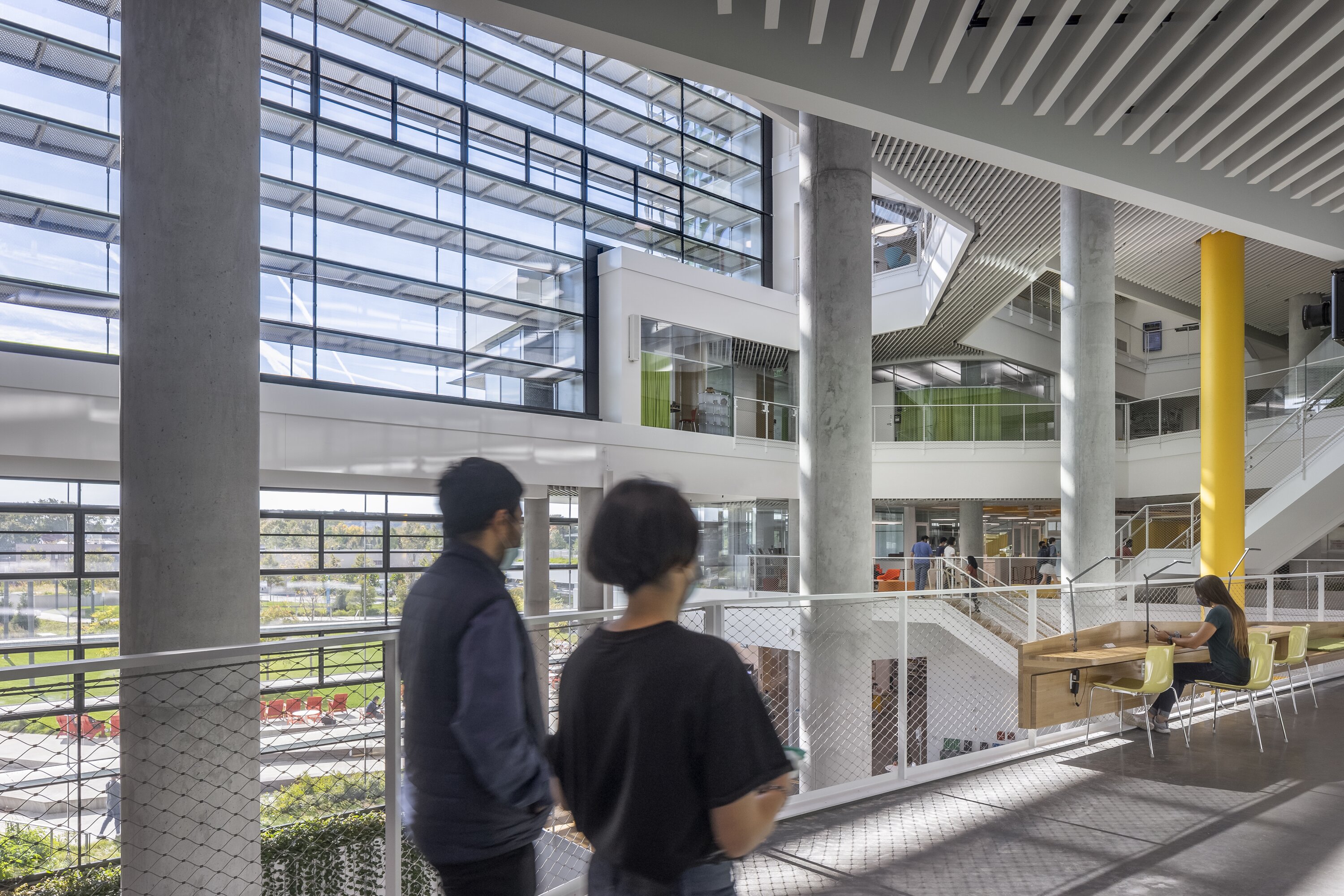
The building’s adaptable, innovative environments support the school’s commitment to cutting-edge academic collaboration, create vibrant public spaces at various scales, and set a distinctive architectural tone for the Allston campus. The 544,000-square-foot building sits prominently on Allston’s main thoroughfare, Western Avenue. Three elevated four-story laboratory blocks are woven around two atria, creating a public, communicative ground floor dedicated to teaching and collaboration, with direct access to a landscaped courtyard to the south.


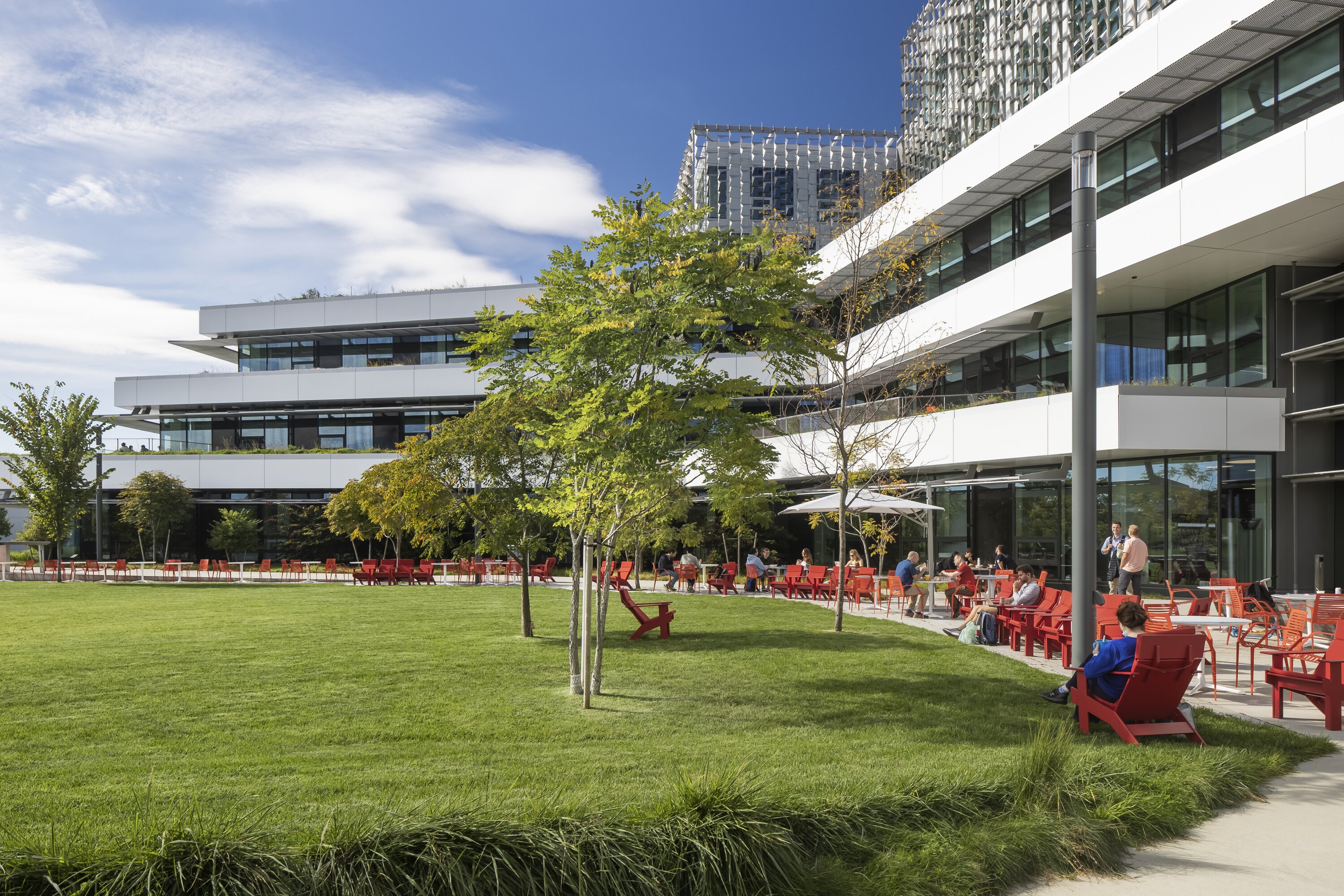


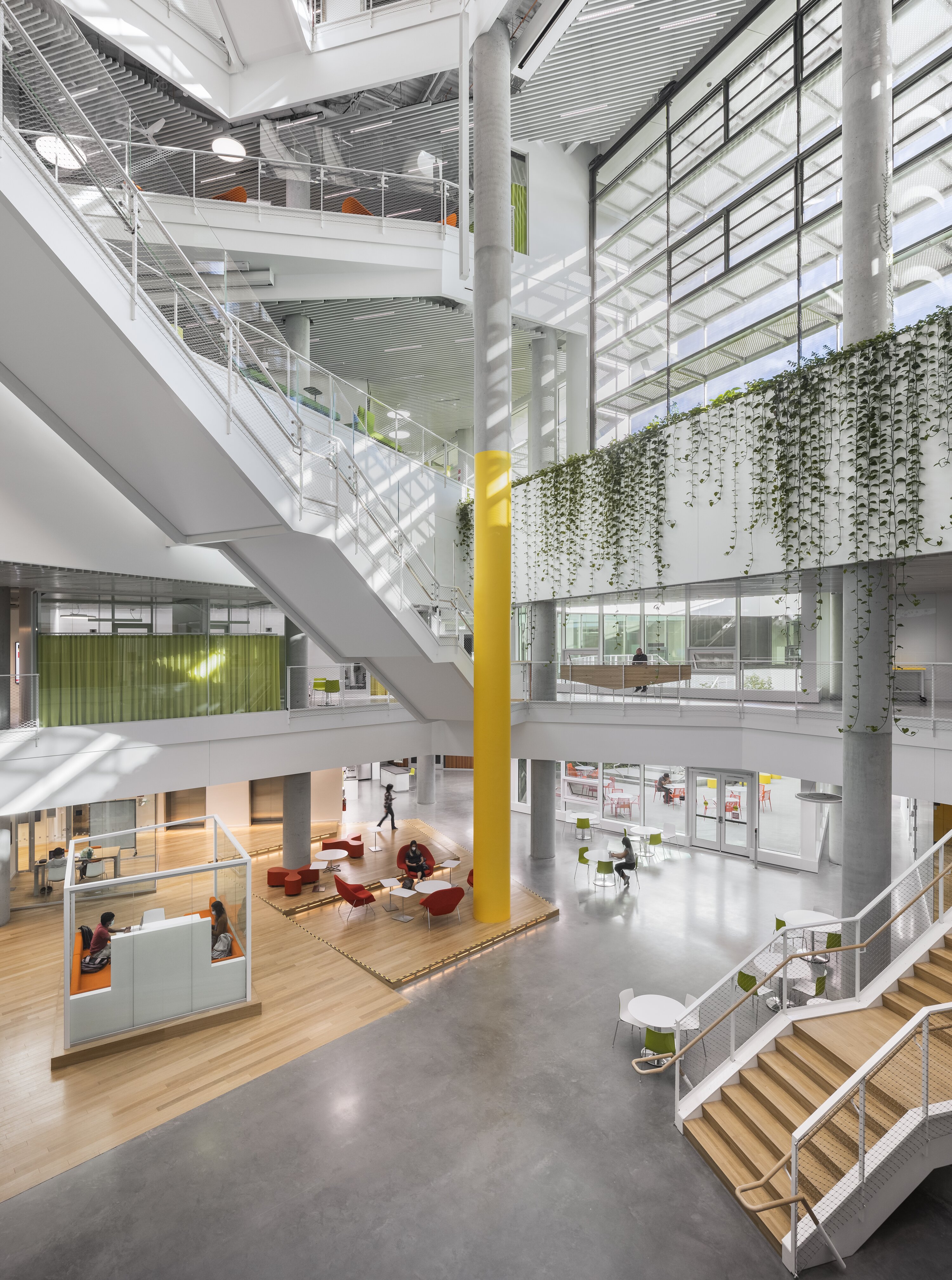
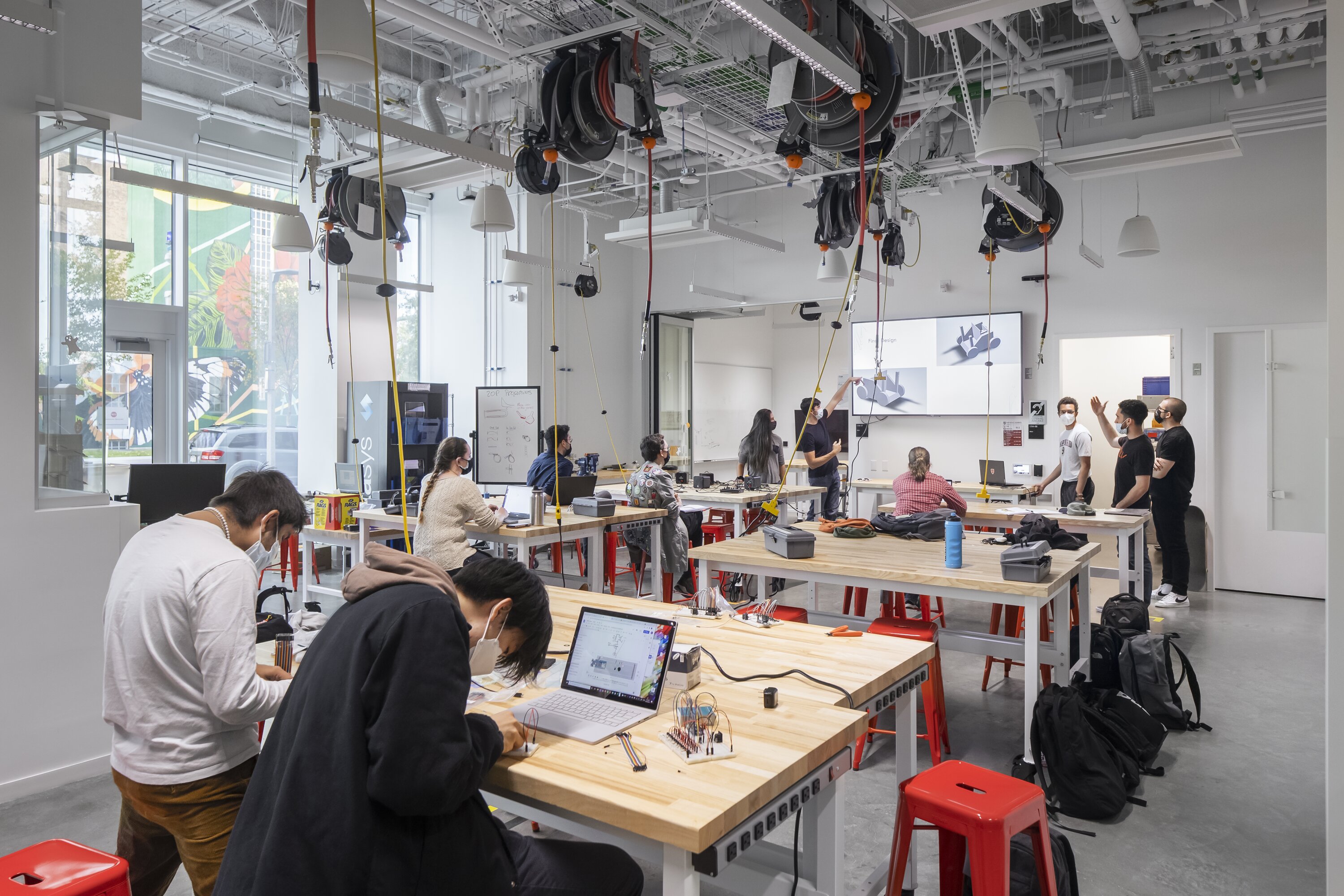
A sunken courtyard beside the central atrium organizes below-grade spaces, enabling reuse of the existing structure and integration into the new SEC. It also establishes a potential connection to future buildings to the south, while creating a vibrant hub for SEAS (School of Engineering and Applied Sciences) classrooms, teaching labs, and core facilities.

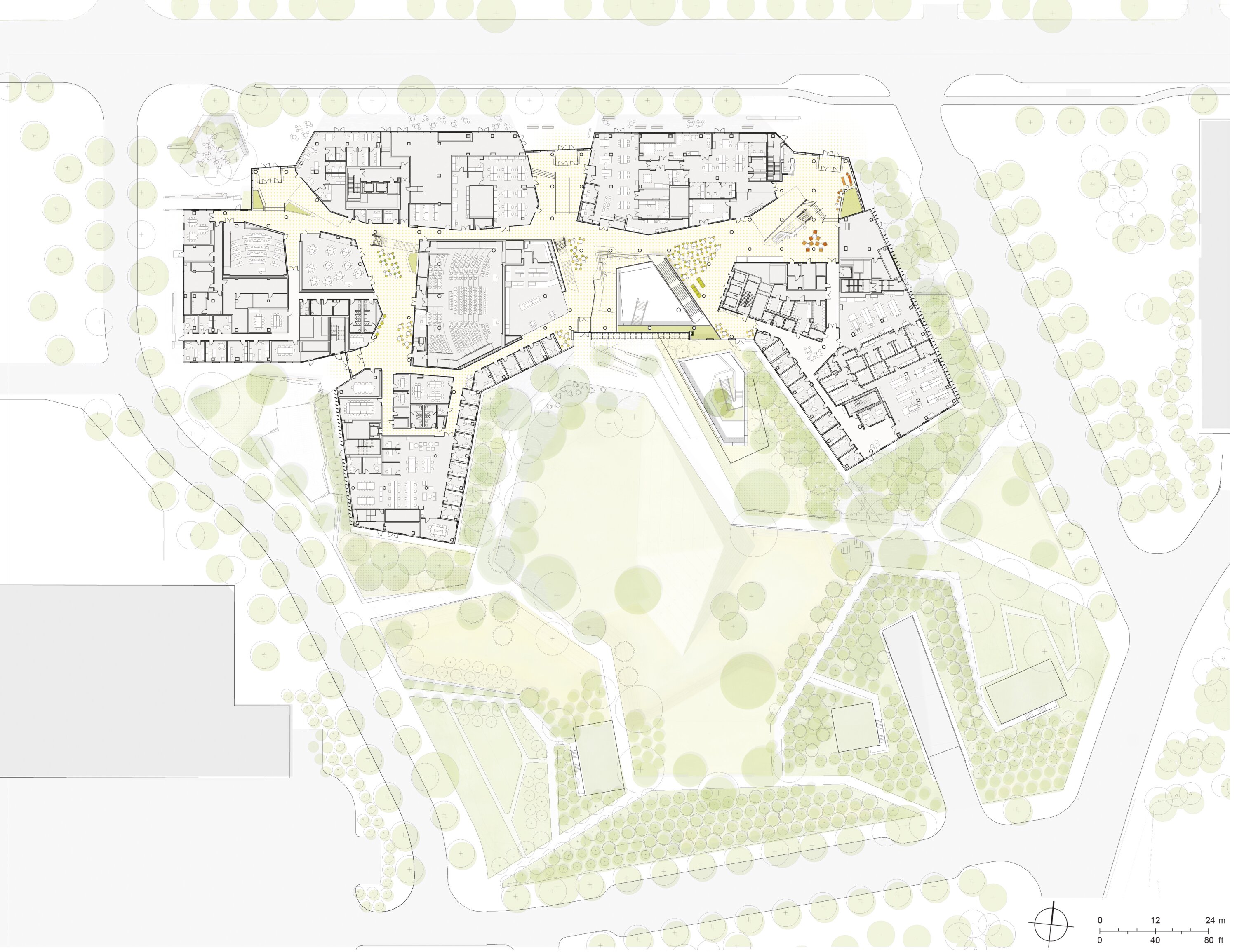

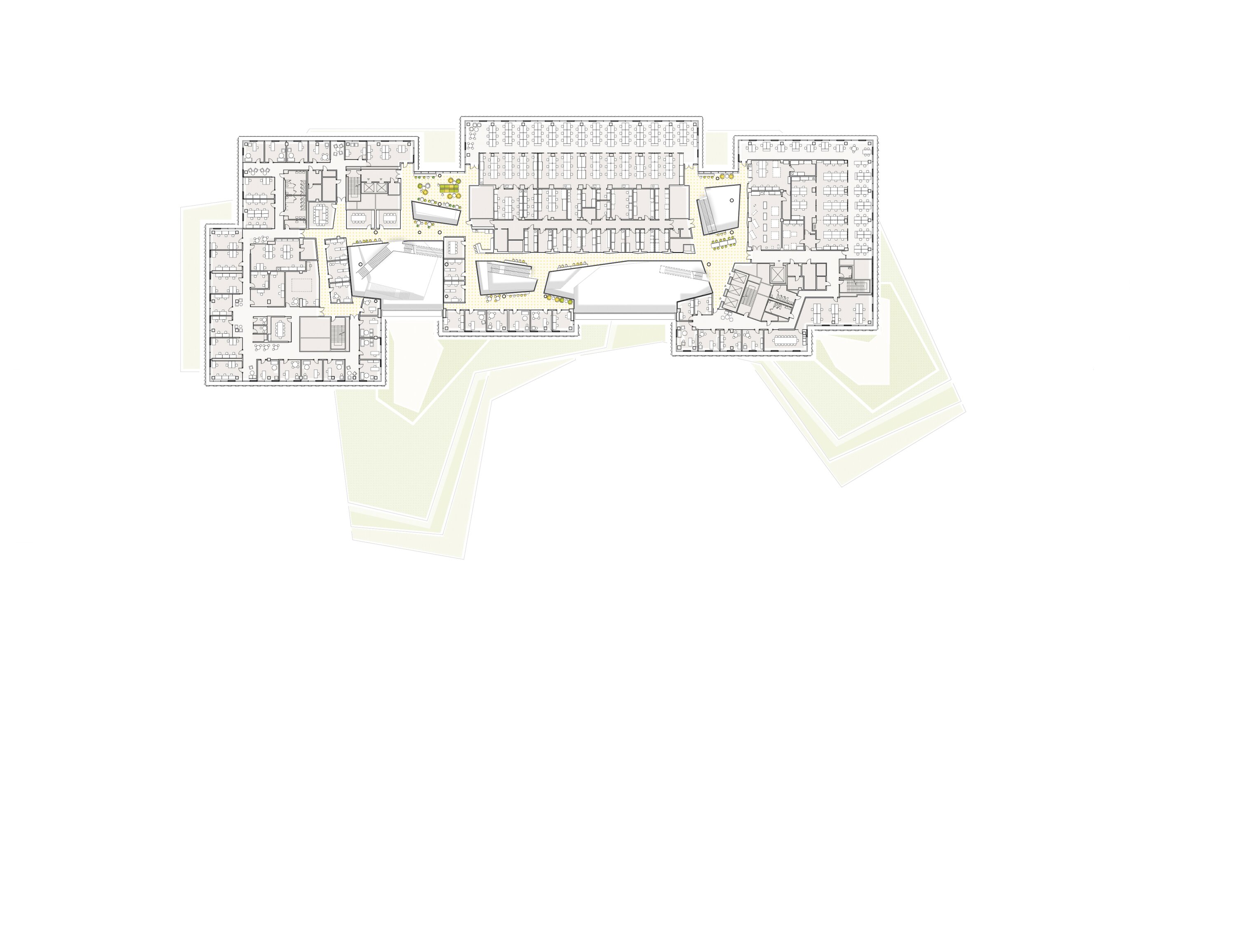
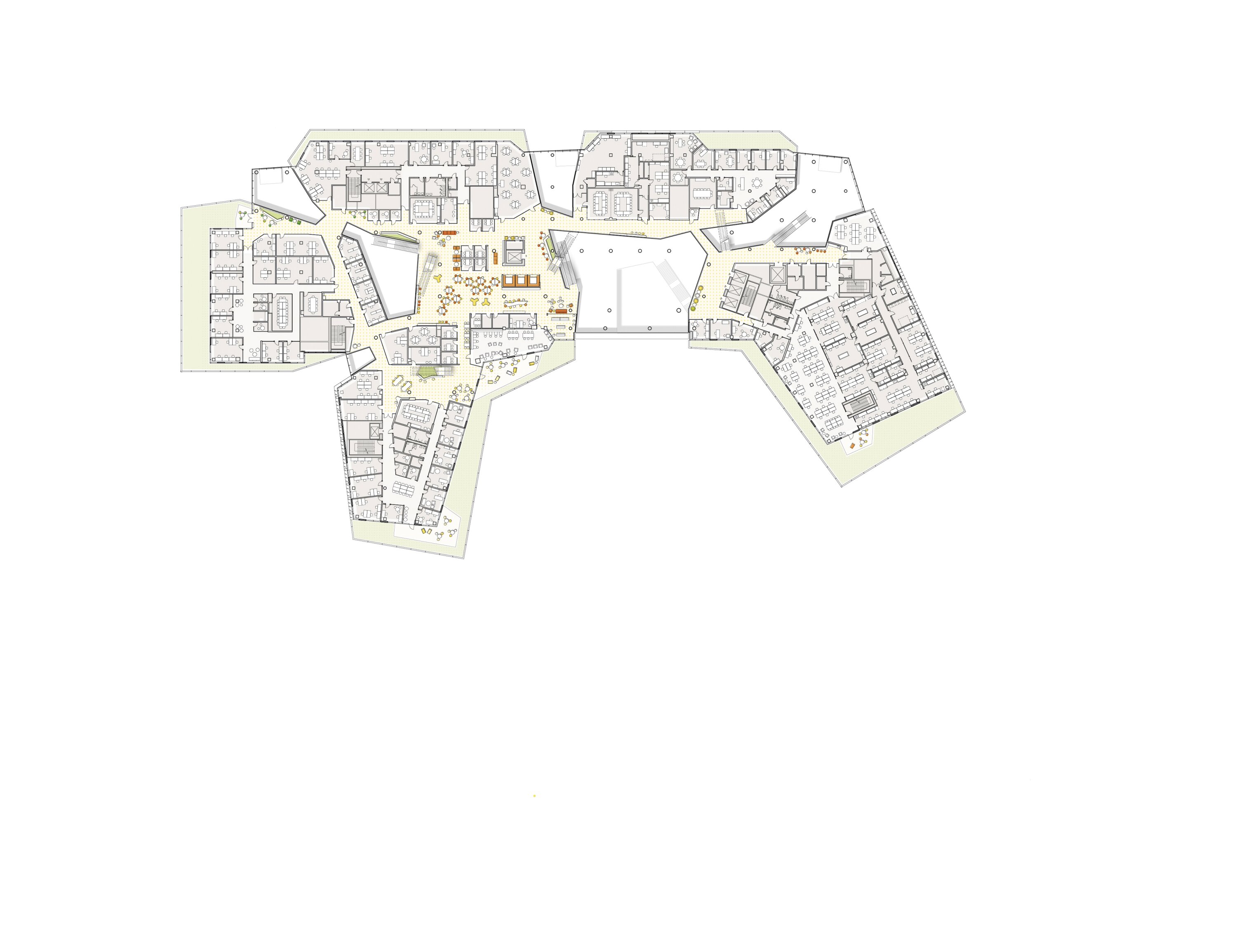
Level 1, 2, 5
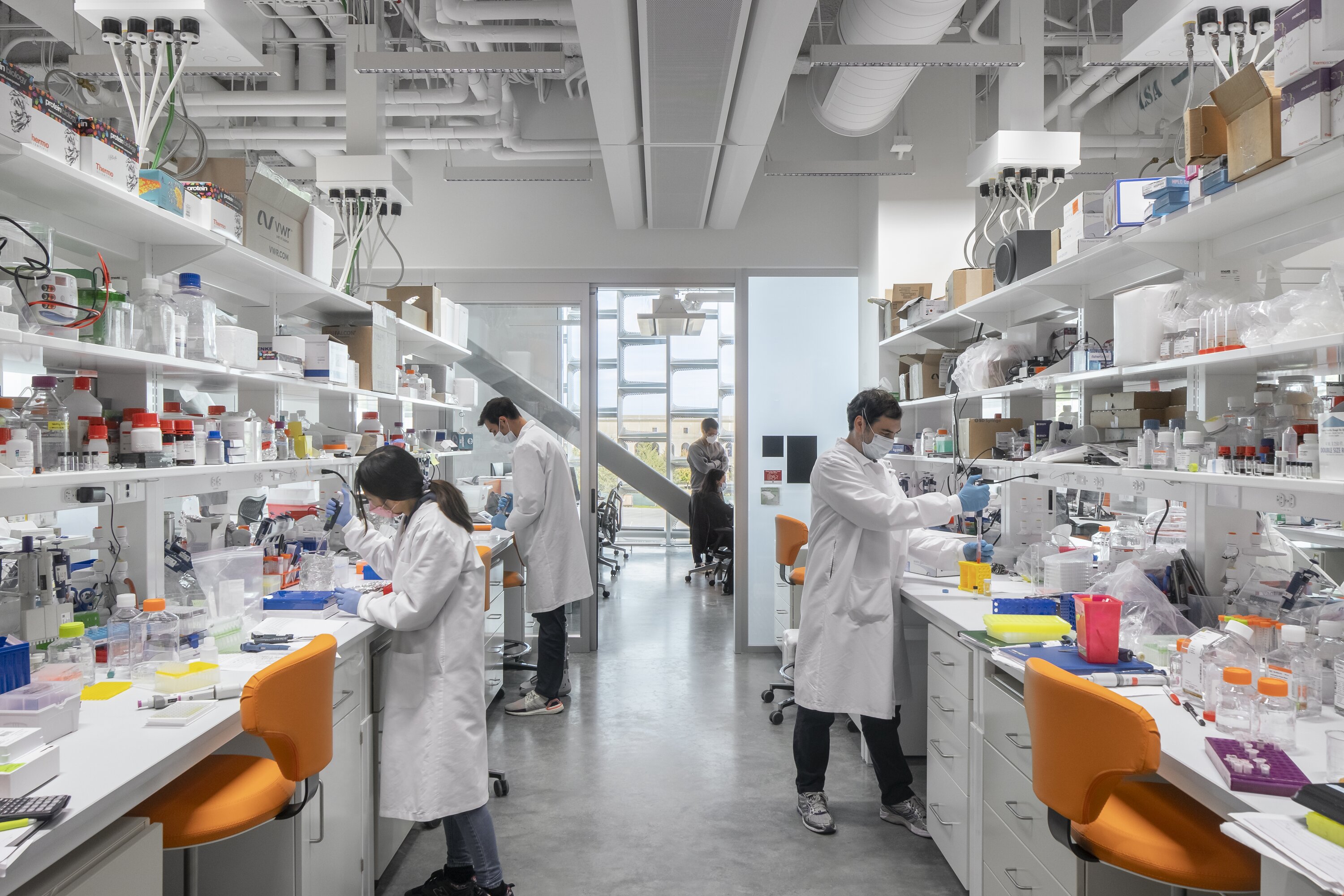
The upper volumes contain modular, adaptable wet and dry labs isolated from the main floor, which is geared toward the general public. Smart zoning divides dry areas from areas with high ventilation, while integrated lab services ensure long-term adaptation. Teachers and students can engage in casual conversation in the large lounges located between lab buildings.



- Client
- The President and Fellows of Harvard College
- Architects
- Behnisch Architekturbüro
- Address
150 Western Avenue
Allston, MA 02134
United States- Gross Area
50,539 qm / 544,000 sq.ft
- Gross Volume
495.494 cbm / 17,498,213 cu.ft
- Net Area
217,800 sq.ft, 5 acres
- Competition
2006, 1st prize
- Certification
LEED Platinum, Living Building Challenge - Materials Petal, Beauty Petal, Equity Petal
- Photography
Brad Feinknopf
- Awards
2021 The Plan Award
2021 DAM, nomination
2021 WAN Award, gold
2021 ABB Leaf Award, winner
2021 Prix Versailles, World Special Prize for an Exterior 2021
2021 BSA Harleston Parker Medal, nomination
2021 SEFA Lab of the Year, winner
2021 AIA New England Awards: Award for Design Excellence
2021 AN Best of Design Award, winner
2021 Built Environment Plus Award: Green Building of the Year
2021 ENR (Engineering New Report)
2022 Green Good Design Award, The Chicago Athenaeum Museum of Architecture and Design
2022 American Architecture Award, The Chicago Athenaeum Museum of Architecture and Design
2022 FSC Leadership Awards Winners Advance Responsible Forest Management
2023 Vitruvian Award, winner
2023 i2SL Overall Lab Buildings and Projects Award, winner
2023 AIA COTE® Top Ten Award
Living Building Challenge: Materials, Beauty and Equity Petals
2025 Society for College and University Planning, SCUP Honor Award- Downloads
-
Download PDF
Water Story Section
Certified by the International Living Future Institute’s (ILFI) Living Building Challenge for Materials, Beauty, and Equity, the SEC is recognized as Harvard University’s healthiest building. In addition to the robust, biodiverse landscape filtering runoff through wet-meadow plantings for reuse, all materials are Red List free, guaranteeing ingredient transparency. The building is also LEED Platinum certified.

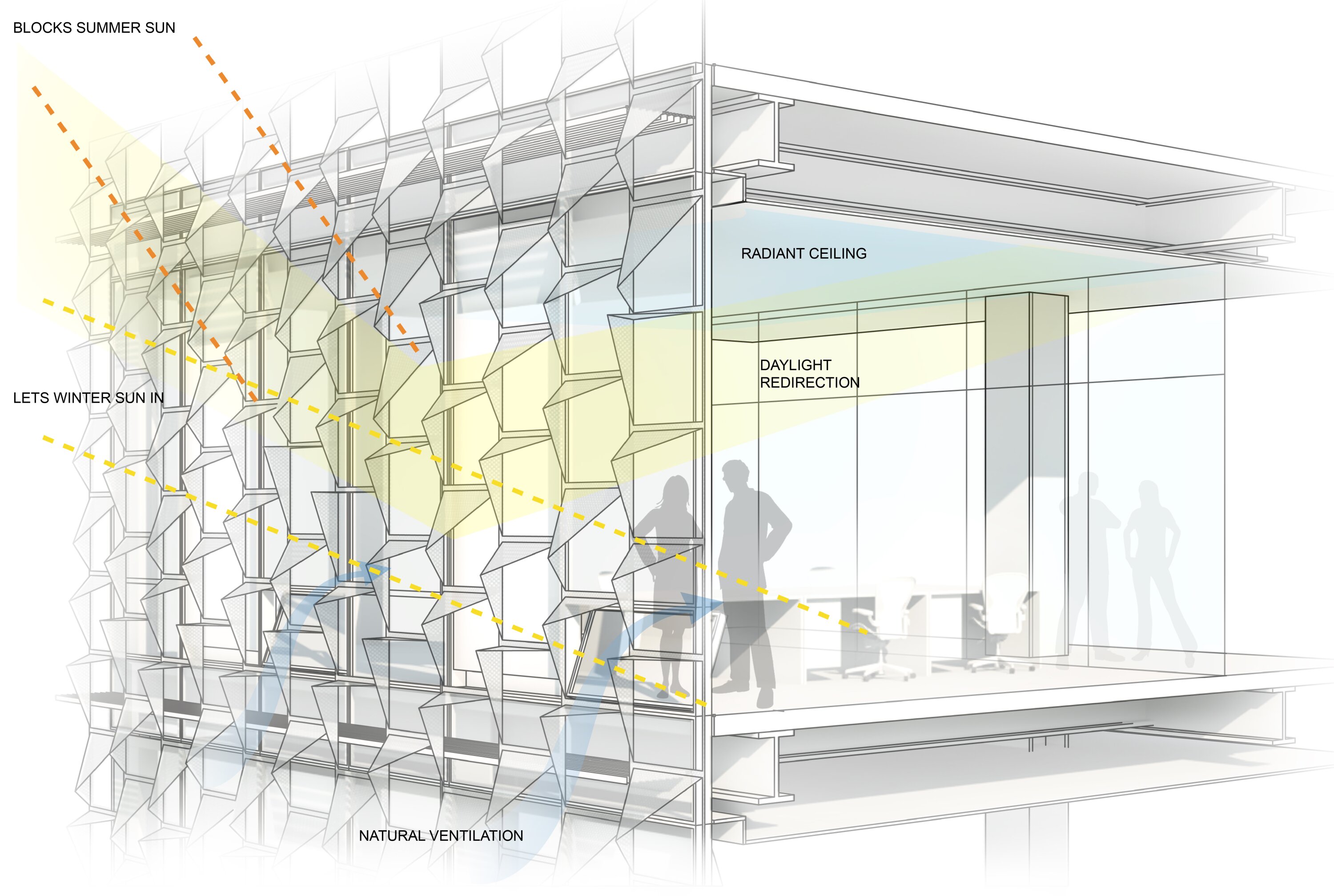

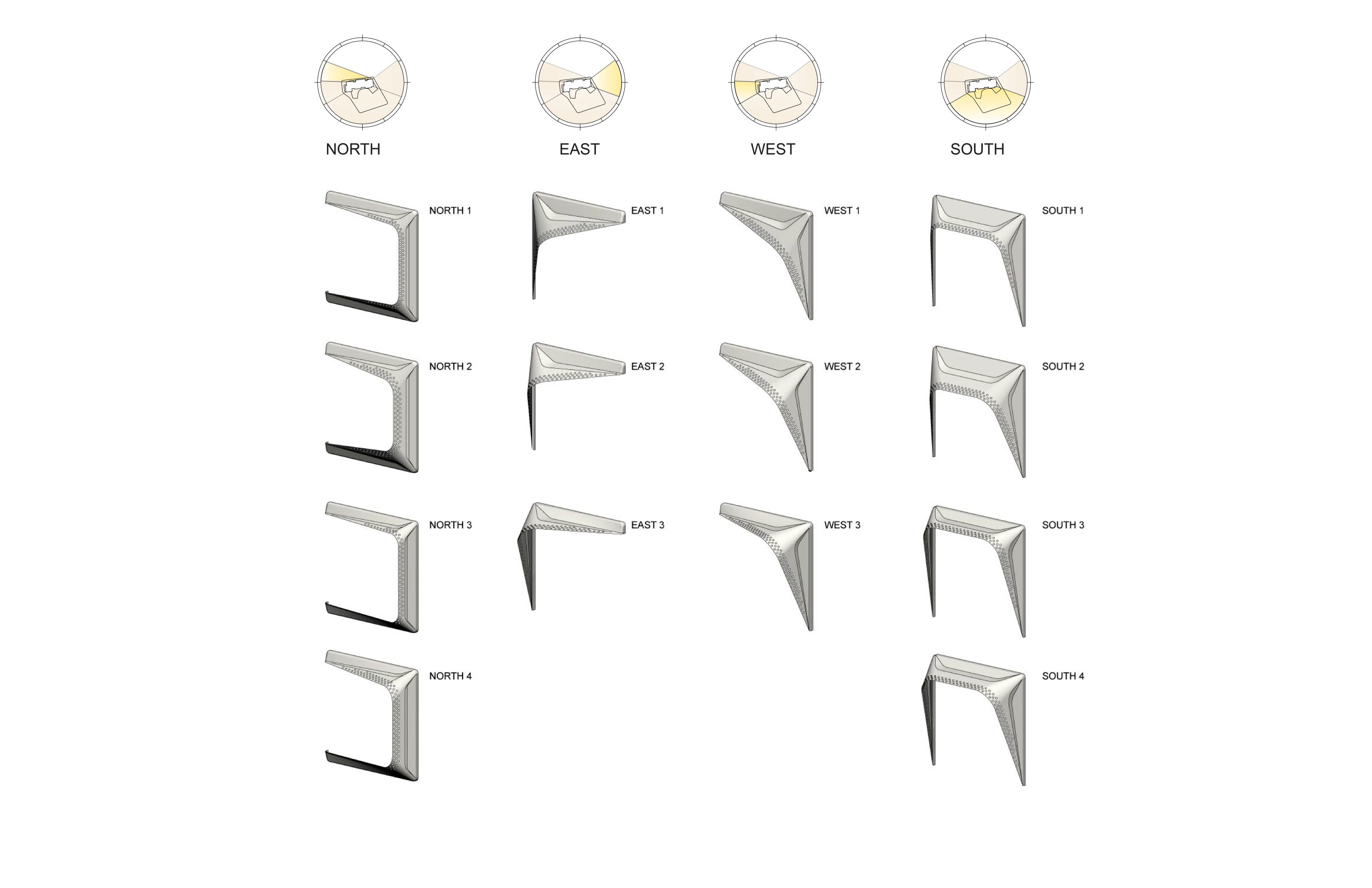

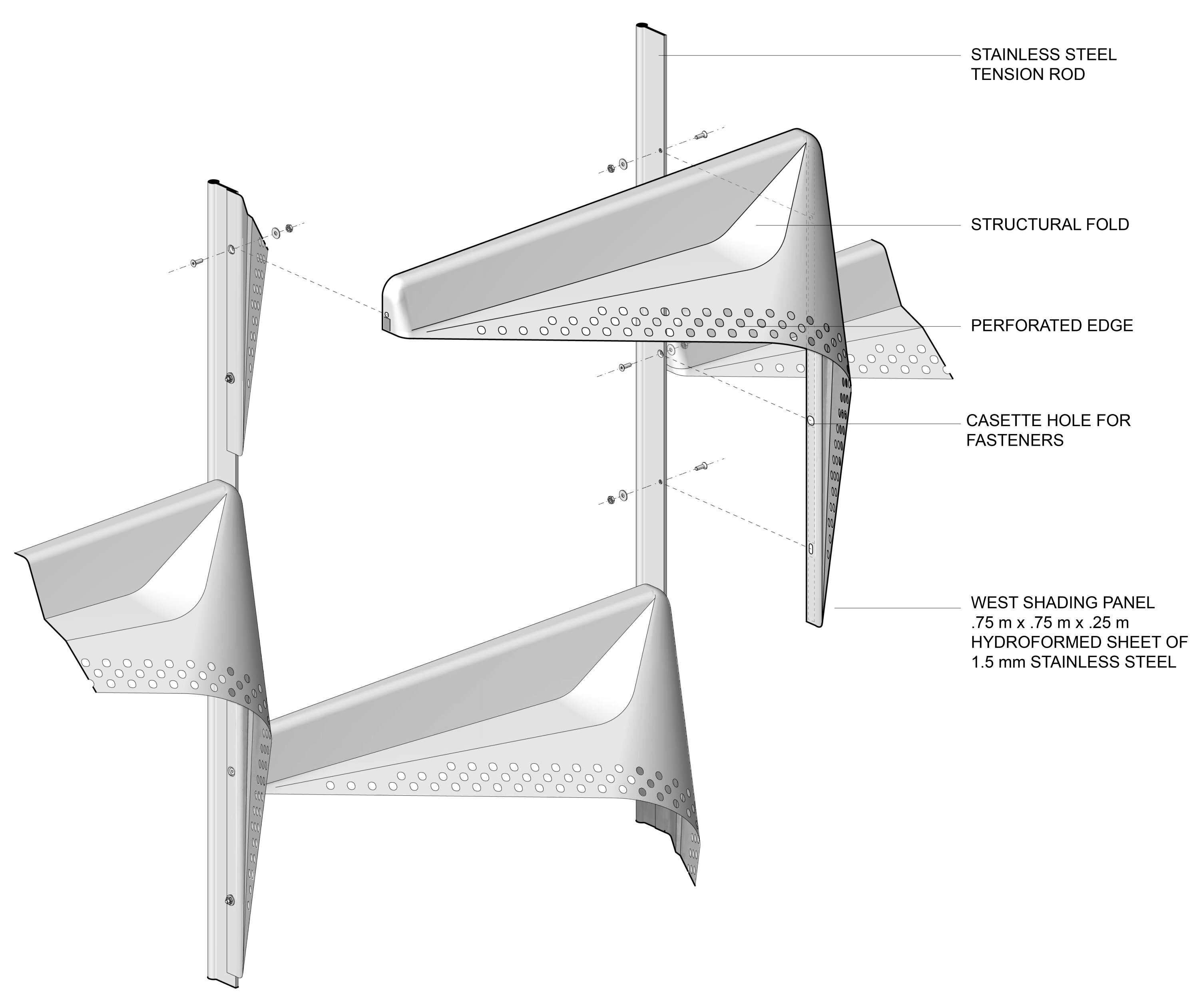
Facade Performance Diagram
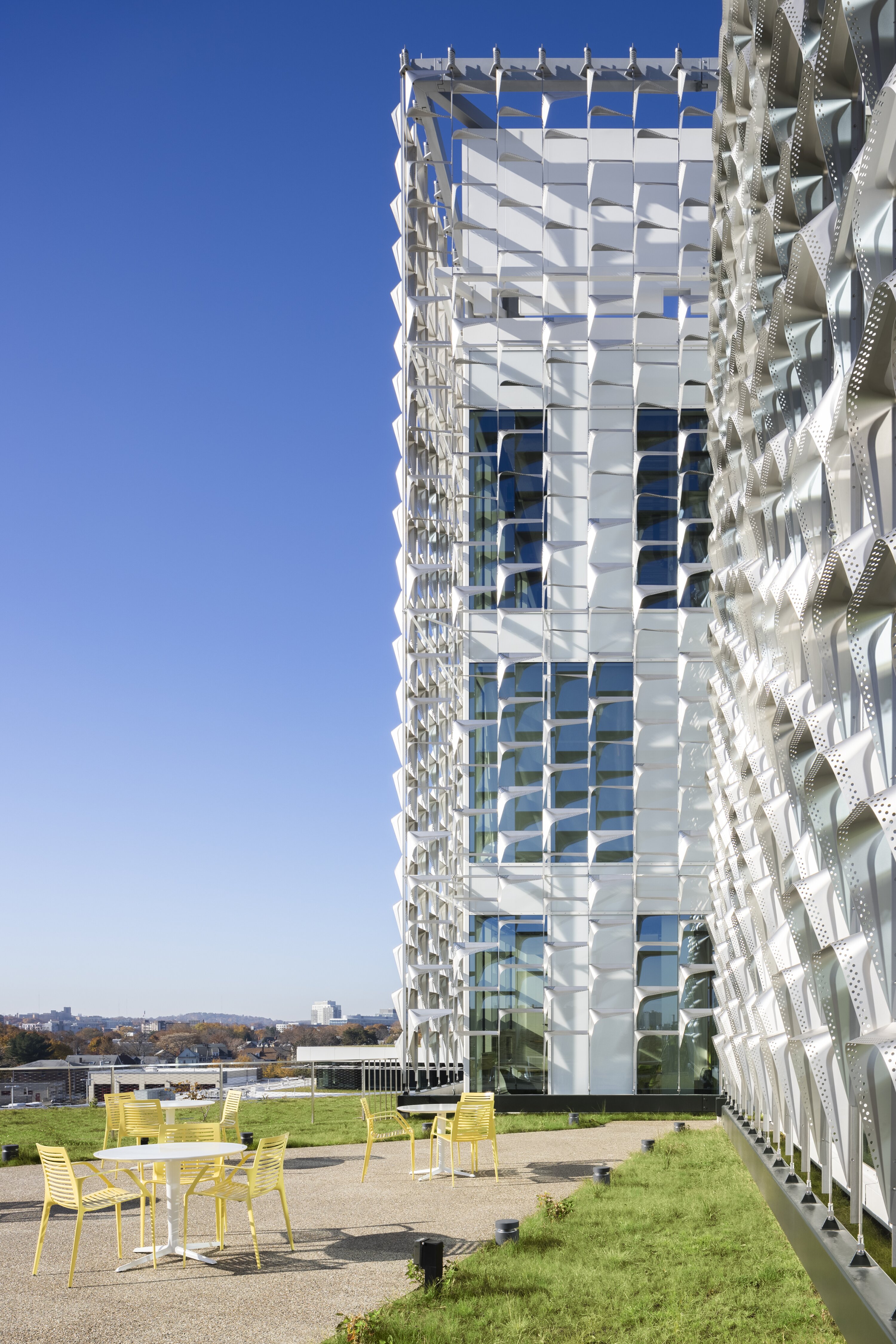
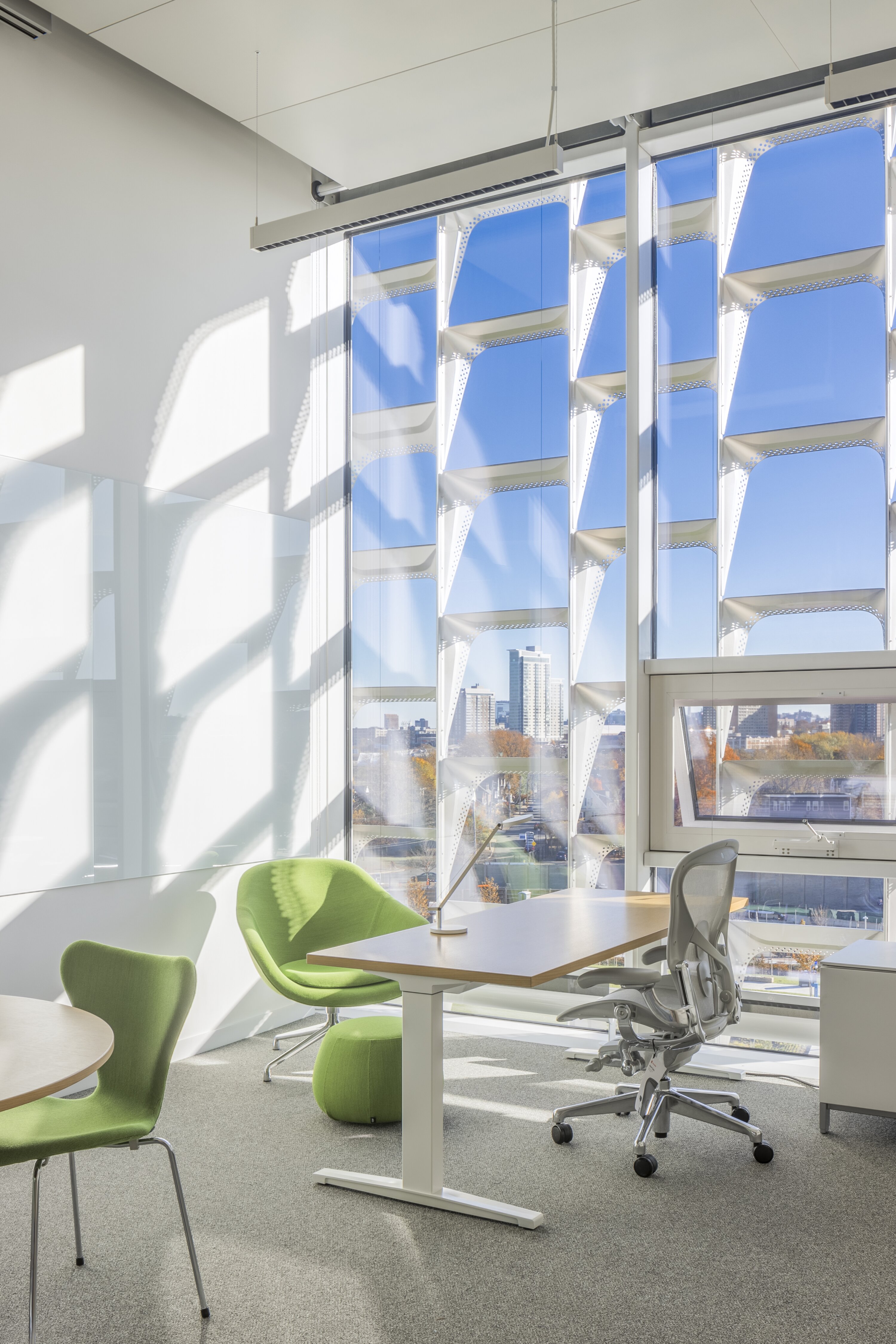
The structure integrates high-performance systems—circadian lighting, efficient HVAC, and vegetated roof terraces—while its layered exterior facade balances aesthetic and technical objectives. The facade, a crucial component of the complex's ambitious energy strategy, improves occupant comfort and energy performance while calibrating the scale of the large research volumes and signaling Harvard University’s presence in Allston.
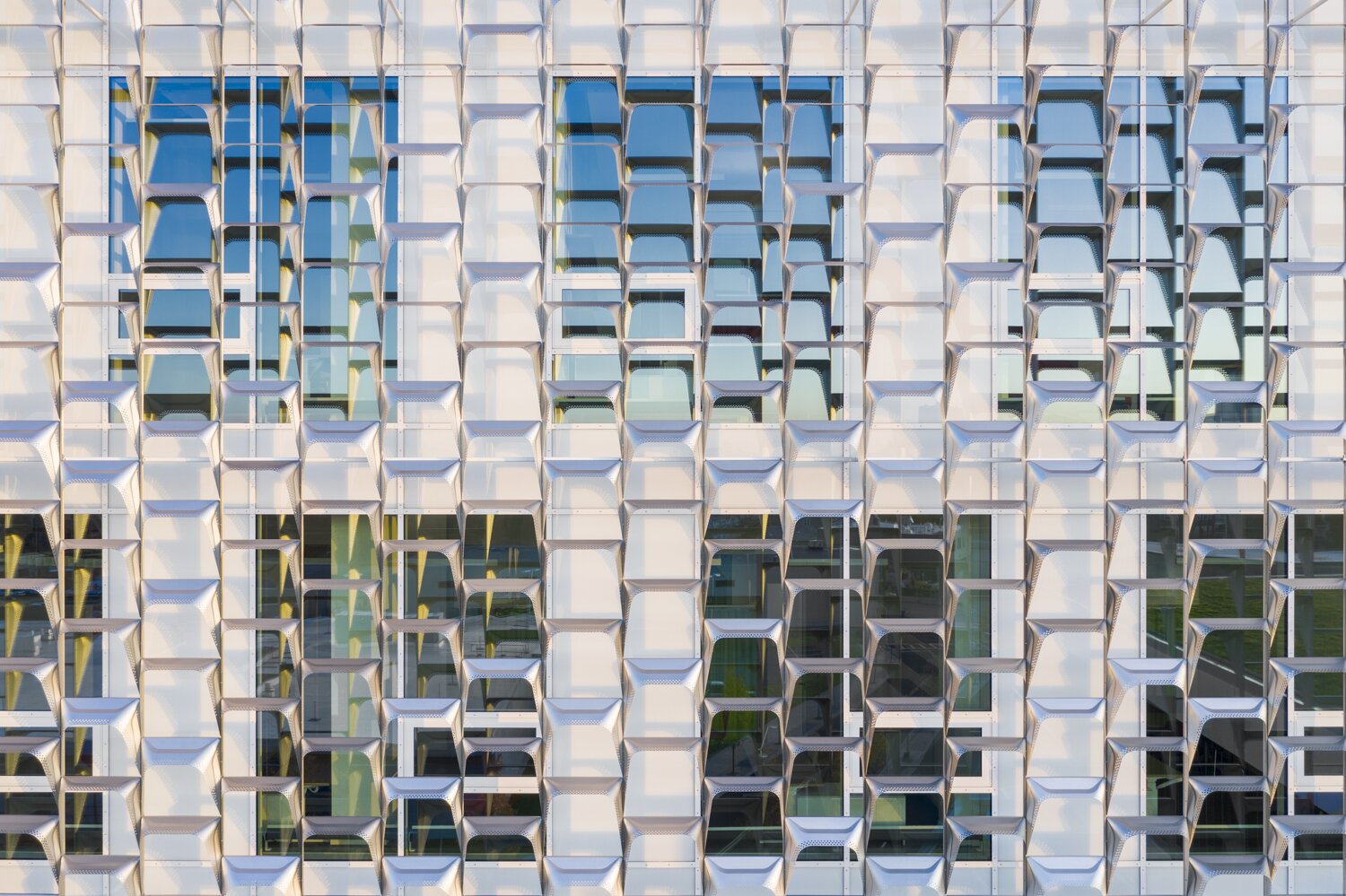
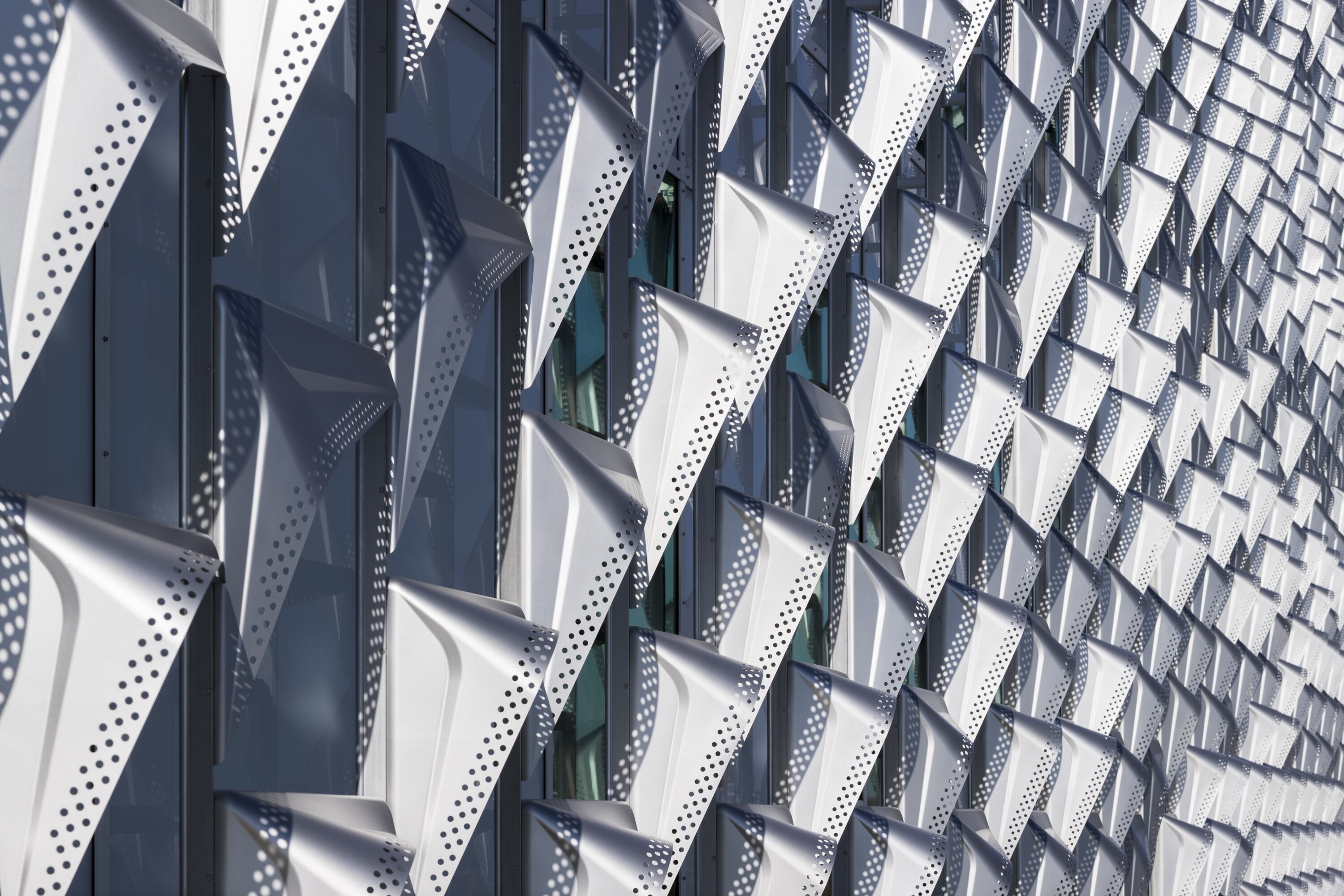
Four principal facade types define the exterior, including the world’s first hydroformed stainless-steel screen, which wraps the laboratory zones. This innovative screen reduces solar heat gain in summer, admits winter sunlight, reflects daylight into the interior, and preserves expansive views. Glazed sections feature exterior sunshades and operable windows to support natural ventilation.

Harvard's reputation in science and engineering is further reinforced by the SEC's striking yet highly functional design, which positions the Allston campus as a hub for innovative, environmentally friendly educational settings.