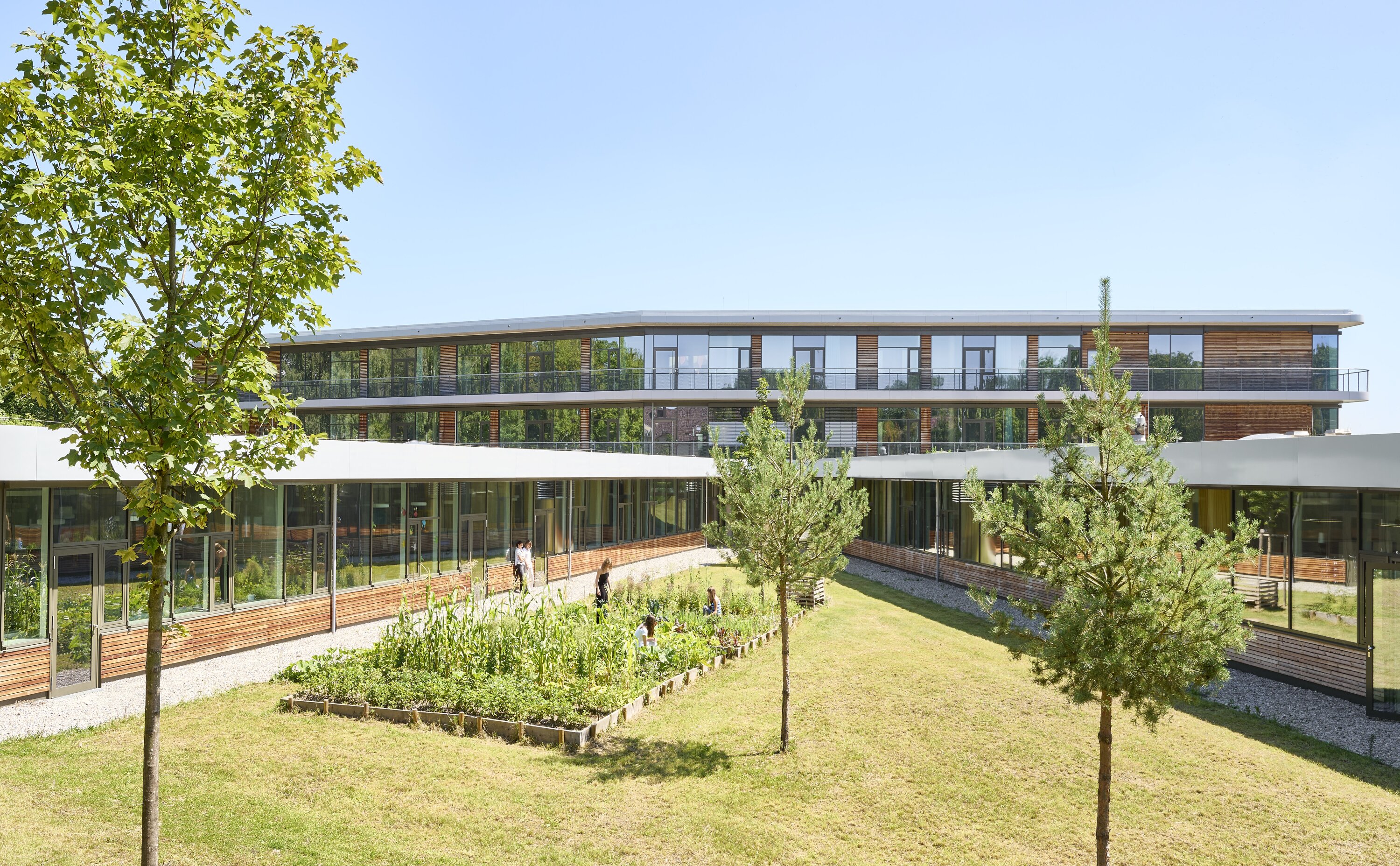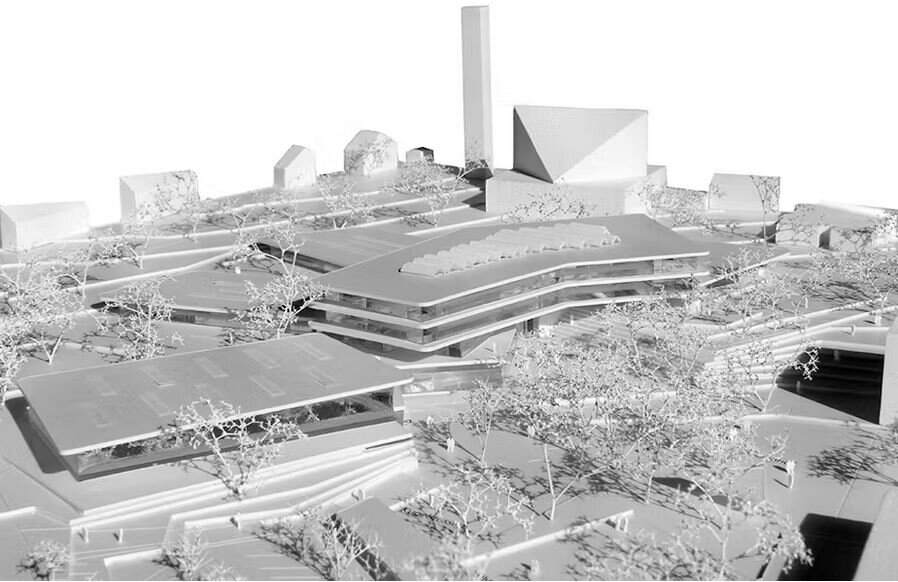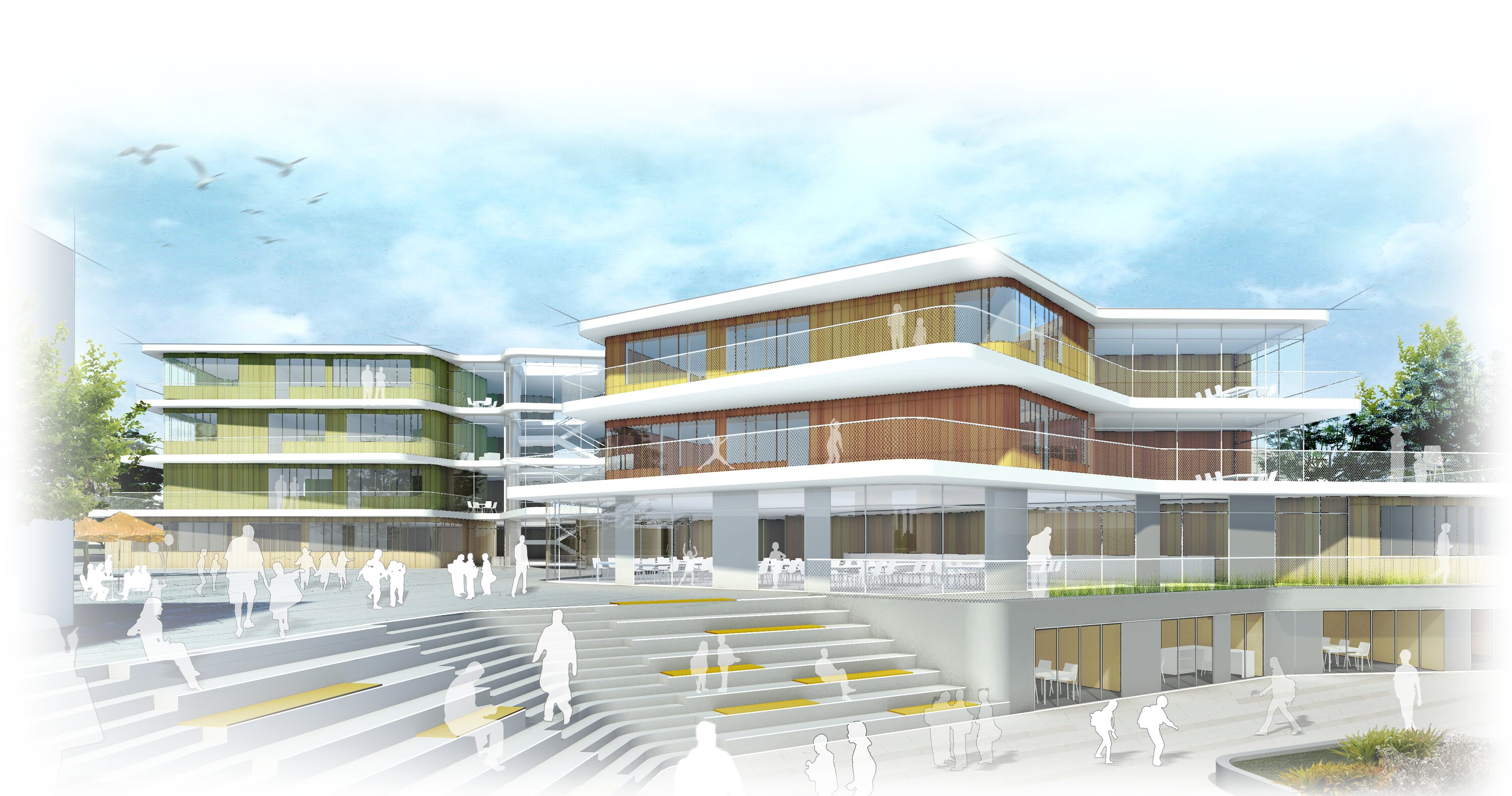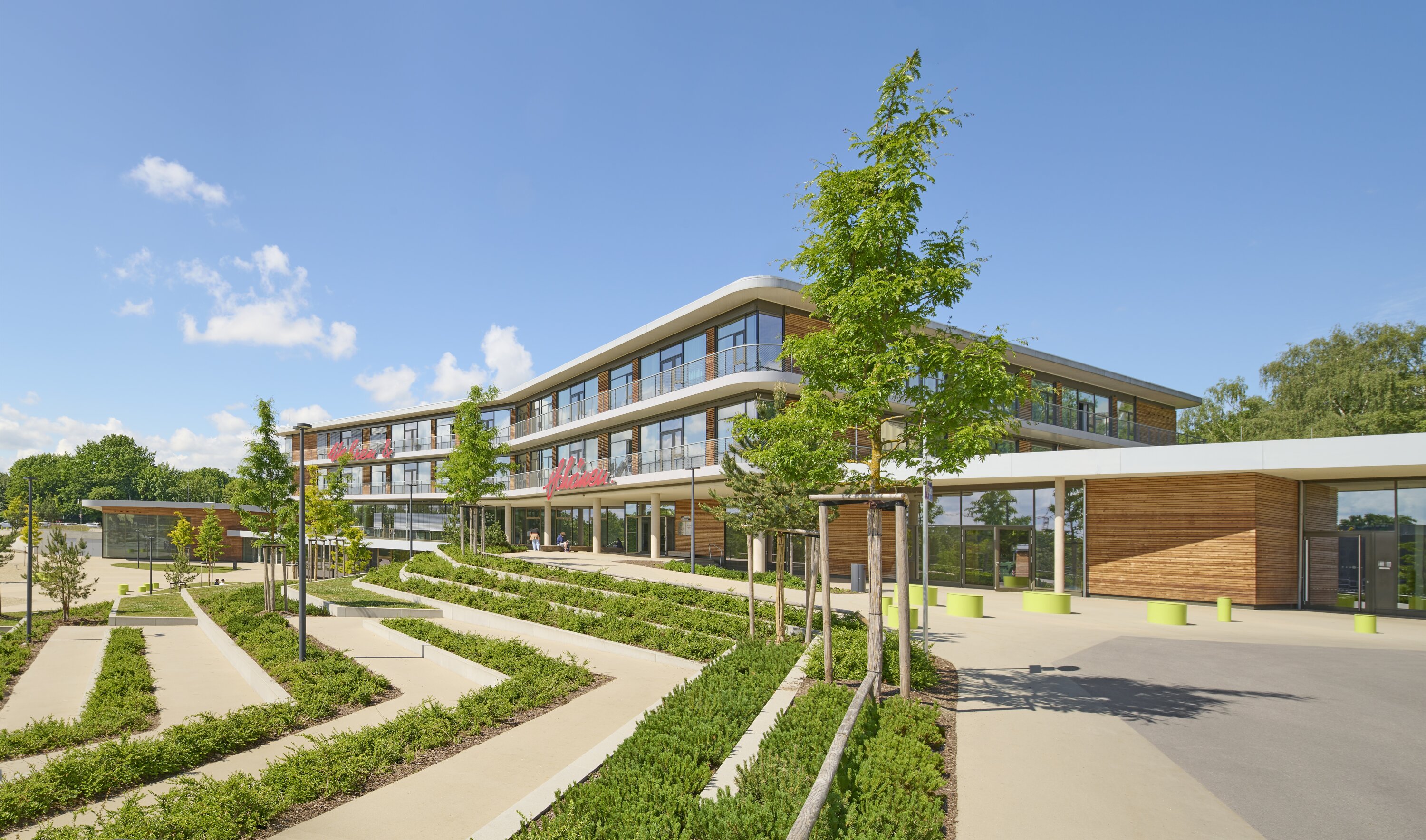
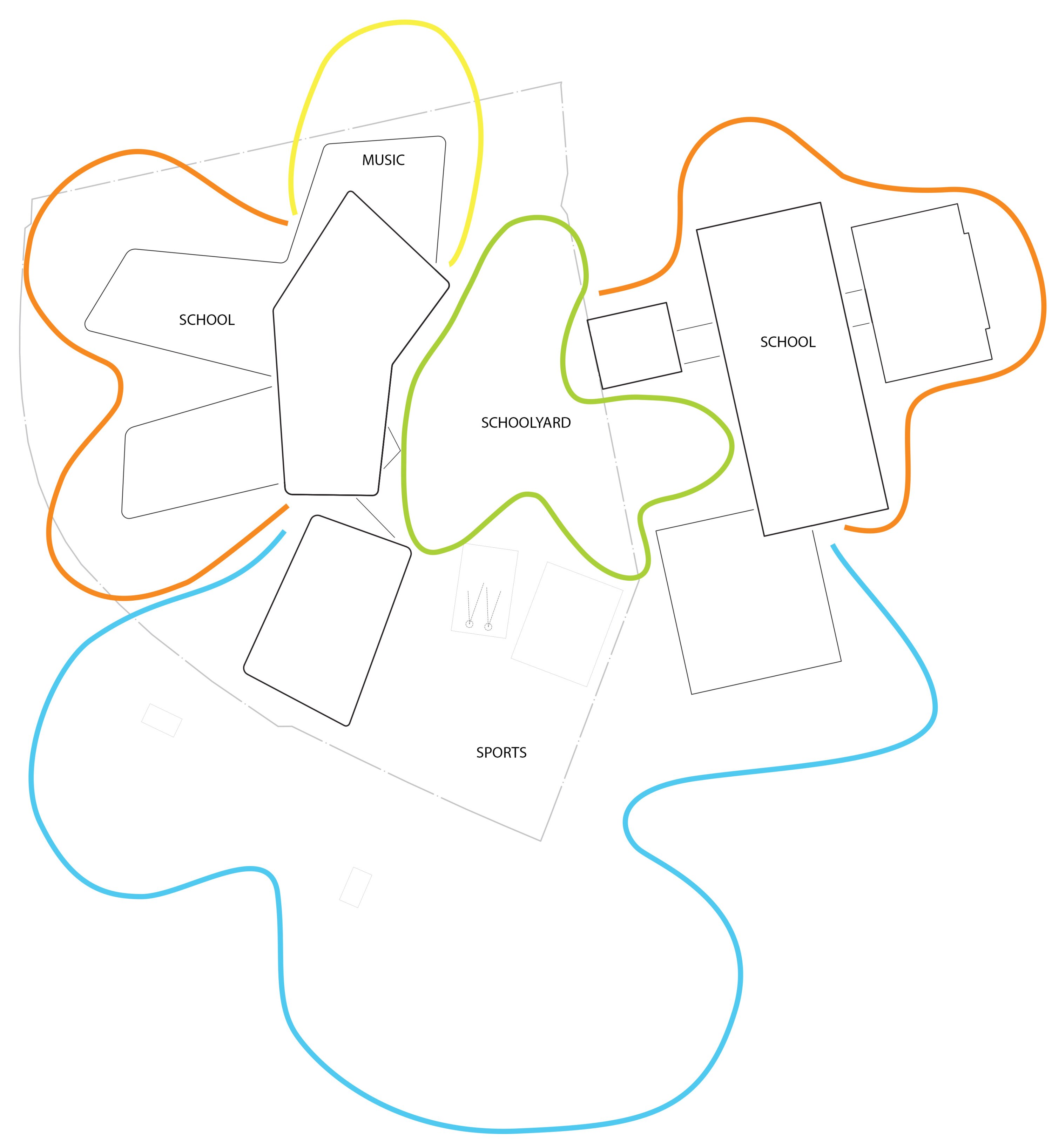
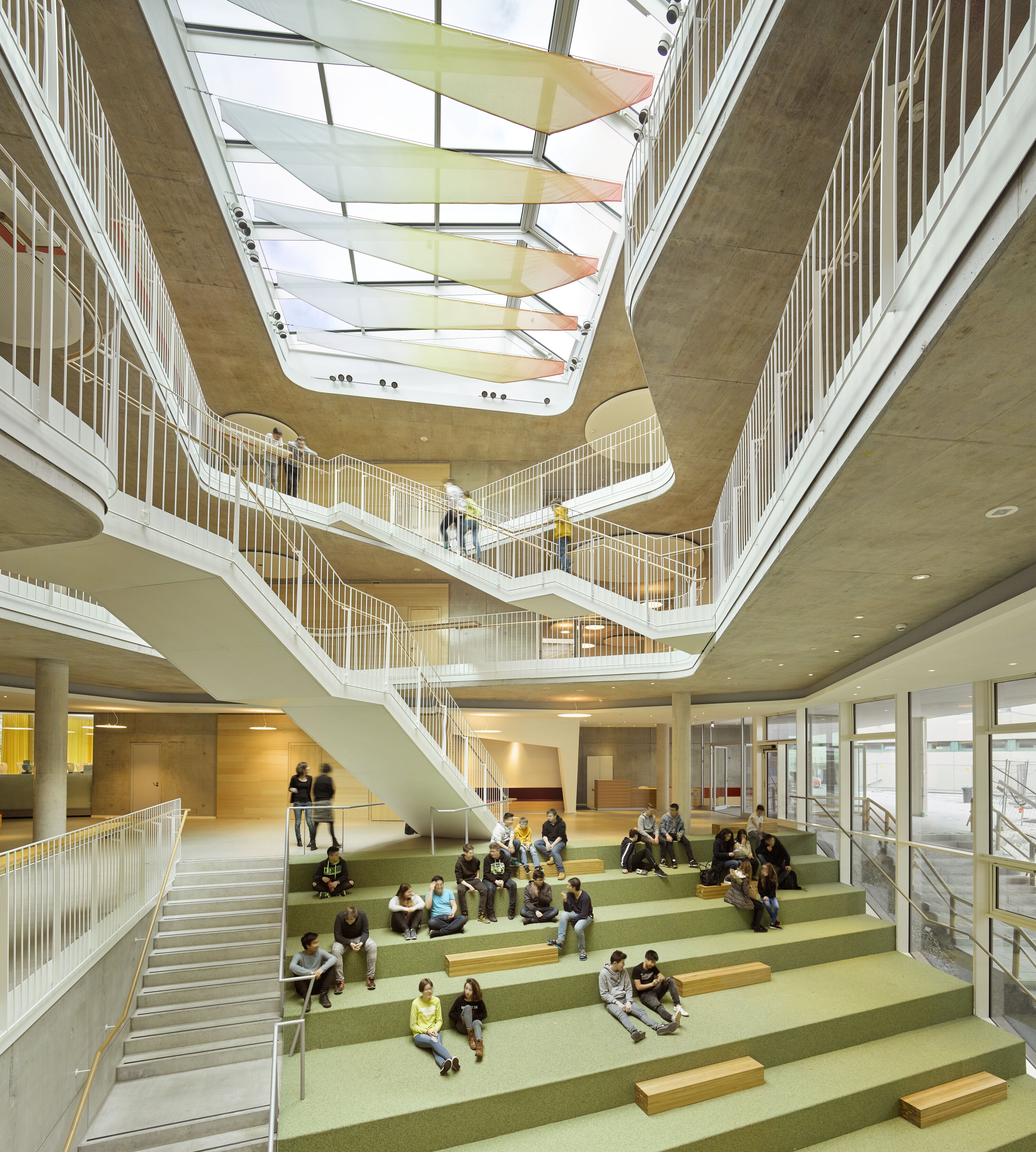
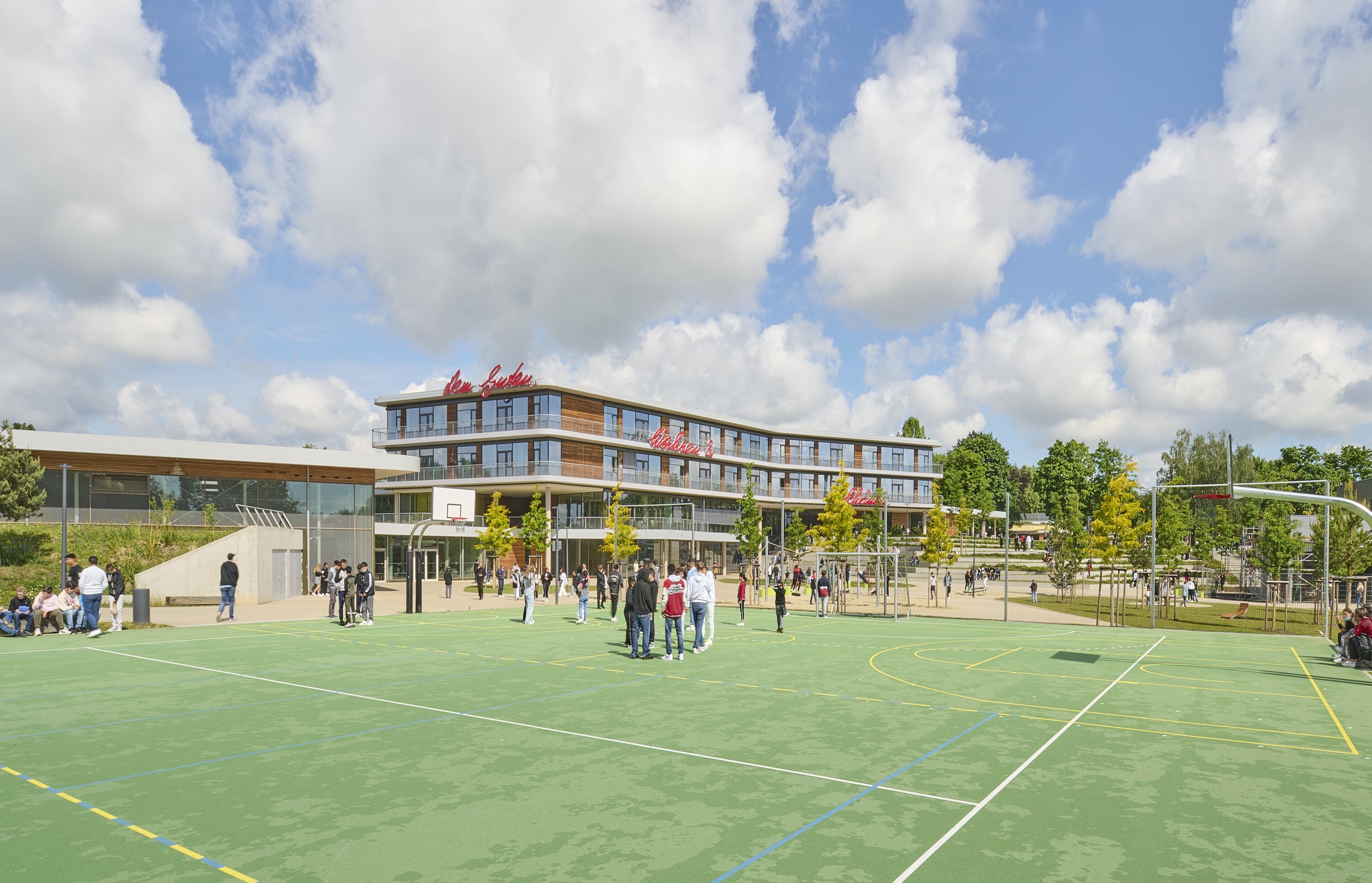
The main objective of the architectural concept is to create a space that caters to potential developments in future education: the structure is flexible enough to accommodate a curriculum in transition and to adapt to evolving pedagogical approaches. The building’s main entrance is located at ground level on the upper access level. A second entrance leads directly into the central auditorium, a multi-story space, in which the different levels are connected by open staircases. With its south-facing orientation, the auditorium forms the heart of the new school building. The concept of the internal two-story staircase with integrated seating continues outdoors in the form of landscaped terracing.
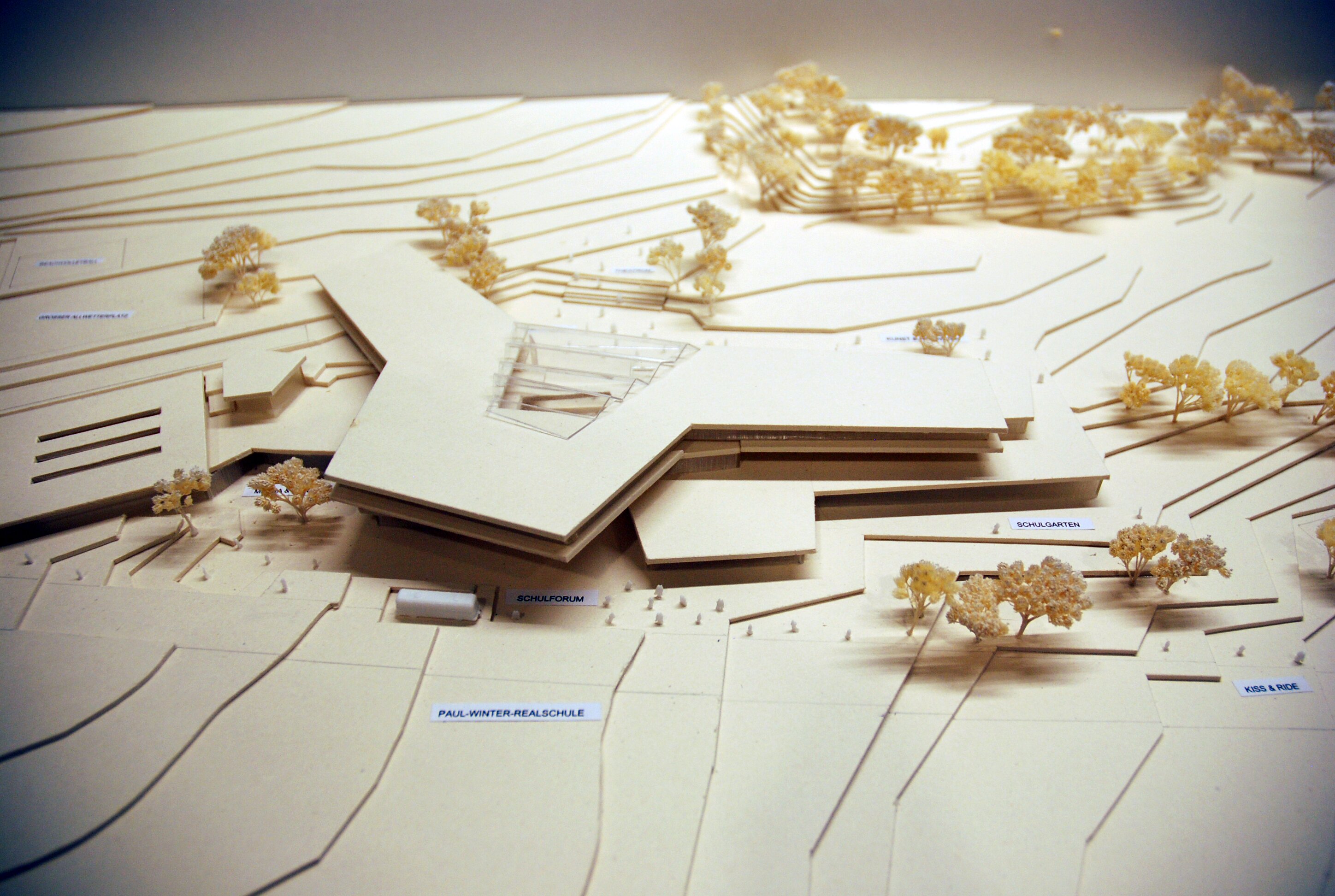
The design is intended to promote a strong sense of identity, while integrating smoothly into the existing school campus. A schoolyard located in the center of the campus is shared with the adjacent grammar school, the Paul Klee Gymnasium. The spacious area offers the students of both schools room for lunchtime or afternoon activities. By working with the site’s natural topography, the design retains the north-south axis passing across the traffic-free school area, while allowing its redevelopment to improve accessibility for people with disabilities.
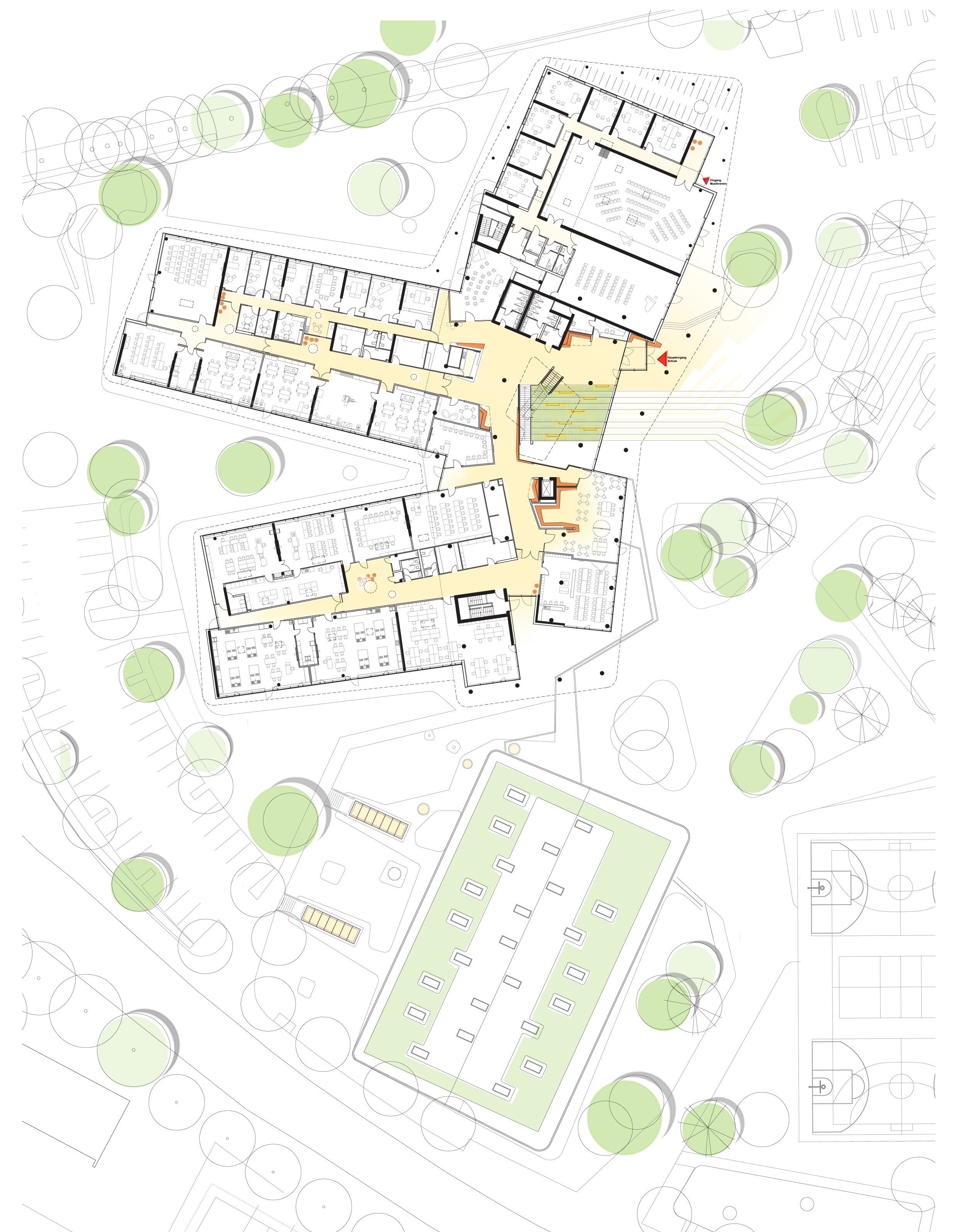
Level 0
On the entrance floor, the teachers’ rooms, school administration, all-day area, music room, and library are arranged adjacent to the auditorium. Teaching spaces also occupy this level, extending into the landscape as “green classrooms” housed in two separate wings. The small, protected areas between these wings provide dedicated zones for art, handicrafts, and cooking. On the two upper floors, the building takes on a compact, free-form structure. Each floor contains six clusters, such as classroom units serving two classes, and each includes group rooms and its own entrance area. This organization creates a sense of community, reinforced by the annular arrangement of rooms around the auditorium. Galleries on the upper floors make the building easy to navigate and provide an informal setting where teachers, students, and parents can meet and exchange information.
- Client
- Stadt Gersthofen
- Architects
- Behnisch Architekturbüro
- Address
- Gross Area
13.396 qm / 144,195 sq.ft.
- Gross Volume
61.839 cbm / 2,183,844 cu.ft.
- Competition
2012, 1st prize
- Downloads
-
Download PDF
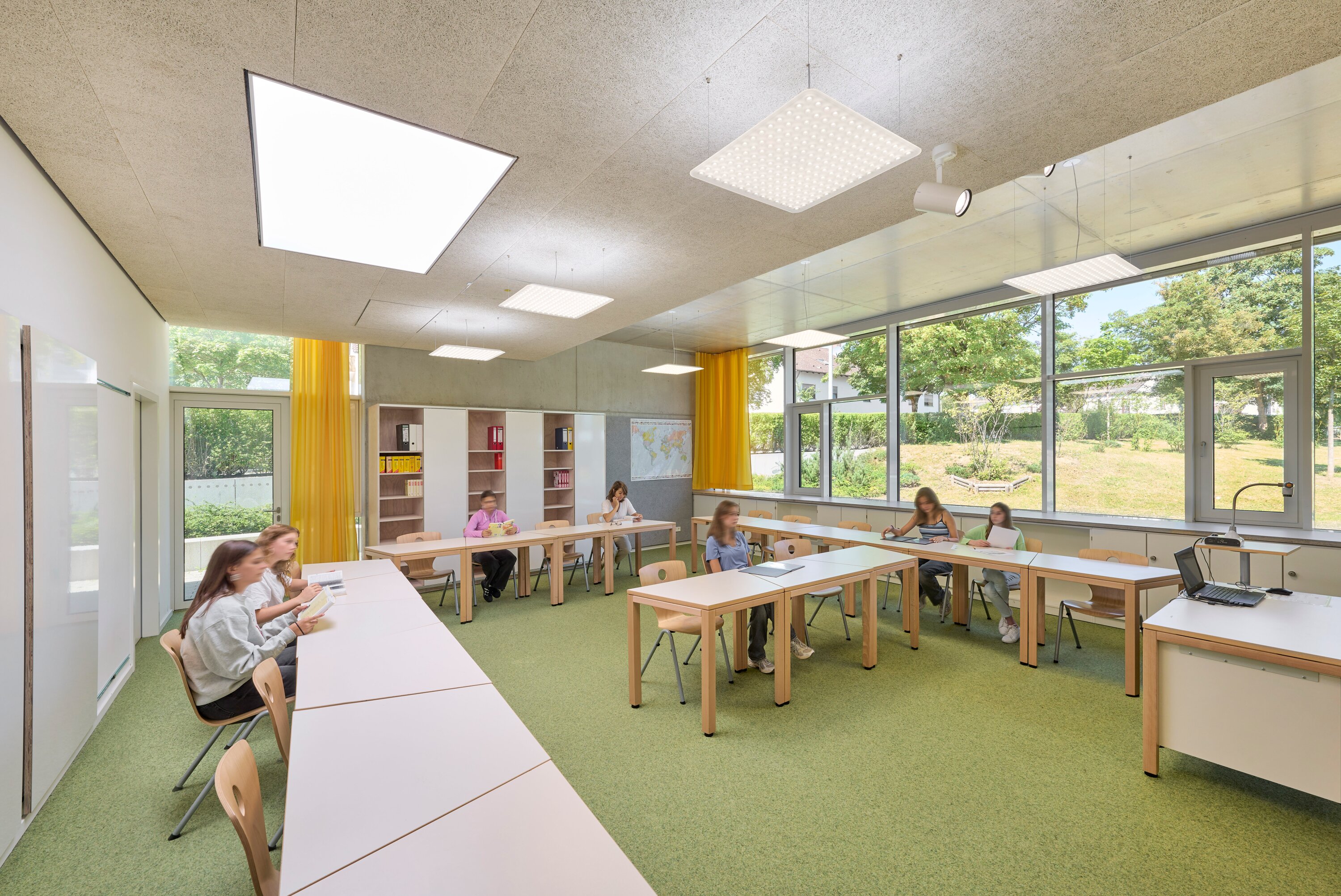
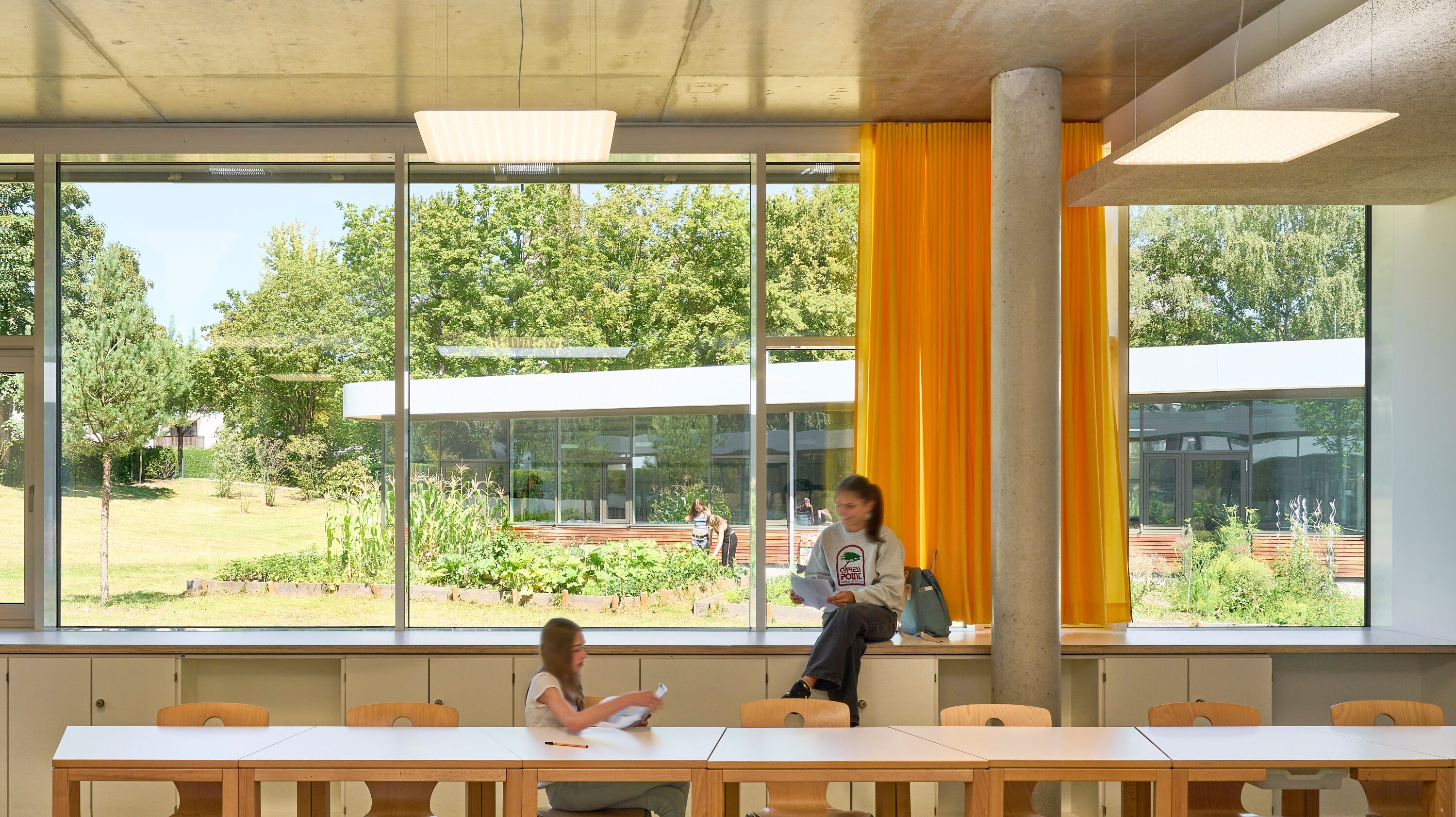
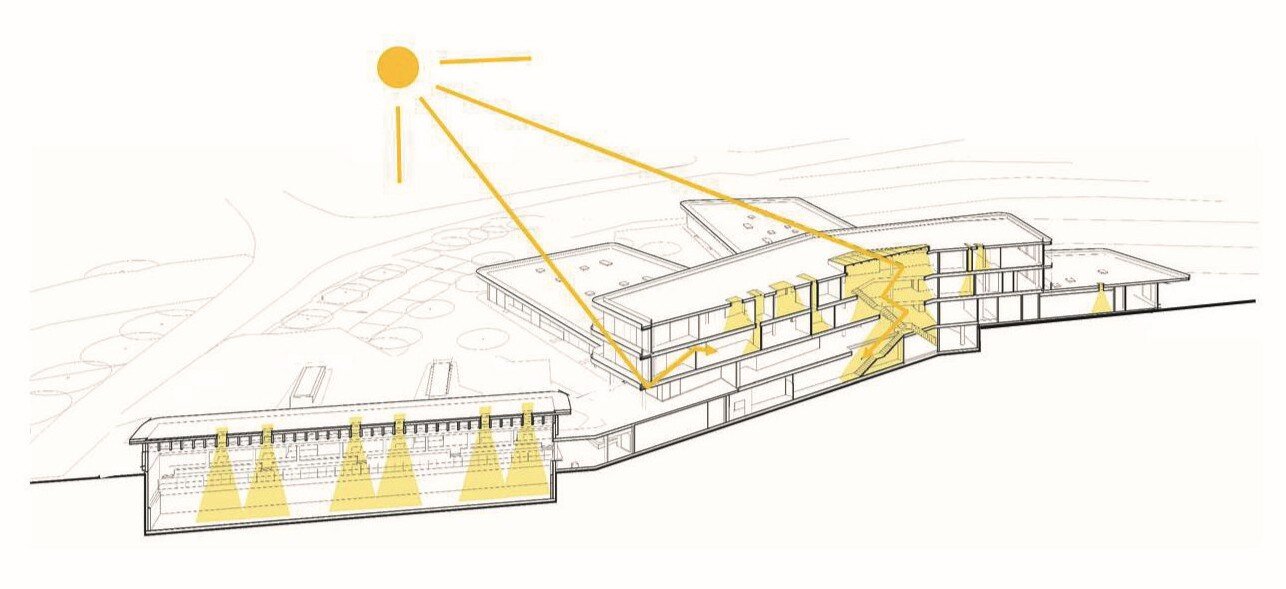
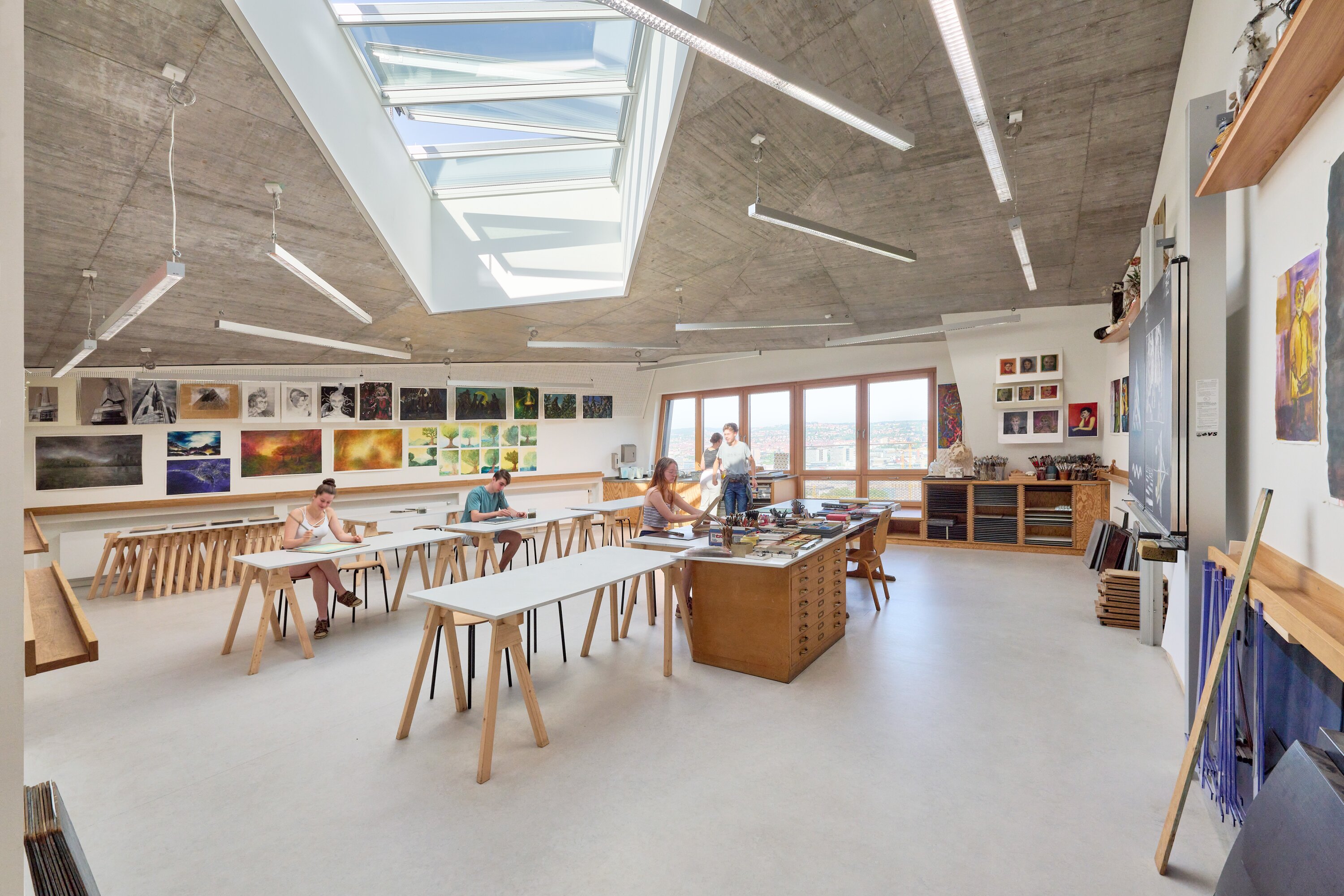
Optimal daylight use, connections between exterior and interior, and the ability to individually adjust the indoor climate play a vital role for both comfort and energy efficiency. Low-energy design principles have thus been extended to include key qualities such as outdoor views and window ventilation that can be individually managed.