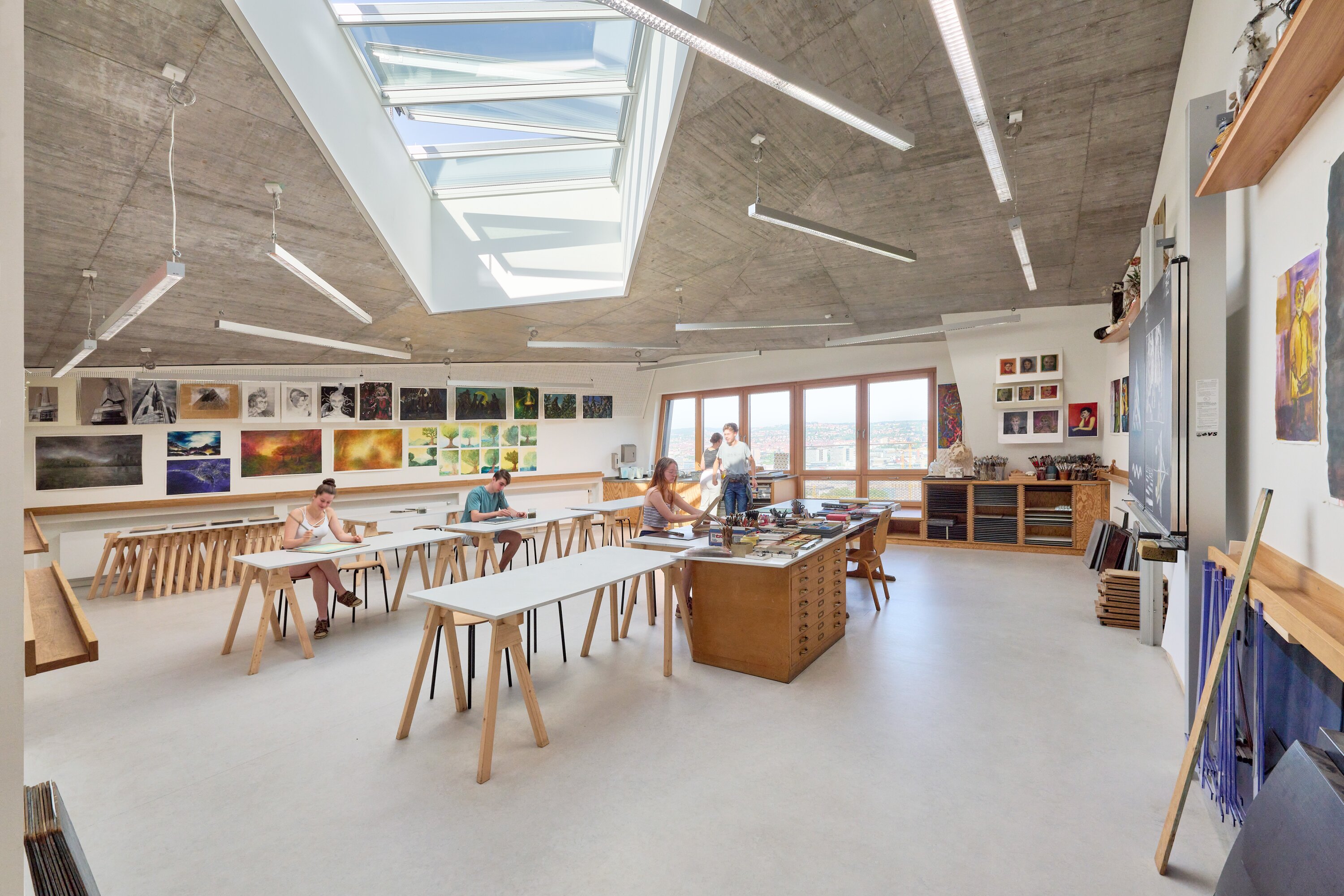
Teachers, students, the city of Buc, and an international team of planners collaborated in an inclusive and holistic design process to develop the campus. Designed to support diverse users and activities, the school offers a calm learning environment during the day and changes into a vibrant community space after hours—a living testament to Franco-German friendship, in which all the seasons’ festivals are celebrated.
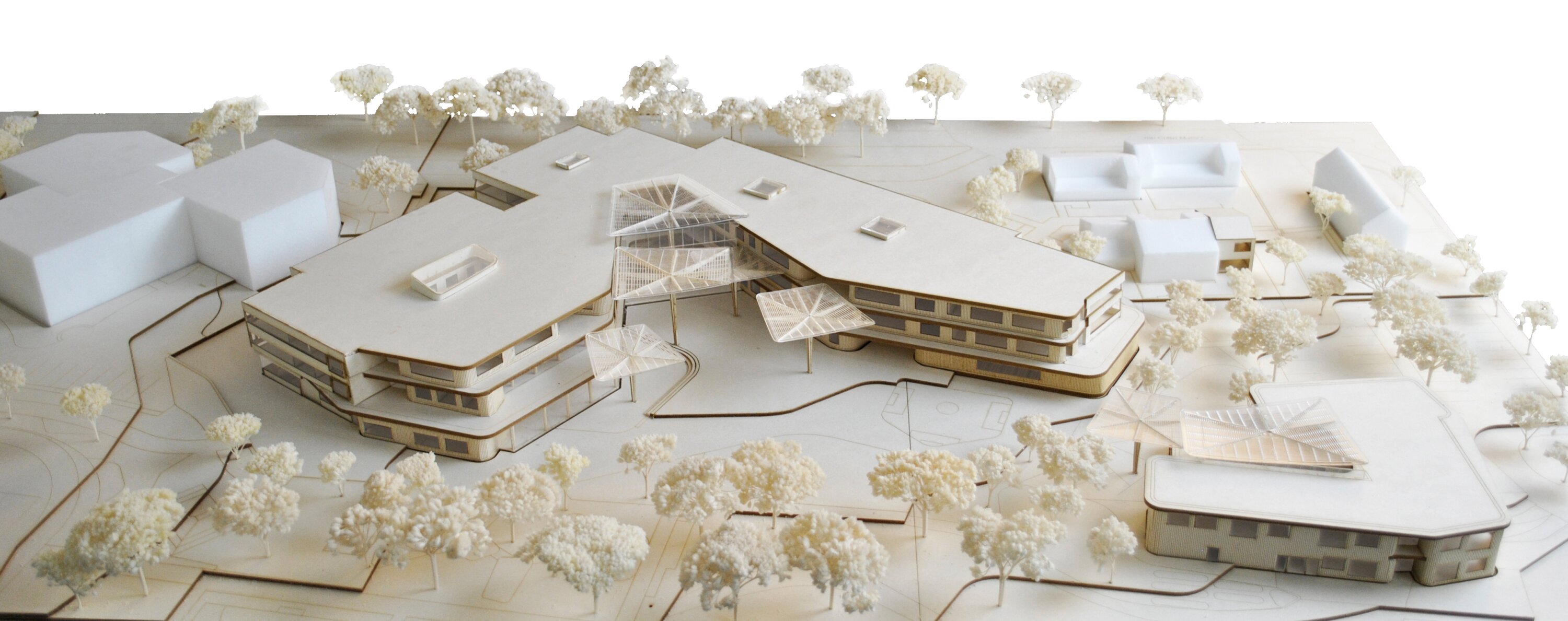
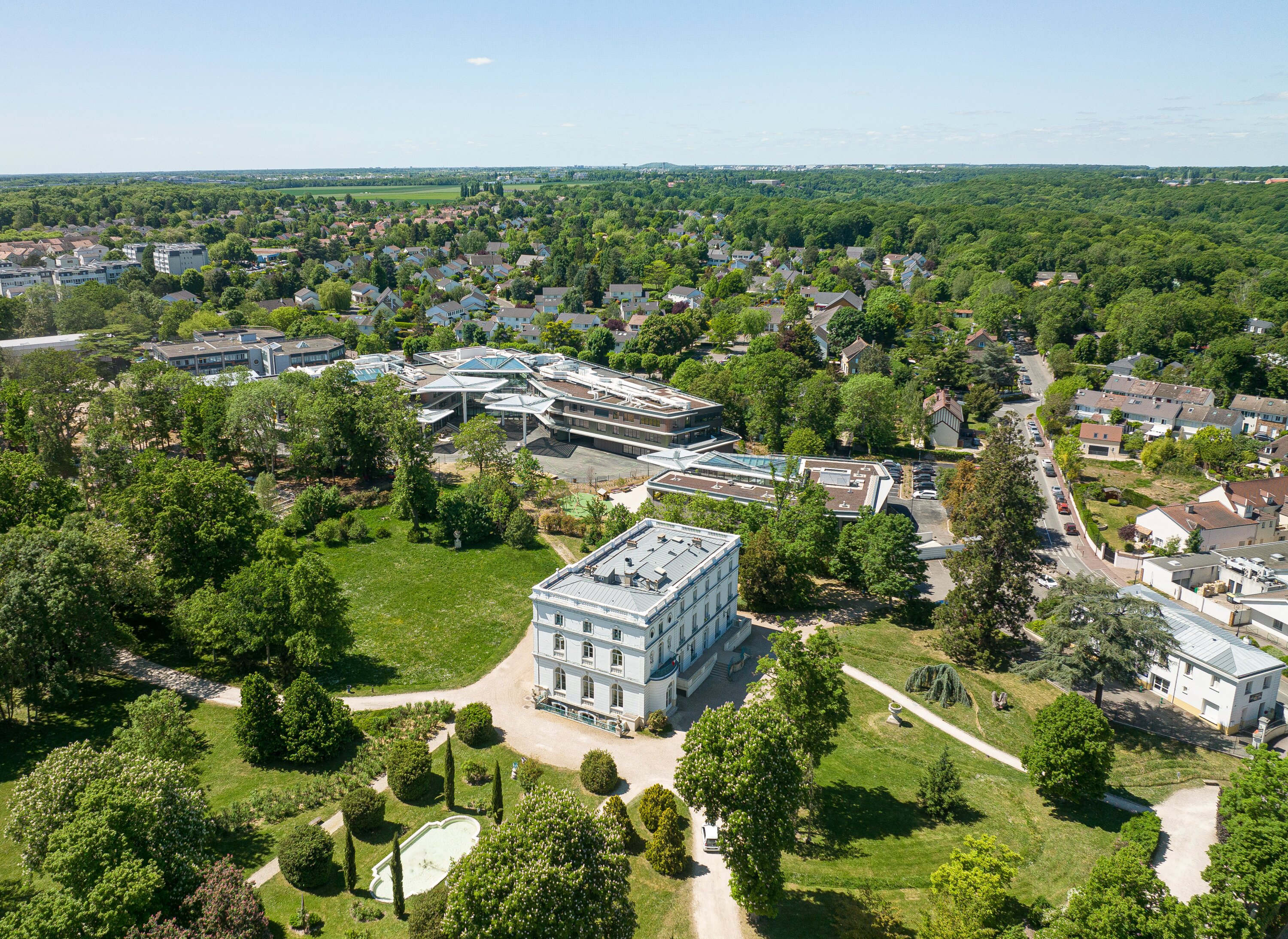
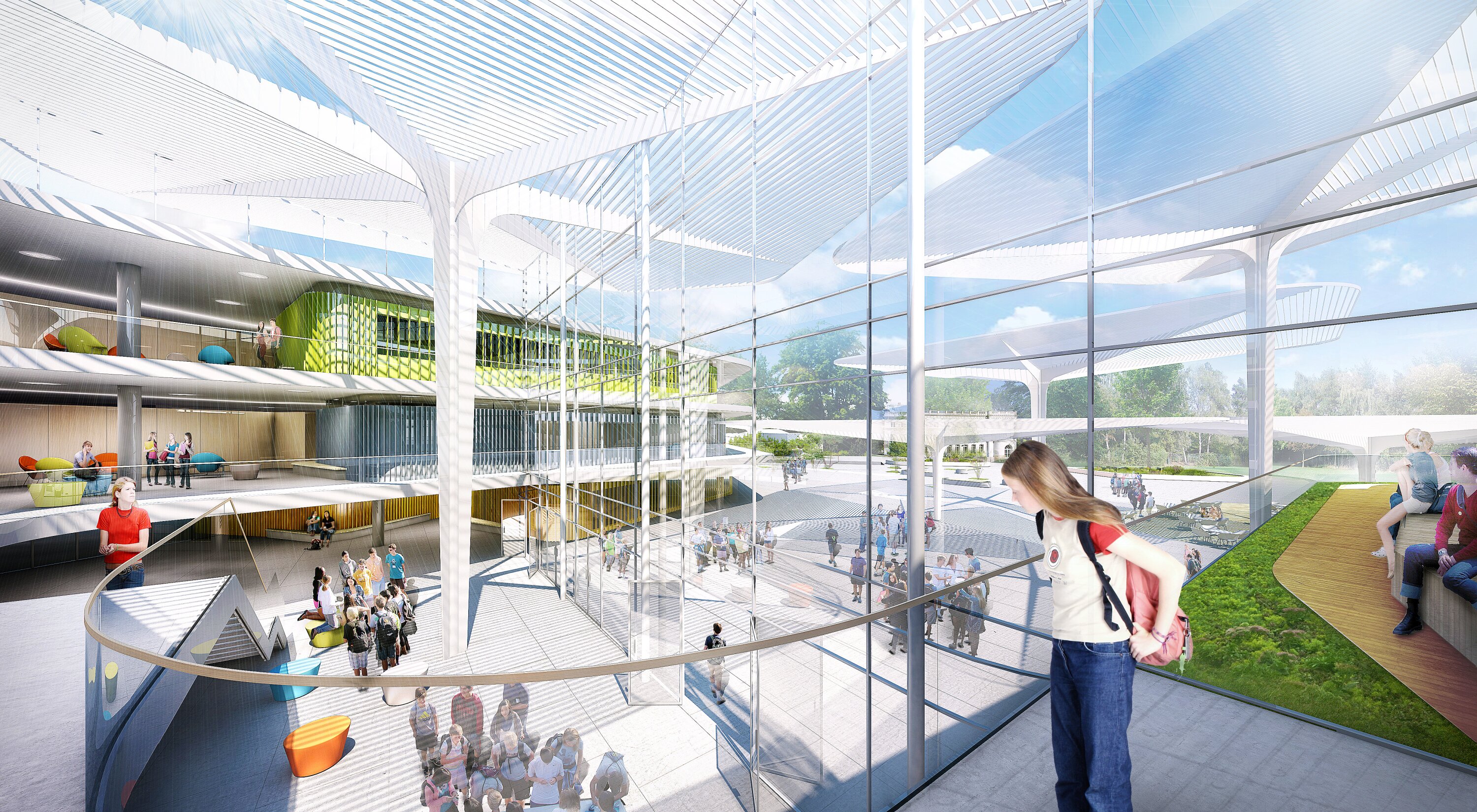
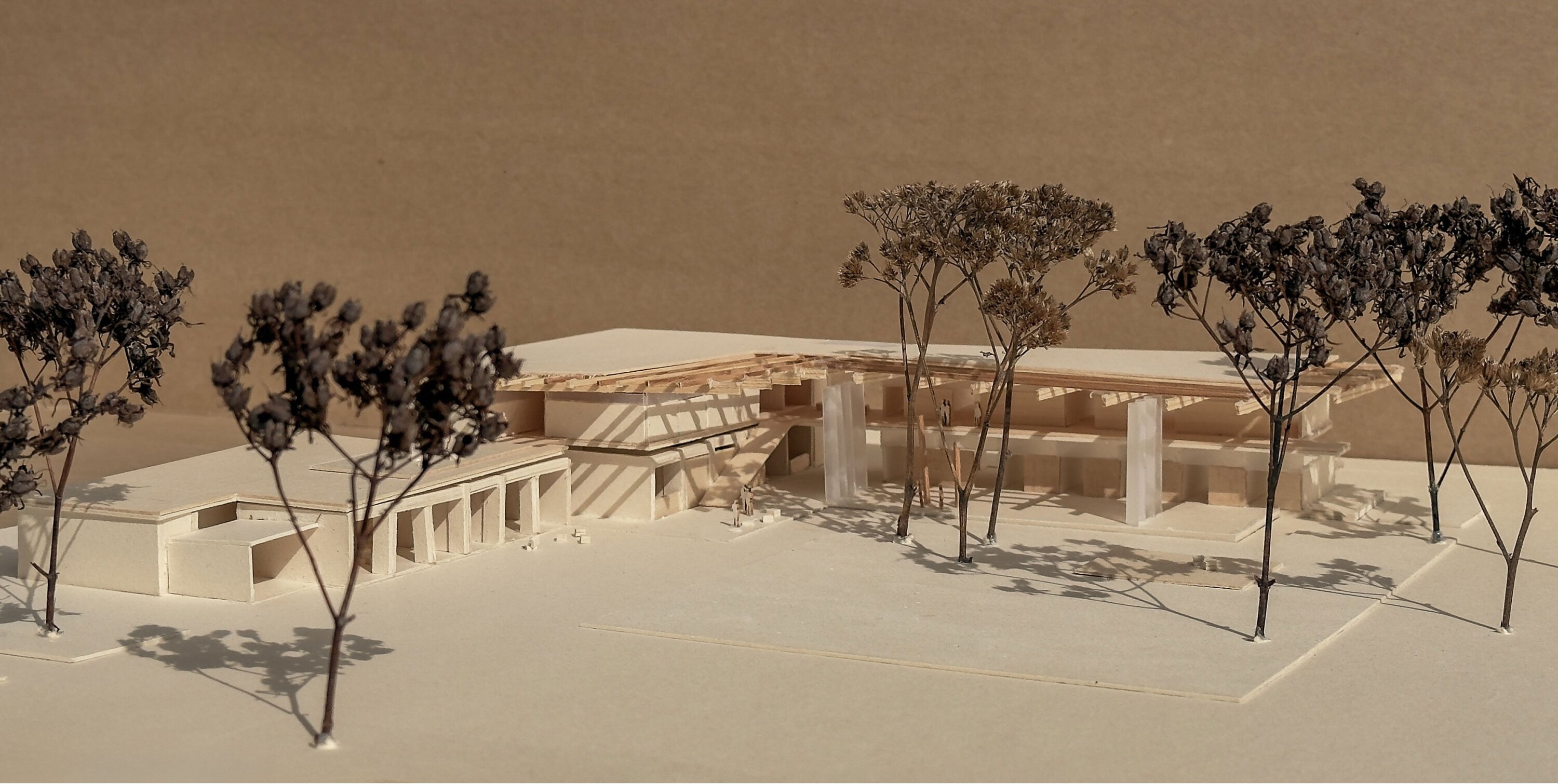
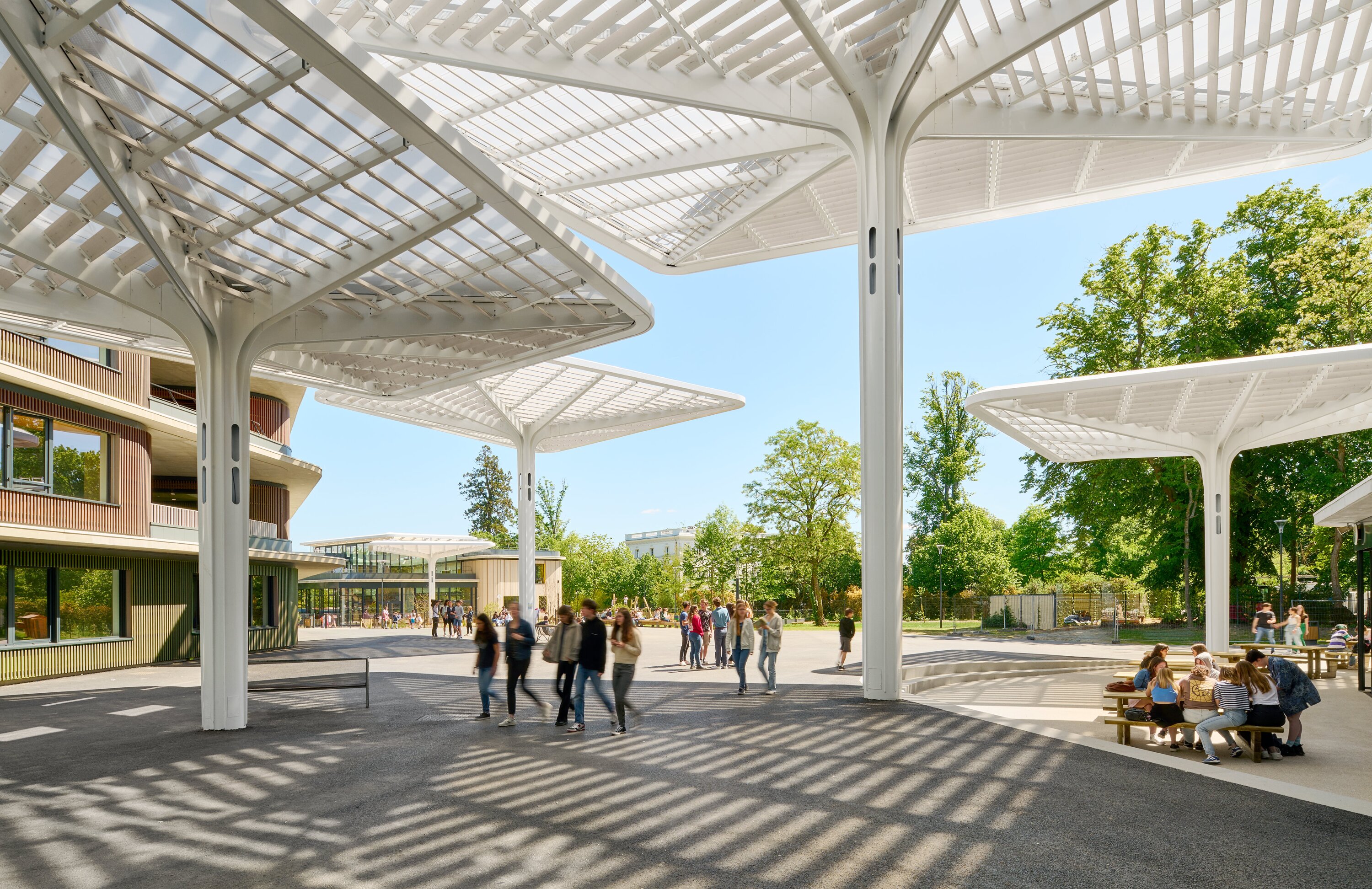
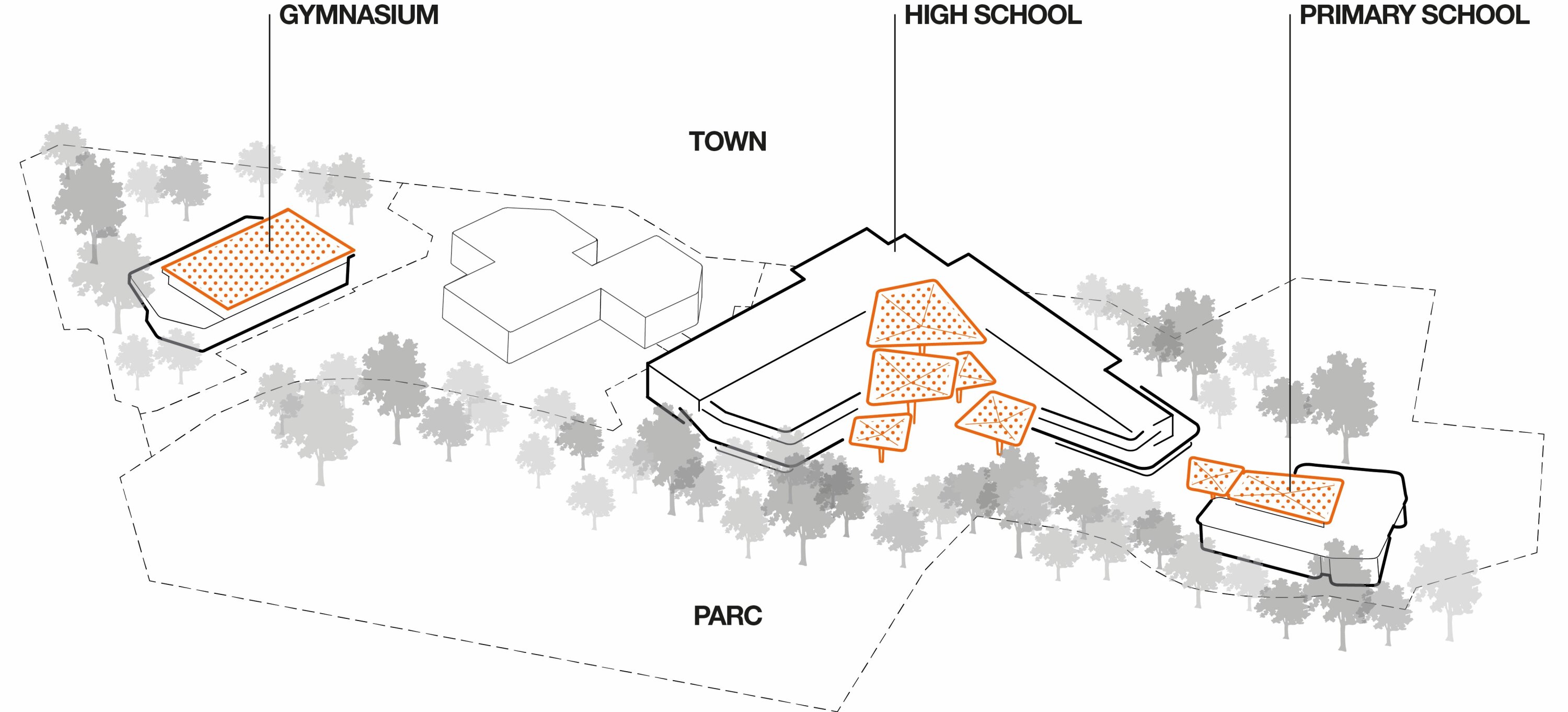
The campus comprises an adapted high school building and two new structures: a primary school and a separate gymnasium. Both school buildings follow V-shaped footprints that open toward one another, framing a canopied outdoor space that forms an important gathering place at the heart of the school. Spacious atriums connect the schools to the schoolyard and park while internally linking the various functions.
- Client
- Departement des Yvelines, Versailles
- Architects
- Behnisch Architekten with Atelier A2+
- Address
7 Rue Collin Mamet
78530 Buc
France- Gross Area
16.044 qm / 172,696 sq.ft
- Gross Volume
61.138 cbm / 2,159,088 cu.ft
- Competition
2015, 1st prize
- Photography
David Matthiessen
- Awards
2023 DAM (Deutsches Architekturmuseum), nomination
2023 The International Architecture Award, The Chicago Athenaeum Museum of Architecture and Design
2023 DNA Paris Design Awards, honorable mention
2024 Design Educates Awards, honorable mention- Downloads
-
Download PDF
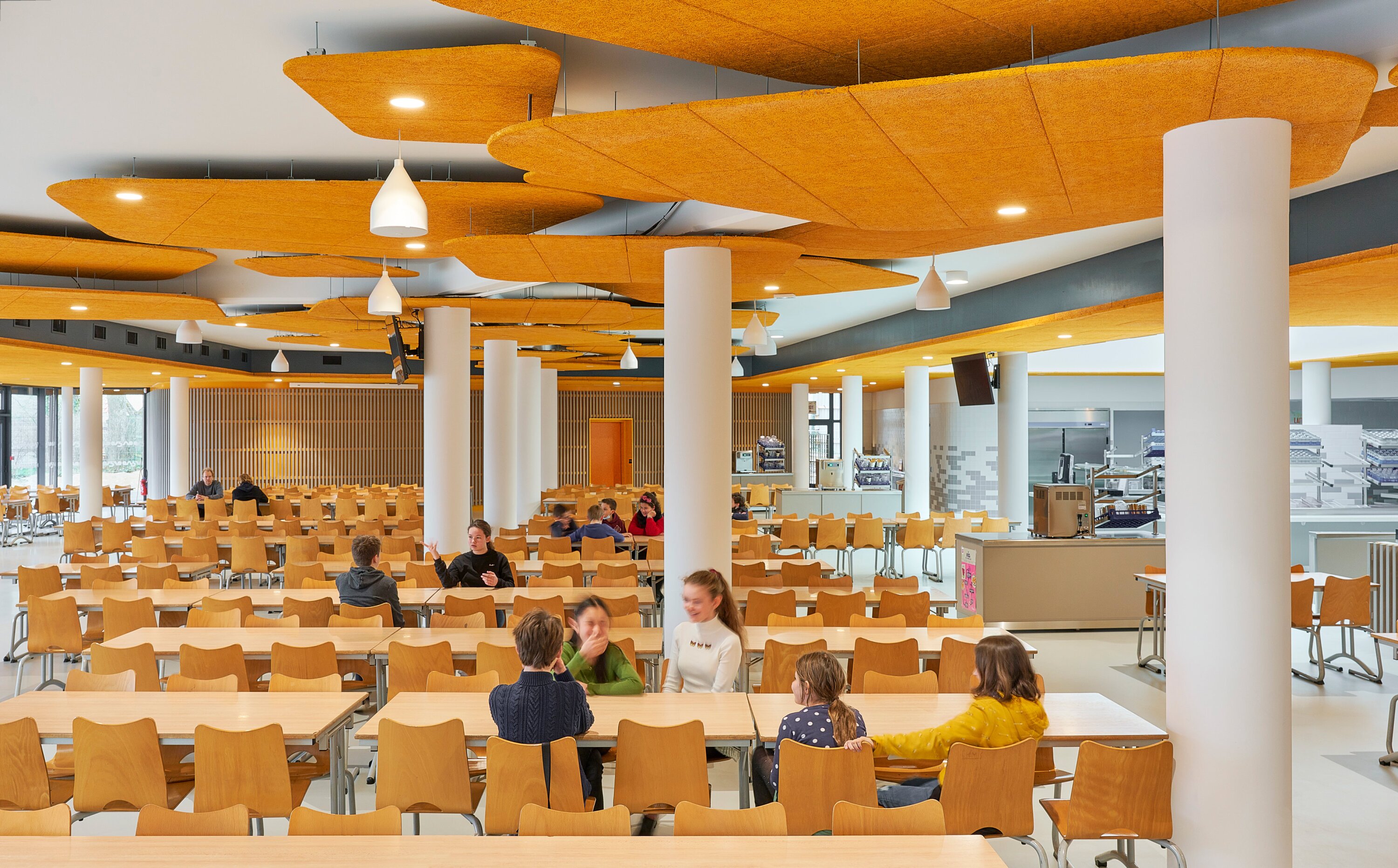
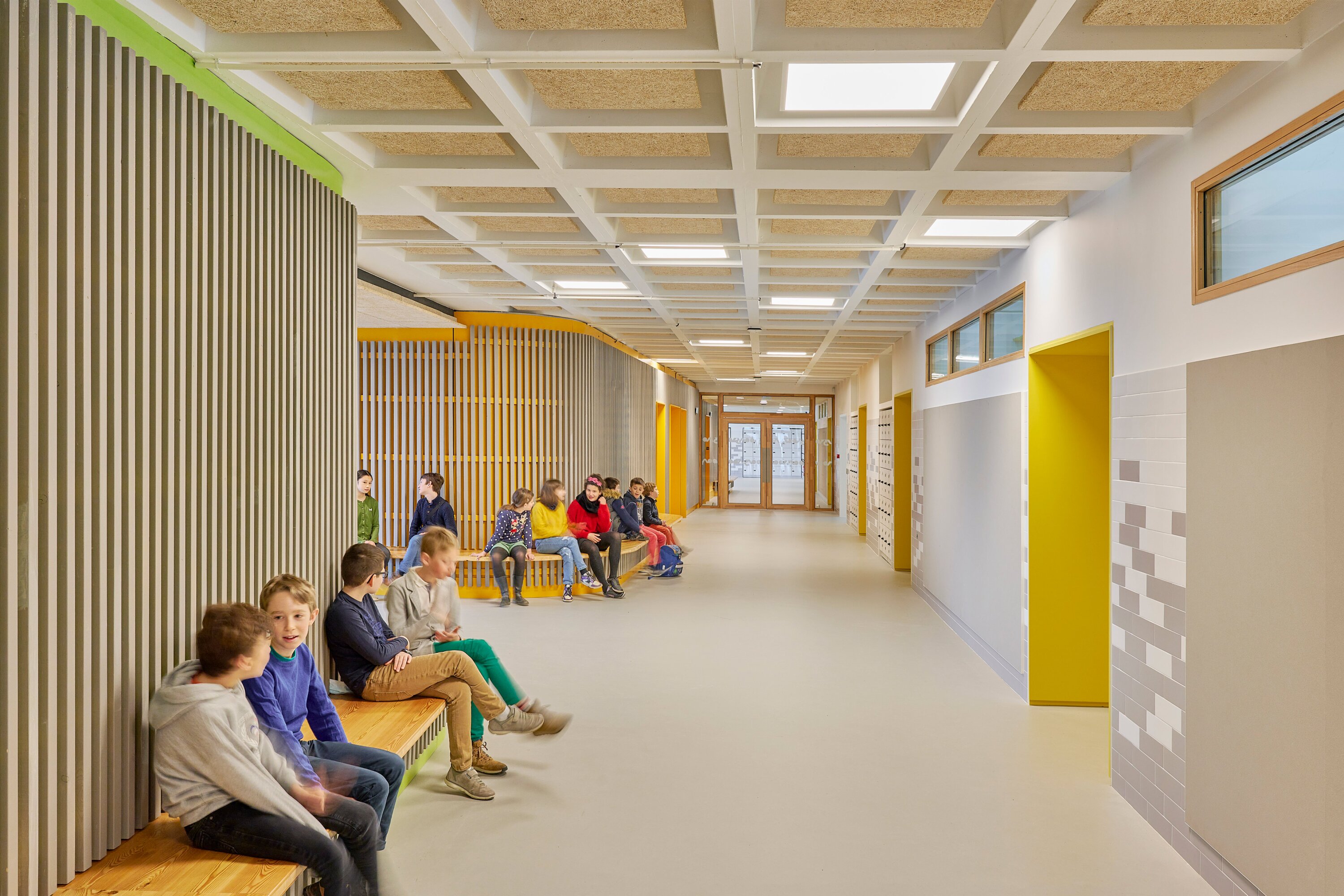
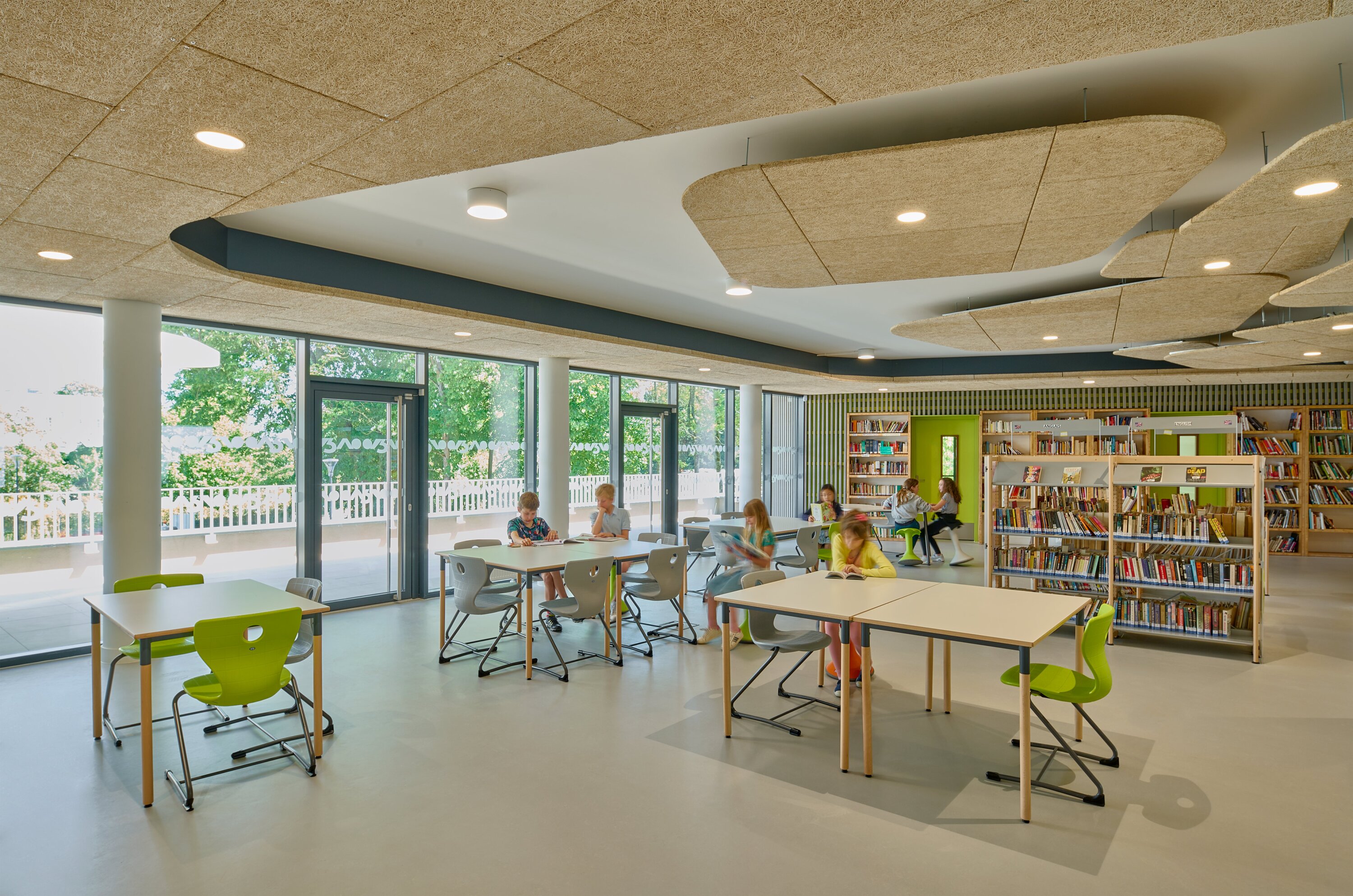
The existing high school was fully renovated and extended to enable new connections and functions. The reconfiguration introduced communal spaces on the ground floor—including an auditorium and cafeteria—that open onto the new schoolyard and adjacent park. Extensions with a more organic layout contrast with the original modular grid, highlighting the interplay between old and new. The upper floors accommodate the media library and specialized classrooms, arranged within rounded learning suites that open circulation areas toward the park and create inviting spaces for seating and informal gatherings. Accessible roof terraces further enrich the variety of shared spaces for students and staff.
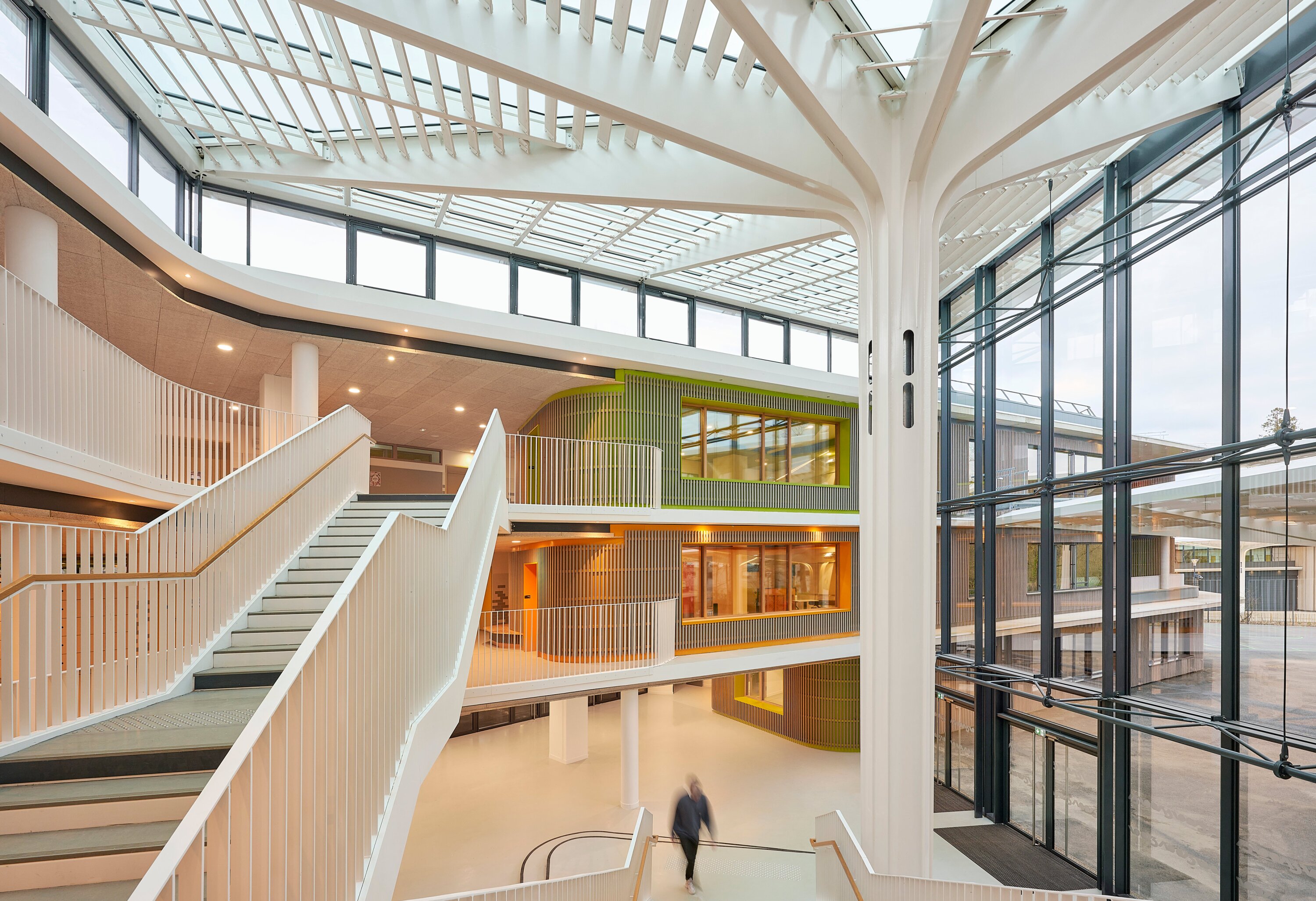
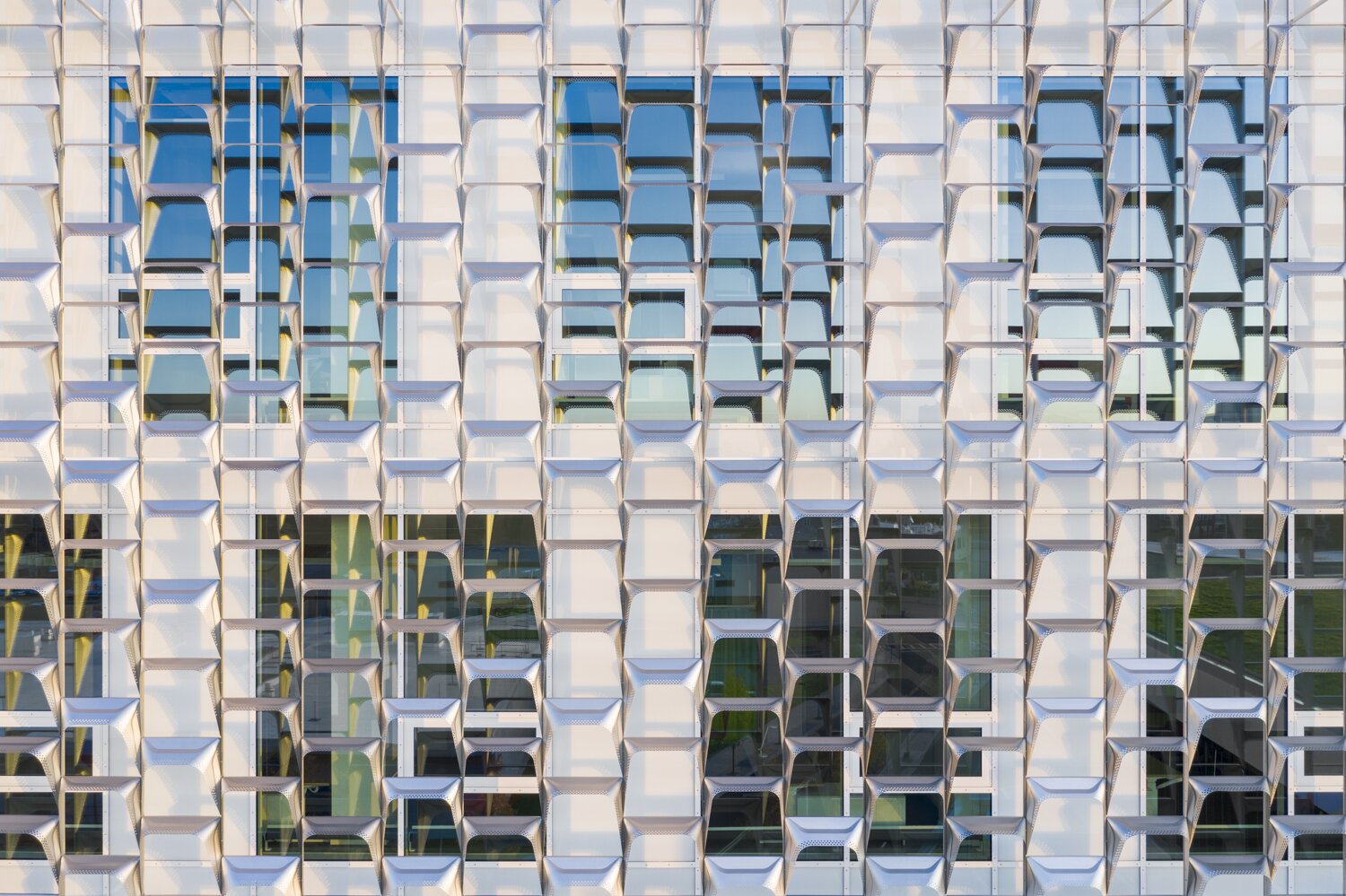
The dialogue between old and new continues in the materials and facade design. While grey panels lend the original structure an urban character, the new curved facades facing the park are clad in pre-weathered larch wood, backed by colored wind paper in natural tones ranging from green to orange. This warm palette and material selection carries through the interior, supporting orientation and reinforcing the school’s connection to the park.
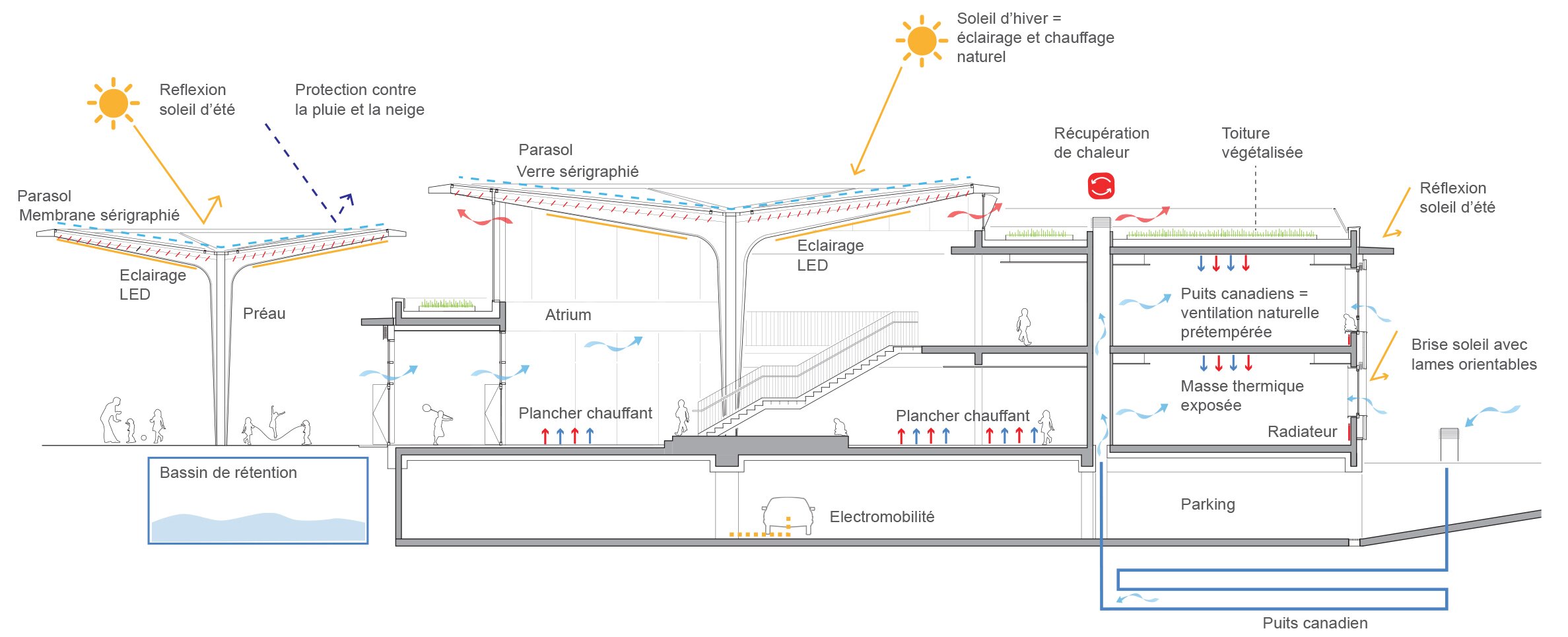
Energy Section
Beyond their social function, the parasols contribute to lighting and passive climate control. Their transparent roofs allow abundant daylight in, while angled wooden slats block the high summer sun to prevent overheating. Integrated ventilation openings create a chimney effect that, together with underground ducts, enables effective cross-ventilation in both schools.