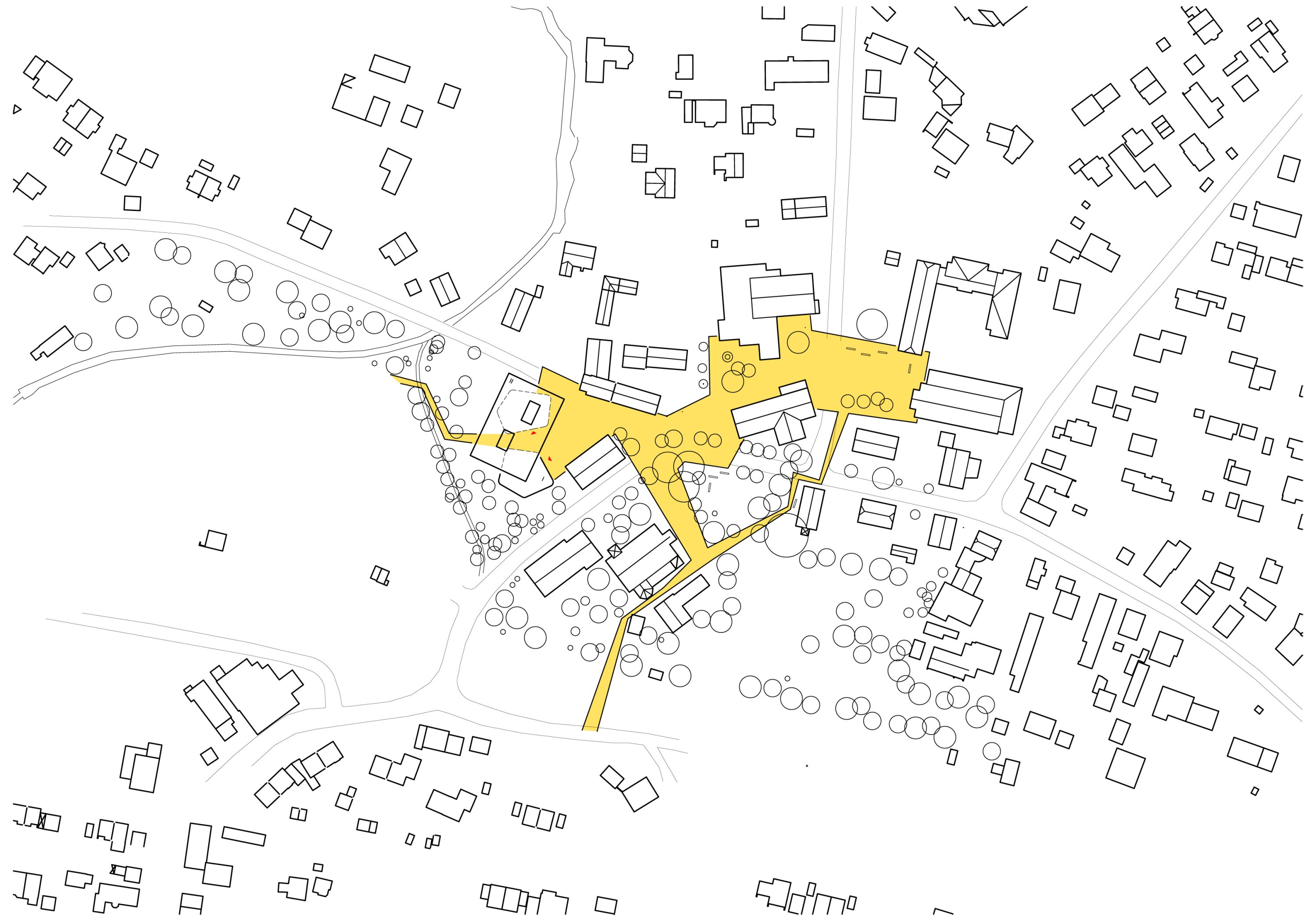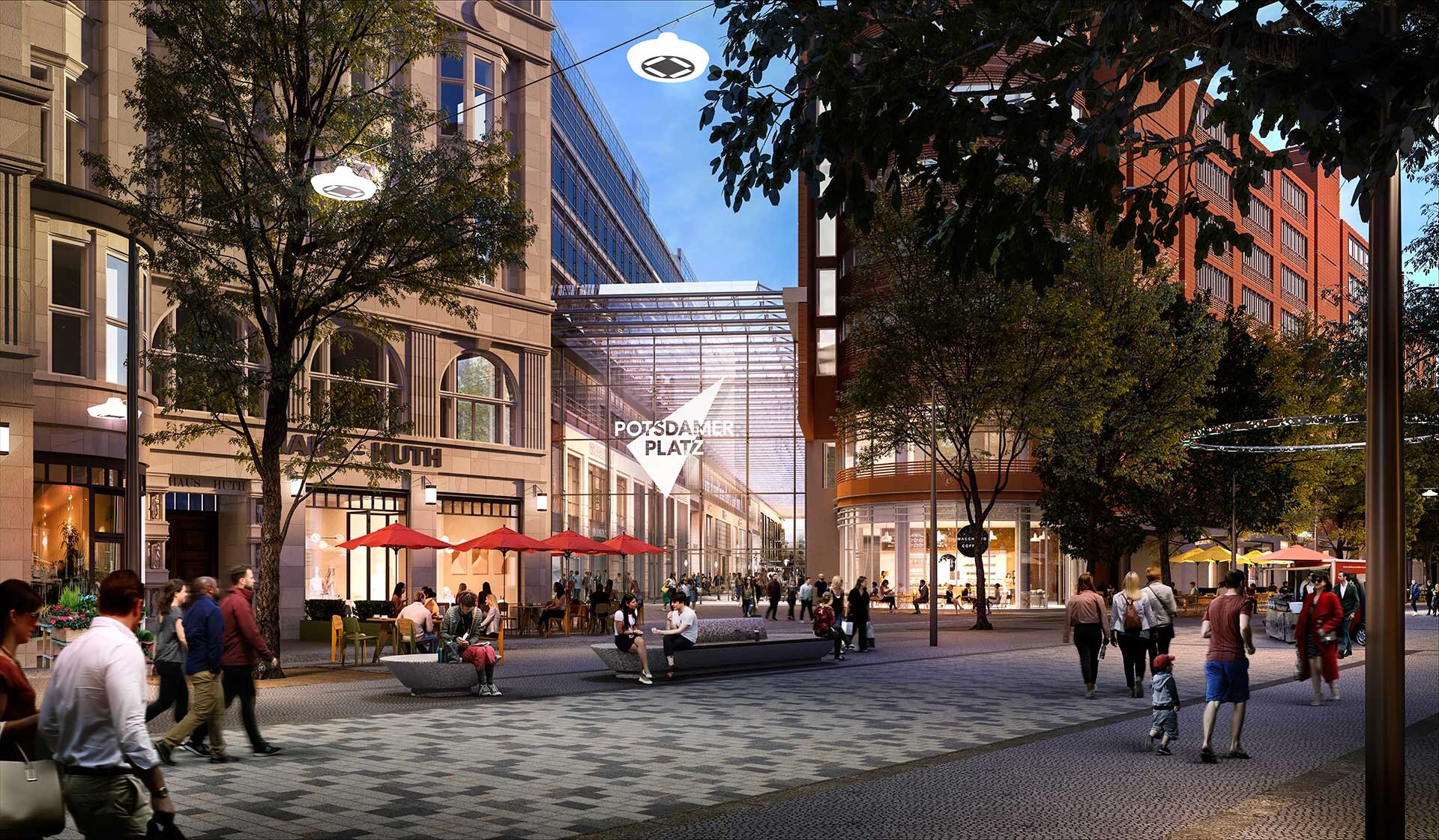
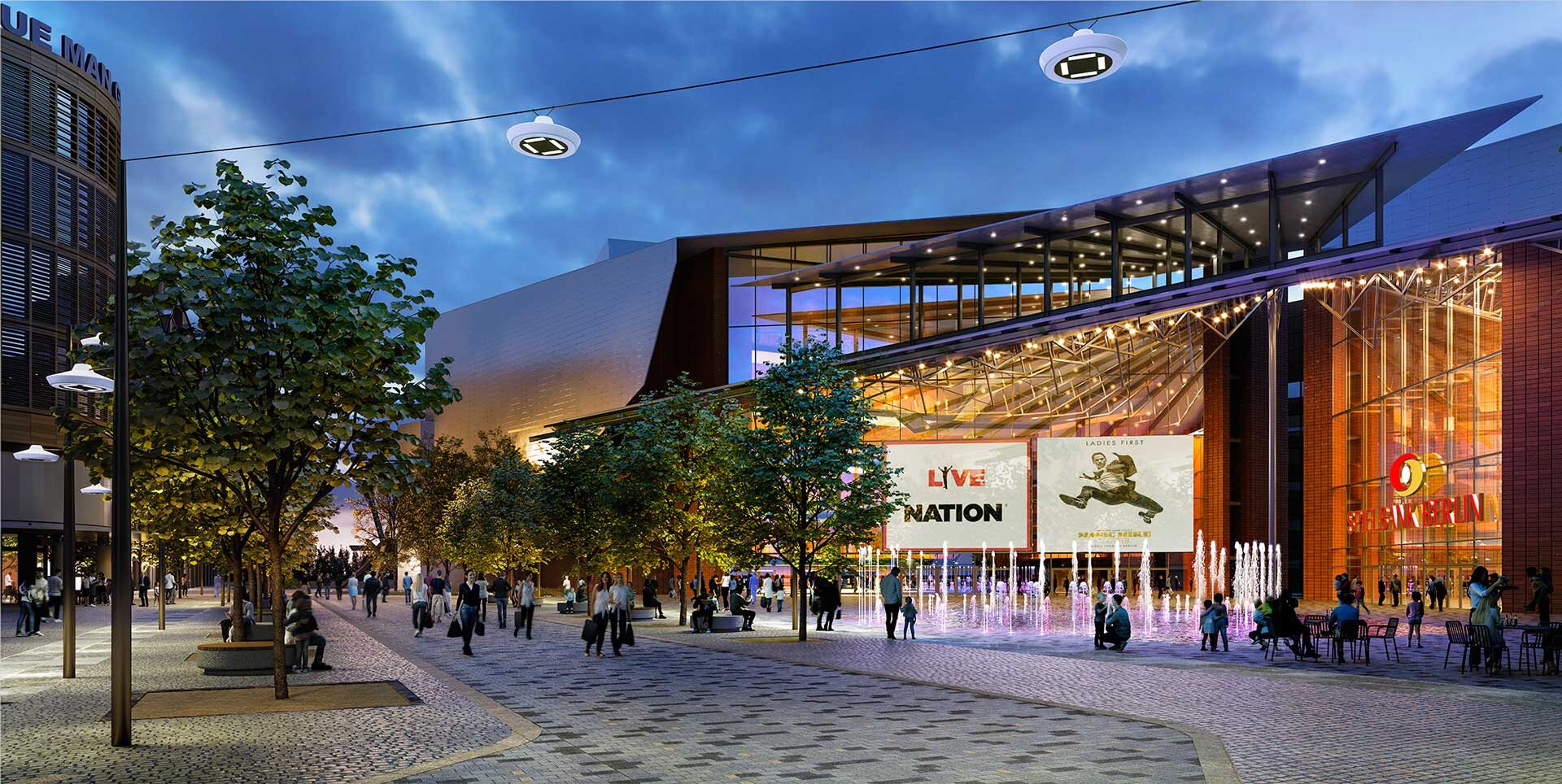
The aim was to assess the untapped potential of the quarter’s public spaces and pinpoint areas where improvements could be made. The planning area encompasses Alte Potsdamer Straße, Marlene-Dietrich-Platz, Eichhornstraße, segments of Linkstraße, and the side streets connecting to the Potsdamer Platz Arkaden shopping mall.
In the mid-1990s, following German reunification, the area around Potsdamer Platz was developed according to contemporary standards as a place to live, work, and shop. Today, the Potsdamer Platz Arkaden and other attractions draw large numbers of tourists. Yet by modern criteria, the area—still relatively inchoate—shows notable shortcomings in its architecture, landscaping, and urban-planning strategies.
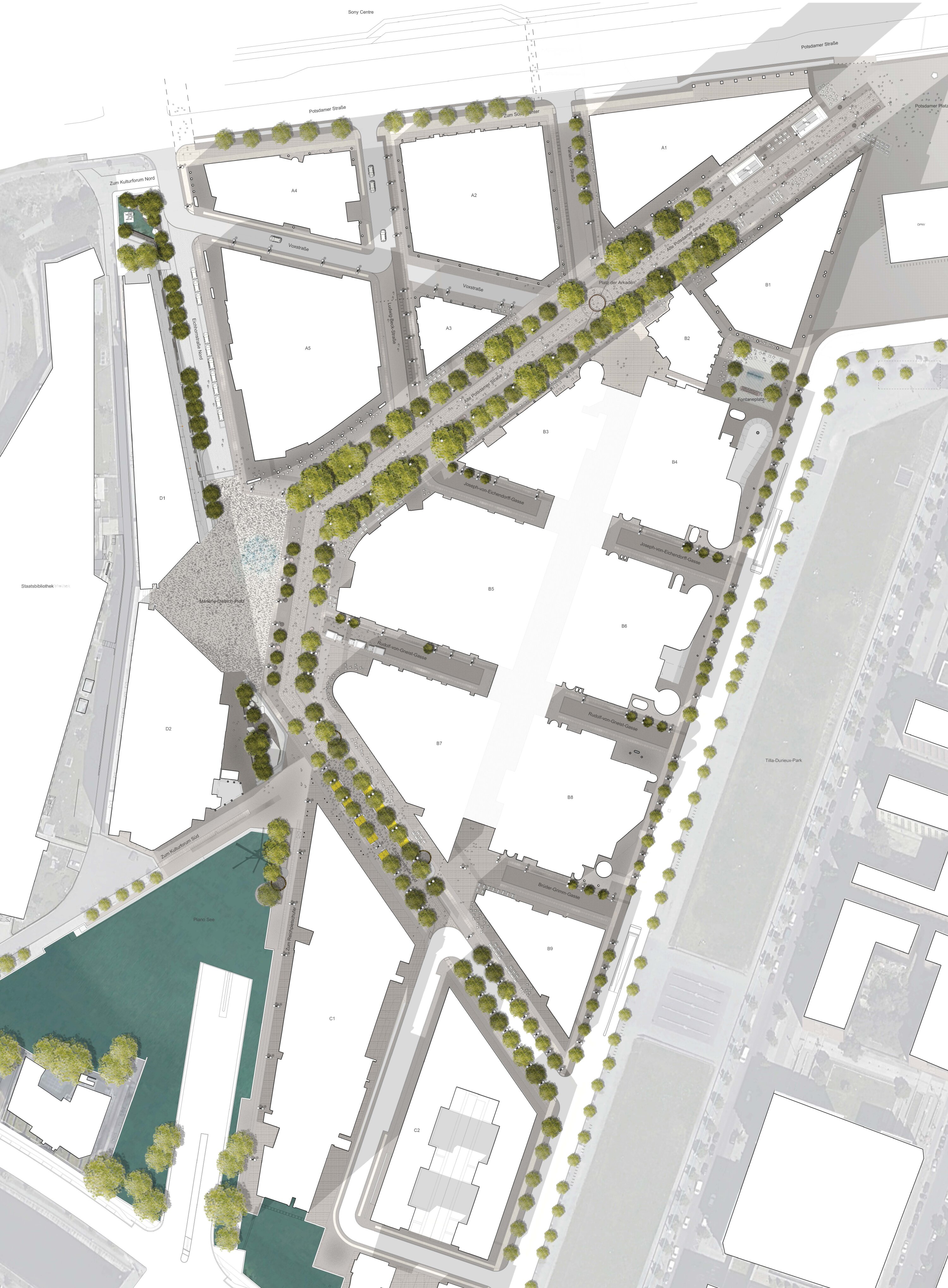
Site Plan
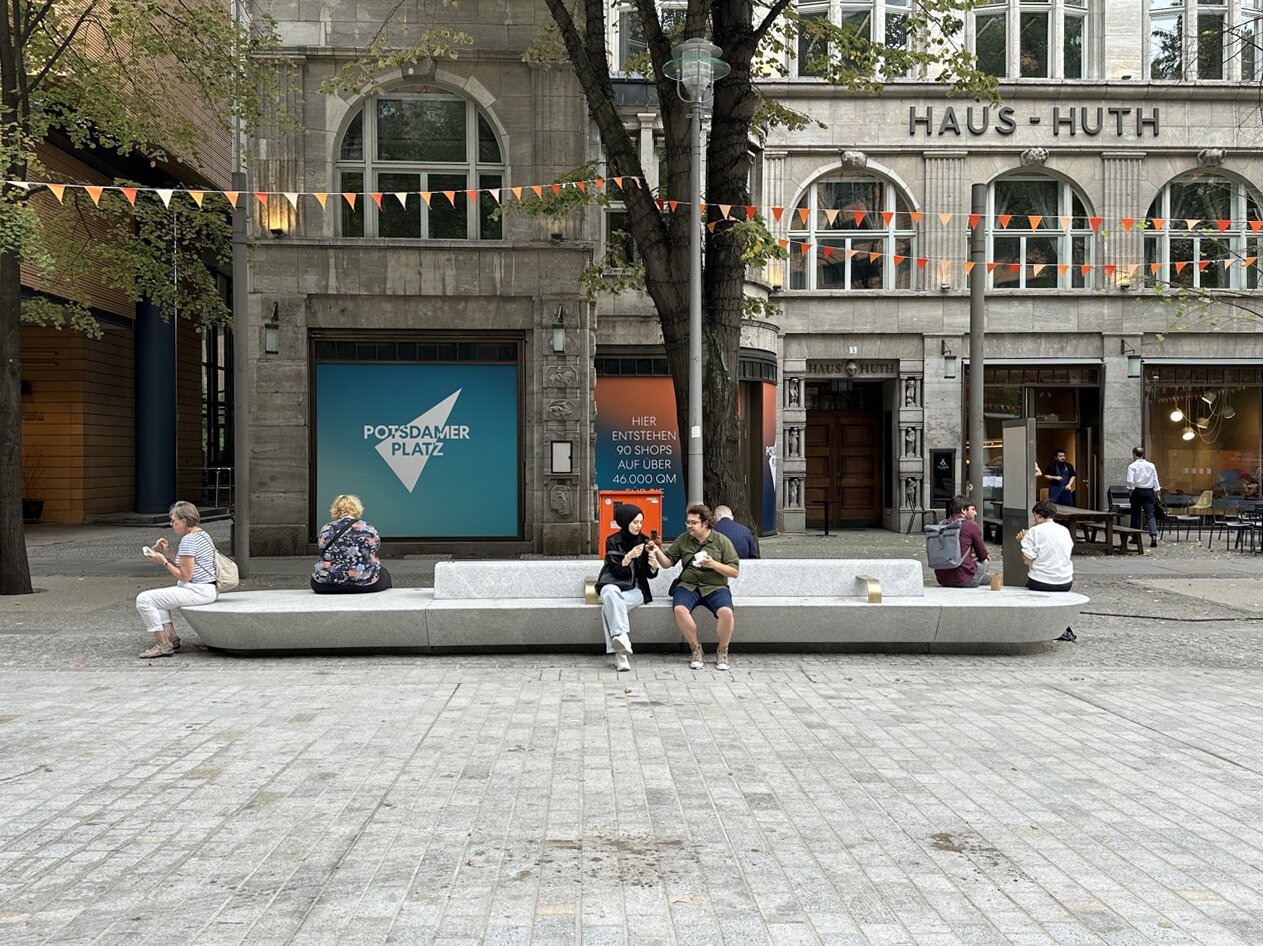
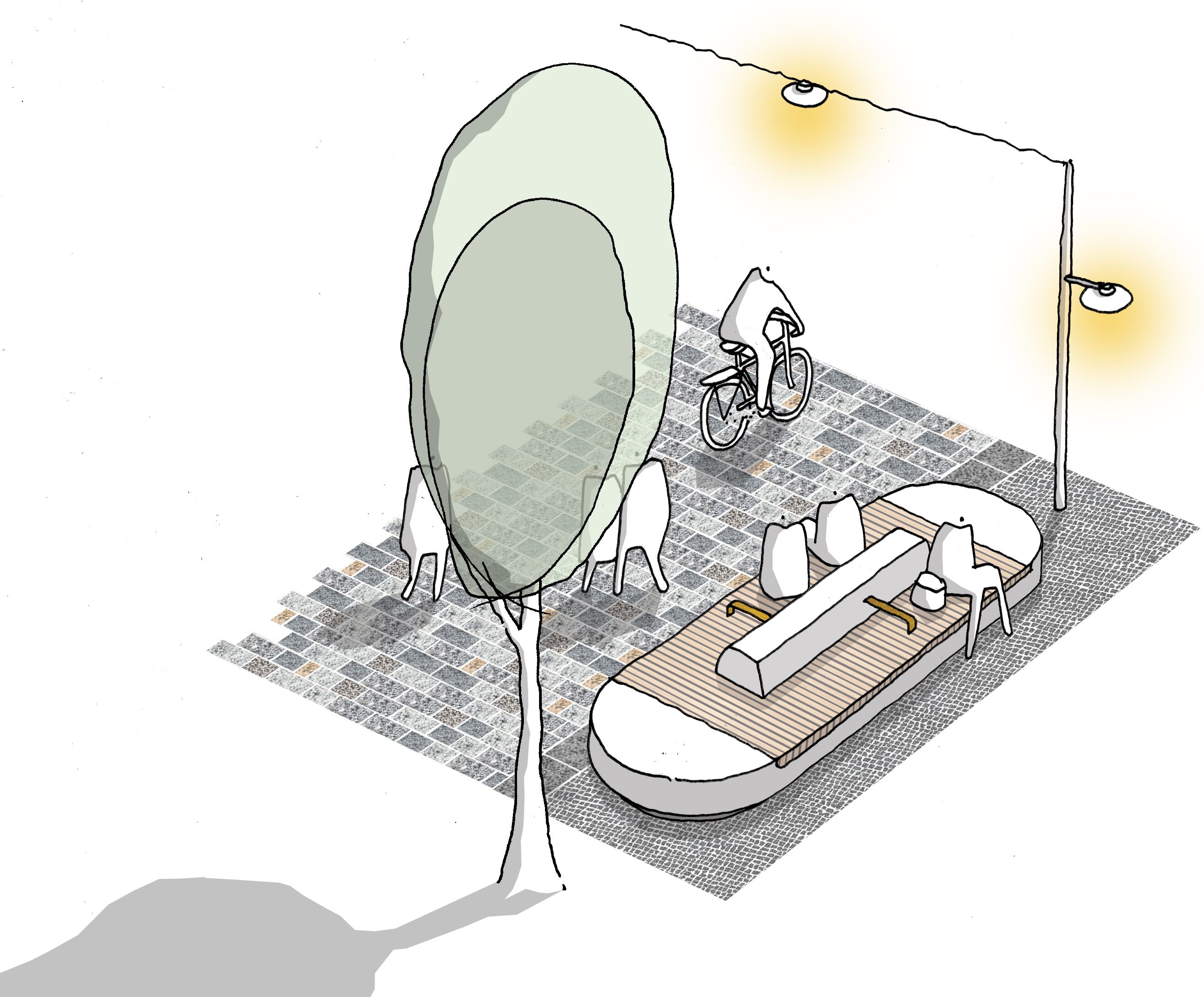
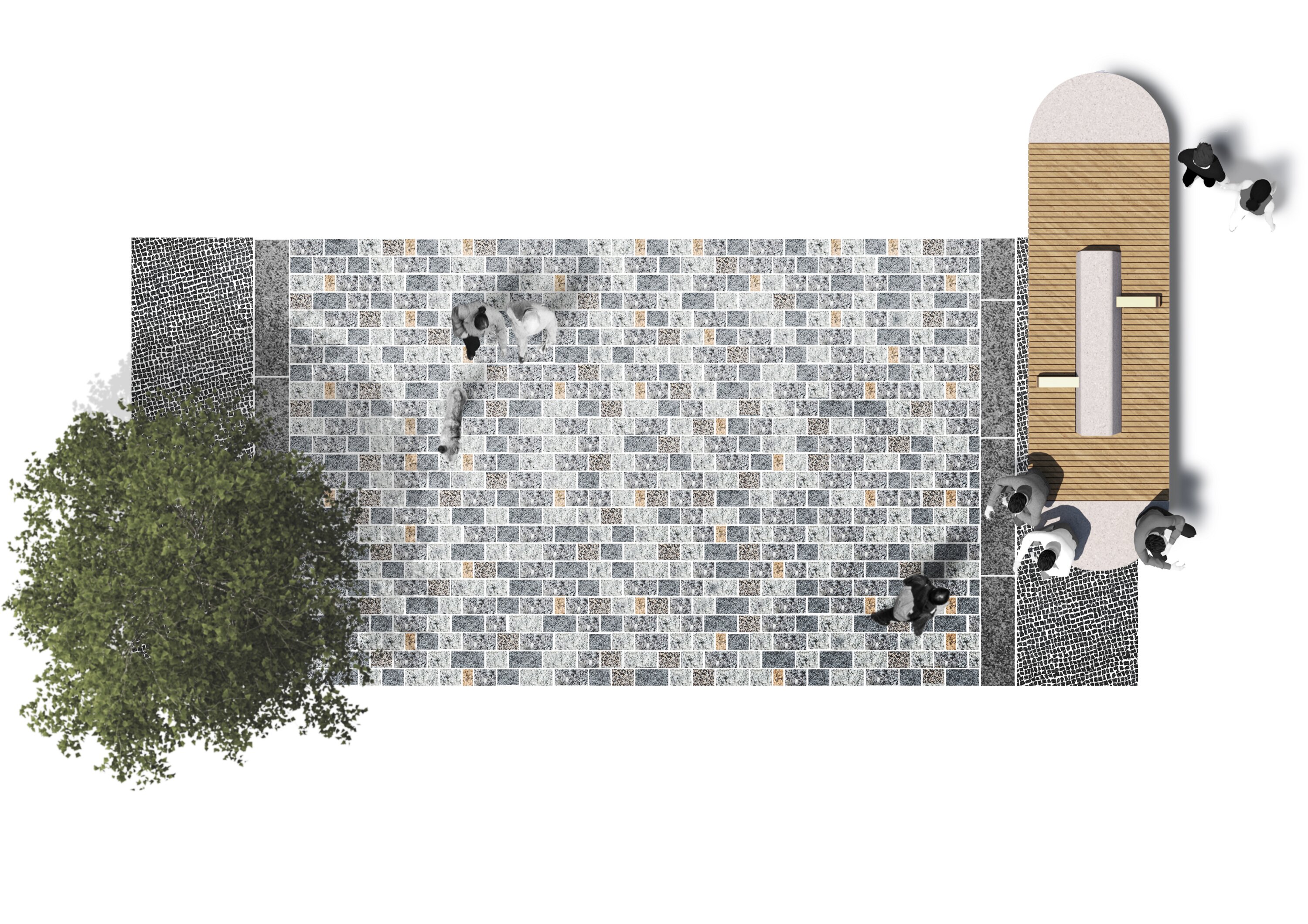
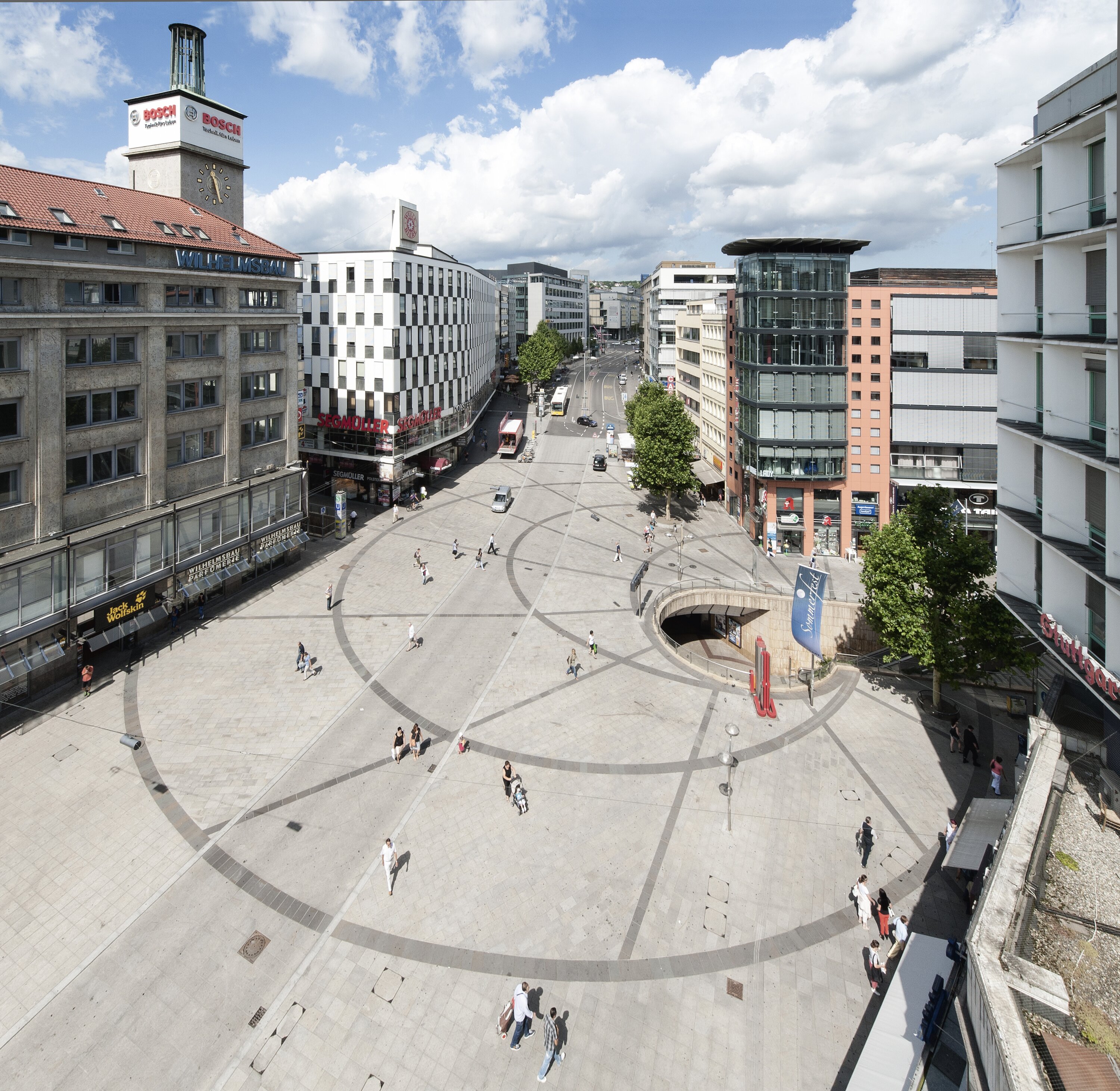
Preliminary studies revealed an urban environment shaped primarily by tourism. Residents and employees, by contrast, tend not to identify with the quarter and make limited use of its open spaces. As a result, instead of the lively public activity expected of a district of this kind, the area around Potsdamer Platz is dominated by stationary vehicular traffic—an outcome at odds with its intended urban character.
- Client
- Brookfield Property Partners L.P.
- Architects
- Behnisch Architekturbüro (general planer) with Schulze+Grassov, Bartenbach GmbH, Stefan Wallman Landschaftsarchitektur and Ramboll Studio Dreiseitl
- Address
Berlin
Germany- Gross Area
42.158 qm / 453.789 sq.ft
- Visualization
Schulze+Grassov
- Downloads
-
Download PDF
The quality of the public realm is negatively affected by lifeless facades at ground level, the constant mix of vehicular and pedestrian traffic along Alte Potsdamer Straße, the design of Marlene-Dietrich-Platz, and the dividing effect of Linkstraße. In addition, both the width of Alte Potsdamer Straße and its uninspired transition to Potsdamer Platz were identified as shortcomings.
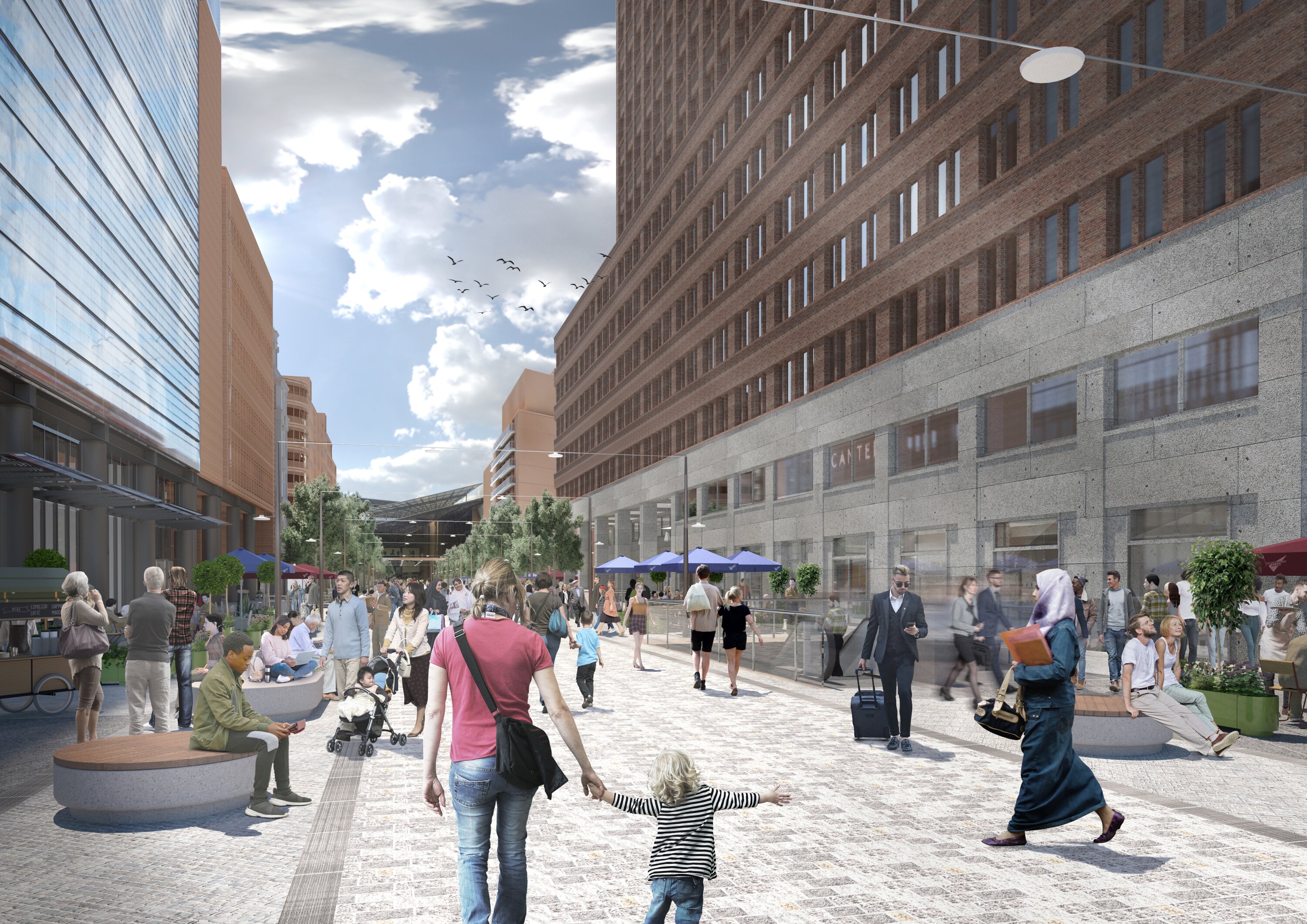
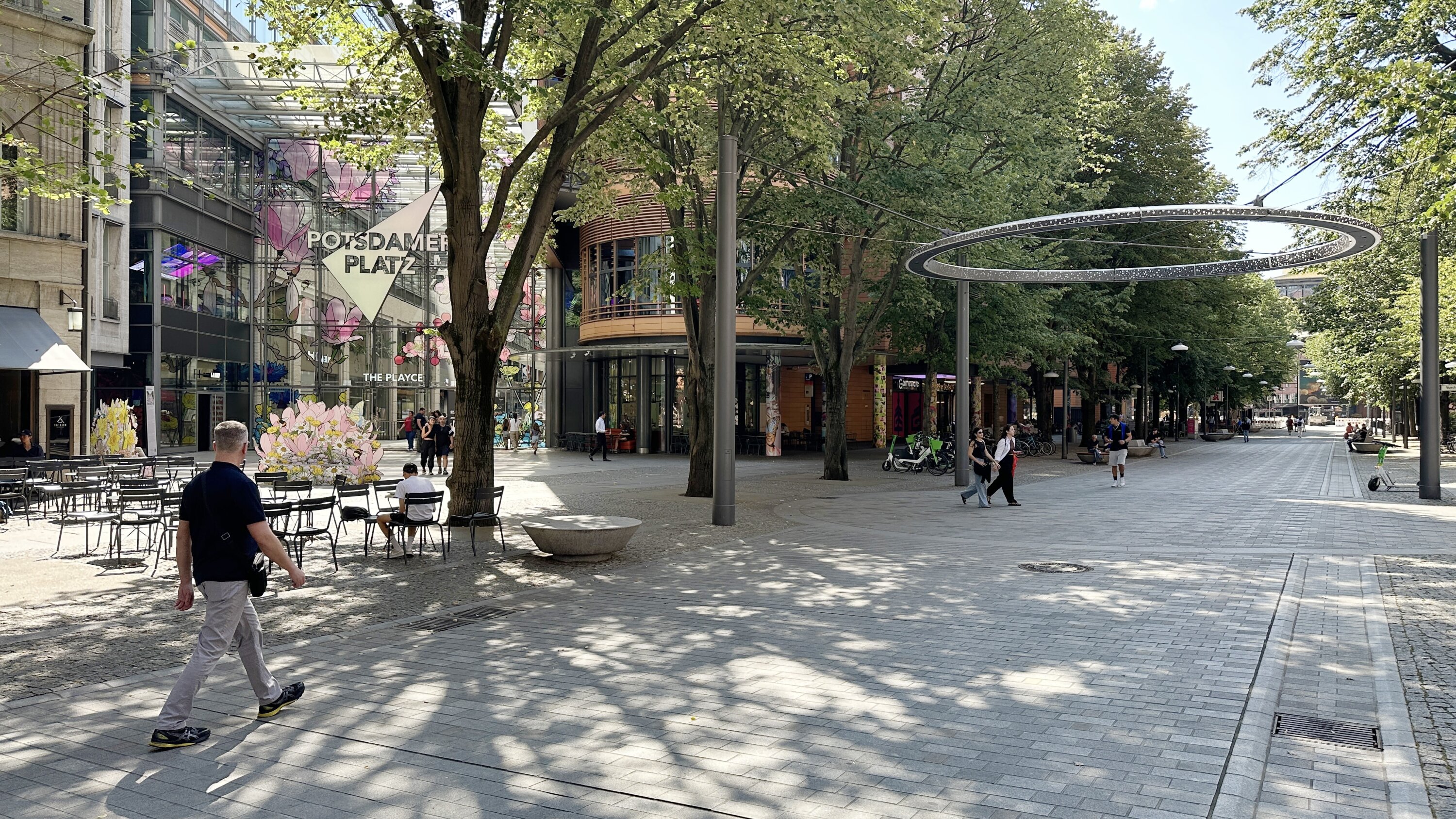
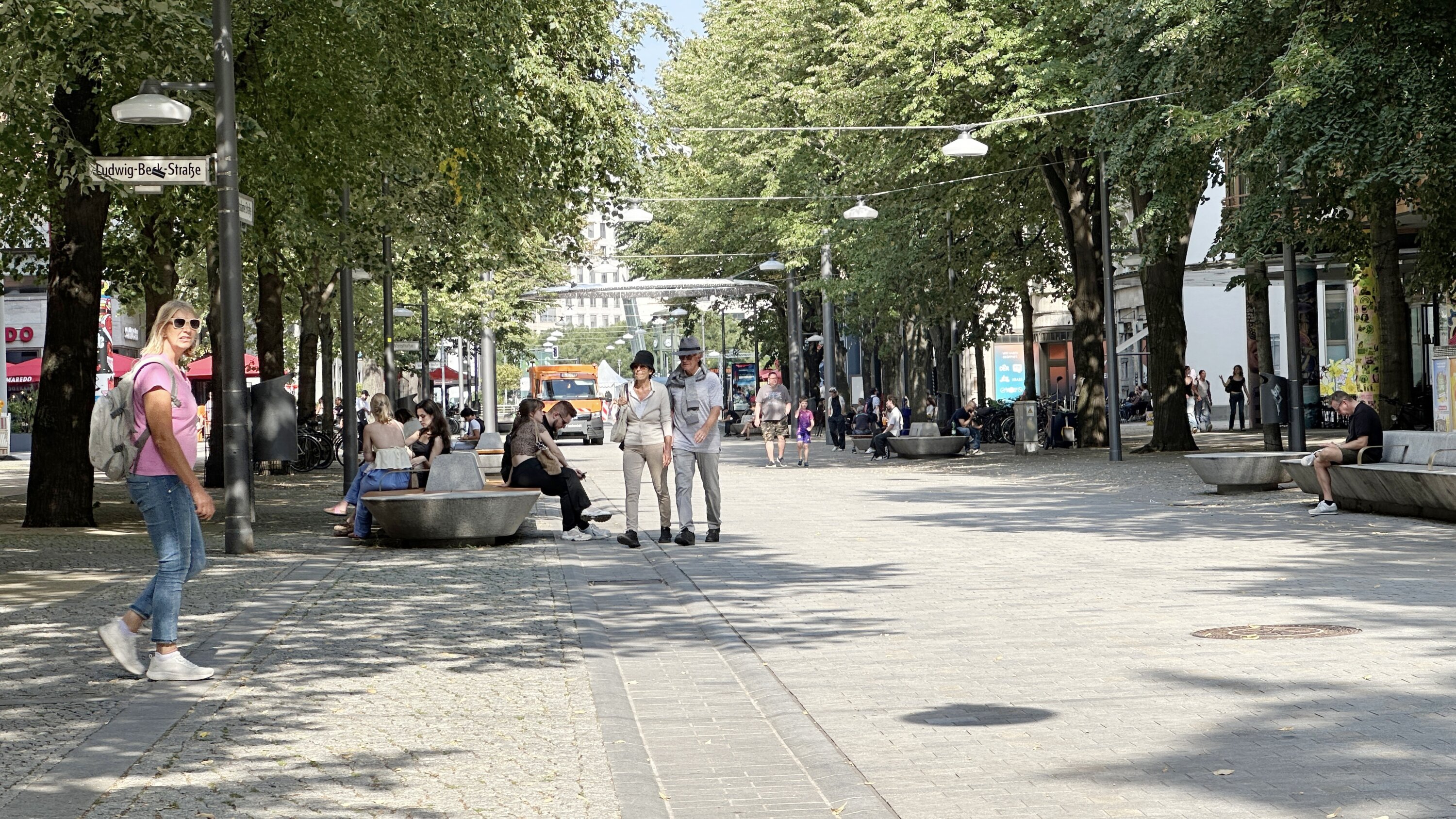
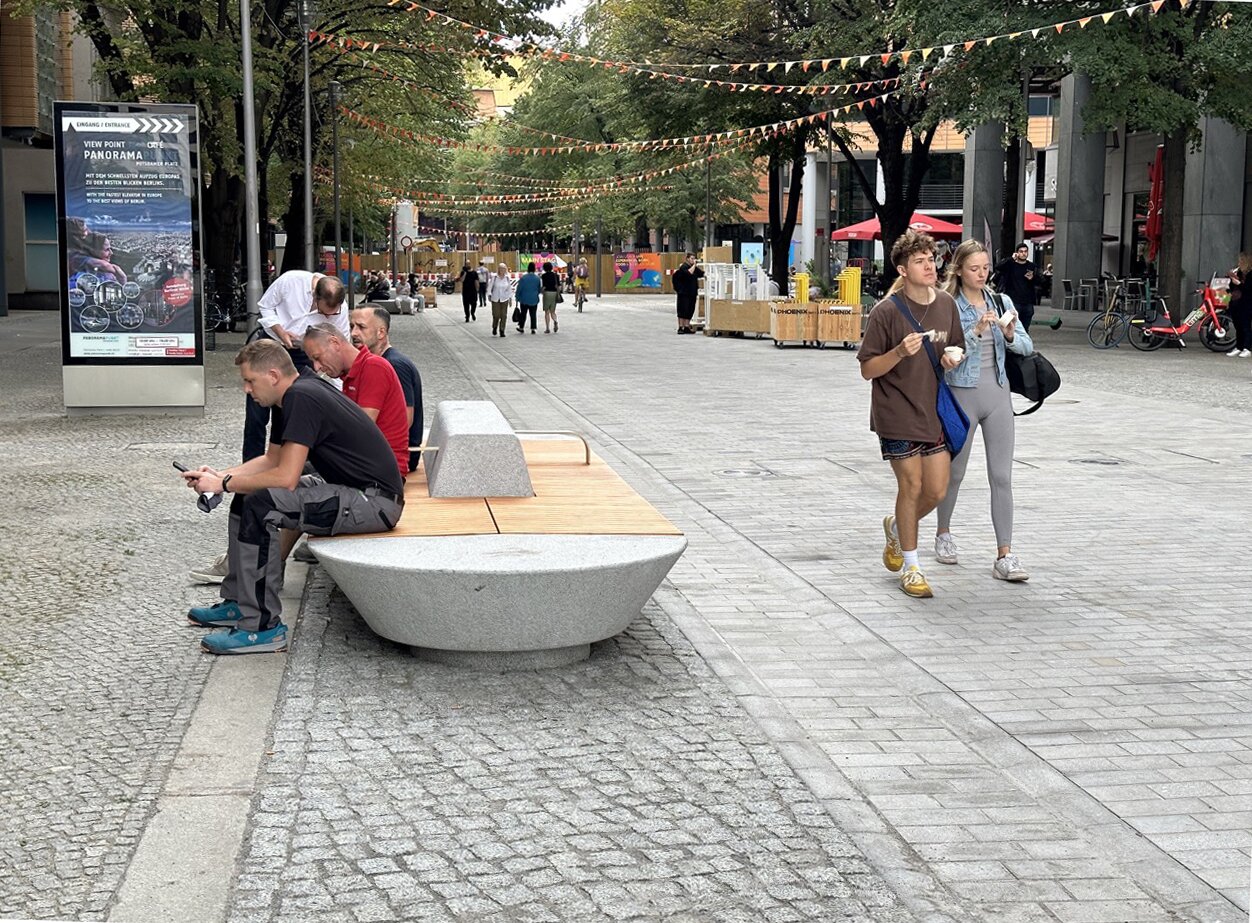
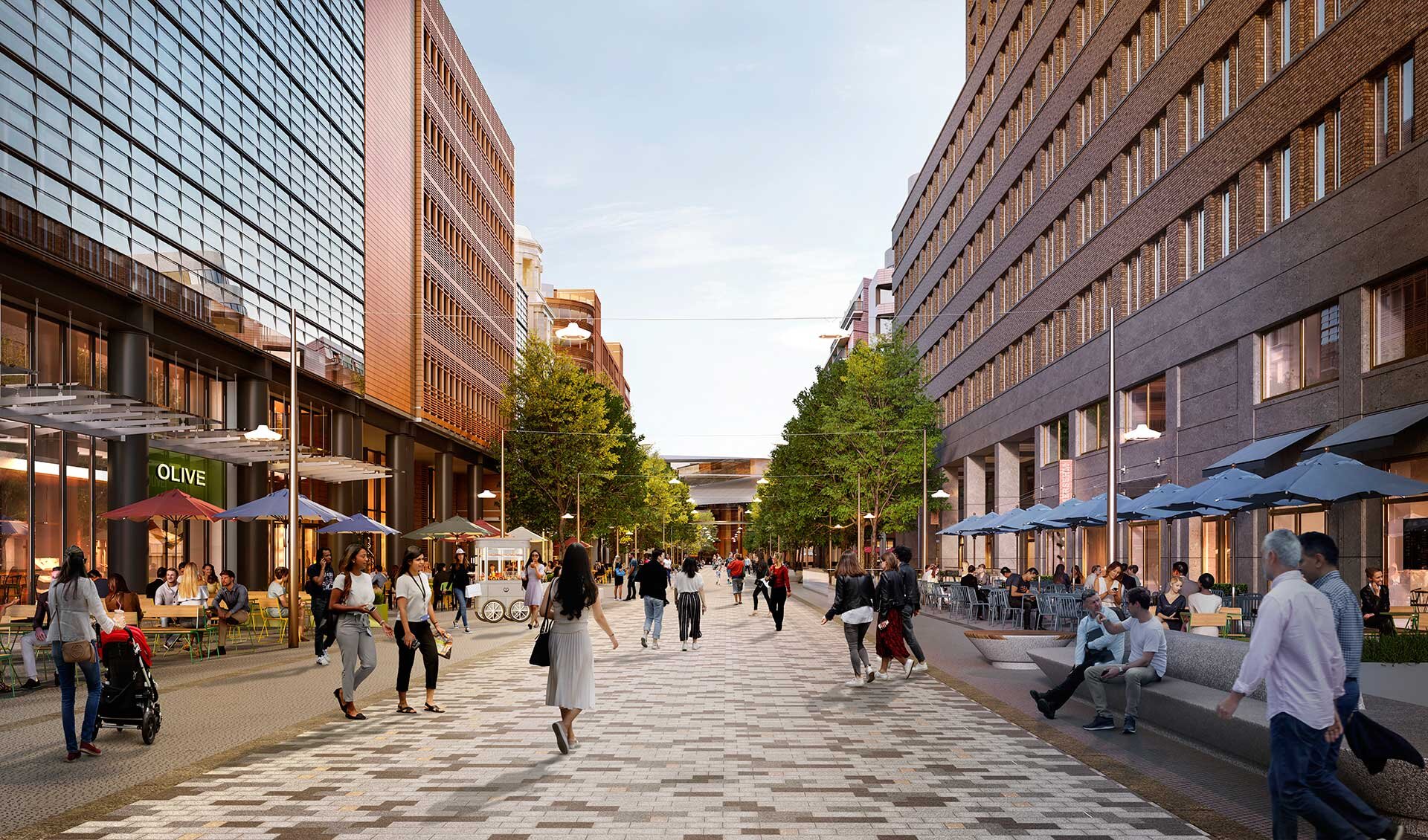
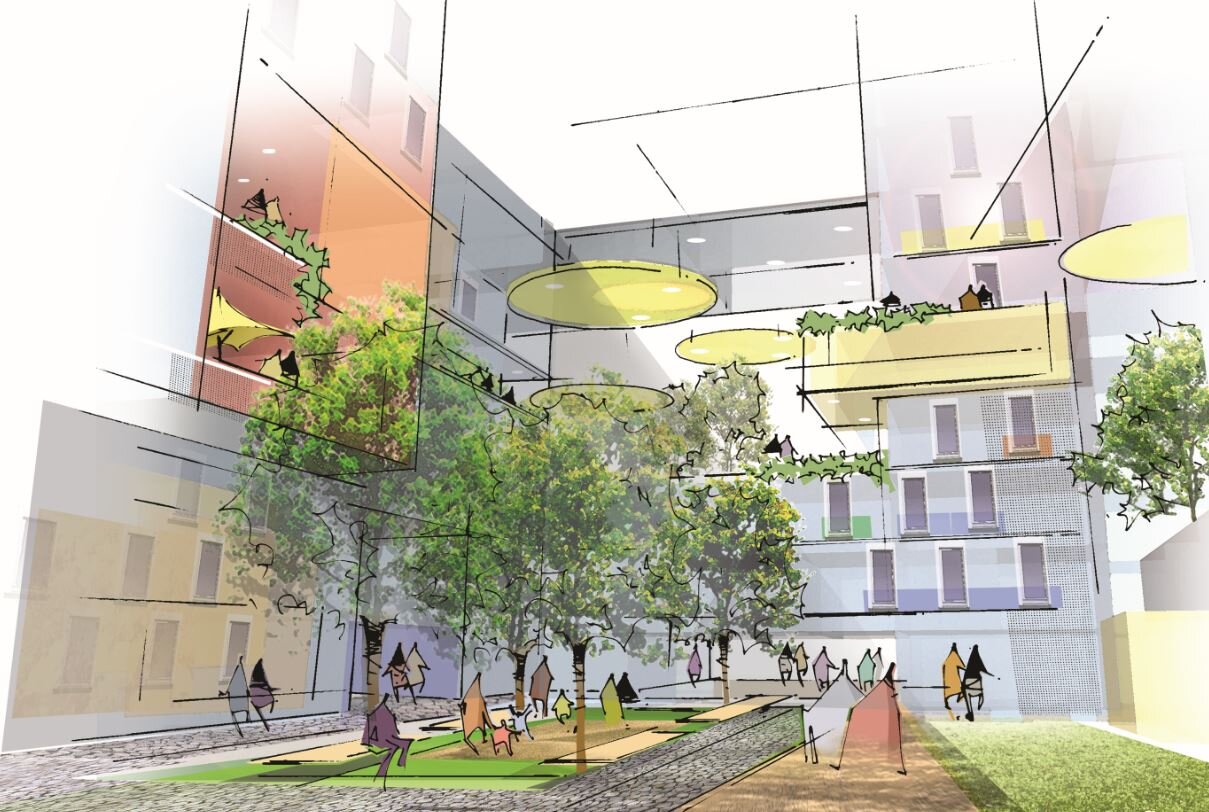
By redeveloping the area and enhancing the quality of its urban spaces, planners aim to revitalize the quarter and give it a unique identity. The main objective is to create an area that will better reflect the needs of its inhabitants, while prioritizing pedestrian traffic and strengthening existing neighborhoods. The plan envisions a forty-hectare network of interconnected public spaces featuring barrier-free streets and squares, traffic-free zones, and dedicated pedestrian areas. High-quality restaurants with prime outdoor seating, complemented by non-commercial spaces for sitting and relaxing, will offer appealing meeting places for residents and workers while also attracting visitors. The result will be a unique destination and a vibrant new neighborhood that actively contributes to the life of the city and strengthens its public profile.