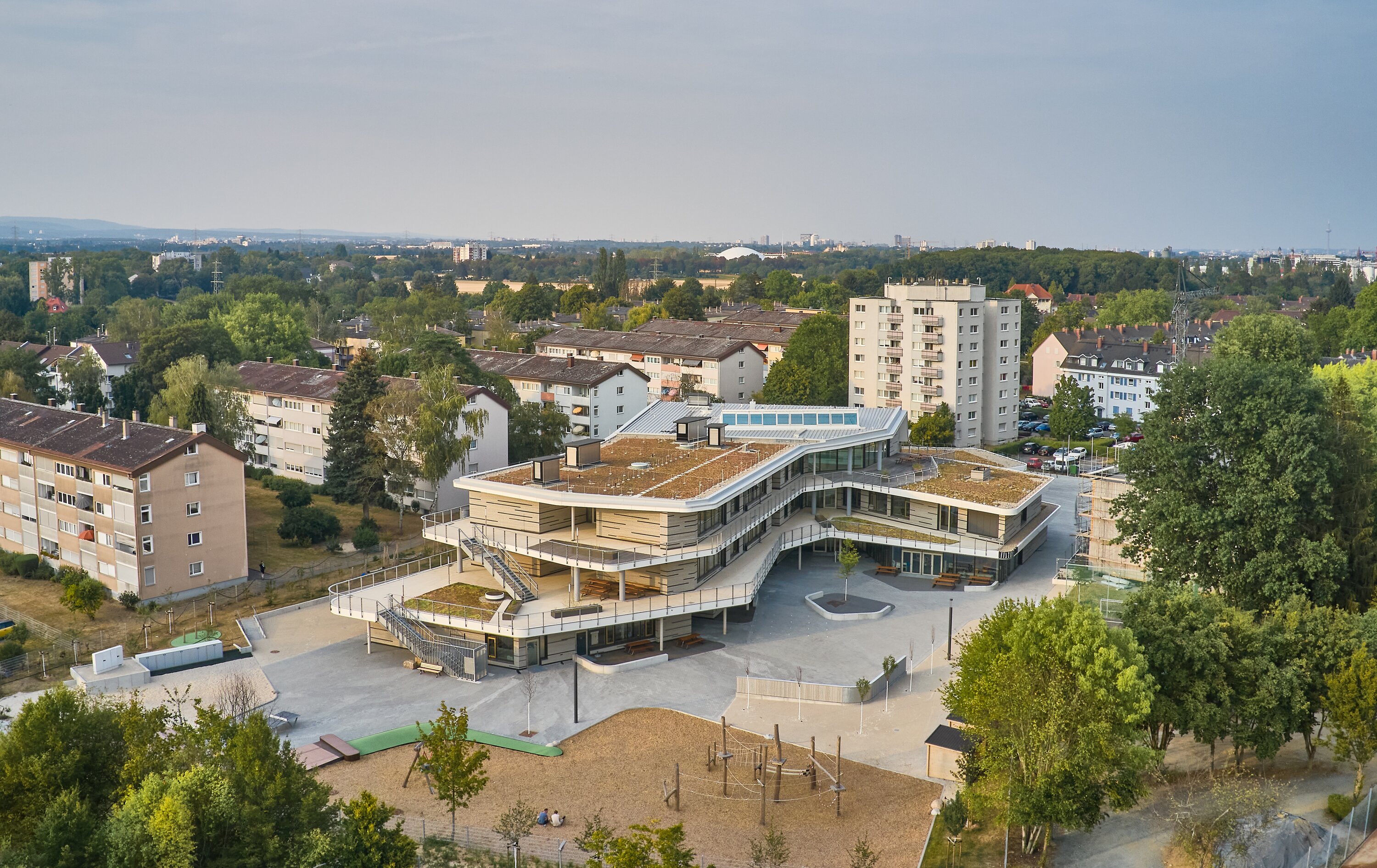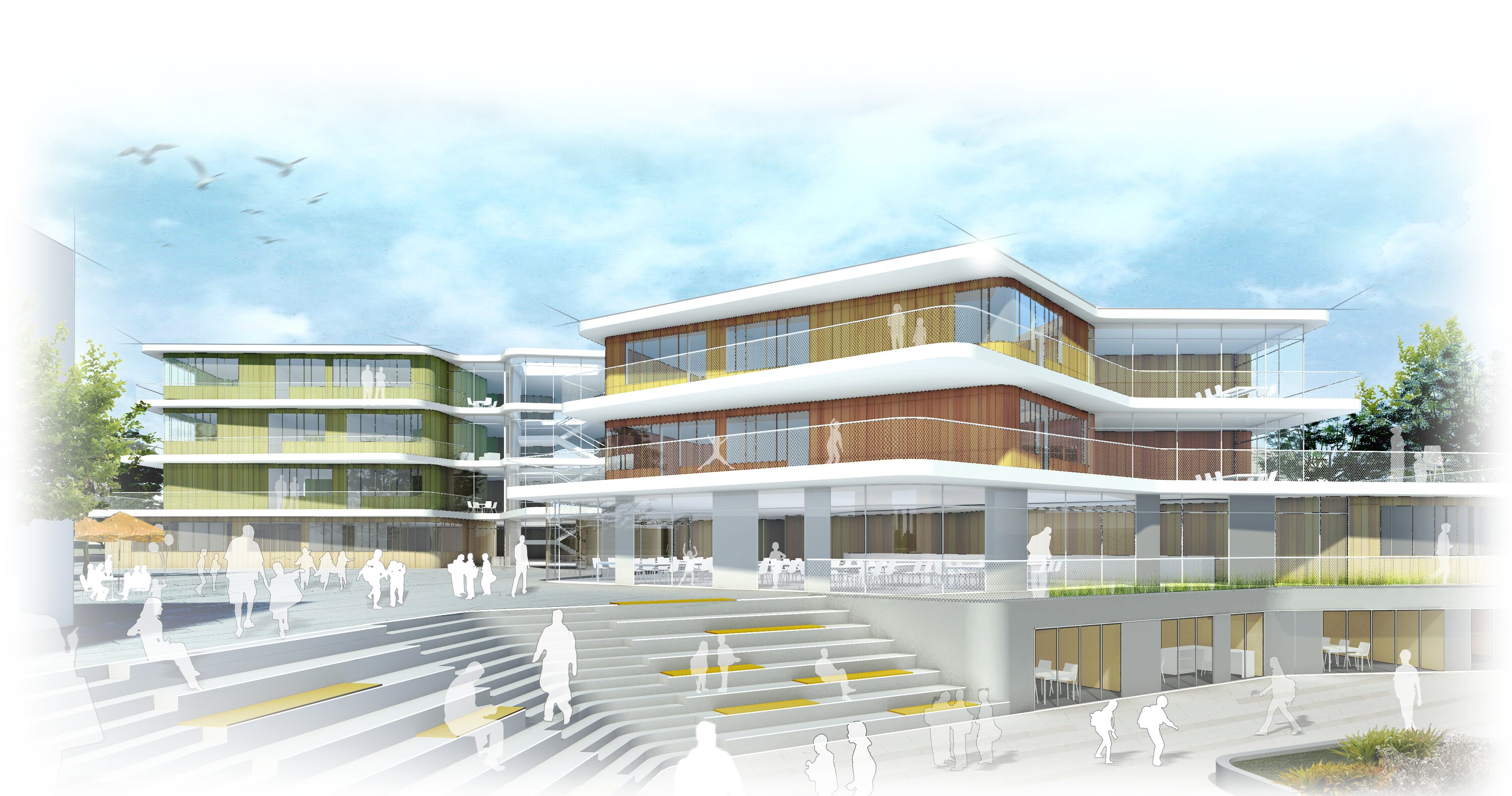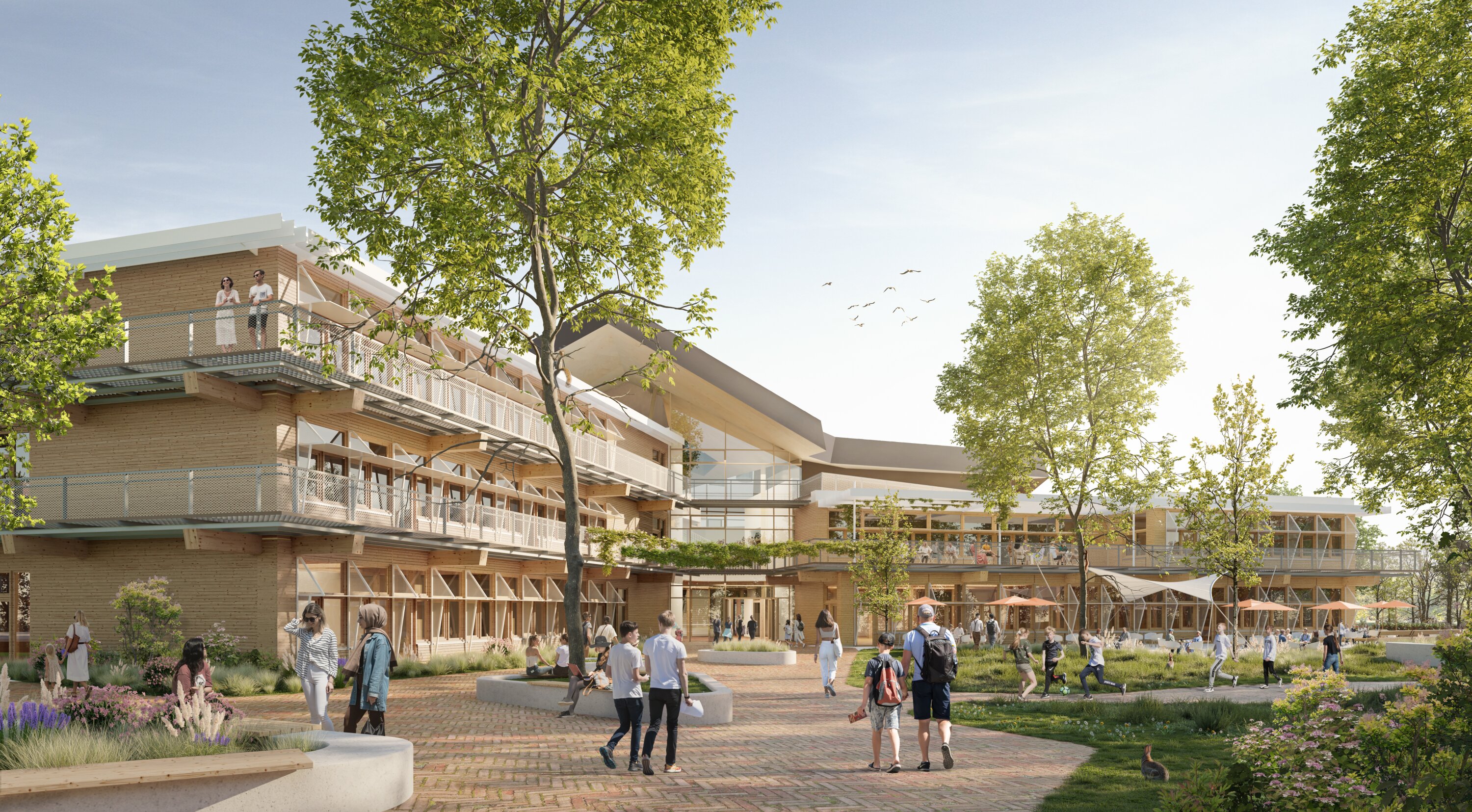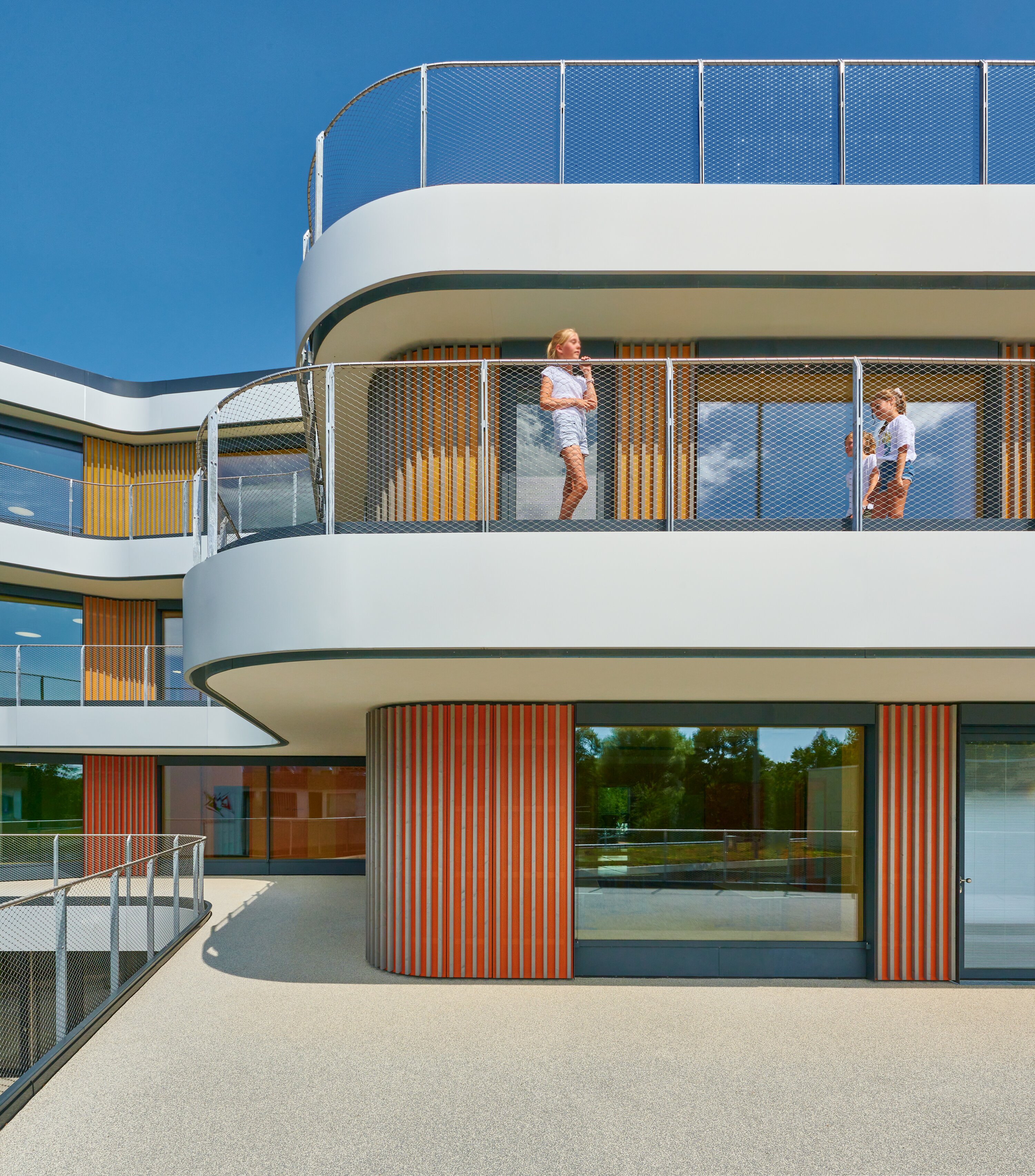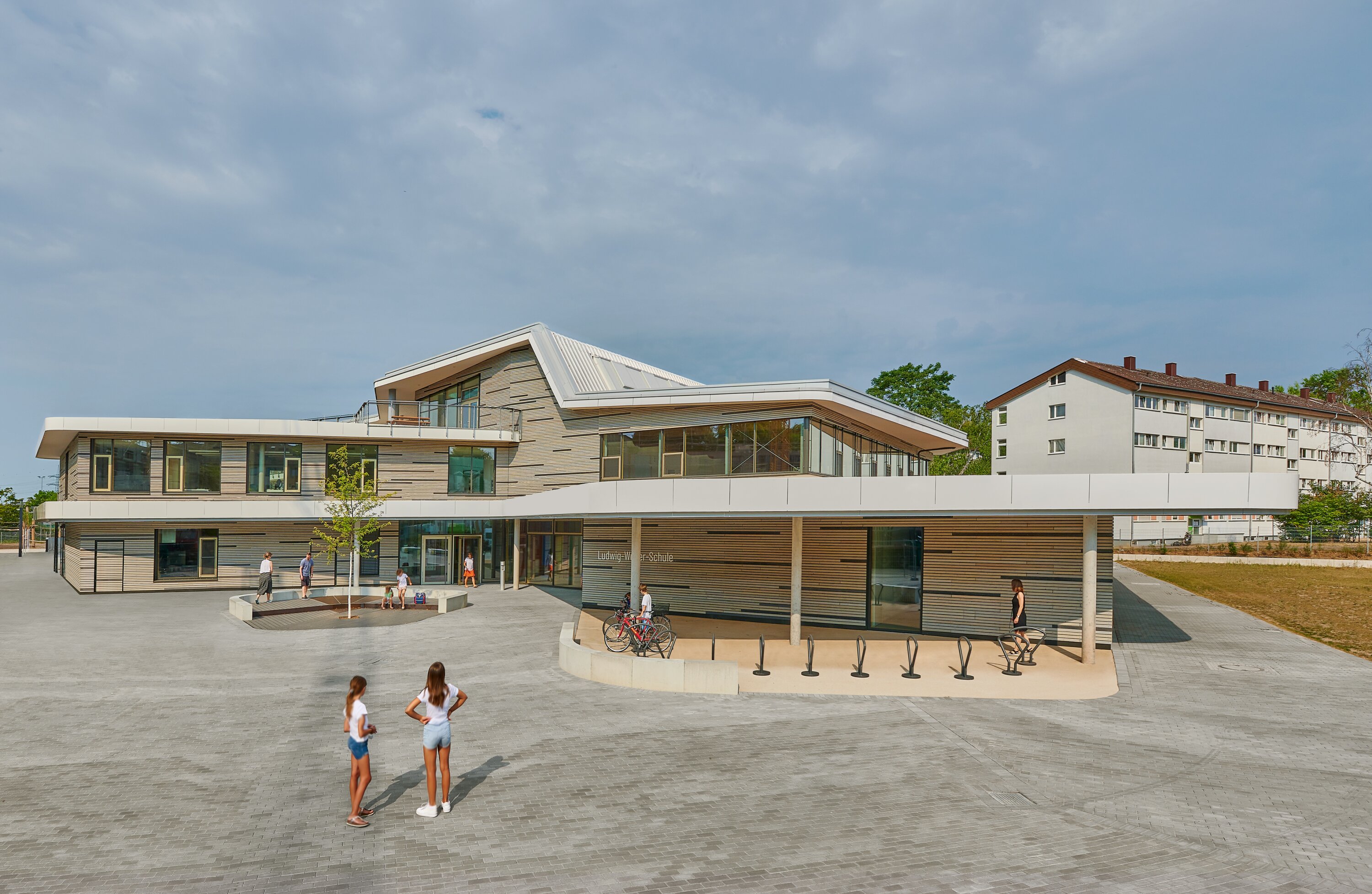

In Frankfurt’s multicultural Sindlingen district, we envisioned a building that promotes inclusiveness, diversity, and integration while acting as a focal point for the neighborhood. We designed the two-class elementary school, its cafeteria, and facilities for a full-day program in accordance with a more sophisticated pedagogic concept marked by a shift from a teacher-centered to a learner-centered approach. The new three-story building blends effortlessly into its context yet retains a strong identity that enters into a dialogue with its surroundings. Its organic form and staggered terraces contrasts with the rigid geometry of the Ferdinand-Hofmann-Siedlung’s residential buildings, creating an inviting atmosphere. Carefully recessed floors moderate the scale, while the timber-clad facade, with its subtle light tones and irregular patterning, lends the building a warm and cheerful character.
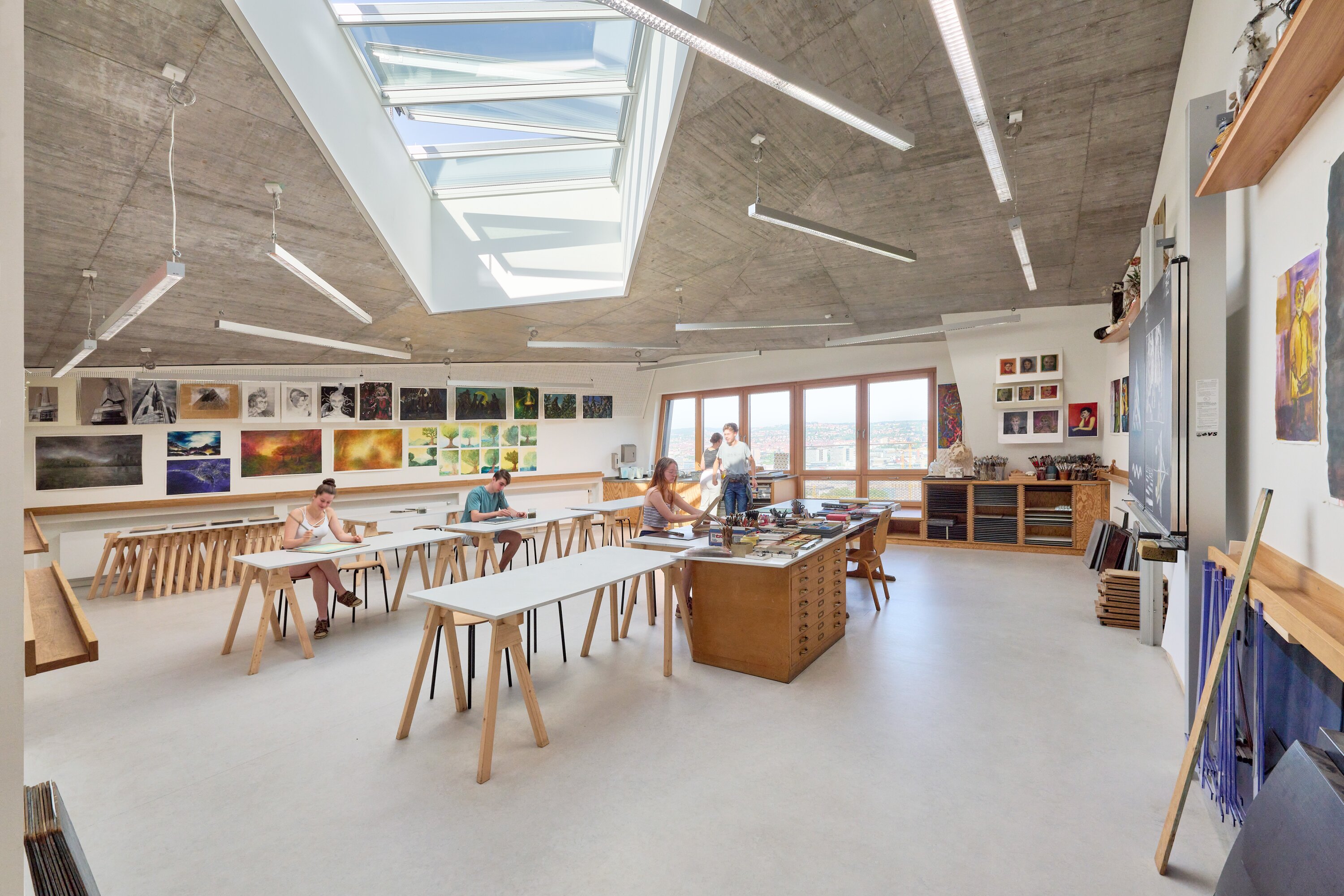
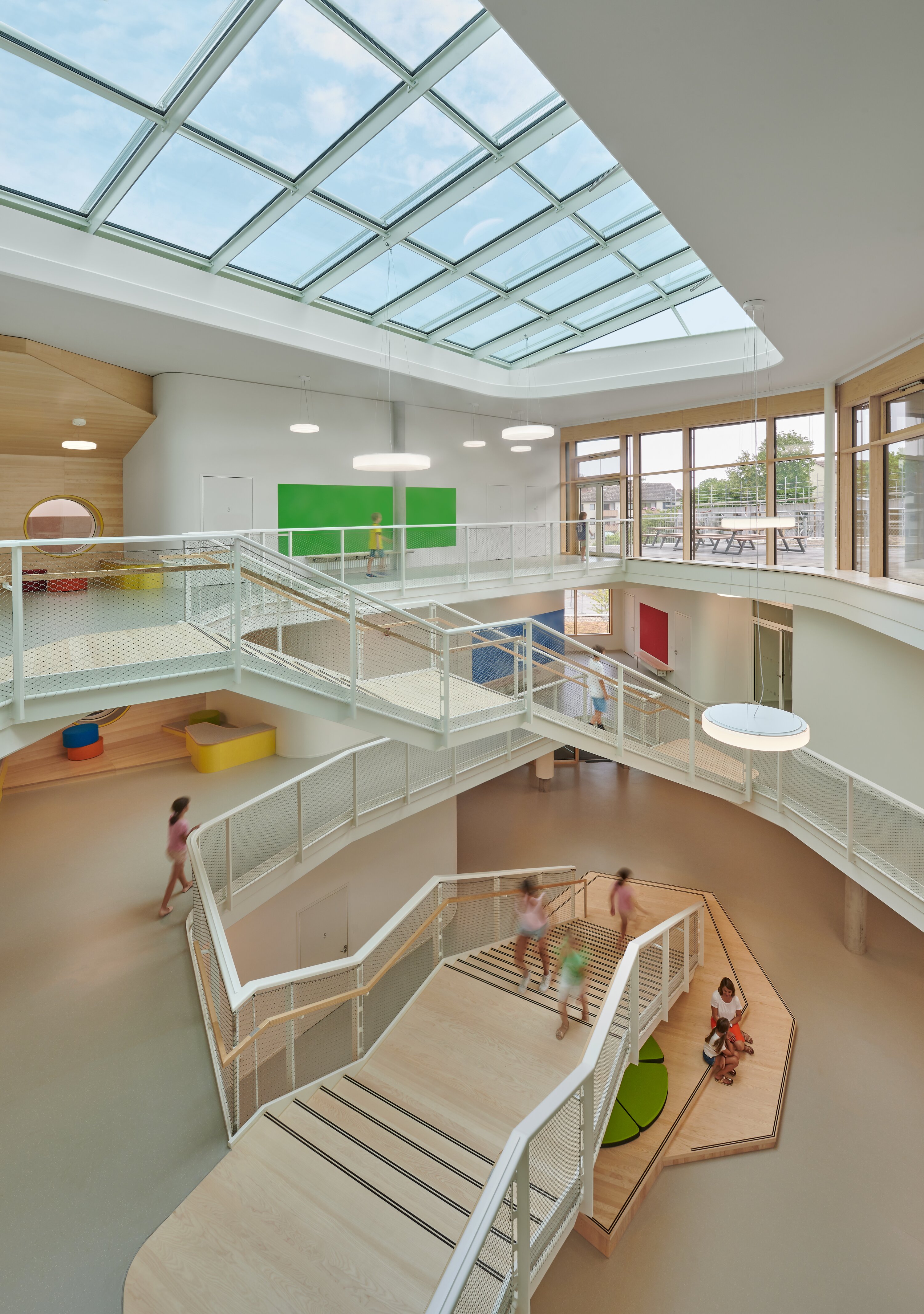
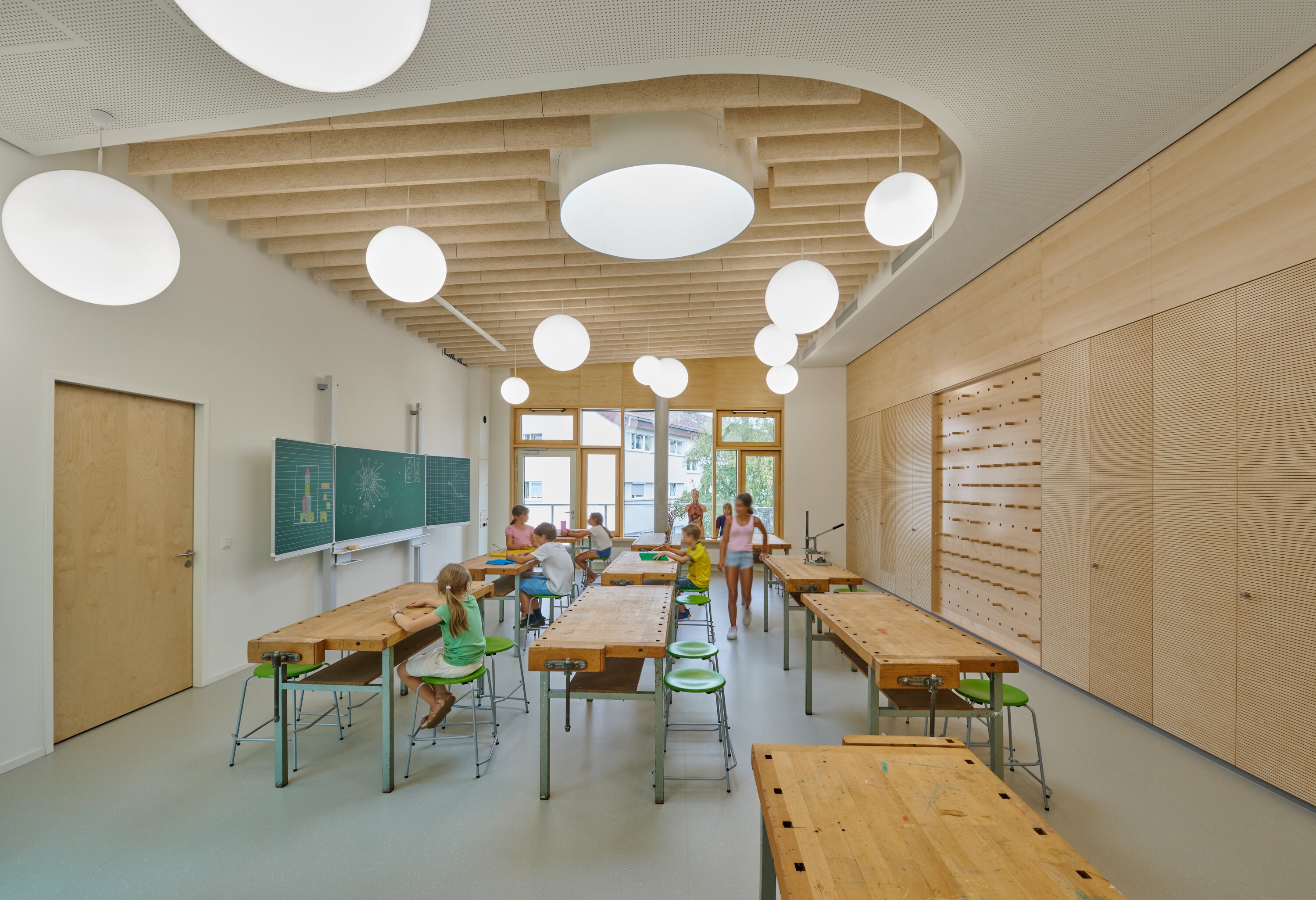
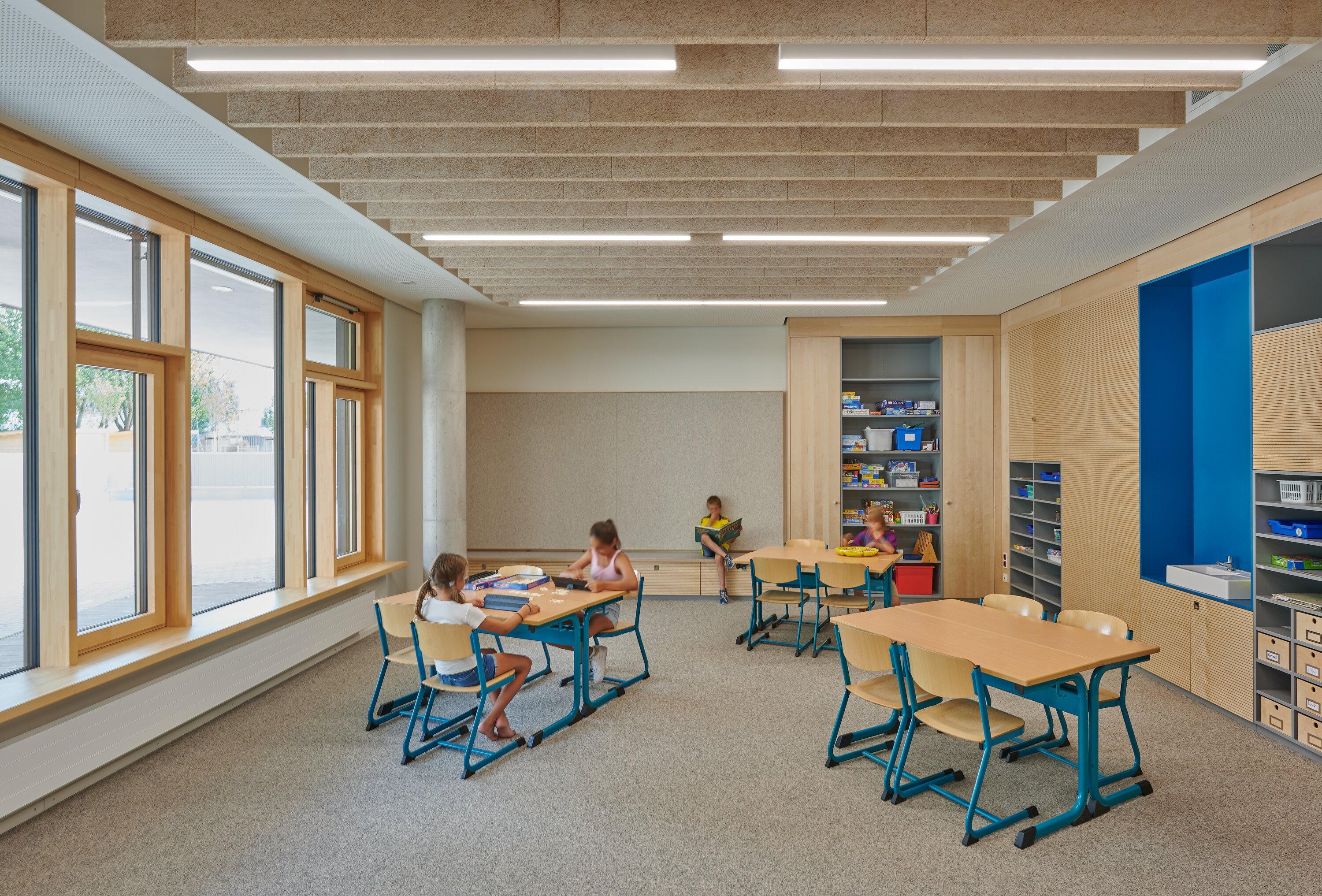
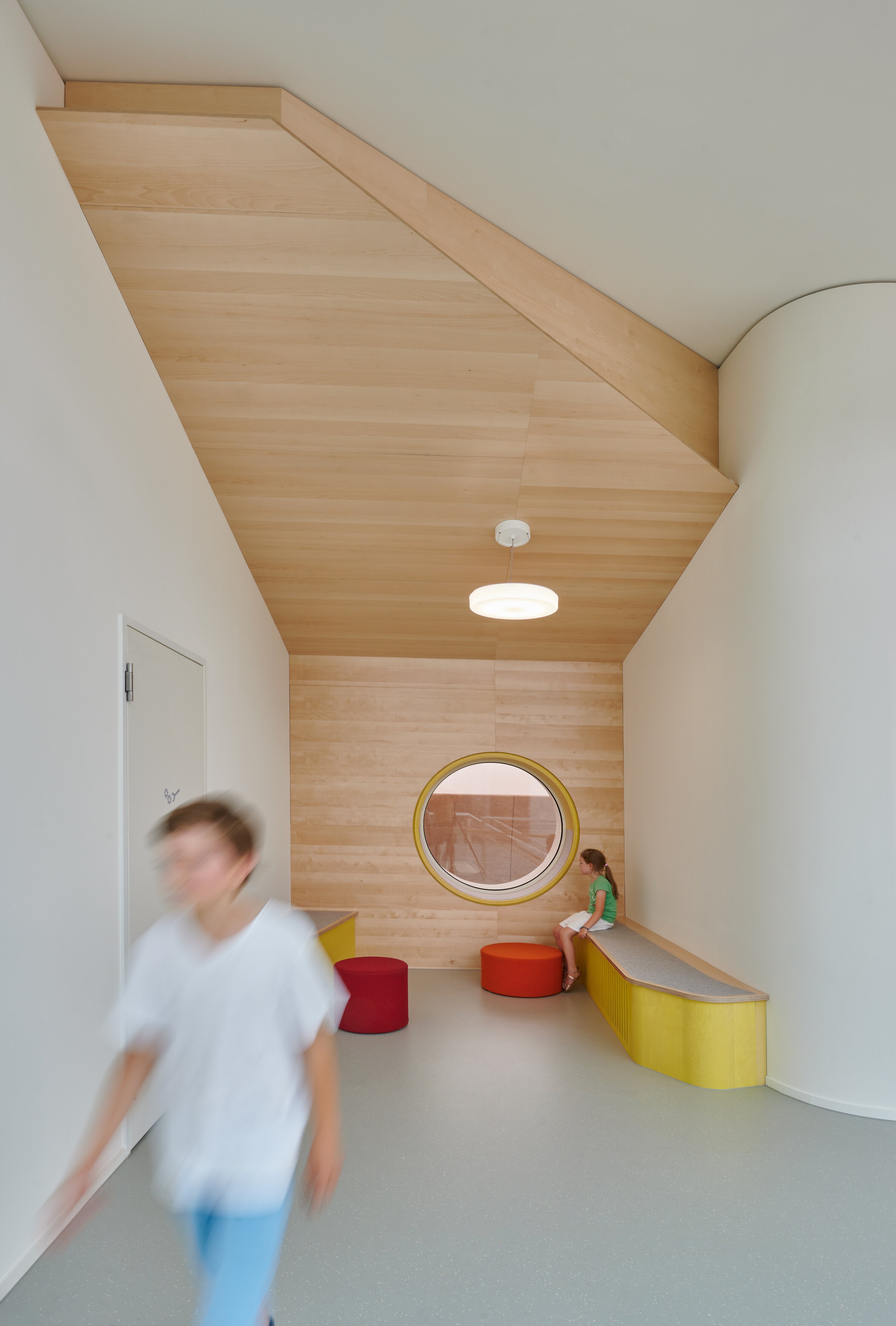
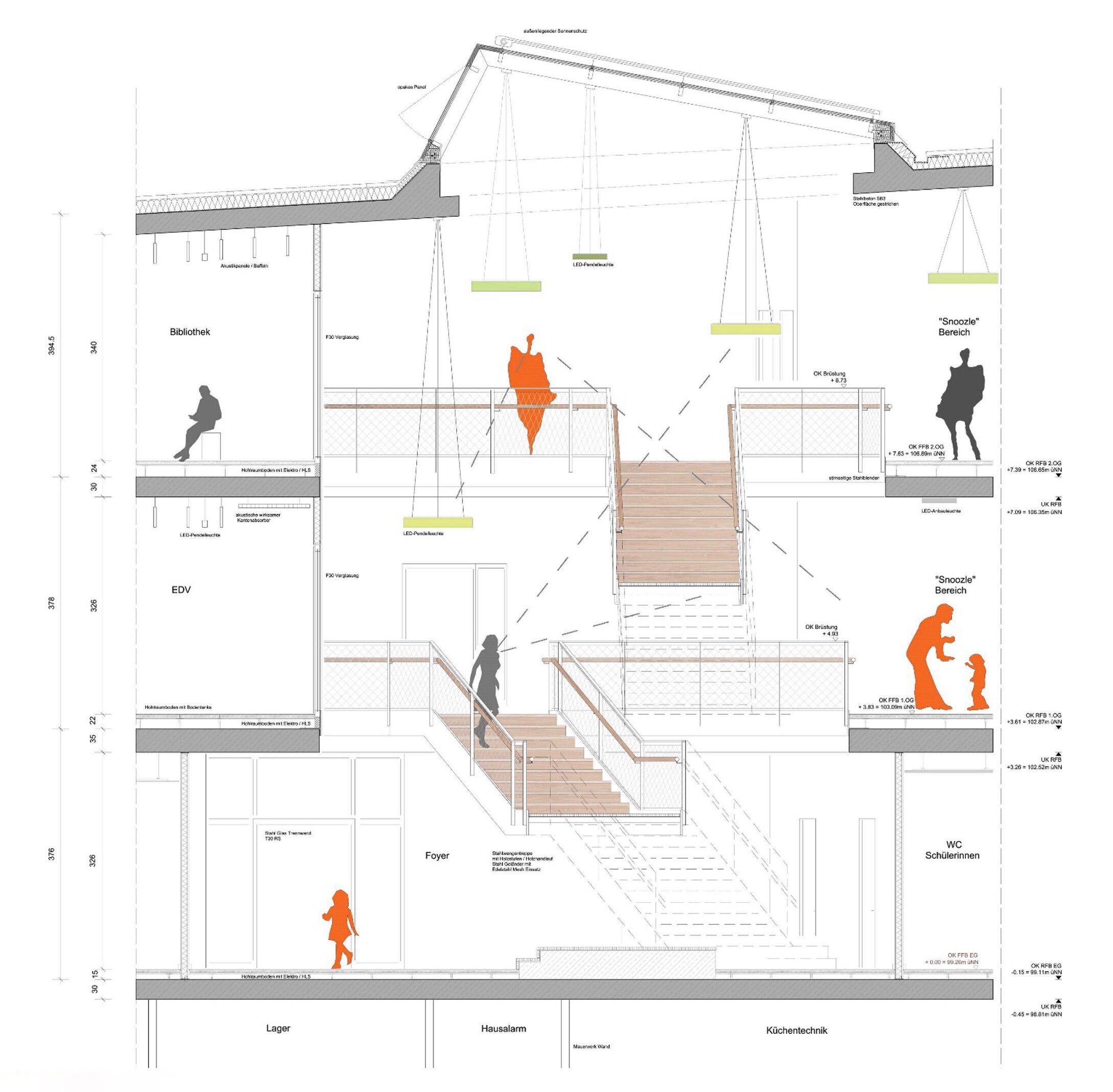
Conceived as a permeable spatial continuum organized around a central atrium, the building is animated by well-lit agorae—gathering places where circulation areas expand—while intimate recesses with inviting seating create a playful tone and offer students spaces to meet and talk. These areas transition into open hallways that extend the sense of space. Classrooms include custom wood-composite furniture and natural-toned flooring in a textile material, while colorful cloakrooms with stepped seating and lockers—also used for teaching—give each class its own character. A shared room connects every two classrooms.
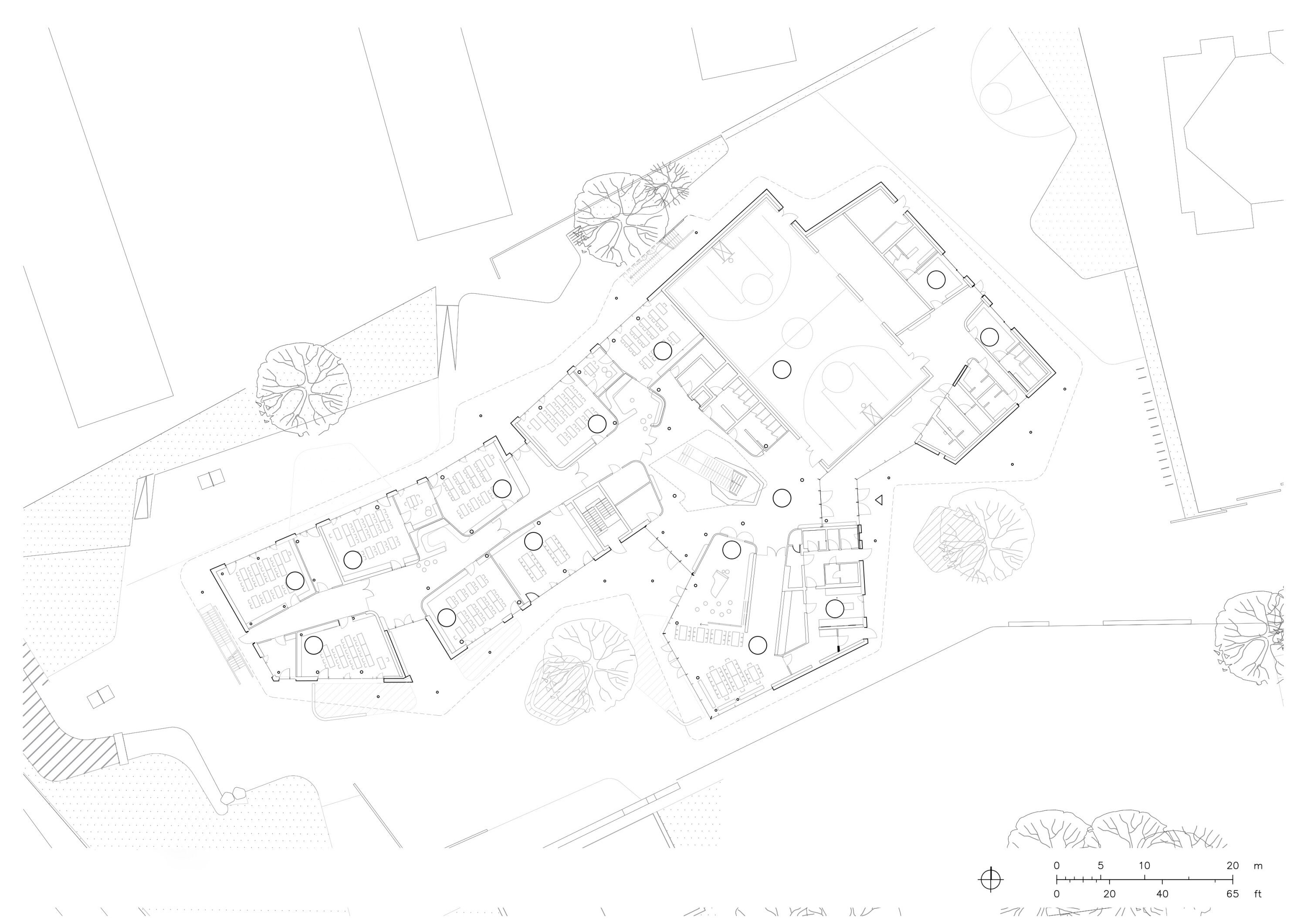
Level 1
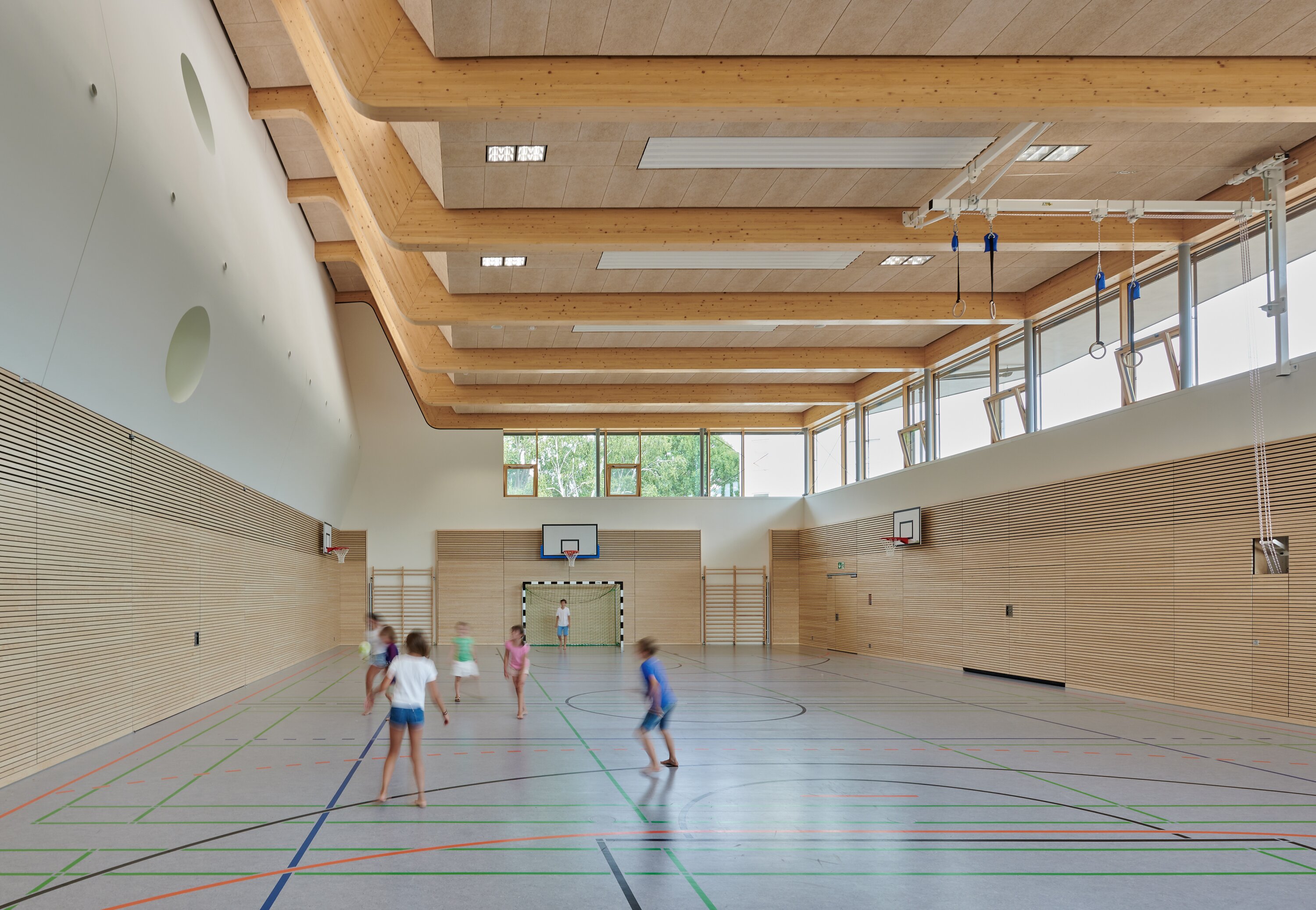
Surrounded by a large schoolyard conceived as an enclosed space with exercise areas, gardens, and quiet study zones, the building connects classrooms directly to the outdoors, while upper levels open onto balconies. “Green classrooms” with tables and benches enable outdoor learning. A gymnasium, integrated into the main building, features a distinctive roof formed by contoured beams. The design creates a learning environment for a multicultural student body. It offers diverse spatial experiences and an atmosphere that benefits students, teachers, and parents alike—its influence extending well beyond the school day.
- Client
- Stadt Frankfurt, Amt für Bau und Immobilien
- Architects
- Behnisch Architekturbüro
- Address
Paul-Kirchhof-Platz 13
65931 Frankfurt am Main
Germany- Gross Area
7.357 qm / 79,191 sq.ft
- Gross Volume
24.892 cbm / 879,061 cu.ft
- Competition
2015, 1st prize
- Photography
David Matthiessen
- Awards
2021 Tag der Architektur 2021, selected
- Downloads
-
Download PDF
Energy Section