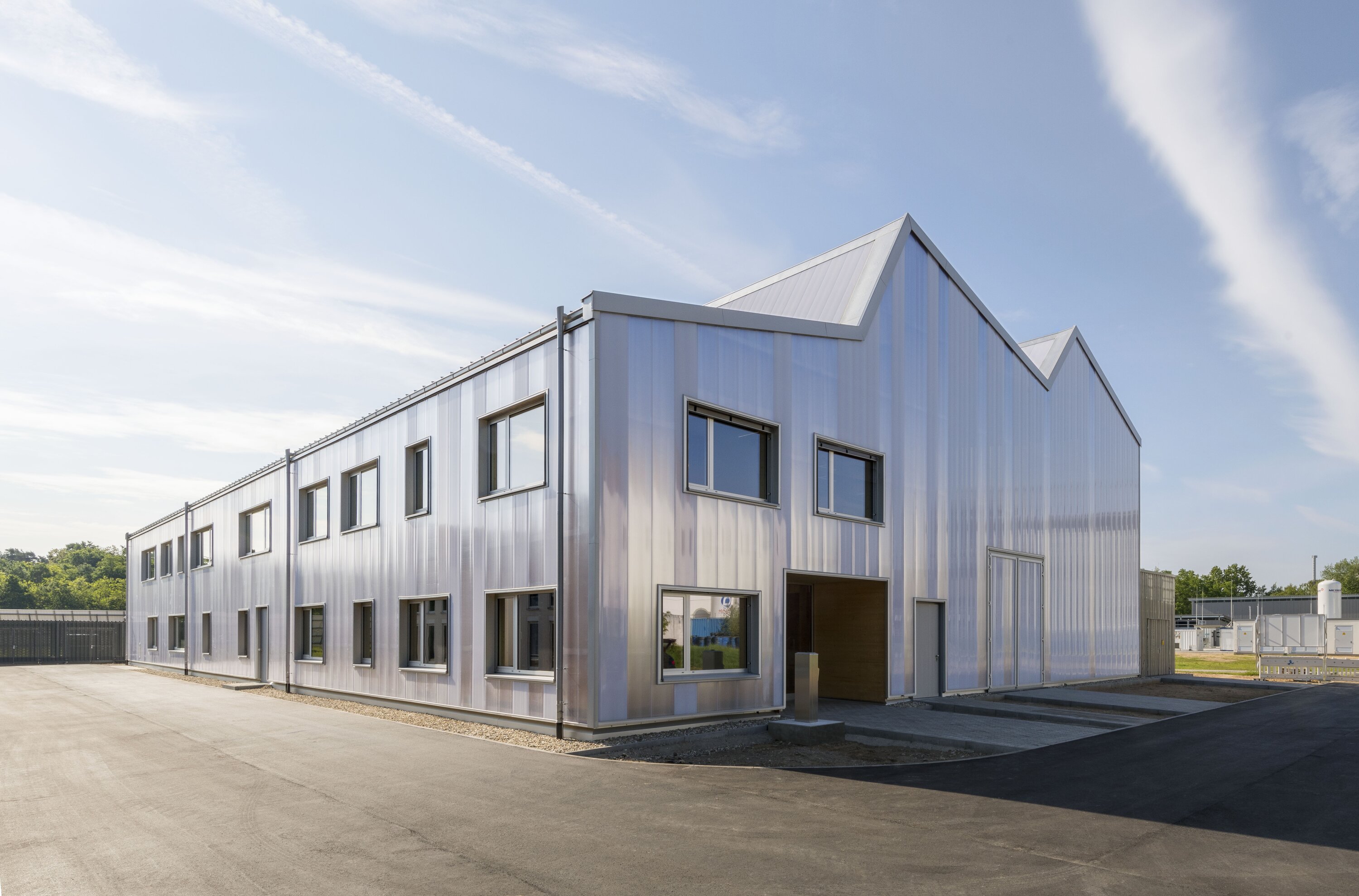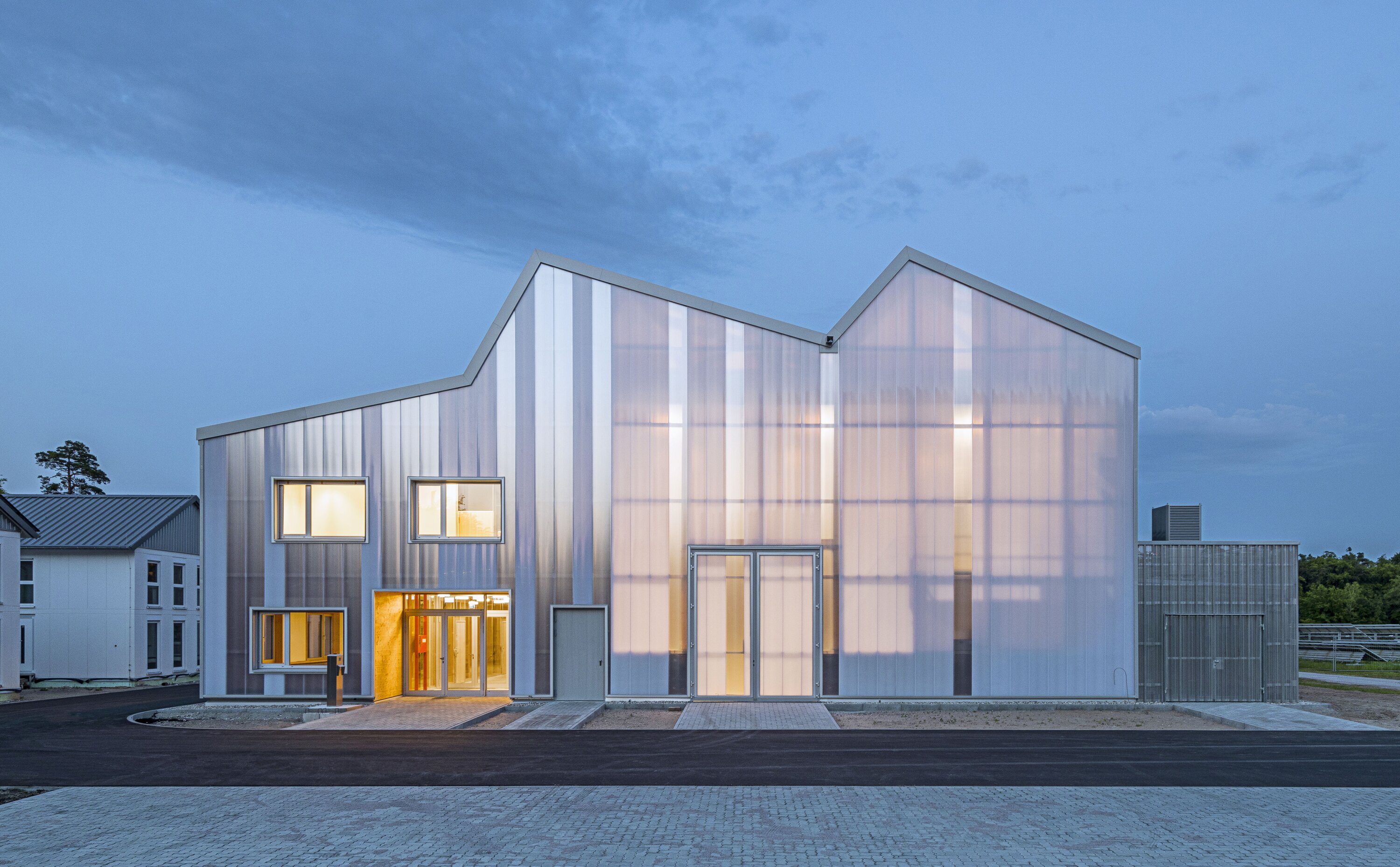

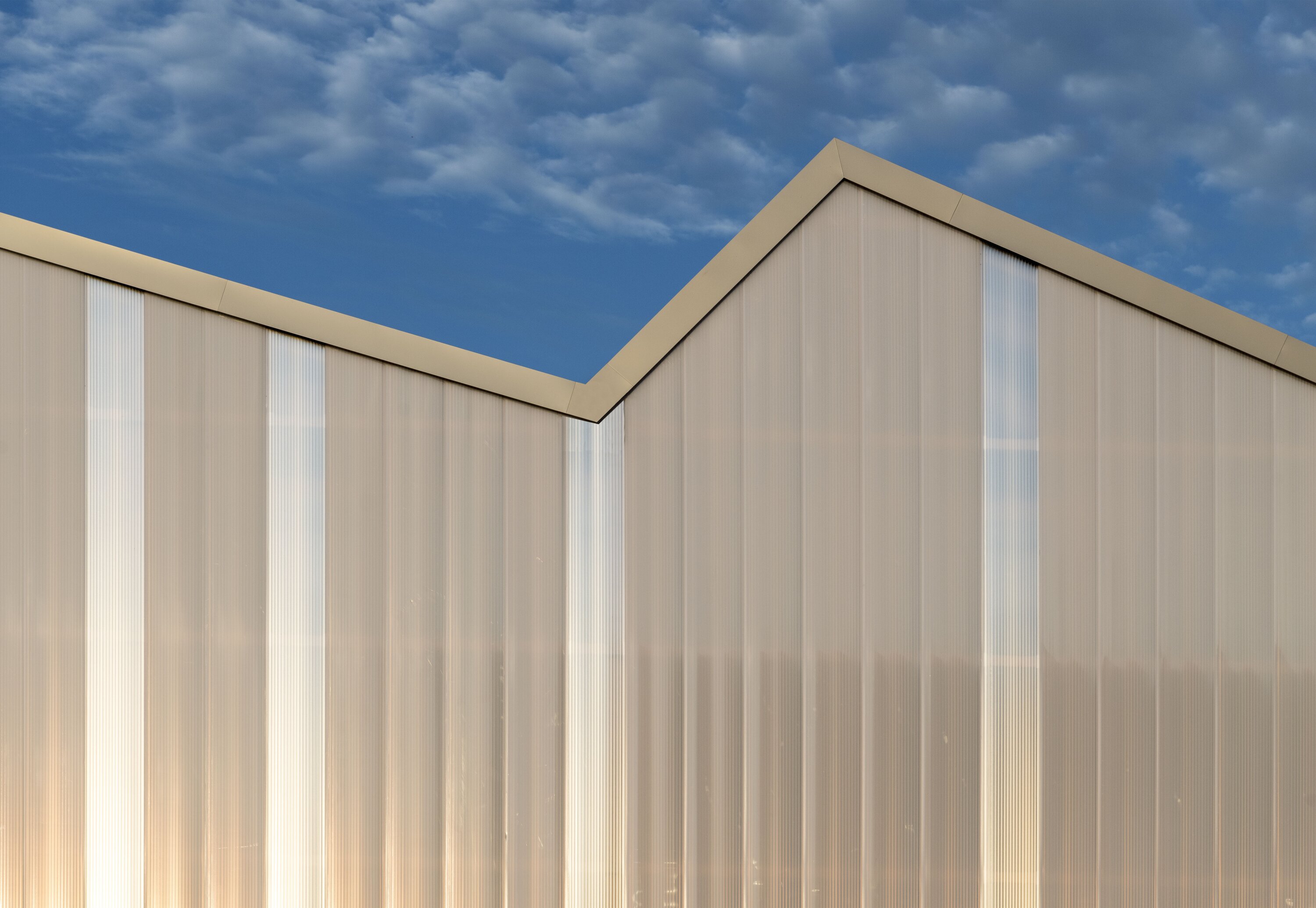


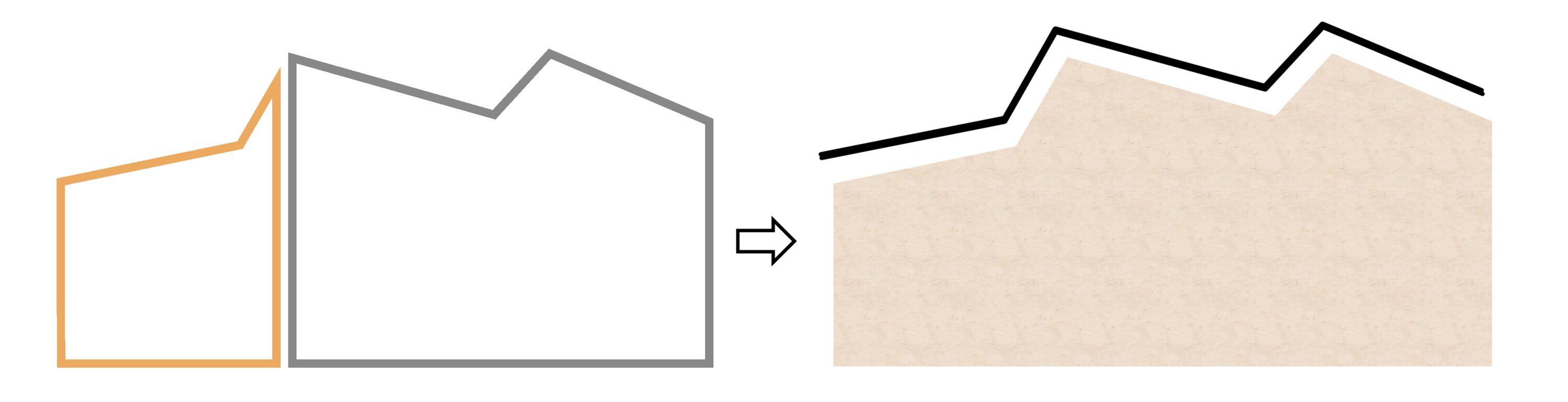
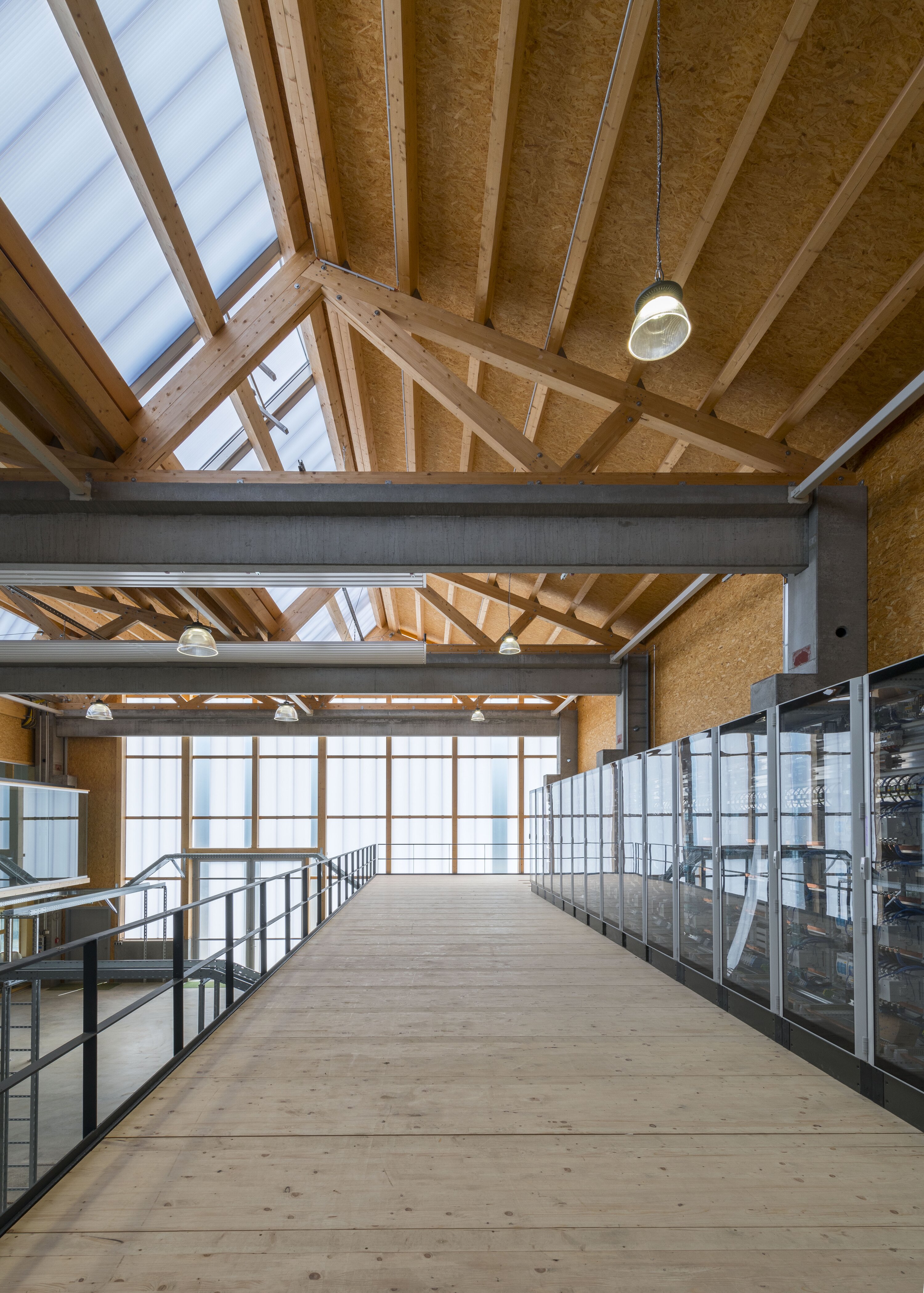
We envisioned a building that would meet the needs of researchers in a no-frills, functional manner, while making clear reference to industrial construction. The interior is organized into distinct functional areas: entry is through a sequence of north-facing laboratories and offices that lead directly into the adjacent test area—a large hall free of columns and able to accommodate an unlimited range of experimental setups. The structure’s workshop-like nature is reflected not only in its layout but also in its materials and shape. The sawtooth roof, huge industrial doors, and coated concrete floor are more reminiscent of a warehouse or factory than a research institute.


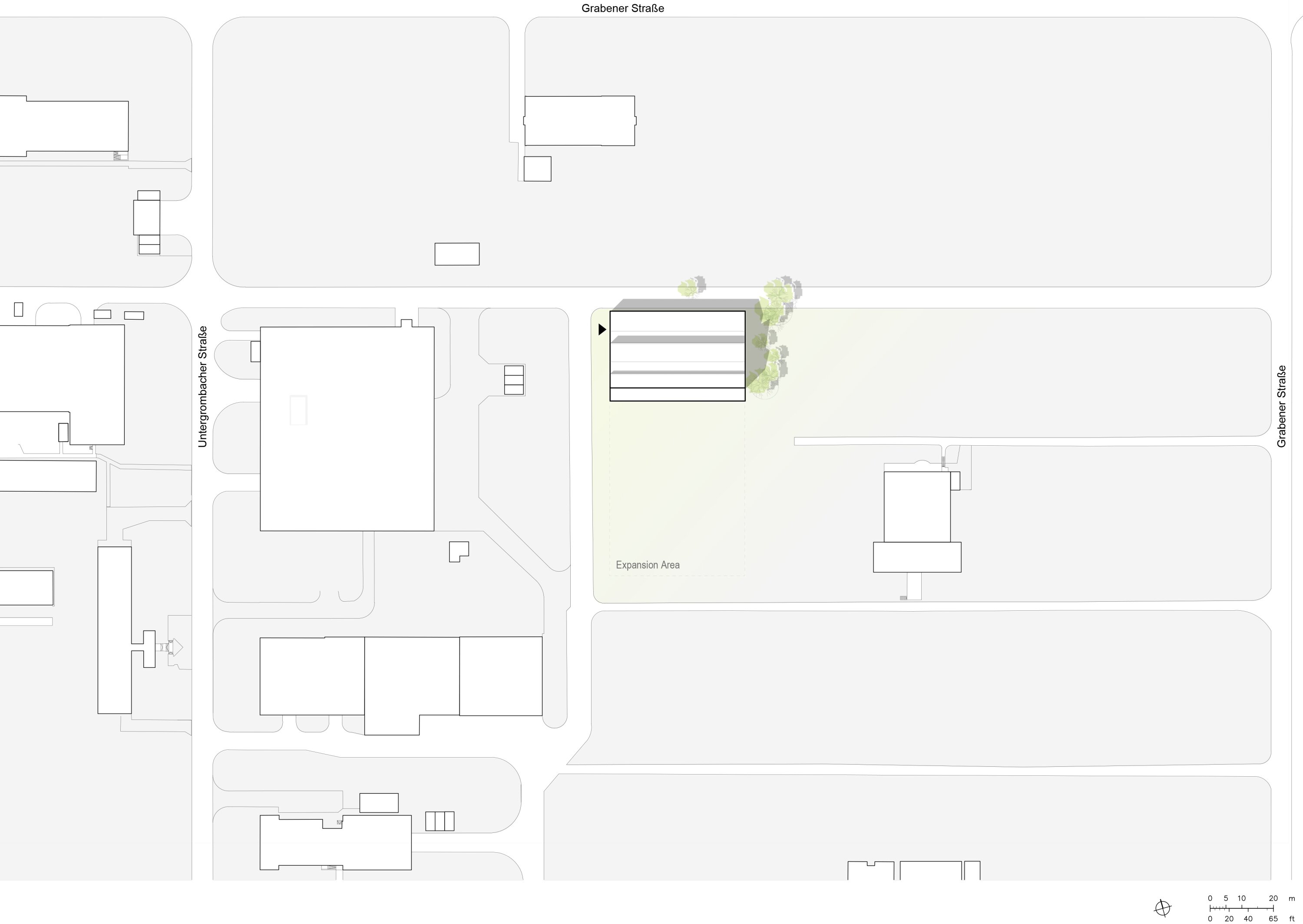
Site Plan
The design responds to its context by forming a harmonious, self-contained unit that enhances its surroundings. This is achieved by the homogeneity of the polycarbonate envelope, which wraps the entire building, along with the simple, almost iconic form of its massing. During the day, the translucent polycarbonate panels admit just the right amount of natural light into the test hall. At night, warm light transforms the facade into a subtly illuminated volume. The gable ends and north-facing sawtooth roof bring daylight deep into the test area, while the more opaque sections of the polycarbonate sheath prevent the naturally ventilated area from overheating in summer.
- Client
- Facility Management KIT, Eggenstein-Leopoldshafen
- Architects
- Behnisch Architekturbüro
- Address
Hermann-von-Helmholtz-Platz 1
76344 Eggenstein-Leopoldshafen
Germany- Gross Area
1.730 qm / 18,621 sq.ft
- Gross Volume
10.551 cbm / 372,609 cu.ft
- Competition
2015, study
- Photography
David Matthiessen
- Downloads
-
Download PDF

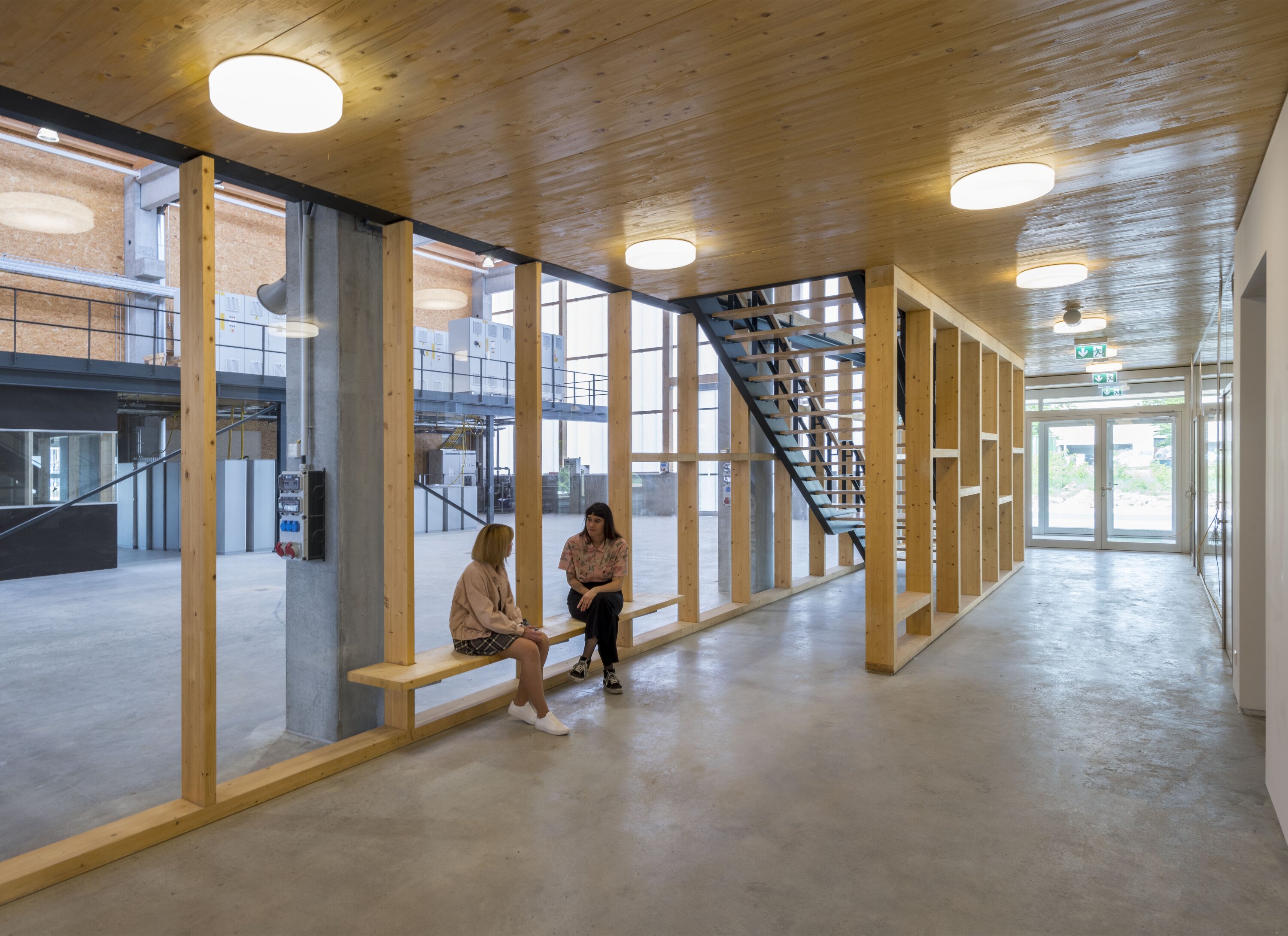
Because testing conditions cannot be precisely predicted, the key criterion for the design was maximum adaptability. The floor slab connects to a network of empty conduits and duct access chambers, allowing future installation of extensive cabling. While the initial design proposed lightweight concrete, we shifted to wood for the walls and load-bearing structure wherever possible to enhance flexibility. A glazed partition between the office area and the test hall provides visitors with striking views of the experiments and enables the entire structure to function as a single fire compartment—an integrated hall with enclosed workspace.

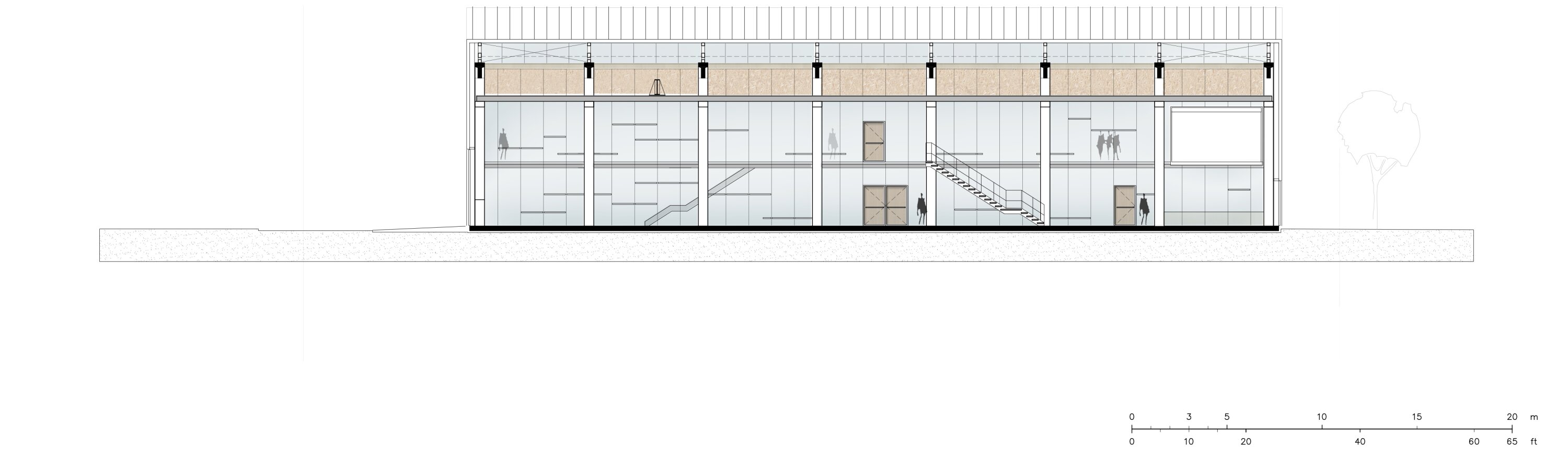
Section AA