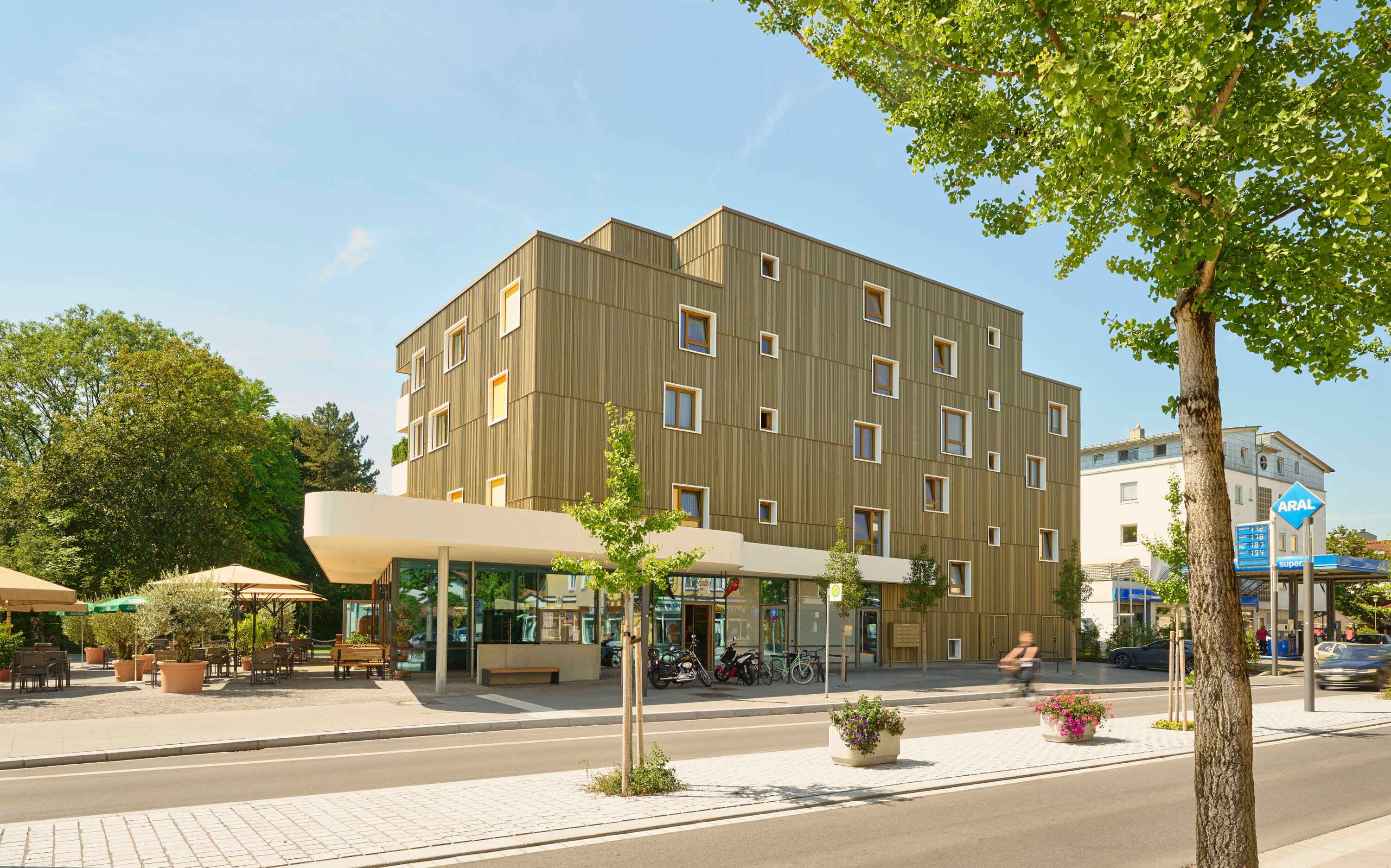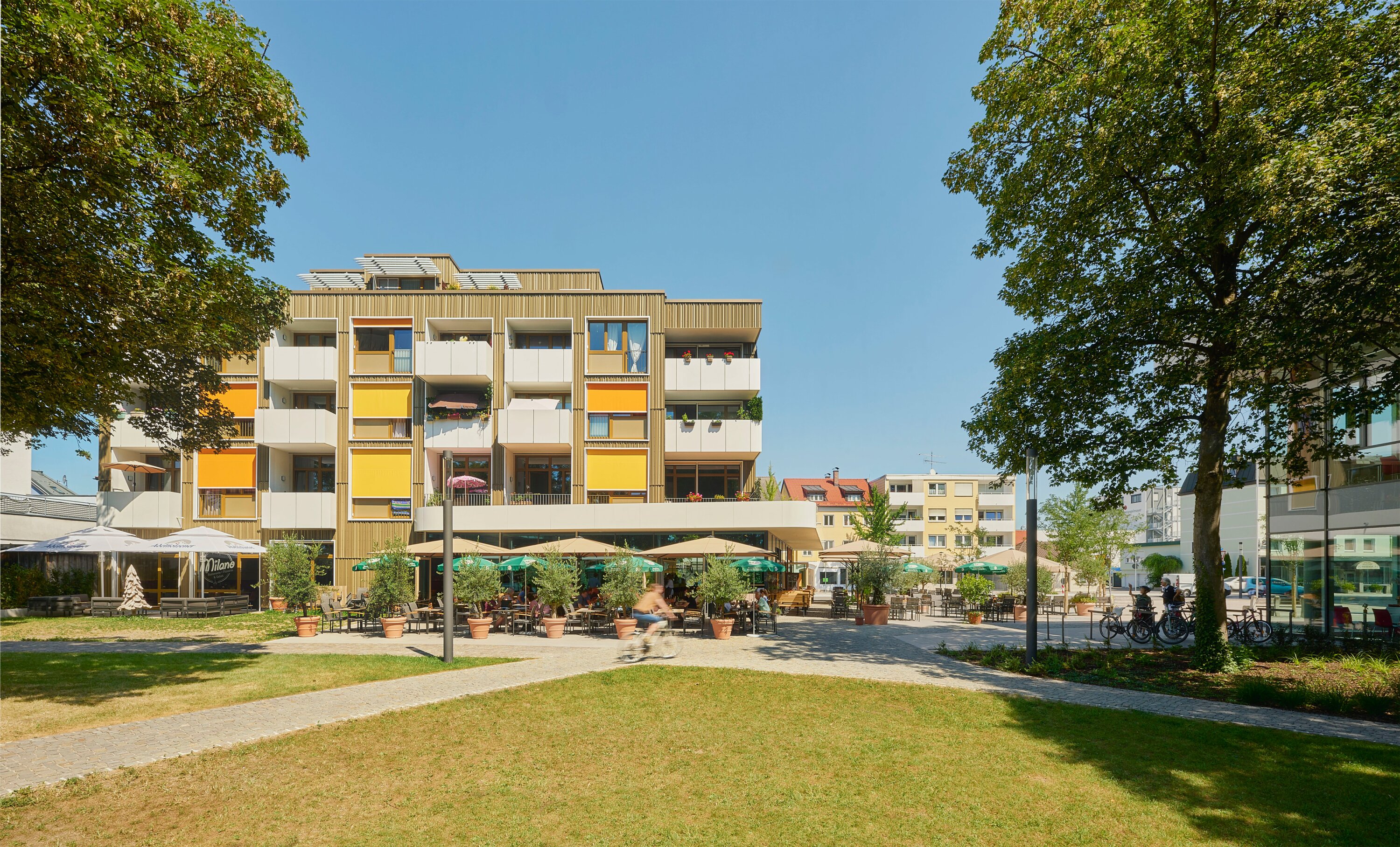
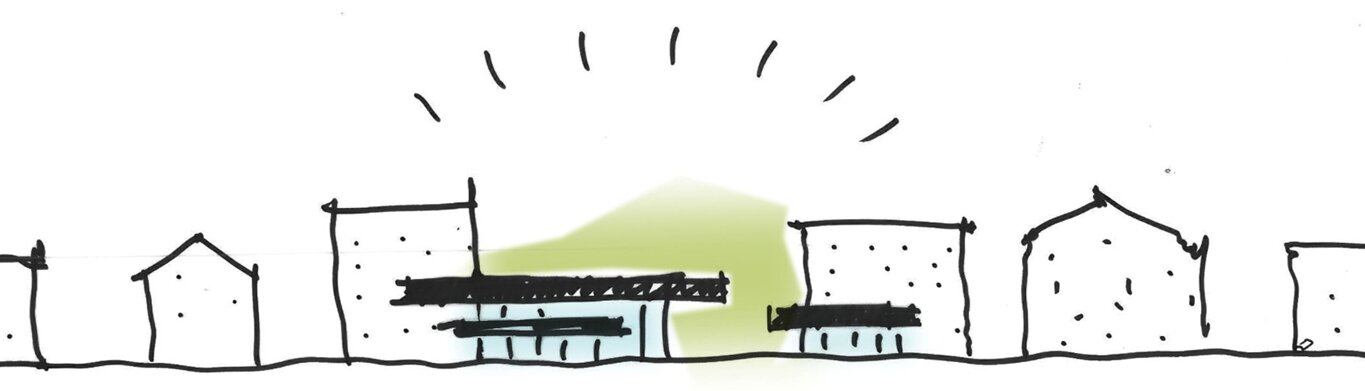
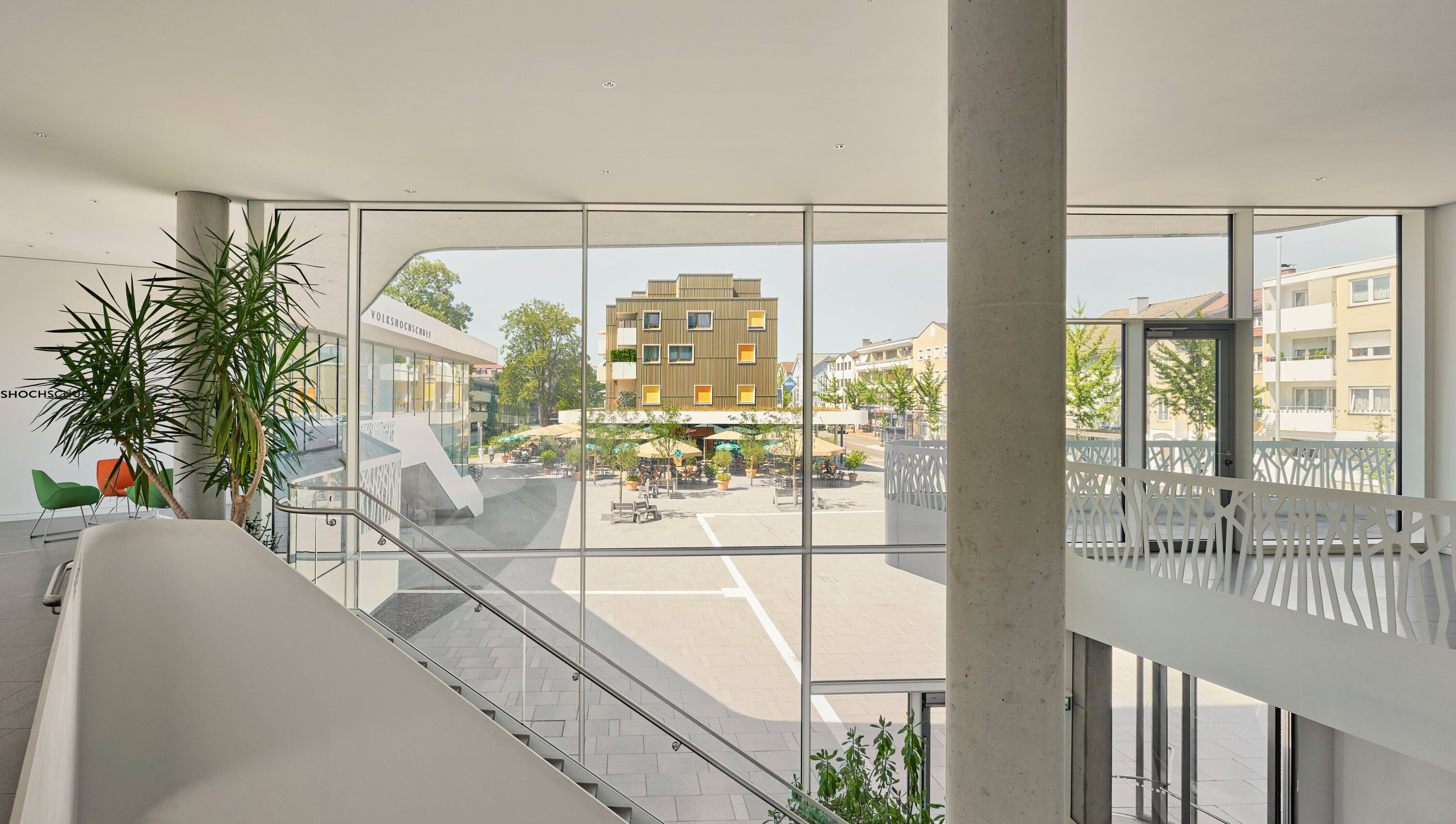
The new building plays a special role within this context. While its appearance is striking, it fits absolutely naturally into the last vacant site between the existing buildings, the square, and the riverside park. In planning terms, it augments the spaces edging Rosenheimer Strasse and the square. The external appearance and internal organization of the residential floors respond to their respective aspects. The north facade is closed and calm in character with comparatively small windows.
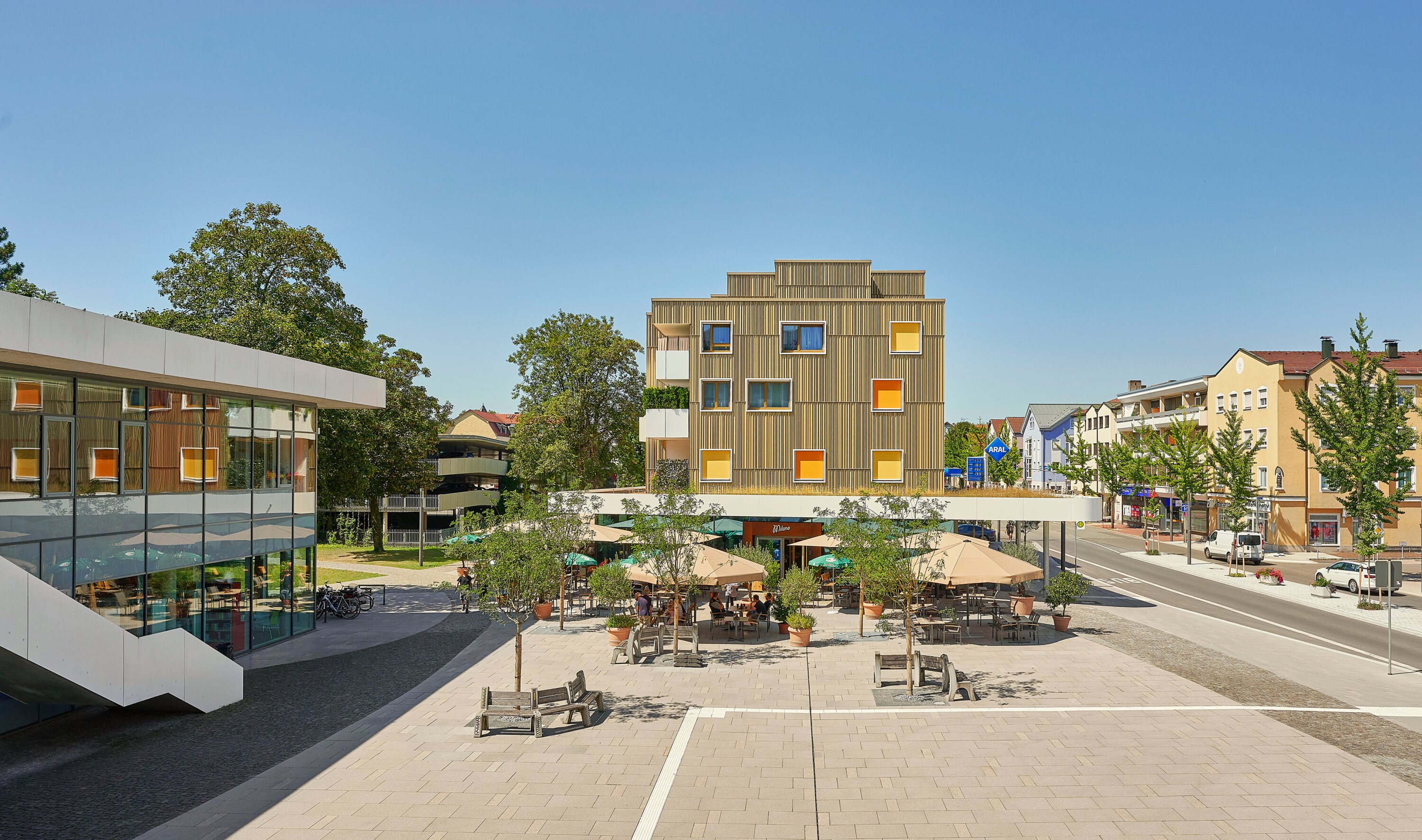
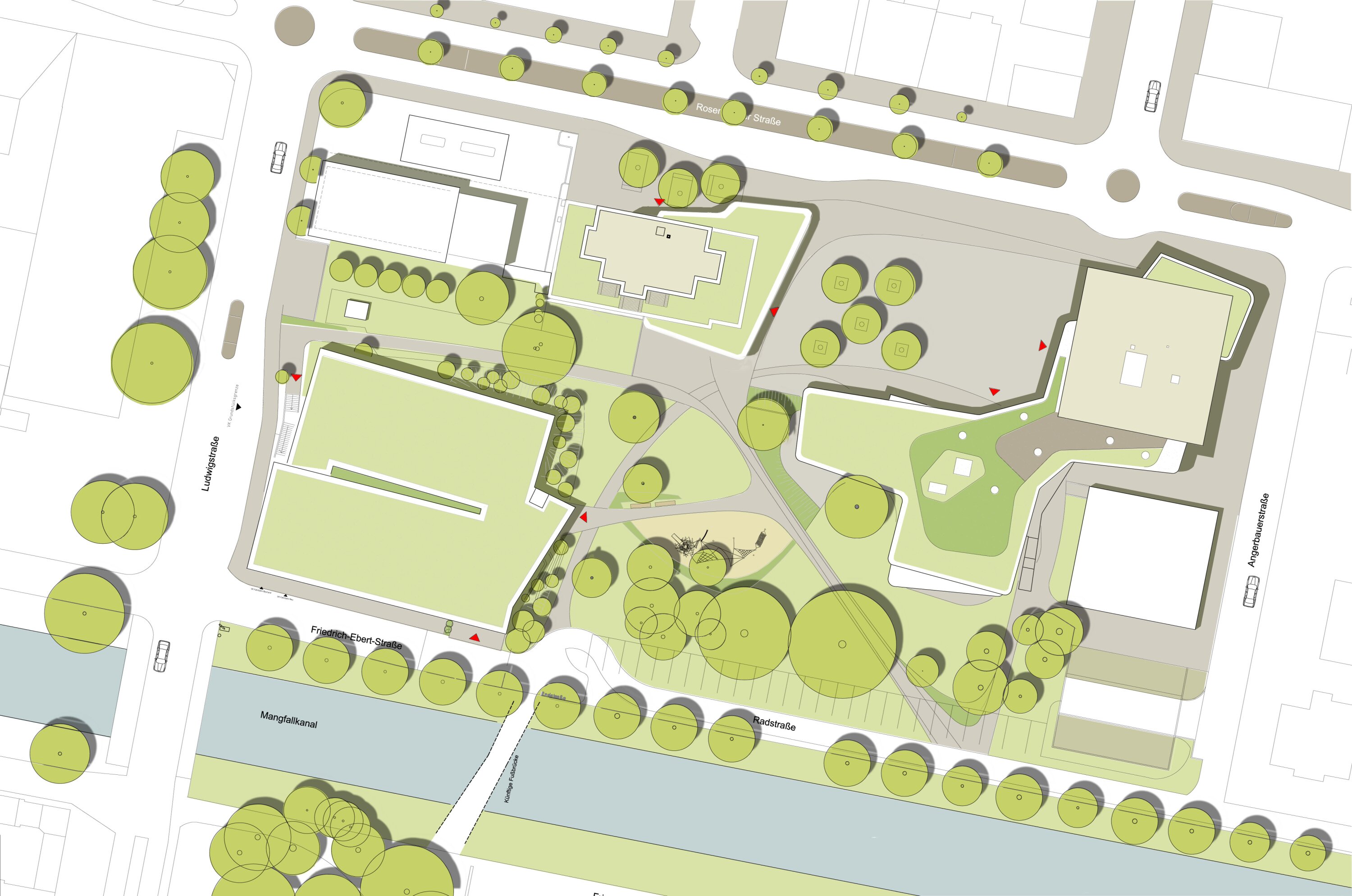
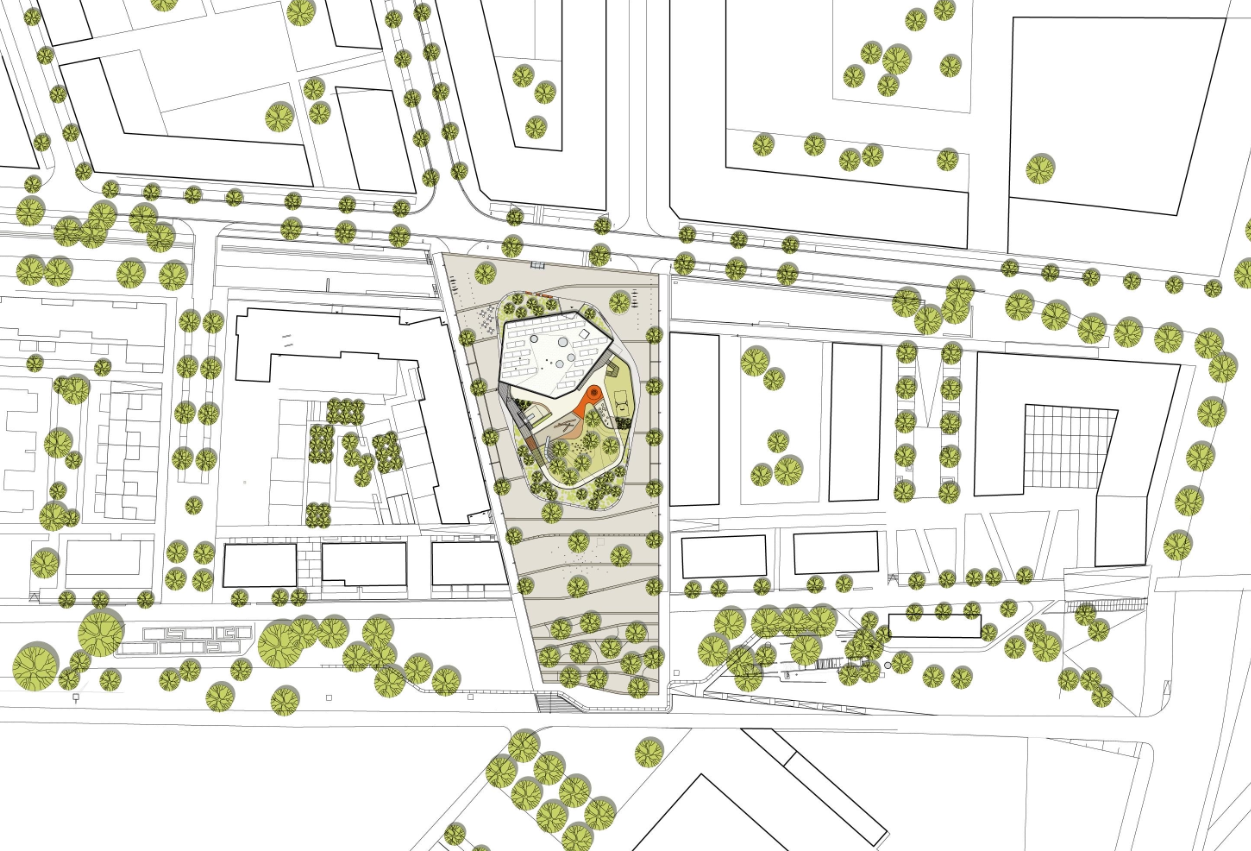
Site Plan
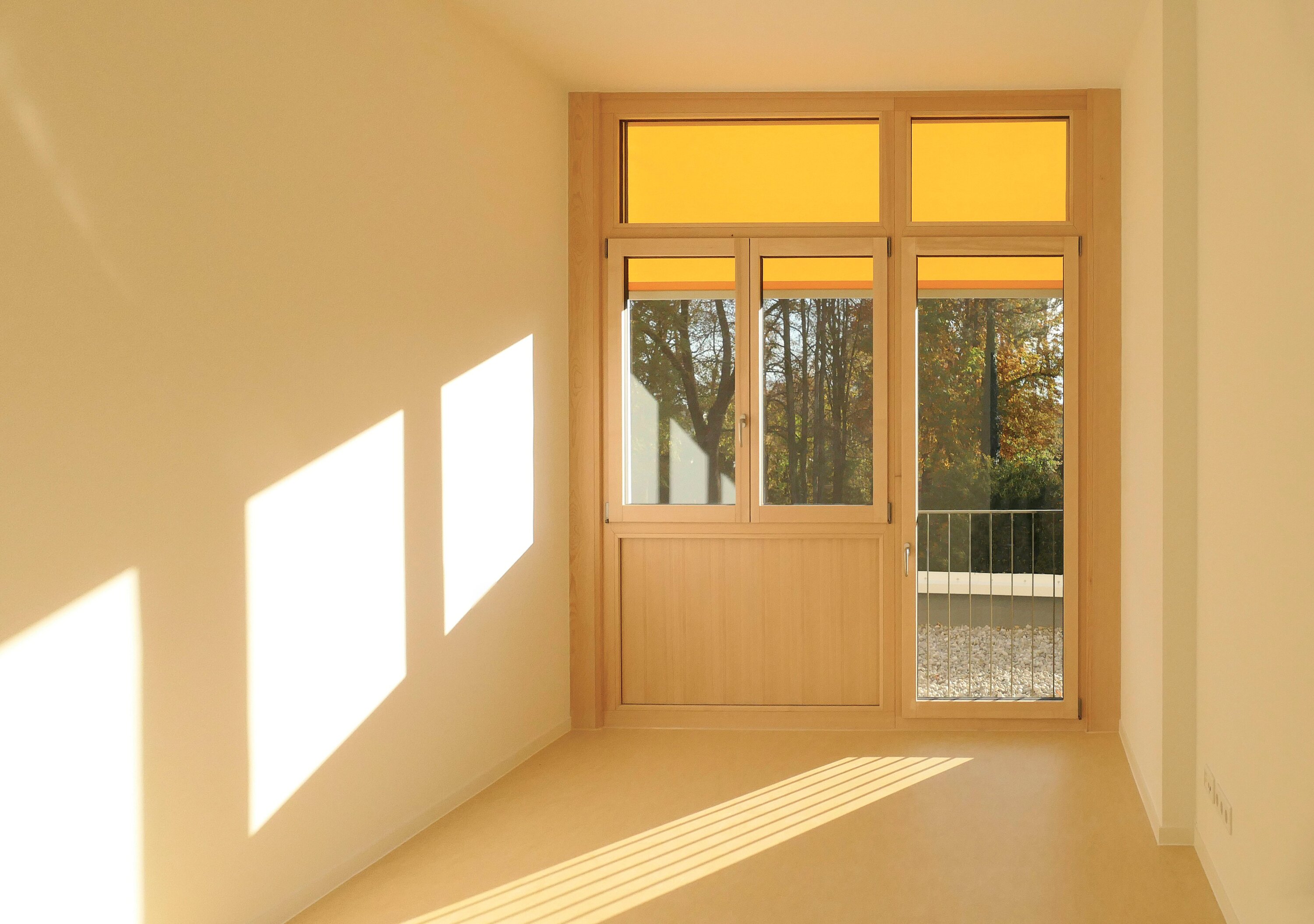
The living spaces face south overlooking the park, with larger windows staggered to form secluded loggias and outside spaces, thus lending the building its variegated character. The four upper floors contain seventeen barrier-free social housing units of various sizes. The open-plan kitchens are connected to the living areas to create flowing space from the entrances through to the loggias, which are glazed floor to ceiling. The two units on the top floor have roof terraces on the south side.
- Client
- Stadt Kolbermoor
- Architects
- Behnisch Architekturbüro
- Address
- Gross Area
2.630 qm / 28,310 sq.ft.
- Gross Volume
8.413 cbm / 297,105 cu.ft.
- Photography
David Matthiessen
- Competition
2013 study
- Downloads
-
Download PDF
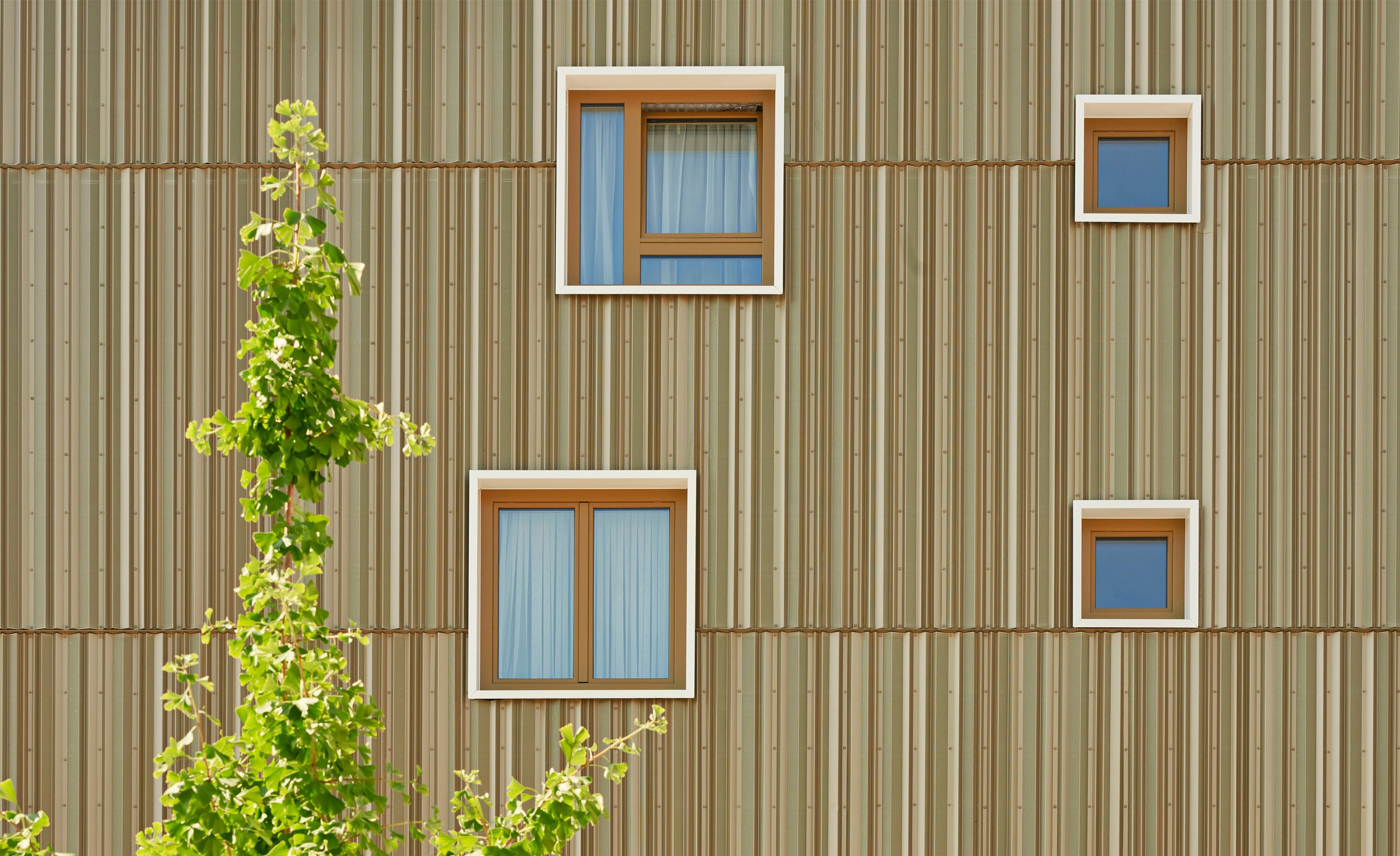
The facade consists of metal sheets whose irregular folds and perforations reflect light differently. The combination of perforations and soft insulating material behind the metal sheets also serves to dampen ambient noise. This sound insulation works in two ways: as well as protecting residents from the noise of the busy Rosenheimer Strasse, the facade surfaces also have a positive noise-absorbing effect on the surrounding area.
“This concept is built for the future.”
– Georg Kustermann (Green Party)
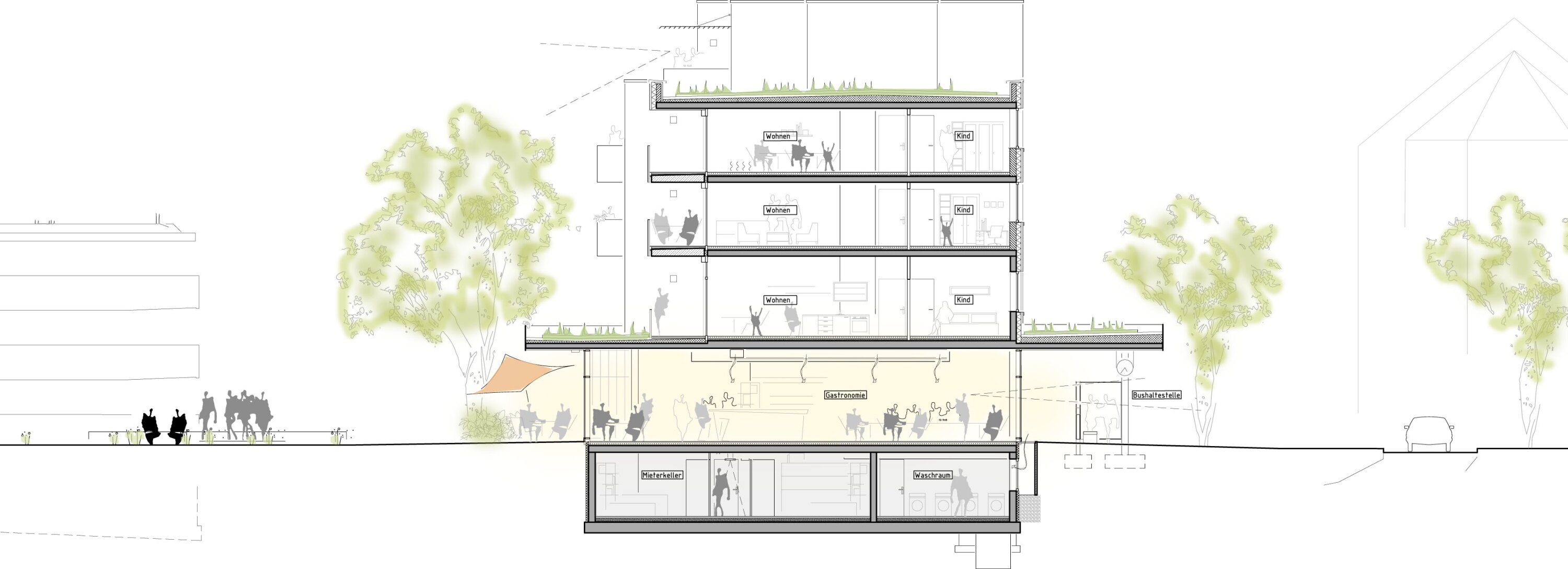
Section BB
Various measures strengthen the relationship between the square and the park to create an integrated open space. Mature trees define the character and spatial structure of the park, so interventions were limited to new furniture, play spaces for children, and gently curving paths that distinguish the park and square from the orthogonal patterns of their surroundings.